HUB 03 · Sous Vide
Sous vide vs reverse sear
They are the same idea executed with different hardware: bring the inside gently to temperature, then brown the outside fast. Sous vide buys you precision and a window you cannot miss; reverse sear buys you a drier surface, a better crust and no extra appliance. Here is which one to use, and when.
We earn a commission if you buy through our links. It does not change the price you pay, and it does not decide our picks — the scoring rubric is published in full, including what disqualifies a pick. How this works.
The short answer
Use sous vide when timing or precision matters — a thick steak you want at exactly medium-rare edge to edge, several steaks to land at once, or dinner that has to wait an hour for someone to get home. Use reverse sear when crust matters most, when you do not own a circulator, or when the cut is thick and dry-aged and you want the surface as dry as possible before it hits the pan. Both methods are the same strategy — bring the interior up gently, brown the exterior fast — and the difference is which medium does the gentle part: water held at the final temperature, or a low oven you pull the meat out of at the right moment.
What each method actually is
Reverse searmeans cooking the steak in a low oven — typically somewhere in the 200–275 °F range — until a probe reads 10–15 °F below your target, resting it briefly, and then searing it hard in a very hot pan or over coals. The oven is above your target temperature, so the meat keeps climbing and you have to pull it at the right moment; the thermometer is doing the real work.
Sous vide means sealing the steak in a bag and holding it in water set to exactly the temperature you want the finished center to be, then searing it the same way. Because the water is at the target rather than above it, the steak cannot overshoot: once it reaches temperature it simply stays there. The thermometer is replaced by the setting on the machine.
That single distinction — bath at the target versus oven above the target — generates every other difference between them.
Head to head
| Sous vide | Reverse sear | |
|---|---|---|
| Gentle stage | Water bath at the exact target temperature | Oven at roughly 200–275 °F, above the target |
| Can it overshoot? | No — the bath is the ceiling | Yes — you must pull it at the right internal temperature |
| Edge-to-edge doneness | As even as it gets | Very even, with a thin gradient near the surface |
| Surface before searing | Wet — must be dried hard or the crust suffers | Dry — the oven dehydrates the surface, which browns better |
| Holding / timing flexibility | Hours. Dinner waits for you | Minutes. The window is real |
| Equipment | Circulator, vessel, bags, plus a pan | Oven, probe thermometer, pan — things you own |
| Attention required | Almost none until the sear | Watch the probe |
| Best on | Thick cuts, multiple portions, fixed serving times | Thick cuts where crust is the priority |
| Worst on | Thin steaks — there is nothing to gain | Thin steaks — they overshoot before the oven helps |
Where reverse sear genuinely wins: the crust
This is the one real advantage and it is worth understanding rather than taking on trust. A surface has to be dry before it can brown — water on the outside of a steak has to boil off first, and while it is boiling off the surface is pinned near 212 °F and not browning. A low oven is a dehydrator: it dries the exterior while it warms the inside, so by the time the steak hits the pan the surface is parched and browns almost immediately.
A sous vide steak comes out of a bag wet, and some of that moisture is expressed juice that clings. You can get a superb crust on it — but you must pat it genuinely dry, and the pan must be hotter and the contact time shorter. Skip the drying step and the crust is the one thing people notice is worse. Our searing guide goes through this properly, because it is the single most common way a sous vide steak disappoints.
Where sous vide genuinely wins: the window
Reverse sear has a window; sous vide has an afternoon. A steak in a 130 °F bath is done after an hour or so and is still done after three — it cannot climb past the water temperature, so you sear it when people actually sit down rather than when the thermometer says now. For a dinner party, or four steaks that must all land medium-rare at once, or a household where someone is always twenty minutes late, that is not a small convenience; it is the reason the technique exists in restaurants.
It also wins on repeatability. Reverse sear depends on your probe, your oven's honesty about its own temperature, and your judgment about carryover. Sous vide depends on a number you typed in. The first time you cook a thick steak either way, the sous vide one is far more likely to be exactly what you intended — which is why it is the method we point beginners at in what is sous vide. There is a limit to the forgiveness, though: hold beef for many hours and the texture does eventually change, which we cover in can you overcook sous vide.
Thickness decides more than either method does
Both techniques exist to solve one problem: on a thick steak, cooking the middle to medium-rare in a hot pan overcooks a half-inch band under the surface first. That problem scales with thickness. On a 1.5-inch or thicker cut, both methods transform the result. On a thin steak — under about an inch — neither helps: there is no gray band worth eliminating, the interior comes up almost as fast as the crust forms, and the right method is a very hot pan and about ninety seconds a side. Using sous vide on a thin steak is not wrong, it is just effort spent on a problem you do not have.
What about everything that is not a steak?
The methods diverge sharply once you leave beef. Reverse sear is a steak-and-roast technique, and that is essentially its whole range. Sous vide covers a far wider set of jobs, precisely because holding a food at an exact temperature for a long time does things an oven cannot: it renders tough collagen in a chuck roast over many hours without drying it, it makes eggs with a texture a pan cannot produce, and it handles salmon and pork chops in a doneness band that is very hard to hit any other way. The full map is in what you can cook sous vide. If steak is genuinely the only reason you are considering a machine, reverse sear is a real alternative; if it is not, the circulator does more.
Can you combine them? Yes, and it is the best of both
Nothing stops you cooking a steak sous vide and then drying it in the fridge, uncovered, for 20–30 minutesbefore the sear. That borrows reverse sear's one advantage — a dehydrated surface — and keeps sous vide's precision and timing. It is the approach we would use for a thick, expensive cut where both the interior and the crust matter, and it costs nothing but a little planning.
So which should you buy into?
If you already own an oven and a probe thermometer, you can reverse sear tonight for nothing, and you should try it before buying anything — it is genuinely good, and if steak is your only interest it may be all you need. If you want the timing freedom, the precision across a 15-degree doneness window, and the other dozen jobs a water bath does, a circulator is the purchase, and it does not have to be expensive. The machines below are the ones we would point a steak cook at; the fuller ranking is in the best sous vide for steak, and if you are weighing the technique against the oven more broadly, sous vide vs oven takes that on directly.
The hardware
The cookers this page is about
The cookers referred to above, with prices pulled live from Amazon and dated on every card. Full rankings live in the roundups linked from this page.
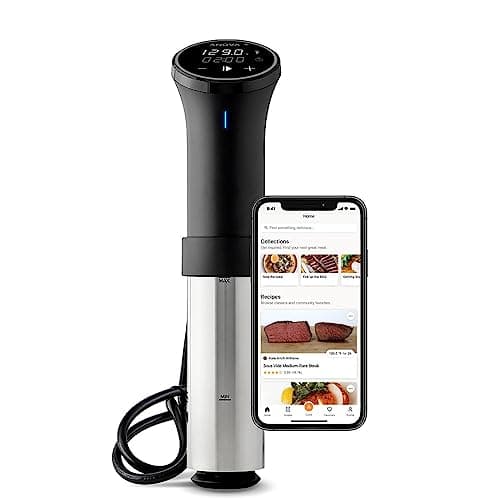
1,100 W
Anova Precision Cooker 3.0 (WiFi), 1100 W
The sous vide circulator most people should buy. Anova publishes the full specification — 1,100 W, a 0–92°C range, ±0.1°C accuracy, an 8 L/min pump — and backs it with a two-year warranty, the longest here. It has an on-device screen so it works without the app, which the Joule does not.
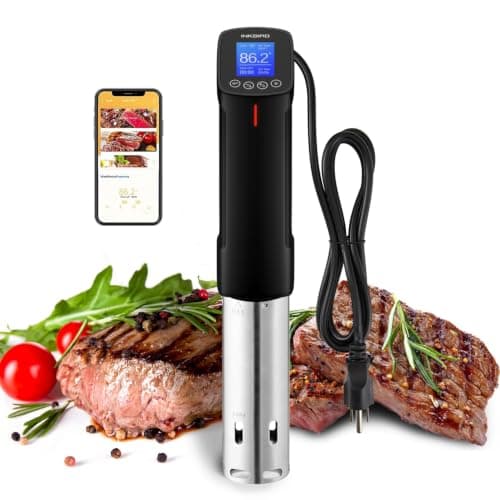
1,000 W
Inkbird ISV-100W WiFi Sous Vide, 1000 W
The value pick that does not feel like one. Under $100, and Inkbird still publishes the full specification: 1,000 W, a 25–99°C range, ±0.1°C accuracy, 15 L capacity, WiFi and an on-device dot-matrix screen. It undercuts the Anova by more than half and gives up remarkably little on paper.
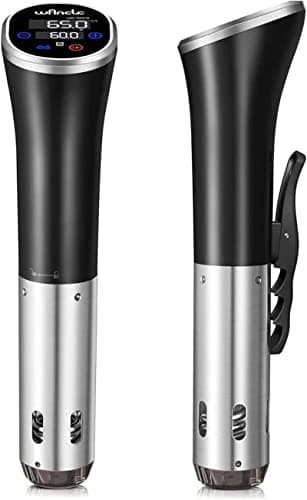
1,100 W
Wancle 1100 W Sous Vide Immersion Circulator (820)
The cheapest way to find out whether you actually like sous vide, now that the Monoprice is gone. 1,100 W, a published 25–90°C range, an IPX7 body you can rinse under the tap, and a spec sheet Wancle actually prints. It claims ±0.1°C, which nobody independent has checked — and it publishes no warranty at all.
#ad · As an Amazon Associate we earn from qualifying purchases.
Questions
Frequently asked
Is sous vide better than reverse sear?
What is the difference between sous vide and reverse sear?
Does reverse sear give a better crust than sous vide?
Do you need a sous vide machine to reverse sear?
Which is better for a thin steak?
Can you reverse sear in an air fryer or multicooker?
Keep reading
Related
Receipts
Sources
- Anova Culinary — Precision Cooker 3.0 product page
- Inkbird — ISV-100W WiFi Sous Vide product page
- USDA Food Safety and Inspection Service — safe minimum internal cooking temperatures
- USDA FSIS — cooking safely with time and temperature (pasteurization basics)
We have not tested these machines in a lab and we do not pretend to have. Specifications come from the manufacturer's own published documents; electricity rates come from the US Energy Information Administration; prices come from the live Amazon API. Where a figure is not published, the page says “not published” rather than guessing. Read the full method.