HUB 02 · Rice Cookers
What Can You Cook in a Rice Cooker?
A rice cooker is a controlled, enclosed pot with a good keep-warm, which makes it useful for a lot more than rice. Steamed vegetables, porridge and oatmeal, other grains like quinoa, beans and lentils, a one-pot rice-and-protein meal, even a simple cake on the right cooker. Here is what it does well, and the honest limits of what it cannot do.
We earn a commission if you buy through our links. It does not change the price you pay, and it does not decide our picks — the scoring rubric is published in full, including what disqualifies a pick. How this works.
A rice cooker is a controlled pot, not just a rice pot
The reason a rice cooker can do more than rice is simple: it is an enclosed pot with managed heat and a good keep-warm. Anything that cooks by simmering or steaming in a measured amount of water is fair game, and a fuzzy-logic cooker that senses and adjusts the heat handles those jobs more gracefully than a dumb on/off model, because it will not just blast one setting until something scorches. None of this turns a rice cooker into a do-everything machine — there are real limits, and we will be honest about them below — but the range is wider than most people use. Here is what is genuinely worth cooking in one.
Steamed vegetables, dumplings and more
Steaming is the most natural second job for a rice cooker, and many ship with a steam basket or tray for exactly this. Put water in the pot, load the basket with vegetables, dumplings, fish or chicken, and the steam does the work while the cooker manages the heat. On a cooker with a dedicated steam setting — the Zojirushi NS-TSC10 adds one, for instance — it is a one-button job. Even better, the Tiger JAX-T10U steams a dish in its tacook tray while the rice cooks below it, so a portion of fish or vegetables and the rice finish together from the same element. Steaming is where a rice cooker most obviously earns its keep beyond rice.
Oatmeal, porridge and other grains
A rice cooker is quietly excellent at breakfast. Oatmeal — rolled or, with more water and time, steel-cut — cooks hands-off in the pot, and many cookers have a porridge or congee setting that runs the long, gentle simmer those need without boiling over or catching. The Cuckoo and Zojirushi cookers here carry a porridge program for exactly this. Beyond oats, a rice cooker handles most other grains that cook by absorption: quinoa, farro, barley, millet and more all work, and the fuzzy-logic heat control helps keep them from scorching. Quinoa is common enough that it has its own walkthrough — see how to cook quinoa in a rice cooker — but the same absorption principle covers the rest.
Beans, lentils and steel-cut oats — the long simmers
Lentils and split peas, which cook fairly quickly and need no soak, do well in a rice cooker: add them with the right amount of water and let the cooker simmer them down. Dried beans can be cooked too, though they take a long soak and a long, patient simmer, and you may need to run the cook cycle more than once to get them fully tender — this is exactly the kind of job where a pressure cooker is faster, and we say so plainly below. Steel-cut oats sit in the same bucket as beans and porridge: they want more water and more time than quick oats, and a porridge setting is the right tool if your cooker has one. The theme across all of these is that a rice cooker is a patient simmering pot, not a fast one.
One-pot rice and protein
One of the most useful non-rice tricks is cooking a whole small meal in one pot. On a cooker with a steam tray, a protein steams above while the rice cooks below — the Tiger JAX-T10U's tacook tray is built for precisely this, turning out rice and a piece of fish or chicken together, hands-off, in the time the rice takes anyway. You can also cook seasoned rice dishes where the flavorings go in with the rice — a simple pilaf-style rice with vegetables and stock, for example. Just keep the portions honest: a steam tray cooks a course for one or two, not a family's worth of protein, so think “rice plus a side” rather than a full dinner for a crowd.
Yes, even a simple cake — on the right cooker
It surprises people, but a rice cooker can bake a simple cake if it has a cake setting — the Zojirushi NS-TSC10is one of the cookers here that includes one. The enclosed pot behaves a little like a gentle oven, and the result is a dense, moist, steamed-style cake rather than a light baked one. It is a fun trick and a genuine option in a kitchen without an oven, but it is a specialty use, not a reason to buy a cooker on its own. Without a dedicated cake program, improvising one on a plain rice cycle is hit or miss, so this is very much a “if your cooker has the setting” feature.
The honest limits — what a rice cooker is not
Being clear about the ceiling matters as much as listing the tricks. A rice cooker is not a pressure cooker: it cannot turn dried beans or a tough cut of meat around in under an hour the way an Instant Pot does, and it will not build the pressure that speeds those jobs up. It is not a saute pan either — most rice cookers cannot brown or sear, because they hold a gentle simmering heat rather than a high, dry one, so you cannot build flavor by browning onions or searing meat first the way you can in a multicooker with a saute function. And its fixed programs and keep-warm shape what works: the cooker is tuned to run a cook and then hold warm, so anything that needs constant stirring, precise timing you control minute to minute, or high dry heat is outside its lane. Within those limits it is wonderfully hands-off; push past them and a different appliance is the right tool.
Why fuzzy logic widens the range
The more you cook beyond plain white rice, the more the cooker's brain matters. A dumb on/off cooker runs one heat until the water is gone, which is fine for a straightforward pot of rice but punishing for porridge that wants a long gentle simmer, or brown rice and grains that scorch if the heat does not ease off. A fuzzy-logic cooker senses and adjusts, so it manages those longer, fussier cooks without catching or boiling over, and its dedicated programs — steam, porridge, brown, cake — are really just the microcomputer running the right heat curve for each job. That is why the cookers that do the most beyond rice are the fuzzy-logic ones, and why a cheap cooker's “versatility” is narrower than the feature list suggests. For the full routine of running any of these cooks, see how to use a rice cooker.
The rule of thumb for what works: if a dish cooks by simmering or steaming in a measured amount of water and does not need browning, constant stirring or pressure, a rice cooker can probably make it — and a fuzzy-logic cooker makes it more reliably. If it needs a hard sear, real pressure or minute-to-minute control, reach for a multicooker or the stovetop instead. Start with the steam basket and a porridge or grain cook, and you will quickly find the handful of extra jobs your cooker does well.
The hardware
The cookers this page is about
The cookers referred to above, with prices pulled live from Amazon and dated on every card. Full rankings live in the roundups linked from this page.
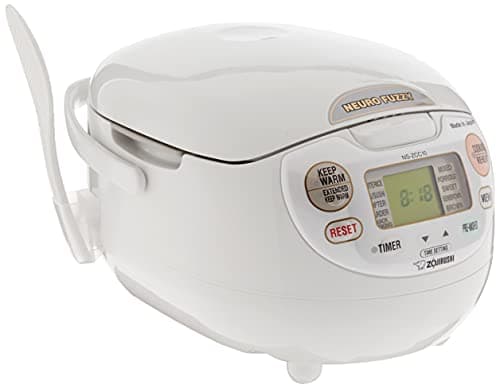
680 W
Zojirushi NS-ZCC10 Neuro Fuzzy Rice Cooker & Warmer, 5.5 Cup
The rice cooker every other one is measured against. Its Neuro Fuzzy microcomputer adjusts heat through the cook rather than running a fixed timer, which is the whole reason a $260 rice cooker cooks rice better than a $30 one. Made in Japan, 680 W, and the settings that matter are all there.
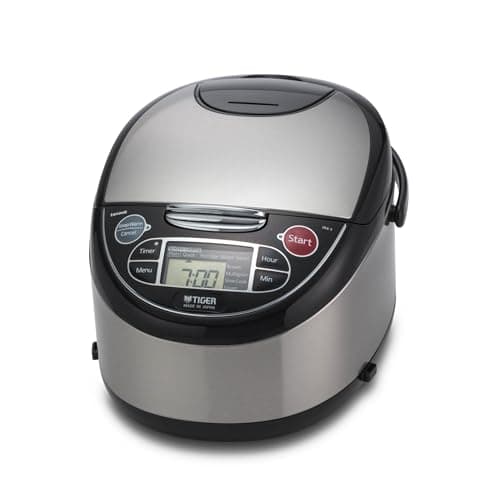
641 W
Tiger JAX-T10U Micom Rice Cooker & Warmer with tacook, 5.5 Cup
Tiger's answer to Zojirushi, with one trick the Zojirushis do not have: the tacook synchronous-cooking tray steams a dish above the rice while it cooks below, from the same 641 W. A Micom fuzzy-logic cooker made in Japan, with a genuinely useful feature the marketing did not invent.
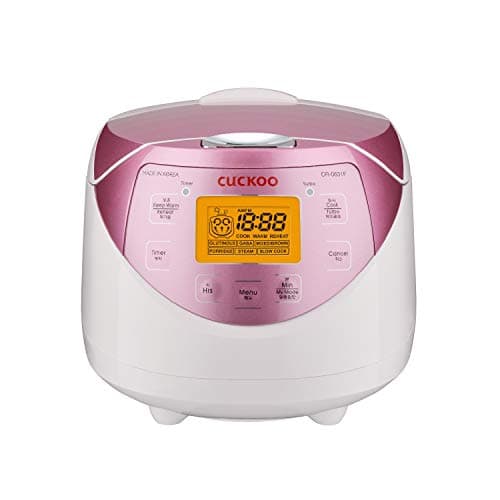
580 W
Cuckoo CR-0631F Micom Rice Cooker, 6 Cup
Cuckoo's non-pressure Micom cooker: the same Korean build and fuzzy-logic control as the CRP, without the pressure mechanism or its price. 580 W, a 6-cup nonstick pot, and a menu set that still covers GABA and brown rice. The sensible Cuckoo if you do not need pressure.
#ad · As an Amazon Associate we earn from qualifying purchases.
Questions
Frequently asked
What else can you cook in a rice cooker besides rice?
Can you steam vegetables and rice at the same time?
What can't you cook in a rice cooker?
Keep reading
Related
- How to cook oatmeal in a rice cookerA hands-off porridge, without the boil-over.
- How to steam vegetables in a rice cookerUsing the steam basket you already own.
- How to cook quinoa in a rice cookerThe most common non-rice grain, step by step.
- How to use a rice cookerThe full rinse-cook-rest routine for any cook.
- Rice cooker vs Instant PotWhere a multicooker does the jobs a rice cooker cannot.
- How to cook congee in a rice cookerSilky rice porridge, the easy way.
- How to make rice pudding in a rice cookerThe sweet, creamy job, minus the boil-over.
Receipts
Sources
- Zojirushi — NS-ZCC10 Neuro Fuzzy Rice Cooker product page
- Tiger Corporation (USA) — JAX-T10U rice cooker product page
- Cuckoo CR-0631F series manual (specification page)
We have not tested these machines in a lab and we do not pretend to have. Specifications come from the manufacturer's own published documents; electricity rates come from the US Energy Information Administration; prices come from the live Amazon API. Where a figure is not published, the page says “not published” rather than guessing. Read the full method.