The verdict
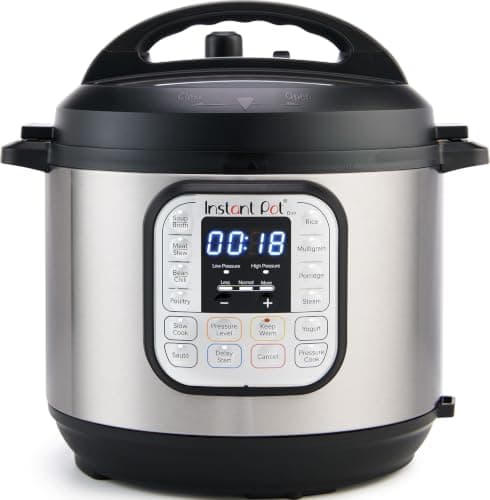
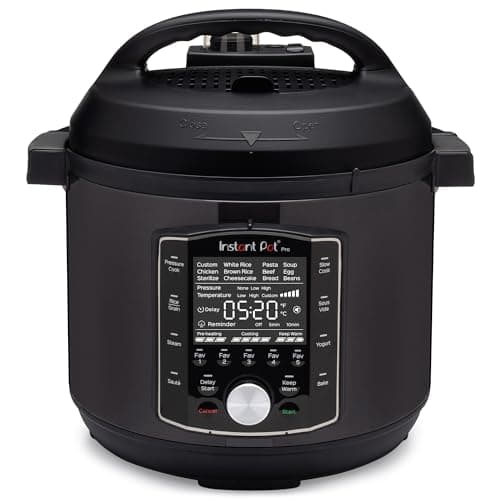
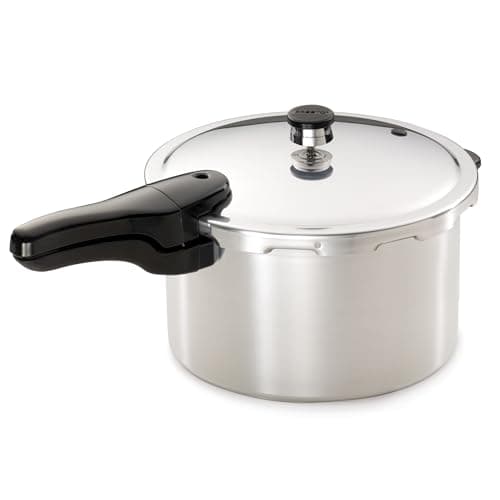
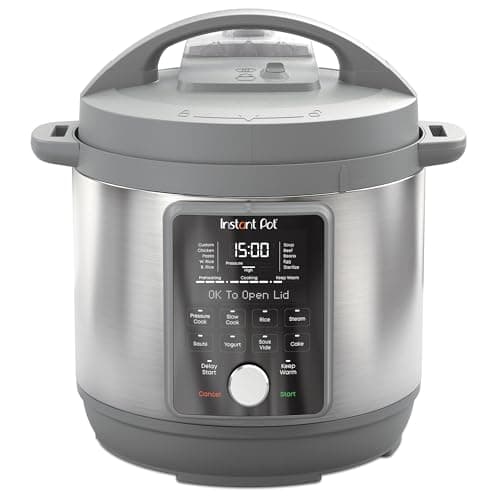
Buy the 8-quart Instant Pot Duo Plus. Bone broth is the one thing a household makes in a pressure cooker where capacity is the binding constraint rather than a nice-to-have: a chicken carcass or a bag of beef knuckles occupies real volume, the maximum-fill line counts the bones as well as the water, and the whole point of the exercise is to come out with enough broth to be worth the effort. At 8.0 quarts it is the largest pressure-capable pot Instant Brands currently lists, and its 18/8 stainless tri-ply inner pot has no coating to scuff when you are levering out bones with a pair of tongs. Buy the 6-quart Duo instead if you make broth from one chicken at a time and want the cheapest well-documented pot that does it; buy the Instant Pot Pro if you jar and store broth, because it is the only cooker here with a published sterilize program; and buy the Presto 01282 if you have a gas or coil range and want the highest pressure on this page, which is a genuine cooking difference rather than a spec flourish.
Why capacity is the whole question
Every pressure cooker on this page carries a maximum-fill line, and for a liquid like stock the operative limit is two-thirds of the pot. That is not a guideline you can quietly ignore: a pressure cooker needs headroom above the liquid for steam to collect, and broth foams. So an 8-quart pot is not 8 quarts of broth and a 6-quart pot is not 6 — call it roughly five and three and a half respectively, before the bones.
Then subtract the bones. A whole chicken frame, wingtips and feet is a couple of quarts of displaced volume on its own; a batch of beef marrow and knuckle bones is more. This is why people who get into broth seriously end up with the big pot, and why the ranking on this page follows published capacity more closely than it follows price. Our guide to Instant Pot sizes works the same arithmetic through for everything else you would cook.
One honest consequence: if you have a 3-quart Instant Pot, broth is the job it is worst at. Not unsafe, not impossible, just small enough that the yield does not repay the twelve-hour commitment. That is a size problem no amount of technique fixes.
The pot material matters more here than anywhere else
Broth is the most abrasive and the most acidic thing most people put in a multicooker. It is abrasive because bones are hard and you are fishing them out with metal; it is acidic because almost every broth method adds a splash of vinegar to help draw minerals out of the bone, and then holds that acid hot for hours. Both of those are arguments for a bare stainless pot over a coated one.
The three Instant Pots on this page all publish an 18/8 stainless inner pot with a tri-ply base, which is the material you want: nothing to scratch off, nothing to wear through, and no coating whose lifespan you are quietly spending every time you make a batch. The Presto 01282 is heavy-gauge aluminum, which is a different trade — it heats faster than stainless, but Presto's own materials note that aluminum reacts with acidic food over long contact, so broth comes out of the pot and into a container rather than being stored in it. Coated pots are the ones we would steer away from for this specific job, which is also the argument the stainless-pot roundup makes at more length.
Pressure, temperature, and the one real advantage of the stovetop pot
Collagen converts to gelatin faster the hotter the water is, and under pressure the water is hotter than boiling. The relevant published figures: Instant Brands states a working pressure of 10.2–11.6 psi (70–80 kPa) on high for the Duo and the Duo Plus, and Presto states that its regulator holds “the ideal cooking pressure — usually 15 pounds.” Fifteen pounds is meaningfully hotter water than eleven, and that is the entire reason a stovetop cooker still exists in an electric world. Our stovetop versus electric comparison goes through what that gap does and does not buy you.
What it buys you for broth is time. What it costs you is attention: a stovetop cooker needs somebody adjusting the burner to hold pressure, and a twelve-hour broth is exactly the cook where you least want to be in the room. That trade is why an electric wins this page outright and the Presto sits fourth despite the better number — and why we would still point a gas-range household at it for a weekend batch.
Note for completeness that Instant Brands publishes no working-pressure figure for the Pro or the 8-quart Duo Plus, only for the Duo and the 6-quart Duo Plus, whose manuals carry it. We are not going to borrow the Duo's number for the other models — same brand is not the same document.
How long, and what the cooker is actually doing
Our bone broth method page has the full sequence, but the relevant point for choosing hardware is that broth is a long, low-attention cook with a natural release at the end. That changes the running-cost picture in a way a 40-minute roast does not: the element energizes to bring the pot up to pressure and then cycles to hold it, so the sum is not nameplate watts times hours. Our running-cost guide shows the arithmetic and explains why every figure on this site is an upper bound rather than a claim.
It also means the release method is not optional here. Broth is a foaming liquid, and a quick release on a full pot of hot stock sprays. Natural release, every time — which adds a half hour you should plan for.
The four, on published figures
Manufacturer-published figures only. Price is deliberately absent — see the live figures on the cards above. | Duo Plus 8qt | Duo 6qt | Pro 6qt | Presto 01282 |
|---|
| Capacity | 8.0 Quart | 6 Qt / 5.7 L | 6 Qt / 5.7 L | 8 Quart (7.6 L) |
|---|
| Inner pot | 18/8 stainless, tri-ply | 18/8 stainless, tri-ply | Dishwasher-safe stainless | Heavy-gauge aluminum |
|---|
| Working pressure | Not published | 10.2–11.6 psi high | Not published | Regulator holds ~15 lb |
|---|
| Rated power | 1,200 W | 1,000 W | 1,200 W | No element — burner |
|---|
| Published warranty | 1 year | 1 year | 1 year | 12 years |
|---|
Read the bottom row twice. Presto's extended 12-year limited warranty against Instant Brands' one year is the widest documentation gap on this page, and it is the reason a stovetop cooker is a twenty-year purchase and an electric one is not. There is nothing electronic in the Presto to fail.
What we would actually do
For most households: the 8-quart Duo Plus, a natural release, and broth once a fortnight in batches big enough to freeze. For a one- or two-person household that will realistically do this with a single chicken frame: the 6-quart Duo, which is the cheapest genuinely well-documented pot on the site and gives up nothing but volume. If you already own any 6-quart Instant Pot, you do not need a new cooker to start — you need the method page and a bag of bones, and the capacity argument above only matters when you decide you want more than three quarts at a time.