HUB 02 · Rice Cookers
How to Use a Rice Cooker
A rice cooker does the hard part for you, but a few habits are the difference between good rice and great rice — and they work on a $40 cooker as well as a $400 one. Here are the ratios, the rinse question, the rest that everyone skips, and how to fix the two ways rice goes wrong.
We earn a commission if you buy through our links. It does not change the price you pay, and it does not decide our picks — the scoring rubric is published in full, including what disqualifies a pick. How this works.
Measure with the cup that came with it
The first thing to know is that a rice-cooker “cup” is not a US cup — it is a 180 ml rice cup, and every ratio the manufacturer prints assumes it. Use the plastic cup that came in the box, and fill the pot's water line to the mark for the number of rice cups you added. If you lost the cup, measure rice and water in the same vessel and keep theratio right; the absolute size matters less than getting both from the same measure.
Water-to-rice ratios by type
As a starting point, by rice cups to water: white long-grain about 1 : 1.25, white medium/short-grain about 1 : 1.2, brown rice about 1 : 1.5 to 1 : 2 with a longer cook, and jasmine or basmati a touch less water, around 1 : 1.15, because you want the grains separate. A fuzzy-logic or induction cooker with dedicated menus adjusts a lot of this for you — one of the reasons a premium cooker is more forgiving — but the ratios above are a reliable baseline for any machine.
To rinse or not to rinse
For white, jasmine and sushi rice, rinse until the water runs mostly clear— it removes surface starch and gives you separate, less-gluey grains, and it is the single biggest upgrade to homemade rice. Rinse in the mesh, not the nonstick pot, to avoid scratching the coating. The exception is enriched or “rinse-free” rice, where rinsing washes off added nutrients — those cookers often have a dedicated rinse-free setting for exactly this.
The rest almost everyone skips
When the cooker clicks to Warm, leave the lid on for 10–15 minutes before you open it. The rest lets the moisture redistribute so the grains firm up evenly instead of being wet on top and dense at the bottom. Then fluff with a paddle, lifting rather than stirring, to separate the grains without crushing them. Skipping the rest is the most common reason home-cooked rice is gummy even from a good cooker.
Fixing rice that went wrong
Mushy or wet? Too much water — next time reduce it a little, and rinse more thoroughly. If it is already cooked, leave the lid off on Warm for a few minutes to dry it out. Crunchy or undercooked in the middle? Too little water or not enough time, common with brown rice — add a splash of hot water, close the lid and run a few more minutes on Warm or a short second cook. Once you know your cooker, nudge the ratio and it becomes automatic — which is the whole point of owning one. If yours struggles no matter what, it may be time for a better cooker.
The hardware
The cookers this page is about
The cookers referred to above, with prices pulled live from Amazon and dated on every card. Full rankings live in the roundups linked from this page.
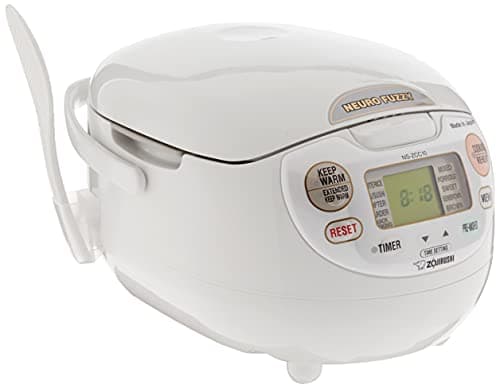
680 W
Zojirushi NS-ZCC10 Neuro Fuzzy Rice Cooker & Warmer, 5.5 Cup
The rice cooker every other one is measured against. Its Neuro Fuzzy microcomputer adjusts heat through the cook rather than running a fixed timer, which is the whole reason a $260 rice cooker cooks rice better than a $30 one. Made in Japan, 680 W, and the settings that matter are all there.
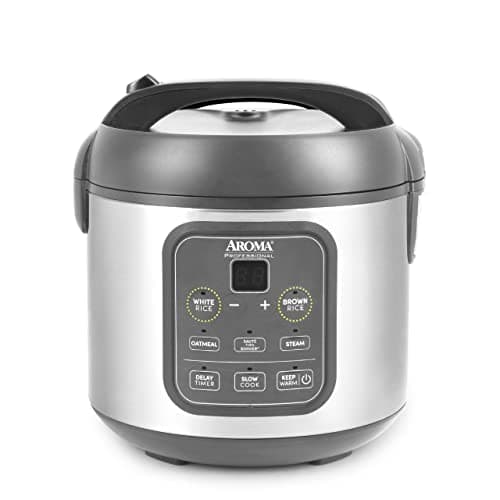
450 W
Aroma Professional ARC-994SG Digital Rice Cooker & Multicooker
The budget pick now, and an honest one. For around forty dollars it cooks white and brown rice, sautés then simmers, slow-cooks for 2 to 10 hours and steams — a genuine little multicooker in a small pot — and Aroma publishes its 450 W draw. What Aroma does not publish is how its 'Sensor Logic' works, and there are only two rice programs, so this is the versatility pick, not the rice-quality one.
#ad · As an Amazon Associate we earn from qualifying purchases.
Questions
Frequently asked
What is the water-to-rice ratio for a rice cooker?
Should you rinse rice before cooking it in a rice cooker?
Why is my rice cooker rice mushy?
Keep reading
Related
- Can you cook pasta in a rice cooker?Yes, with caveats, and how to do it cleanly.
- How to cook white riceThe full routine, including the step most people skip.
- What else you can cook in a rice cookerGrains, oats, steamed veg and more, beyond rice.
- How to make sushi riceFrom rinse to vinegar seasoning.
- How to cook brown riceMore water, more time, and the Brown setting.
- Rice-to-water ratioThe ratios and the measuring-cup gotcha.
- The best rice cookersA better cooker makes better rice easier.
- Are rice cookers worth it?When to upgrade from the cooker you have.
- The best rice cookers for brown riceIf whole grains are where yours struggles.
- Is it safe to leave rice on Keep Warm?How long you can hold rice, safely.
- How long does a rice cooker take?Cook times by rice and cooker type.
Receipts
Sources
- USDA FoodData Central — rice, cooked (nutrition reference)
- Zojirushi — NS-ZCC10 Neuro Fuzzy Rice Cooker product page
We have not tested these machines in a lab and we do not pretend to have. Specifications come from the manufacturer's own published documents; electricity rates come from the US Energy Information Administration; prices come from the live Amazon API. Where a figure is not published, the page says “not published” rather than guessing. Read the full method.