The short answer
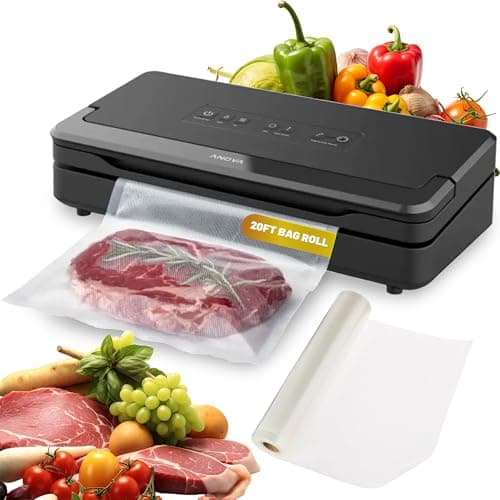
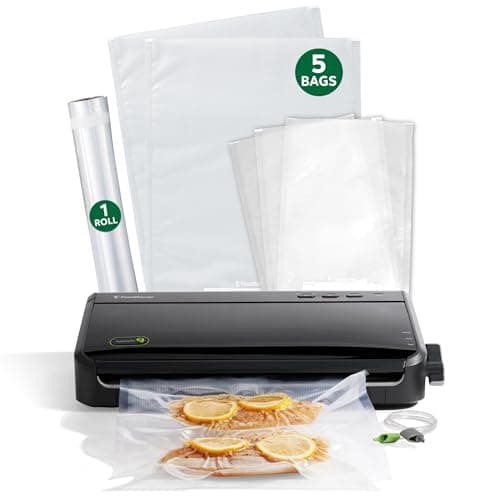
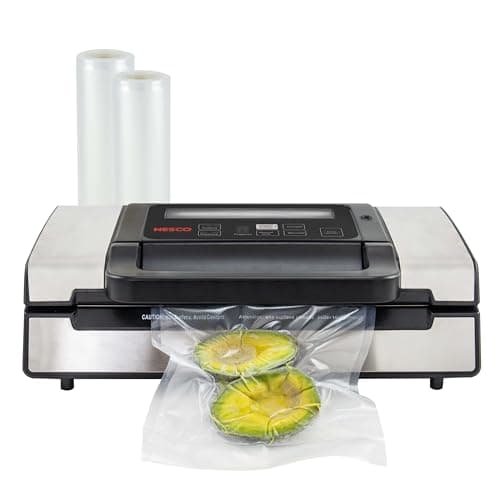
Buy the Nesco VS-12 Deluxe. It has more control over the vacuum than anything else under this ceiling: Dry and Moist seal times (a shorter and a longer heat seal), Normal and Gentle pressure settings, a Manual Seal button and a Pulse Vacuum button, and a vacuum chamber that catches liquid overflow from the bag. Those are the controls that let you seal a delicate fillet without flattening it, and Nesco publishes every one of them in its own care-and-use guide. Buy the Anova Precision Vacuum Sealer Proif you want the best-documented machine and the longest warranty — 110 W, a published 12 L/min extraction rate, an accessory port with the hose included, and two yearsagainst everyone else's one. The budget pick is the FoodSaver FM2100, which is the cheapest sealer in our catalog whose maker names sous vide as a stated use, and which has one-touch sealing with dry and moist settings and nothing else.
Every sealer ranked below was under $200 when our price layer last refreshed, and the Quick Picks table above carries that date. Prices move daily, so the table is the authority rather than this sentence.
What the ceiling actually excludes
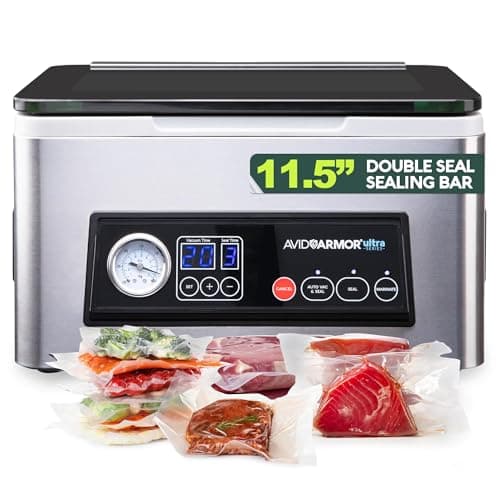
One thing, and it is worth knowing before you spend: a chamber sealer. Under $200 every machine in this catalog is an edge sealer, which pulls air across the open mouth of the bag. A chamber sealer puts the whole bag inside a box and evacuates the box, so there is no airflow past the food at all — which is the only way to seal soup, brine or a wet marinade properly.
The Avid Armor USV20 is the chamber sealer in our catalog and it sits well above this ceiling: a 4 L chamber, an 11.5-inch double seal bar, and Avid Armor states it is for wet foods, soups and liquids. If sealing liquid is the job, no amount of shopping under $200 will get you there and the honest advice is to save. We rank it properly in the best vacuum sealers for sous vide, which is the uncapped version of this list.
What the ceiling does notexclude is anything you need for ordinary sous vide. Portioned meat, fish, vegetables, a marinade you have patted off — every sealer here does that well, and the two-year Anova warranty and the Nesco's control set are both under the line.
Why control beats suction
The specification people shop on is how hard the pump pulls, and it is close to the least useful number in the category. All three of these machines will evacuate a bag of chicken thighs perfectly. What separates them is when the pump stops.
A fully evacuated bag applies real force to whatever is in it. On a chicken thigh, nothing happens. On a fish fillet, a soft-boiled egg or a tomato, the food is visibly crushed — and once the vacuum has done that, no amount of care at the water bath will undo it. The fix is to cut the vacuum short: pulse the pump, watch the bag, and seal manually at the point where the air is gone and the pressure has not yet started squeezing.
That is why the Nesco wins. It has a Pulse Vacuum button and a Manual Seal button, both published, and separate Normal and Gentle pressure settings. The FoodSaver has neither pulse nor manual seal, which means there is no way to stop it early — its one-touch cycle runs to completion and that is the whole machine.
The second thing that separates them is seal time against moisture. A damp bag mouth needs a longer heat seal to fuse properly, and a seal that fails three days into a freeze is worse than no seal. Nesco publishes Dry and Moist settings that are explicitly a shorter and a longer heat seal, both double-sealing; FoodSaver publishes dry and moist food settings; Anova publishes neither in its specification table, which is a gap on the dearest machine here.
Where the Anova earns its place
Anova's sealer is second on controls and first on documentation and support, and for a lot of readers that is the better trade.
It publishes 110 W at 120 V, an extraction rate of 12 L/min— which is a real figure nobody else here publishes — external dimensions to the millimetre, an accessory port with a vacuum hose in the box, a bag roll included, and a two-year warranty. Every other sealer in this catalog offers one.
The honest gaps, and they are real: Anova publishes no seal-bar width and no vacuum pressure in kPa or inHg, and its wet/dry mode set appears in its marketing description rather than in its specification table. On a site that ranks by what makers publish, that is what keeps it second.
It is also the sealer that pairs most obviously with a circulator, which is the reason most people reading this page own a sealer at all. If you are starting from scratch, the container ranking and the machine ranking are the other two purchases.
The cheapest sealer worth owning
The FoodSaver FM2100 is the budget pick and the reason is narrow: FoodSaver names sous vide as a stated use for it, which no other sealer at this price in our catalog does, and it has built-in roll storage and a cutter so you are not buying pre-cut bags.
Three things it does not have. No pulse, no manual seal, and therefore no way to stop a cycle early — so delicate food is out. No published wattage, no published vacuum pressure and no published seal-bar width, because foodsaver.com refused every request we made to it, so the card carries brand-supplied listing copy and states the gap rather than borrowing figures from another FoodSaver model. And a one-year warranty against the Anova's two.
For a reader whose sealing is portioned meat for the freezer and the occasional sous-vide cook, it is enough, and the money saved is better spent on the circulator. If you are not sure you need a sealer at all, read sous vide without a vacuum sealer and whether Ziploc bags work for sous vide first — both are honest that the water-displacement method is fine for short cooks and not for long or hot ones.
The limit nobody mentions: duty cycle
If you intend to seal thirty bags on a Sunday, read the Nesco's own guide before you buy it. It publishes a two-minute cool-down between uses and a 15-second lockout on the Manual Sealbutton. Those are not defects — they protect the heating element — but they make it a machine for batches rather than for continuous work, and a batch-cooking reader should know that in advance.
None of the three sealers here publishes a continuous-duty rating, and we are not going to invent one. If high-volume sealing is the actual job, that is another argument for the chamber machine above the ceiling, which is built for it.
That argument gets made in full on the best vacuum sealers for meat, which drops this ceiling and ranks on the seal rather than the vacuum — and finds that the chamber machine's four-liter box, not its 11.5-inch bar, is what limits a big cut.
Choosing in one minute
You seal fish, eggs, tomatoes or anything soft.Nesco VS-12. Pulse, manual seal, and a Gentle pressure setting — the only machine here that lets you stop early.
You want documentation and a two-year warranty.Anova Precision Vacuum Sealer Pro, with a published 12 L/min extraction rate and an accessory hose in the box.
You seal portioned meat for the freezer and nothing delicate. FoodSaver FM2100, and put the difference into the circulator.
You seal soup, brine or wet marinade. Nothing under $200 does this properly. Save for the chamber sealer.
The three mistakes
Shopping on suction, which every machine here has enough of, instead of on whether you can stop the pump. Sealing a wet bag mouth on the dry setting, which gives you a seal that fails in the freezer. And buying an edge sealer to bag liquid — that is the one job it physically cannot do, because the pump is pulling air across the top of the liquid.