Skip to content
DD

HUB 03 · Sous Vide

FoodSaver alternatives

A FoodSaver is the sealer most people own, it names sous vide on its own box, and you can buy its bags in a supermarket. What it will not do is let you stop the pump - and that single missing control is why people go looking. Each alternative here fixes a different part of it.

By Stephen V.Updated How we rank
#ad

We earn a commission if you buy through our links. It does not change the price you pay, and it does not decide our picks — the scoring rubric is published in full, including what disqualifies a pick. How this works.

The short answer

Quick picks

#CookerBest forScorePrice
01
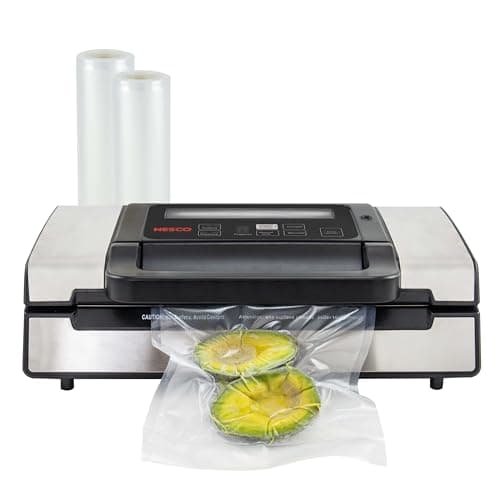
Nesco Nesco VS-12 Deluxe Vacuum Sealer
Nesco VS-12 Deluxe Vacuum Sealer

The most control over the vacuum

130 W
7.9
$108.18Amazon
02
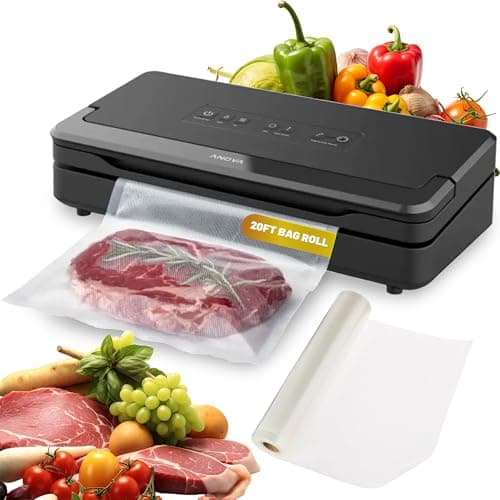
Anova Anova Precision Vacuum Sealer Pro
Anova Precision Vacuum Sealer Pro

The best-documented sealer for a bath

110 W
8.0
$100.99Amazon
03Wattage not published
7.3
$319.00Amazon

#ad· Prices pulled live from Amazon's official Creators API, last checked November 23, 2026. Where we have no verified live price we show none — we would rather leave a gap than print a number that has gone stale. The wattage column is what the manufacturer publishes; “not published” means exactly that, and we have not estimated one. Scores are ours, compiled from published specifications, and are not test results.

The short answer

Buy the Nesco VS-12 if your reason is control, which it usually is. It is the only machine here with a pulse vacuum and a manual seal and separate Dry/Moist seal timing and a Normal/Gentlepressure setting — four independent controls, all documented in Nesco's own care-and-use guide, and together they are how you stop a vacuum flattening a fish fillet. Buy the Anova Precision Vacuum Sealer Pro if your reason is documentation and support: 110 W, an extraction rate of 12 L/min— the only flow figure published by anyone in this catalog — an accessory port with the hose in the box, and a two-year warranty, the longest here. Buy the Avid Armor USV20 if your reason is liquid: it is a chamber machine rather than a better edge sealer, so brine, marinade and purge seal without travelling toward a pump. The budget pick is the FoodSaver you already own— it is the cheapest sealer in our catalog and nothing here replaces it for portioned dry food into a freezer, so if neither control nor liquid is your problem, the honest answer is to keep it.

Read the next section before you spend anything, because two of the reasons people keep a FoodSaver are good ones.

What a FoodSaver is actually good at

Stated plainly, because both of these are real and neither is a consolation prize.

You can buy the bags in a supermarket.No other brand here manages that. Anova's rolls and Nesco's rolls are online orders; chamber pouches for the Avid Armor are generic and cheap but still a thing you plan for. A FoodSaver roll is a grocery run, and on a machine whose running cost is the consumable, that convenience compounds.

It is the cheapest sealer in this catalog, and its own listing names sous vide. That second part matters more than it sounds: an edge sealer sold purely for freezer storage is tuned for dry food, and the FM2100's listing says sous vide is an intended use, with dry and moist food settings and roll storage and a cutter built into the body. For portioned, dryish food going into a freezer, it does the job the expensive machines do.

What it is not good at, and this is the reason this page exists: one-touch means exactly that. There is no pulse vacuum and no manual seal, so there is no way to cut the pump short — a fully evacuated bag will flatten a delicate fillet and pull marinade straight at the machine. FoodSaver also publishes no wattage, no vacuum pressure and no seal-bar width anywhere we could reach; foodsaver.com refused every request we made for its specifications. On a site that ranks by what makers document, that is the lowest documentation score of any product in this catalog, and it is why every alternative below beats it on our rubric without being a better machine in every way.

How we ranked these

By the reason you are replacing a FoodSaver rather than by an overall score, because the three reasons point at three different machines and two of them cost considerably more. The tests, in order:

  1. Can you stop the pump?First, because it is the FoodSaver's actual limitation and the thing that ruins food. A pulse vacuum and a manual seal are two separate controls and both matter.
  2. Does the maker publish anything? Wattage, extraction rate, seal-bar width, warranty term. This is where the FoodSaver loses outright and where the field is thinner than you would expect.
  3. Can it handle liquid at all? Binary, and only a chamber machine passes. An edge sealer pulls air across the open mouth of a bag, so anything liquid in there moves toward the pump as pressure drops. No amount of suction changes the mechanism.
  4. Then the consumables, then the duty cycle, then price.

One thing nobody can rank on, and we want to be explicit rather than quietly silent about it: not one of these four machines publishes a vacuum pressure figure, in inHg or kPa. Anova's 12 L/min is a flow rate, not a pressure. So every “strongest suction” claim you will read about these machines, including in their own marketing, is unverifiable — we ranked on mechanism, published controls and documented warranty instead. We have sealed nothing with any of them. The full rubric is in our methodology, and prices come from the live refresh on each card rather than from this prose.

What each one fixes

Published mechanism, controls, warranty and bag type. Every cell is the manufacturer's own statement; a dash means the maker publishes no figure.
SealerMechanismStop the pump early?Published powerWarrantyBags
FoodSaver FM2100Edge sealerNo — one-touch only——FoodSaver textured, sold in supermarkets
Nesco VS-12Edge sealerYes — pulse vacuum and manual seal130 W1 yearTextured; stores an 11-in roll
Anova Precision Vacuum Sealer ProEdge sealerPartly — low-pressure suction mode110 W, 12 L/min2 yearsAnova rolls; one included
Avid Armor USV20ChamberNot needed — liquid never moves——Generic smooth chamber pouches

1. Nesco VS-12 — if the reason is control

This is the machine that fixes the FoodSaver's actual problem, and it fixes it four different ways. Nesco's own care-and-use guide documents a Pulse Vacuum button and a Manual Seal button, separate Dry and Moist seal timings that both double-seal, and Normal and Gentlevacuum pressure settings. Four independent controls against the FoodSaver's one touch. That is the whole difference between a machine that decides when your bag is tight and one where you do.

Two more things in that guide are worth knowing because they are unusually candid for a manufacturer. Nesco documents a removable tray in the vacuum chamber that catches liquid pulled out of the bag, and tells you to clean it after each use — which is a maker saying in writing that an edge sealer will pull liquid, something no other brand here admits. And it publishes 120 V / 130 W, an accessory hose port for canisters, jar attachments and bottle savers, a Marinate program that cycles the vacuum rather than pulling once, and roll storage for an 11-inch roll.

Two honest costs. The guide also tells you to let the machine cool for two minutes between uses, and that Manual Seal will not fire within 15 seconds of the last activation — fine for a weekend batch, slow if you are portioning twenty bags in a row. And the warranty is one year, half the Anova's. The fuller case for it is in the best vacuum sealers under $200, where it wins on these same controls.

2. Anova Precision Vacuum Sealer Pro — if the reason is documentation

If what frustrates you about the FoodSaver is that nobody will tell you anything about it, this is the correction. Anova publishes a real specification table: 110 W at 120 V / 60 Hz, an extraction rate of 12 L/min, external dimensions of 400 x 180 x 108.5 mm, an accessory port with the vacuum hose included, one bag roll in the box, and a two-year warranty— the longest of any sealer in this catalog and double what Nesco offers. That extraction rate is the only flow figure any sealer maker here publishes, and it is the number that actually decides how long a bag spends under vacuum before the weld, which is to say how much liquid gets pulled toward the pump.

Anova's own copy also describes a low-pressure suction function and a double seal specifically for juicy food, which is the sous vide failure mode named precisely. It is the same company that makes the circulator this hub is built around, and it wins our sous vide sealer ranking for exactly these reasons.

Where it falls short.It publishes no seal-bar width and no vacuum pressure, so bag-width compatibility is something you measure rather than read. The wet-and-dry mode set appears in its marketing copy but not in its specification table, which is a gap on a machine sold partly on wet-food performance. And it is built around Anova's own bags — a consumable you keep buying from one brand, which is precisely the FoodSaver criticism pointed the other way. It also will not seal standing liquid, because no edge sealer will.

3. Avid Armor USV20 — if the reason is liquid

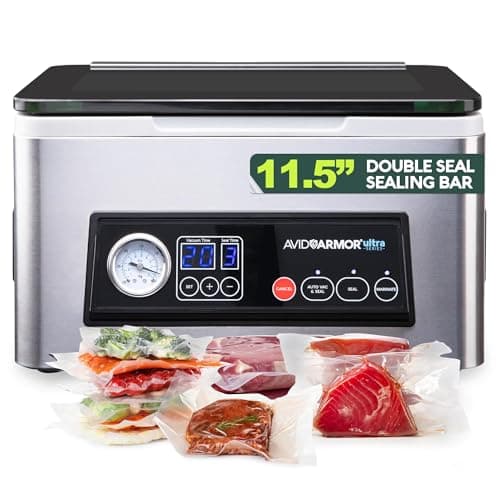
The only machine on this page that is not a better FoodSaver but a different kind of machine. A chamber sealer drops the pressure around the whole box the bag sits in, so the soup, brine or marinade inside never travels toward a pump — the one thing no edge sealer can do at any price. Avid Armor publishes a 4-liter chamber and an 11.5-inch double seal bar, which is the only seal-bar figure published by any sealer in this catalog and is wider than the roll storage on any edge sealer here. Chamber pouches are also smooth and genericrather than textured and brand-specific, so the per-bag cost is the lowest of the four — the one place this machine is cheaper than a FoodSaver.

Three costs, and the first two are large. It is several times the price of every other sealer here and about 17 pounds of machine that has to live somewhere permanent on a worktop. Avid Armor publishes no wattage, so there is no running-cost figure on its card — the 300 W number in circulation online is a retailer figure, not the maker's — and no warranty term either. And the 4-liter chamber is a hard size limit: the bag has to fit inside the box, so a whole brisket is not going in however wide the bar is. The honest instruction is to portion first, which is better practice anyway. If meat is the reason you are here, the best vacuum sealers for meat is the page where this machine wins outright.

What we would buy

You want to stop the pump: the Nesco VS-12, for the pulse vacuum and the manual seal, accepting a documented two-minute cool-down between uses. You want a maker that publishes figures and stands behind them: the Anova Precision Vacuum Sealer Pro, for the extraction rate, the accessory port and two years of warranty. You seal liquid: the Avid Armor USV20, accepting the price, the weight and a 4-liter ceiling.

And if neither the control nor the liquid is your problem, keep the FoodSaver. For portioned dry food into a freezer it does the same job as machines costing three times more, its bags are the only ones you can buy on a grocery run, and nothing on this page changes either of those facts. There is a live buy link for it below the picks rather than hidden, because a page about alternatives that buries the original is not being straight with you. The free route is worth knowing too: sous vide without a vacuum sealer covers the water-displacement method and where it genuinely stops working.

In detail

The picks, in full

01
Nesco Nesco VS-12 Deluxe Vacuum Sealer

The most control over the vacuum

Nesco VS-12 Deluxe Vacuum Sealer

Pulse vacuum + manual sealNeeds a 2-minute cool-down
7.9/10

130 W, and the only machine here with separate controls for seal time AND vacuum pressure AND a pulse vacuum AND a manual seal - which together are how you stop a vacuum crushing a fish fillet or sucking marinade out of a bag. Nesco publishes a full care-and-use guide documenting every one of them. One-year warranty.

Capability
9
Capacity
7
Documentation
8.5
Build
7.5
Value
7.5

What it gets right

  • Four independent controls - Dry/Moist seal time, Normal/Gentle pressure, Pulse Vacuum and Manual Seal - which is what lets you stop the pump the moment a bag is tight rather than when the machine decides
  • Nesco's own guide documents a removable tray in the vacuum chamber that catches liquid pulled out of the bag, and tells you to clean it after each use; that is the honest acknowledgement that an edge sealer will pull liquid
  • A hose port for canisters, jar attachments and bottle savers, plus a Marinate program that cycles the vacuum to infuse rather than just pulling once

What it doesn't

  • Nesco's guide tells you to let it cool for two minutes between uses and that Manual Seal will not fire within 15 seconds of the last activation - fine for a weekend batch, slow for twenty bags in a row
  • A one-year limited warranty, half the Anova Pro's term
  • Nesco publishes no vacuum pressure figure and no seal-bar width in the guide, so the only sizing fact you get is that the bag storage takes an 11-inch roll

What it costs to run

About 2.4¢ an hour at full rated draw, at the US average of 18.83¢ per kWh.

130 W ÷ 1000 × 1 h × 18.83¢ = 2.4¢

120 Volts / 130 Watts, from the Technical Specifications block of Nesco's own VS-12 care and use guide. This is an upper bound: the element only draws full power while it is heating up or pressurizing, then cycles off to hold temperature, and no manufacturer publishes a duty cycle — so we compute at full rated draw rather than invent a correction factor. The full method is published.

Skip this if…

…you want to seal continuously. The published two-minute cool-down between uses and the 15-second lockout on the manual seal make this a machine for batches, not for an afternoon of portioning a whole animal.

$108.18on Amazon

$133.9919% off

Price last checked November 23, 2026. Prices move constantly — Amazon's at checkout is the one that counts.

#ad · we may earn a commission from this link to Nesco VS-12 Deluxe Vacuum Sealer

02
Anova Anova Precision Vacuum Sealer Pro

The best-documented sealer for a bath

Anova Precision Vacuum Sealer Pro

Publishes an extraction rateNo seal-bar width published
8.0/10

The sealer made by the company that makes the circulator, and the only one here that publishes an extraction rate: 110 W, 12 L/min, a two-year warranty and an accessory port with a hose in the box. Anova describes a low-pressure suction function and a double seal for juicy food, which is the sous vide problem in one sentence.

Capability
8.5
Capacity
7.5
Documentation
8.5
Build
7.5
Value
8

What it gets right

  • The only sealer here whose maker publishes an extraction rate (12 L/min), which is the figure that decides how long a bag spends under vacuum before the seal - and therefore how much liquid gets pulled toward the pump
  • A two-year warranty, the longest of the four, from the brand whose circulators this site already ranks - and an accessory port with the hose in the box for jars and canisters
  • Anova's own copy describes a low-pressure suction function and a double seal specifically for juicy food, which is the failure mode sous vide bags actually have

What it doesn't

  • Anova publishes no seal-bar width and no vacuum pressure in kPa or inHg, so bag-width compatibility is something you measure rather than read
  • The wet-and-dry mode set appears in Anova's marketing copy and customer reviews but not in its specification table, which is a gap for a machine sold on wet-food performance
  • Plastic body, and Anova's own bags are pitched as the ones designed for sous vide - a nudge toward a consumable you keep buying from one brand

What it costs to run

About 2.1¢ an hour at full rated draw, at the US average of 18.83¢ per kWh.

110 W ÷ 1000 × 1 h × 18.83¢ = 2.1¢

110 Watts at 120 Volts / 60Hz, published in the specifications table on Anova's own Precision Vacuum Sealer Pro product page. This is an upper bound: the element only draws full power while it is heating up or pressurizing, then cycles off to hold temperature, and no manufacturer publishes a duty cycle — so we compute at full rated draw rather than invent a correction factor. The full method is published.

Skip this if…

…you seal soup, brine or a wet marinade more than occasionally. No edge sealer handles standing liquid well, because the pump is pulling air across the top of it - that is a chamber machine's job, and the Avid Armor below is the one on this page.

$100.99on Amazon

$154.9935% off

Price last checked November 23, 2026. Prices move constantly — Amazon's at checkout is the one that counts.

#ad · we may earn a commission from this link to Anova Precision Vacuum Sealer Pro

03
Avid Armor Avid Armor USV20 Chamber Vacuum Sealer

Sealing liquids properly

Avid Armor USV20 Chamber Vacuum Sealer

Seals standing liquidNeeds chamber pouches
7.3/10

A chamber machine, which is a different mechanism rather than a better edge sealer: it drops the pressure around the whole bag so soup, brine and marinade seal without boiling toward the pump. A 4-liter chamber and an 11.5-inch double seal bar. It costs several times what the others do and weighs about as much as a bag of flour times three.

Capability
9.5
Capacity
6.5
Documentation
6
Build
9
Value
5.5

What it gets right

  • The only machine on this page that can seal a bag of liquid: dropping the pressure around the whole bag means the liquid never travels toward a pump, which is the single thing edge sealers cannot do
  • An 11.5-inch double seal bar is wider than the roll storage on any edge sealer here, and a double seal is two parallel welds rather than one
  • Chamber pouches are cheap and generic - smooth, not textured - so the per-bag running cost is lower than any brand-specific textured roll

What it doesn't

  • Several times the price of every other sealer here, and about 17 pounds of machine that has to live somewhere on a worktop
  • Avid Armor publishes no wattage for it, so this card shows no running-cost figure; the 300 W number in circulation is a retailer figure, not the maker's
  • A 4-liter chamber sets a hard size limit - the bag has to fit inside the box, so a whole brisket is not going in it however big the seal bar is

What it costs to run

Avid Armor publishes no wattage for this cooker in any document we could find, so we do not show a running-cost figure for it. We are not going to estimate one from a similar model. Here is the method we would have used.

Skip this if…

…you are sealing portioned meat and vegetables. For dry-ish food in a bag, an edge sealer does the same job for a fifth of the money and a fifth of the counter space - the chamber only earns its price when liquid is involved.

$319.00on Amazon

$349.009% off

Price last checked November 23, 2026. Prices move constantly — Amazon's at checkout is the one that counts.

#ad · we may earn a commission from this link to Avid Armor USV20 Chamber Vacuum Sealer

Four questions to settle before you replace a FoodSaver

What are you actually sealing?This decides everything and it is the question people skip. Portioned, fairly dry food into a freezer: any of these four works and the FoodSaver is the cheapest. Delicate things — fish, berries, a rested steak you do not want flattened: you need a machine you can interrupt, which means the Nesco. Standing liquid — brine, marinade, soup: you need a chamber machine, and that is the Avid Armor or nothing.

How much does the consumable cost you over a year? The purchase price is the smaller number for most households. FoodSaver and Anova both build around their own textured bags, Nesco takes textured rolls and stores an 11-inch one in the body, and chamber pouches for the Avid Armor are smooth, generic and the cheapest per bag of the four. If you seal weekly, run that arithmetic before you compare machine prices, because it inverts the ranking over a couple of years.

How many bags in a row?Duty cycle is the specification nobody advertises. The Nesco guide is the only one that publishes a limit — cool two minutes between uses, and a 15-second lockout on the manual seal — which looks like a drawback and is actually the only honest figure in the field; the other three publish nothing, which is not the same as having no limit. If you process a whole animal or a bulk buy in one session, plan for pauses whichever machine you choose.

Is this for sous vide, for the freezer, or both? They pull in different directions. A bath cook wants a vacuum that can be stopped early so the bag seals without crushing the food; a freezer user wants the strongest, widest weld that will survive months of handling. Our sous vide sealer ranking and meat sealer ranking rank the same machines on those two criteria and reach different winners, which is the clearest illustration we have that there is no single best sealer. If bag type rather than machine is the real question, whether Ziploc bags work for sous vide is the page for that.
The hardware

The cookers this page is about

The cookers referred to above, with prices pulled live from Amazon and dated on every card. Full rankings live in the roundups linked from this page.

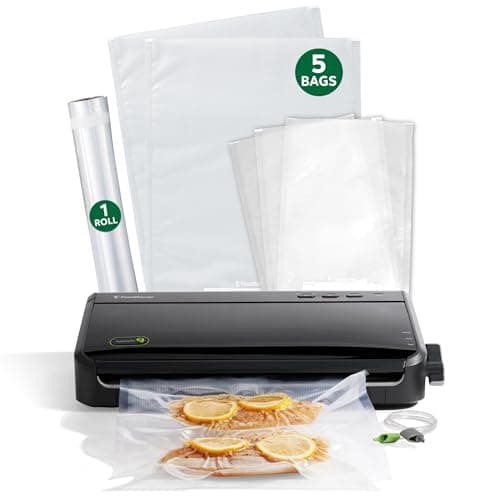
  • FoodSaver FoodSaver FM2100 Vacuum Sealer Machine

    Wattage not published

    FoodSaver FM2100 Vacuum Sealer Machine

    The one most people end up with, and the only machine here whose own listing says sous vide on the box. One-touch sealing, dry and moist food settings, roll storage and a cutter built in. FoodSaver publishes no wattage for it in anything we could reach, and FoodSaver bags are the ones it is built around.

#ad · As an Amazon Associate we earn from qualifying purchases.

How we picked

Machines we claim to have tested: 0

Everyone in this category tells you they tested twenty cookers. We have tested none, and we say so. Here is what we do instead: read the manufacturer's manual and spec page, record the published wattage, capacity, pressure or temperature figure and warranty term, work out what the machine costs to run per hour, show the arithmetic so you can redo it with your own electricity rate, and cite all of it. Where a brand publishes no wattage, we print no running cost rather than borrowing a number from a similar model. Prices come live from Amazon's API and disappear rather than go stale.

The scores above are judgments from that documented research — not test results. One of the five metrics is Documentation: whether the manufacturer will tell you what its cooker draws at all. The full rubric, including what disqualifies a pick, is published in full.

Questions

Frequently asked

What is the best alternative to a FoodSaver?
The Nesco VS-12, for most people, because it fixes the FoodSaver's actual limitation. Nesco's own care-and-use guide documents a pulse vacuum, a manual seal, separate Dry and Moist seal timings that both double-seal, and Normal and Gentle vacuum pressure settings - four independent controls against the FoodSaver's single touch, which is the difference between the machine deciding when your bag is tight and you deciding. It also publishes 120 V / 130 W and a one-year warranty. If documentation and support matter more, the Anova Precision Vacuum Sealer Pro publishes an extraction rate and carries two years.
Why do people replace a FoodSaver?
Almost always for one of three reasons. Control: the FM2100 is one-touch, with no pulse vacuum and no manual seal, so there is no way to cut the pump short before a delicate fillet is flattened or marinade is pulled toward the machine. Documentation: FoodSaver publishes no wattage, no vacuum pressure and no seal-bar width anywhere we could reach, which makes it impossible to compare against anything. Liquid: no edge sealer handles standing liquid well, and the only fix is a chamber machine. None of those is a complaint about the welds it makes on dry food.
Is a FoodSaver good enough for sous vide?
For portioned, fairly dry food, yes, and its own listing names sous vide as an intended use with dry and moist food settings. The failure mode is specific: with no pulse and no manual seal you cannot stop the vacuum early, so a tender fillet gets compressed and a marinated bag can pull liquid at the pump. If most of what you cook sous vide is steak, chicken and vegetables going into the bath fairly dry, it will do the job. If it is fish, berries or anything wet, buy a machine you can interrupt.
Can I use FoodSaver bags in another machine?
Usually yes between edge sealers, because what matters is that the bag is textured or channeled - the texture is the path the air takes as the bag is pressed flat. FoodSaver rolls generally work in a Nesco or an Anova and vice versa, though neither maker sells the machine on taking any brand. The exception is the chamber machine: the Avid Armor uses smooth chamber pouches, and a textured FoodSaver bag is the wrong consumable for it. Chamber pouches are cheaper and generic, which is the one running-cost argument in the expensive machine's favor.
Which vacuum sealer has the strongest suction?
Nobody can tell you, including us, and we would rather say that than rank on it. Not one of these four machines publishes a vacuum pressure figure - not in inHg, not in kPa. Anova publishes an extraction rate of 12 L/min, which is a flow figure rather than a pressure and is the only number of its kind in this catalog. So every strongest-suction claim about these machines is unverifiable. We ranked on the mechanism, the published controls, the documented warranty and the consumables instead, because those are things the makers actually commit to in writing.
Do I need a chamber vacuum sealer?
Only if what you seal is wet. A chamber machine is the only way to seal standing liquid - brine, marinade, or the purge a thawed cut releases - because it evacuates the whole box rather than pulling air across the open mouth of the bag. For portioned, dryish food an edge sealer does the same job for a fraction of the price and a fraction of the counter space. The Avid Armor also has a hard 4-liter chamber limit, so large whole cuts need portioning first regardless of its 11.5-inch seal bar.
Is the Anova sealer worth double the FoodSaver?
It depends on what you are buying. What the extra money demonstrably gets you is documentation and cover: 110 W, a 12 L/min extraction rate and external dimensions in a published specification table, an accessory port with the hose in the box, and a two-year warranty against nothing published by FoodSaver. What it does not get you is the ability to seal liquid, because it is still an edge sealer, or a published seal-bar width. If you want control over the vacuum rather than paperwork, the Nesco is the better spend.
Are the prices on this page current?
They come from a daily price refresh, and the Quick Picks table prints the date of the most recent one next to the buy buttons. If the refresh stops, every number on this site disappears and the buttons fall back to 'Check price on Amazon' rather than showing a stale figure. Treat the table as the authority over any number in the prose.

Keep reading

Receipts

Sources

We have not tested these machines in a lab and we do not pretend to have. Specifications come from the manufacturer's own published documents; electricity rates come from the US Energy Information Administration; prices come from the live Amazon API. Where a figure is not published, the page says “not published” rather than guessing. Read the full method.