HUB 04 · Buying Guides
Are Electric Pressure Cookers Cheap to Run?
Short answer: yes, and often cheaper per meal than the low-wattage appliances that look thriftier on the label. Running cost is watts times time times your rate — and a pressure cooker's speed is the variable everyone forgets. Here is how the arithmetic actually works, with the numbers you need to do it yourself.
We earn a commission if you buy through our links. It does not change the price you pay, and it does not decide our picks — the scoring rubric is published in full, including what disqualifies a pick. How this works.
The formula, and the variable everyone forgets
Running cost is not the wattage on the label; it is watts × hours × your electricity rate. A cooker's power draw only tells you the “watts” part. The piece people forget is time — and it is exactly where an electric pressure cooker wins. It draws a lot (around 1,000 W) but runs for minutes, so the hours in the sum are tiny. That is the whole reason a pressure cooker is cheap to run despite a high nameplate wattage.
The counterintuitive part: high watts can be cheaper
Compare an Instant Pot Duo at 1,000 W with a Crock-Pot at just 240 W — the lowest draw on this site. The slow cooker looks four times cheaper on the label. But the pressure cooker finishes a roast in about 40 minutes while the slow cooker runs 8 hours. Multiply it out and the “thirsty” pressure cooker often uses less total energy for the same meal. Wattage without time is a misleading number, which is why we never quote it alone.
Where high wattage does cost more: things that run long
The flip side is honest too. An appliance that draws a lot and runs a long time is where cost adds up — a sous vide circulator held for many hours, or the induction Zojirushi at 1,230 W over repeated daily cooks. Even these are modest per meal, but they are where the per-cook figure is worth checking, and it is why a rice cooker that runs most days deserves a look at its draw in a way a once-a-week pressure cooker does not.
How to do the sum yourself
Take the cooker's watts, divide by 1,000 to get kilowatts, multiply by the hours it actually runs, and multiply by your electricity rate in cents per kWh (on your bill). A 1,000 W cooker for half an hour is 0.5 kWh; at the US average residential rate that is a few cents. That is the entire calculation, and it is the one every running-cost figure on this site shows in full — watts, hours and rate laid out — so you can redo it with your rate rather than ours. We use the US average residential price published by the EIA; your bill may differ, and the sum makes the difference visible.
The bottom line
Electric pressure cookers are cheap to run, full stop — their speed more than offsets their wattage, and per meal they are among the most economical hot-cooking appliances you can own. Do not judge any cooker by its nameplate watts alone; judge it by watts times the time it actually runs. Where a manufacturer publishes no wattage, we print no running cost rather than inventing one — the number that isn't there is a finding too. See how we compute every figure.
The hardware
The cookers this page is about
The cookers referred to above, with prices pulled live from Amazon and dated on every card. Full rankings live in the roundups linked from this page.
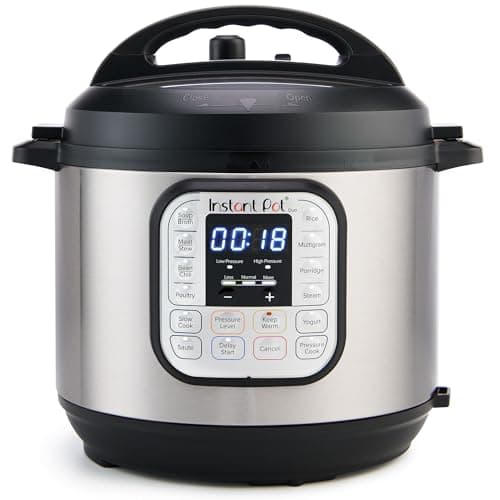
1,000 W
Instant Pot Duo 7-in-1 Electric Pressure Cooker, 6 Quart
The multicooker that made the category, and still the right default. Instant Brands publishes the wattage, the working pressure range and a stainless (not nonstick) inner pot, which is more than most of the field manages — and it costs less than almost all of them.
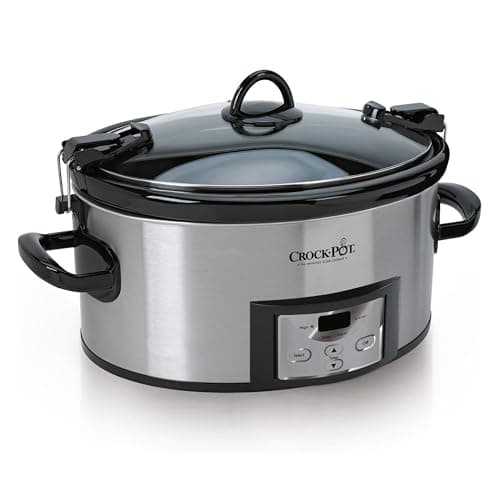
240 W
Crock-Pot 6-Quart Cook & Carry Programmable Slow Cooker
Not a multicooker and not a pressure cooker — a plain 6-quart programmable slow cooker with a locking Cook & Carry lid. It is here as the honest counterweight to the whole category: if the only function you ever used on a multicooker was Slow Cook, this does that one job for a fraction of the price.
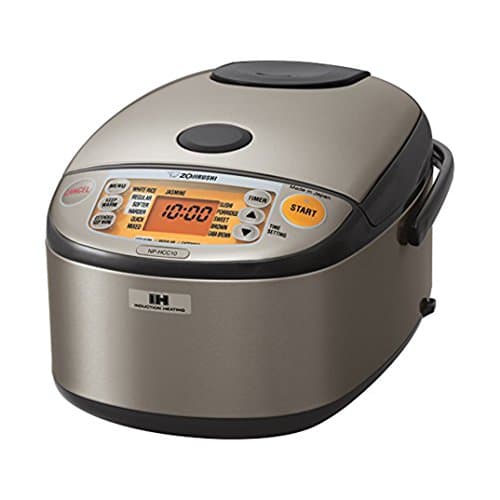
1,230 W
Zojirushi NP-HCC10 Induction Heating Rice Cooker & Warmer, 5.5 Cup
The best rice cooker on this site, and it is not close — for people who eat rice daily. Induction heats the entire pot electromagnetically rather than from a plate underneath, so the heat is more even and more responsive. It draws 1,230 W to do that, roughly double the Micom models, and it costs $420.
#ad · As an Amazon Associate we earn from qualifying purchases.
Questions
Frequently asked
Are electric pressure cookers expensive to run?
Does a slow cooker use less electricity than a pressure cooker?
How do I calculate what my cooker costs to run?
Keep reading
Related
Receipts
Sources
- Instant Brands — Instant Pot Duo 6qt product page
- Crock-Pot — 6-Quart Cook & Carry Programmable Slow Cooker product page
- US Energy Information Administration — Electric Power Monthly, Table 5.3 (average residential price)
- US EIA — How much electricity does an American home use? (FAQ)
We have not tested these machines in a lab and we do not pretend to have. Specifications come from the manufacturer's own published documents; electricity rates come from the US Energy Information Administration; prices come from the live Amazon API. Where a figure is not published, the page says “not published” rather than guessing. Read the full method.