HUB 03 · Sous Vide
Can You Overcook Sous Vide?
Sous vide is famously forgiving — it cannot heat food past the temperature you set — so people assume you can leave anything in for as long as you like. Not quite. The bath can't overcook by temperature, but it can by time: hold food long enough and the texture goes. Here is the honest picture.
We earn a commission if you buy through our links. It does not change the price you pay, and it does not decide our picks — the scoring rubric is published in full, including what disqualifies a pick. How this works.
The short answer: not by temperature, but yes by time
Sous vide is forgiving because of one fact: the food cannot get hotter than the water. Set the bath to your target doneness and the food rises to that temperature and stops — it cannot overshoot, which is why a steak can sit well past its minimum without turning gray. But “cannot overshoot” is not the same as “cannot overcook.” Hold food in the bath long enoughand the texture changes, sometimes badly. So the honest answer is: you will not overcook sous vide the way you overcook a pan — but you can absolutely ruin the texture by leaving things in too long. Two different dials do two different jobs.
Temperature sets doneness; time sets texture
This is the mental model that makes sous vide click. The water temperature decides the doneness— how rare or well-done, set once and held exactly, which is why we keep a full temperature guide. The holding time decides the texture— how tender, and eventually how far the proteins break down. Up to a point, more time is good: a tough cut grows more tender as collagen slowly converts. Past that point, more time is bad: the same slow breakdown that tenderizes eventually turns muscle fibers mushy, mealy or pasty. Overcooking sous vide is a texture failure, not a temperature one.
How long is too long depends on the food
The safe window varies enormously by ingredient. A steakis forgiving — an extra hour is nothing, though push it many hours past its window and it starts to go soft and loose. Tough cuts like brisket or ribs are cooked long on purpose, so their windows are measured in many hours. But delicate foods are unforgiving: fish, shrimp and eggs can go from perfect to mealy or rubbery in a fairly short window, because there is little connective tissue to protect and the proteins are fragile. The rule of thumb: the leaner and more delicate the food, the tighter the window, and the more the holding time matters.
The one real forgiveness — and its limit
Where sous vide genuinely shines is the doneness window: because it cannot overshoot, you can leave a steak in an extra thirty or sixty minutes with no harm to how done it is, which is why it is so good for timing a meal. A precise circulator — the Anova or Inkbird, both ±0.1°C— holds that temperature exactly, so the forgiveness is real. Its limit is texture and, on very long cooks, food safety and bag integrity. Follow the recommended windows in the temperature guide, treat the max holding times as real, and sous vide is about as forgiving as cooking gets — just not infinitely so.
The answer in one line: you cannotovercook sous vide by temperature — the food never exceeds the water — but you can overcook it by time, turning the texture mushy or mealy if you hold it far too long. Sturdy cuts have wide windows; fish, shrimp and eggs have tight ones. Set the temperature for doneness, respect the holding window for texture, and lean on the temperature guide for both. New to the method? Start with what is sous vide.
The hardware
The cookers this page is about
The cookers referred to above, with prices pulled live from Amazon and dated on every card. Full rankings live in the roundups linked from this page.
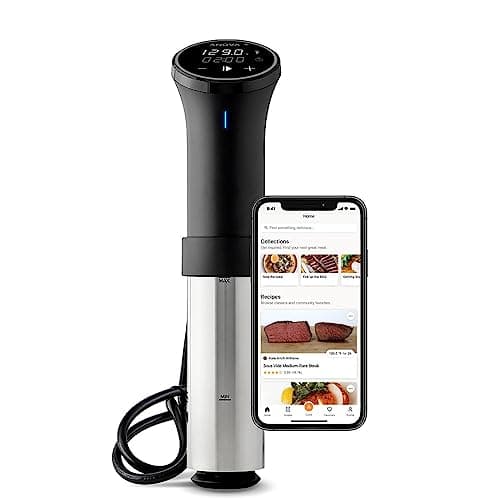
1,100 W
Anova Precision Cooker 3.0 (WiFi), 1100 W
The sous vide circulator most people should buy. Anova publishes the full specification — 1,100 W, a 0–92°C range, ±0.1°C accuracy, an 8 L/min pump — and backs it with a two-year warranty, the longest here. It has an on-device screen so it works without the app, which the Joule does not.
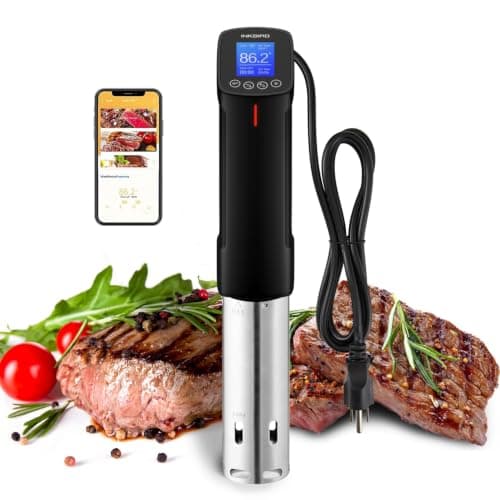
1,000 W
Inkbird ISV-100W WiFi Sous Vide, 1000 W
The value pick that does not feel like one. Under $100, and Inkbird still publishes the full specification: 1,000 W, a 25–99°C range, ±0.1°C accuracy, 15 L capacity, WiFi and an on-device dot-matrix screen. It undercuts the Anova by more than half and gives up remarkably little on paper.
#ad · As an Amazon Associate we earn from qualifying purchases.
Questions
Frequently asked
Can you overcook food with sous vide?
What happens if you leave meat in sous vide too long?
Is it OK to leave a steak in the sous vide an extra hour?
Keep reading