
Skip to content
DD

HUB 01 · Multicookers

Instant Pot Duo vs Duo Plus

Two cookers that share a heating element, a pot and a working pressure — so the choice is not about better food, it is about three added functions and a quieter release. Here is exactly what the Duo Plus gives you over the Duo, and whether it is worth the difference.

By Stephen V.Updated How we rank
#ad

We earn a commission if you buy through our links. It does not change the price you pay, and it does not decide our picks — the scoring rubric is published in full, including what disqualifies a pick. How this works.

The short answer

Quick picks

#CookerBest forScorePrice
011,000 W
8.6
$100.32Amazon
02
Illustrative photo — the Instant Pot Duo Plus 9-in-1 Multicooker, 6 Quart is discontinued, so no current product photo exists
Instant Pot Duo Plus 9-in-1 Multicooker, 6 Quart

Sous vide and sterilize, now gone from Amazon

1,000 W
7.4

#ad· Prices pulled live from Amazon's official Creators API, last checked November 13, 2026. Where we have no verified live price we show none — we would rather leave a gap than print a number that has gone stale. The wattage column is what the manufacturer publishes; “not published” means exactly that, and we have not estimated one. Scores are ours, compiled from published specifications, and are not test results.

What is genuinely the same

Start with what does not differ, because it is most of the machine. The Duo and the Duo Plus share the same 1,000 W heating element, the same 6-quart 18/8 stainless tri-ply inner pot, and the same published 10.2–11.6 psi working pressure. That means the rice, the beans and the pot roast come out identically — you are not paying for better cooking when you step up, and any comparison that implies otherwise is selling you a number, not a result.

What the Duo Plus adds

Three things, all real. First, a sous vide program — useful for an occasional low-temperature cook, though it holds temperature less tightly than a dedicated circulator. Second, a sterilize function for baby bottles and canning jars (sterilizing, not pressure canning, which is a different and more serious question). Third, the WhisperQuiet steam release, which diffuses the venting hiss so it is markedly quieter — the upgrade owners actually notice. The Plus also counts itself 9-in-1 with 25 presets against the Duo's 7-in-1 with 13, but several of those extra presets are the same element at a different set point.

What the Duo keeps that matters

The Duo's advantage is simple: it costs less and does the core job identically. If you will never sous vide and the venting noise does not bother you, every dollar of the difference is spent on functions you will not use. The Duo is also, at its usual price, the cheapest genuinely well-documented multicooker on this site — the value pick in the whole budget field. Simplicity is a feature when the added functions are ones you do not want.

The comparison that actually decides it

Here is the twist: the real fight is not Duo vs Duo Plus, it is Duo Plus vs Pro. The Duo Plus sits close to the Pro's price, and the Pro adds an auto-sealing lid, programmable buttons and grab-and-go handles on top of the same sous vide. So if you have decided you want sous vide, the question quickly becomes whether to spend a little more on the Pro rather than whether to spend a little more on the Duo Plus. The Duo Plus wins that three-way only in a narrow band: you want sous vide and the Pro is at full price. We map the whole ladder in which Instant Pot to buy.

The decision rule

Buy the Duo if you want the cheapest, most proven pressure cooker and you do not need sous vide or a quiet release — for most kitchens, that is the right trade, and as of November 2026 it is also the only one of these two you can buy. You cannot buy the Duo Plus— Amazon returns “Currently unavailable” with no price and no seller for both the 6-quart and the 8-quart. So if sous vide and sterilize were what sent you to the Plus, the live machine with both is the 6-quart Pro, and Duo vs Pro is now the comparison that decides it — which is where that decision usually landed anyway, because the Pro's interface upgrades are often worth more than the sous vide that sent you looking.

In detail

The picks, in full

01
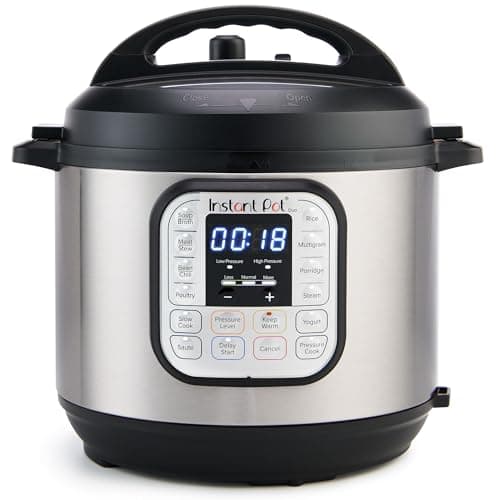
Instant Pot Instant Pot Duo 7-in-1 Electric Pressure Cooker, 6 Quart

The one to buy if you are not sure

Instant Pot Duo 7-in-1 Electric Pressure Cooker, 6 Quart

Stainless inner potWattage & pressure published
8.6/10

The multicooker that made the category, and still the right default. Instant Brands publishes the wattage, the working pressure range and a stainless (not nonstick) inner pot, which is more than most of the field manages — and it costs less than almost all of them.

Capability
7.5
Capacity
8
Documentation
9.5
Build
8.5
Value
9.5

What it gets right

  • Instant Brands publishes the wattage, the working-pressure range and the pot material — the full set, which most of the field does not, and the only electric cooker on this site with a published pressure figure
  • The 18/8 stainless inner pot has no coating to scratch off, so it outlives the nonstick pots in cookers costing more
  • At the current price it is the cheapest genuinely well-documented multicooker on this site, and the best-documented one at any price

What it doesn't

  • No sous vide or air-fry program — this is the plain pressure-and-slow-cook model, by design
  • The steam release is a manual toggle, not the quiet auto-release of the Duo Plus or Pro
  • Seven functions is fewer than the sticker-count leaders, though most of those are the same element at different set points

What it costs to run

About 18.8¢ an hour at full rated draw, at the US average of 18.83¢ per kWh.

1,000 W ÷ 1000 × 1 h × 18.83¢ = 18.8¢

1000 W at 120 V / 60 Hz, published on the Instant Pot Duo product page and confirmed on the IP-DUO60 manual specification page. This is an upper bound: the element only draws full power while it is heating up or pressurizing, then cycles off to hold temperature, and no manufacturer publishes a duty cycle — so we compute at full rated draw rather than invent a correction factor. The full method is published.

Skip this if…

…you specifically want sous vide, a quieter steam release, or an air-fry lid — the Duo has none of those, and reaching for it and then wishing it did more is the most common Instant Pot regret. Step up to the Pro or the Duo Crisp instead.

$100.32on Amazon

$109.999% off

Price last checked November 13, 2026. Prices move constantly — Amazon's at checkout is the one that counts.

#ad · we may earn a commission from this link to Instant Pot Duo 7-in-1 Electric Pressure Cooker, 6 Quart

02
Illustrative photo — the Instant Pot Duo Plus 9-in-1 Multicooker, 6 Quart is discontinued, so no current product photo exists

Sous vide and sterilize, now gone from Amazon

Instant Pot Duo Plus 9-in-1 Multicooker, 6 Quart

No buyable Amazon listingStainless inner pot
7.4/10

The Duo with two functions added that people genuinely use — sous vide and sterilize — plus a quieter WhisperQuiet steam release, on the same 1,000 W element and the same stainless pot. It no longer has a buyable Amazon listing: the 6-quart returns "Currently unavailable" with no price and no seller, and so does the 8-quart beside it, so the Duo Plus is off Amazon in both sizes. Instant Brands still sells it and still publishes every figure below — but there is nothing here to click.

Capability
8
Capacity
8
Documentation
9
Build
8
Value
4

What it gets right

  • Sous vide and sterilize on top of the Duo's core set, on an 18/8 stainless tri-ply pot with no coating to fail
  • The WhisperQuiet steam release is a real quality-of-life change if the kitchen is near a bedroom
  • Instant Brands publishes the wattage, the working-pressure range and the pot material for it — the full set, and it still publishes all three

What it doesn't

  • There is nothing to buy: Amazon returns "Currently unavailable" with no price and no seller for the 6-quart, and the 8-quart Duo Plus beside it is unavailable too
  • The blue backlit LCD and button interface is dated next to the Pro's dial, and there is no auto-sealing lid
  • Sous vide on a pressure cooker holds temperature less tightly than a dedicated circulator with a pump

What it costs to run

About 18.8¢ an hour at full rated draw, at the US average of 18.83¢ per kWh.

1,000 W ÷ 1000 × 1 h × 18.83¢ = 18.8¢

1000 W at 120 V / 60 Hz, published on the Duo Plus product page and confirmed on the Duo Plus manual specifications page 7. This is an upper bound: the element only draws full power while it is heating up or pressurizing, then cycles off to hold temperature, and no manufacturer publishes a duty cycle — so we compute at full rated draw rather than invent a correction factor. The full method is published.

Skip this if…

…you are shopping today. Amazon has no buyable offer for the Duo Plus in either size, so there is nothing here to click — the 6-quart Instant Pot Pro is the machine we point you to instead: the same sous vide and sterilize on the same stainless mechanicals, with an auto-sealing lid and five programmable buttons on top, for more money and 200 W more draw. What the Pro does not give you is the WhisperQuiet release or a published working-pressure figure, both of which this one had.

Discontinued

The 6-quart Instant Pot Duo Plus has no buyable Amazon listing left — Amazon shows it as currently unavailable with no price and no seller, and the 8-quart Duo Plus beside it is gone the same way, so the line is off Amazon in both sizes. Instant Brands still sells the cooker and still publishes its specification, and we have left this write-up up because the machine is in a lot of kitchens — but its sous-vide slot now goes to the 6-quart Instant Pot Pro.

Our pick instead: Instant Pot Pro 10-in-1 Pressure Cooker, 6 Quart

How we picked

Machines we claim to have tested: 0

Everyone in this category tells you they tested twenty cookers. We have tested none, and we say so. Here is what we do instead: read the manufacturer's manual and spec page, record the published wattage, capacity, pressure or temperature figure and warranty term, work out what the machine costs to run per hour, show the arithmetic so you can redo it with your own electricity rate, and cite all of it. Where a brand publishes no wattage, we print no running cost rather than borrowing a number from a similar model. Prices come live from Amazon's API and disappear rather than go stale.

The scores above are judgments from that documented research — not test results. One of the five metrics is Documentation: whether the manufacturer will tell you what its cooker draws at all. The full rubric, including what disqualifies a pick, is published in full.

Questions

Frequently asked

Is the Instant Pot Duo Plus worth it over the Duo?
You cannot act on the answer any more - Amazon has no buyable offer for the Duo Plus in either size, and the Duo is in stock. For the record: the Duo Plus added sous vide, sterilize and a quieter WhisperQuiet steam release, but it cooked identically to the Duo on the same 1,000 W element and the same stainless pot, so it was only worth the step up if you would use the additions. If you would, the live machine with sous vide and sterilize is the 6-quart Pro.
Do the Duo and Duo Plus cook rice and meat the same?
Yes. They share the same 1,000 W heating element, the same 18/8 stainless pot and the same published working pressure, so rice, beans and roasts come out the same. The Duo Plus's differences are added functions and a quieter release, not better cooking.
Should I get the Duo Plus or the Pro?
The Pro, because it is the one with a listing — Amazon has no buyable offer for the Duo Plus in either size. It was usually the answer regardless: the Pro adds an auto-sealing lid and programmable buttons on top of the same sous vide for not much more, and discounts often closed the gap. The Duo Plus won mainly when the Pro was at full price. See Duo vs Pro.

Keep reading

Receipts

Sources

We have not tested these machines in a lab and we do not pretend to have. Specifications come from the manufacturer's own published documents; electricity rates come from the US Energy Information Administration; prices come from the live Amazon API. Where a figure is not published, the page says “not published” rather than guessing. Read the full method.