The short answer
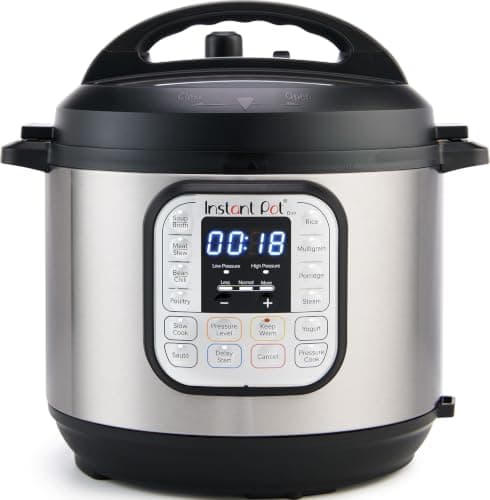
Buy the 6-quart Instant Pot Duoif you cook beans for a household of two to four. It is the cheapest cooker on this site that publishes all three numbers that matter for beans — 1,000 W, a working pressure of 10.2–11.6 psi, and an 18/8 stainless inner pot with no coating — and the stainless pot is the part people underrate, because beans want a sofrito browned in the same pot first and a coated surface is the wrong tool for that. If you batch-cook and freeze, the 8-quart Instant Pot Duo Plus is the pick: beans may only fill a pressure cooker halfway, so eight quarts of pot is four quarts of usable bean space. If you want the fastest cook, a stovetop Presto 01362 holds roughly 15 pounds of pressure against an electric cooker's 10–12, and it costs less — on the condition that you stand at the stove while it works.
Why beans are a different buying question
Every other food you pressure-cook is limited by the cooker's stated capacity. Beans are limited by something stricter. Dried beans roughly double or triple in volume as they hydrate, and they throw a starchy foam that can block a steam-release valve — which is why every pressure-cooker manual tells you not to fill the pot past the halfway mark for beans, grains and anything else that foams. The number on the box is therefore not the number you cook with:
Usable bean capacity, applying the half-full rule to each cooker's published capacity. The dry-weight column is the arithmetic of that rule, not a manufacturer claim.| Cooker | Published capacity | Safe fill for beans | Roughly |
|---|
| Instant Pot Duo | 6 Qt / 5.7 L | 3 quarts | 2 lb dried beans + water |
|---|
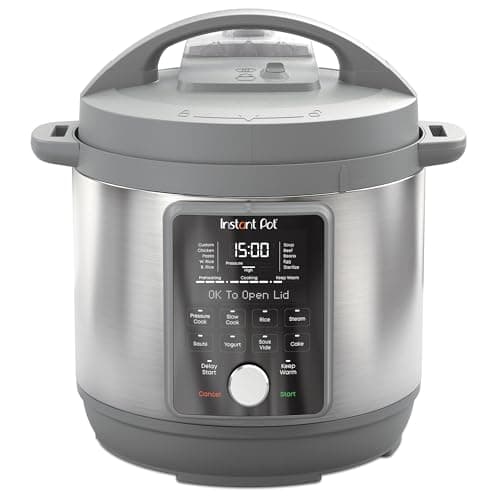
| Instant Pot Duo Plus 8 Qt | 8.0 Quart | 4 quarts | 3 lb dried beans + water |
|---|
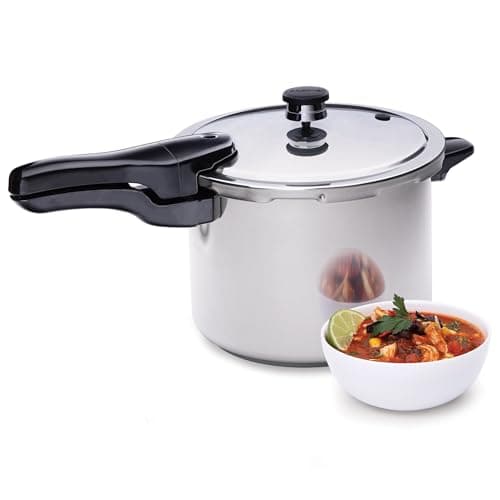
| Presto 01362 (stovetop) | 6-Quart (5.7 L) | 3 quarts | 2 lb dried beans + water |
|---|
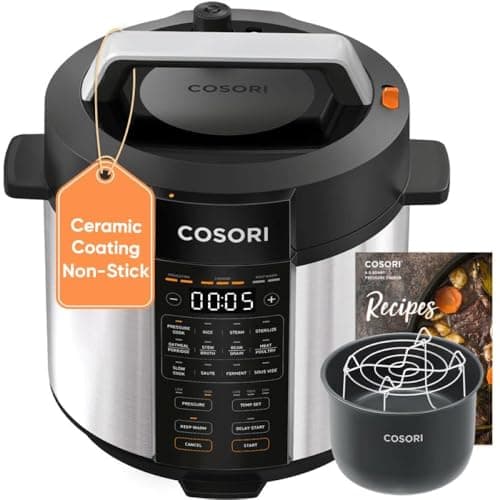
| Cosori 6-Quart | 6.0 qt / 5.7 L | 3 quarts | 2 lb dried beans + water |
|---|
That single rule is why “buy the biggest one you can store” is better advice for a bean cook than for anyone else. It is also why the size question answers differently here: a household that would be fine with a 6-quart pot for chicken and rice will find it tight the first time it cooks a pound and a half of chickpeas.
The second thing that matters: pressure
Beans are the clearest demonstration of what working pressure buys you, because the cook is long enough for the difference to show. Instant Brands publishes 10.2–11.6 psi for the Duo's high setting; Cosori publishes 9.4–12.3 psi high and 5.1–8 psi low, which is the most complete pressure documentation of any cooker on this site; Presto's regulator holds what Presto calls the ideal cooking pressure, “usually 15 pounds”. Higher pressure means a higher boiling point, and a higher boiling point means softer beans sooner. It is not a dramatic gap — a stovetop pot might do black beans in 20 minutes where an electric needs 25–30 — but across a year of bean cooking it is real, and it is the honest reason the cheapest option here is also the fastest.
What pressure does not do is rescue old beans. Beans that have sat in a cupboard for two years have lost the ability to hydrate evenly, and no amount of pressure fixes that; you get split skins and chalky centres. That is a pantry problem rather than an appliance problem, and it is the most common reason a pressure-cooked bean comes out wrong.
The third thing: can you brown in the pot?
Almost every bean recipe worth cooking starts by softening onion, garlic, a bay leaf and sometimes bacon or chorizo in the bottom of the pot. On an electric cooker that means the Sauté program, and it means the pot surface sees dry, direct heat with sugars sticking to it. This is where the Instant Pots separate themselves: Instant Brands publishes an 18/8 stainless inner pot with a tri-ply base and no coating at all, so a stuck fond is something you deglaze rather than something you worry about scratching off. Cosori publishes a removable pot with a nonstick interior coating, which browns fine and will eventually wear — the trade is explicit on its card below, and it is the single reason the Cosori places fourth here despite publishing better pressure data than Instant Brands does.
On a stovetop cooker you brown over the burner with the lid off, which is the best searing surface of the four — the Presto 01362 has a tri-clad base, aluminum between two layers of stainless, so it browns without the hot spots a plain stainless pan has. There is no coating to think about on any Presto either.
What about soaking, and does the cooker care?
It does not, and this is worth saying because it changes which cooker you need. A pressure cooker makes soaking optional: unsoaked black beans, pintos or chickpeas cook through under pressure in a single session, which is most of why people buy one for beans in the first place. Unsoaked beans need more water and more headroom, though, so if you plan to skip the soak permanently, size up. Our beans in an Instant Pot guide has the timings for both routes, and how much liquid an Instant Pot needs covers the minimum the machine itself requires to reach pressure at all.
One note that is specific to legumes rather than to appliances: dried red kidney beans contain a lectin that raw or under-cooked beans carry in quantity, and the fix is simply to cook them fully — which a pressure cooker does comfortably. The Instant Pot safety page covers the appliance side of this, including why the foam rule exists, and the lentil guide is the one to read for the legumes that need no soak at all.
Electric or stovetop, for beans specifically
Beans are the one category where we genuinely split on this. An electric cooker lets you start 2 pounds of beans and leave the kitchen, which matters when the cook is half an hour plus a natural pressure release of fifteen or twenty minutes more — and natural release is what you want for beans, because a quick release makes them split. A stovetop cooker cooks faster at higher pressure and costs less, but asks you to hold the burner steady for the whole time. If beans are a weekly batch you freeze, buy electric; if beans are something you make on a Sunday while you are in the kitchen anyway, the Presto is the better machine and the cheaper one. Natural versus quick release explains why the difference shows up in the bean and not in the pot roast, and stovetop versus electric lays out the wider trade.
Beans also make the running-cost arithmetic unusually favourable, because the element only works hard while the pot comes up to pressure. Once the valve seals, an electric cooker cycles at a fraction of its rated draw to hold pressure — which is why what an electric pressure cooker costs to run works out to pennies per batch even at 1,200 W. A stovetop pot draws nothing of its own at all; it draws whatever your burner draws, which is why no stovetop cooker on this site carries a wattage figure.
If you cook beans in quantity and freeze them
Then this is a capacity purchase and nothing else, and the 8-quart Duo Plus is the answer: four quarts of usable bean space, the full nine-function set, and the same 18/8 stainless tri-ply pot as the 6-quart at 1,200 W. It is a tall pot rather than a wide one, so browning three pounds of sofrito means doing it in rounds — the honest limit, and the reason we do not call it the overall winner. The large-capacity roundup covers the rest of the big-pot field, and the best cookers for meal prep is the page to read if batch-and-freeze is the whole reason you are buying.