HUB 02 · Rice Cookers
How to Cook Jasmine Rice in a Rice Cooker
Jasmine rice is the fragrant Thai long-grain that cooks up soft, fluffy and separate — the opposite of sticky sushi rice. The method is simple: rinse it well, give it slightly less water than a short-grain, run the white-rice setting, and rest it before you fluff. Here is how to get it right, and how it differs from short-grain.
We earn a commission if you buy through our links. It does not change the price you pay, and it does not decide our picks — the scoring rubric is published in full, including what disqualifies a pick. How this works.
What jasmine rice is, and how it should turn out
Jasmine rice is a Thai fragrant long-grain rice, prized for its soft texture and its faint, popcorn-like aroma. Cooked well, it comes out fluffy and tender with grains that stay mostly separate — soft, not sticky, and nothing like the clingy short-grain used for sushi. That difference in target texture drives the whole method: because you want jasmine light and fluffy rather than sticky, you rinse it well and cook it a touch drier than a short-grain. Get those two right and a rice cooker turns out excellent jasmine with almost no effort.
Rinse until the water runs mostly clear
Start by rinsing the rice. Put the measured jasmine in the pot or a bowl, cover with cold water, swirl it with your hand, and pour off the cloudy water — repeat until the water runs mostly clear, usually two or three changes. This washes away the loose surface starch that would otherwise make the rice gummy and clump together, which matters for jasmine specifically because the whole point is a light, separate grain. Rinsing also cuts down on foaming and boil-overs. Drain the rinsed rice well before cooking so the water it carries in does not throw off your ratio. The only rice you would not rinse is one explicitly labeled “rinse-free.”
Use slightly less water than short-grain
Here is the key difference from sticky rice: jasmine wants a little less water. Because it is a drier, fluffier long-grain, too much water turns it soft and mushy and robs it of the separate texture you are after — so you dial the water back slightly compared with a medium or short-grain rice. How much less depends on your rice and your cooker, and we keep the precise figures for every rice type on one page so they stay consistent: see the rice-to-water ratio guide for the jasmine number. The most reliable method, as always, is to measure with the cup that came with the cooker and fill water to the matching line in the pot — and if your cooker has a line specifically for white or long-grain rice, use it. If you rinsed thoroughly, err a touch on the drier side.
Cook on the white-rice setting
Jasmine is a long-grain white rice, so the plain white-rice setting is exactly right — no special program needed. Load the rinsed, drained rice and the water, close the lid, and start a normal white-rice cook. On a fuzzy-logic cooker like the Zojirushi Neuro Fuzzy, the microcomputer adjusts the heat through the cook, which forgives a slightly-off water measure and helps deliver fluffy, evenly cooked grains. If your cooker has a tacook-style steam tray like the Tiger JAX-T10U, you can steam a portion of vegetables or fish above the jasmine while it cooks, turning it into a one-pot meal. Whatever the cooker, do not lift the lid mid-cook — you let out the steam that is doing the work.
Rest it, then fluff
When the cycle finishes, leave the jasmine on keep-warm with the lid closed for about 10 minutes before opening it. This rest lets the moisture even out through the pot so the top is not wetter than the bottom, and it firms the grains up — it is the difference between fluffy and slightly claggy jasmine. Then fluff it gently with a fork or the cooker's paddle, lifting and separating the grains rather than stirring or mashing, which would compact them. Well-cooked jasmine should look light and separate and smell faintly floral. If it seems a touch wet, a few minutes more on keep-warm with the lid cracked open helps it dry to fluffy.
Jasmine vs sushi and short-grain — the contrast that matters
The clearest way to understand jasmine is against its opposite. Sushi and short-grain rice are bred to be sticky — they cling together so you can shape them into nigiri and rolls — and they are cooked to hold that stickiness, closer to equal parts rice and water, then often seasoned. Jasmine is the reverse: a long-grain bred to cook soft but separate, so it takes slightly less water and is never seasoned with vinegar. Using a sushi setting or a sushi water level for jasmine would leave it wetter and stickier than it should be, and cooking short-grain the dry way you cook jasmine would leave it too firm to shape. So match the water and the setting to the grain: for the sticky side of the family, see how to make sushi rice, which is a genuinely different technique.
A note on other long-grains and getting it consistent
Jasmine behaves much like other long-grain white rices — plain long-grain and basmati included — in that they all want relatively less water and cook up fluffy and separate rather than sticky, though each has its own aroma and ideal ratio, which the ratio guide lays out. The path to consistent jasmine is the same every time: rinse until mostly clear, keep the water a touch on the low side, cook on white rice, rest and fluff. If a batch comes out too soft, pull the water back a little next time; if it comes out firm or with dry grains on top, add a little more water or make sure you rested it. Two or three batches and you will have your own cooker dialed in — and because a fuzzy-logic cooker adjusts the heat for you, that margin for error is wider than on a basic on/off cooker.
The two rules for great jasmine: rinse until the water runs mostly clear so the grains stay light and separate, and use slightly less water than you would for short-grain or sushi rice, because jasmine is a drier, fluffier long-grain that turns mushy with too much. Cook on the plain white-rice setting, rest 10 minutes, and fluff gently. For the exact jasmine water figure alongside every other rice type, see the rice-to-water ratio guide.
The hardware
The cookers this page is about
The cookers referred to above, with prices pulled live from Amazon and dated on every card. Full rankings live in the roundups linked from this page.
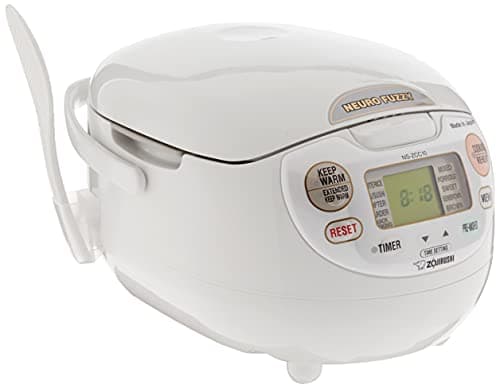
680 W
Zojirushi NS-ZCC10 Neuro Fuzzy Rice Cooker & Warmer, 5.5 Cup
The rice cooker every other one is measured against. Its Neuro Fuzzy microcomputer adjusts heat through the cook rather than running a fixed timer, which is the whole reason a $260 rice cooker cooks rice better than a $30 one. Made in Japan, 680 W, and the settings that matter are all there.
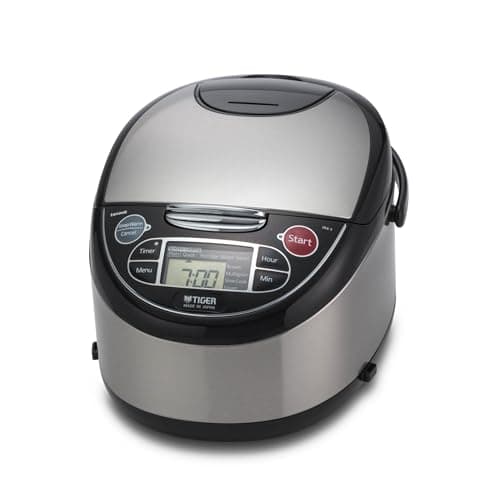
641 W
Tiger JAX-T10U Micom Rice Cooker & Warmer with tacook, 5.5 Cup
Tiger's answer to Zojirushi, with one trick the Zojirushis do not have: the tacook synchronous-cooking tray steams a dish above the rice while it cooks below, from the same 641 W. A Micom fuzzy-logic cooker made in Japan, with a genuinely useful feature the marketing did not invent.
#ad · As an Amazon Associate we earn from qualifying purchases.
Questions
Frequently asked
How much water do you use for jasmine rice in a rice cooker?
Do you need to rinse jasmine rice?
What setting do you use for jasmine rice?
Keep reading
Related
Receipts
Sources
- Zojirushi — NS-ZCC10 Neuro Fuzzy Rice Cooker product page
- Tiger Corporation (USA) — JAX-T10U rice cooker product page
We have not tested these machines in a lab and we do not pretend to have. Specifications come from the manufacturer's own published documents; electricity rates come from the US Energy Information Administration; prices come from the live Amazon API. Where a figure is not published, the page says “not published” rather than guessing. Read the full method.