The short answer
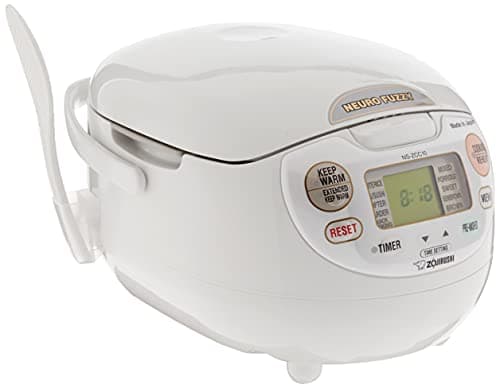
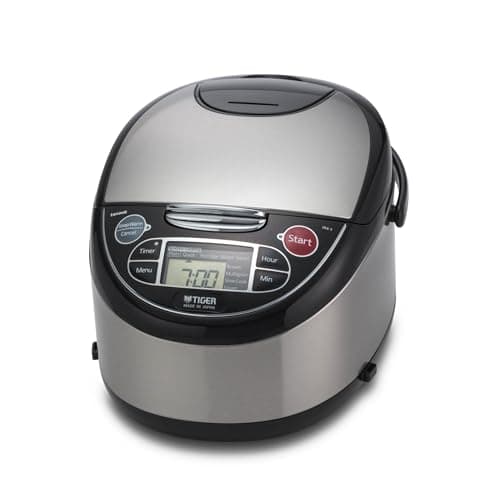
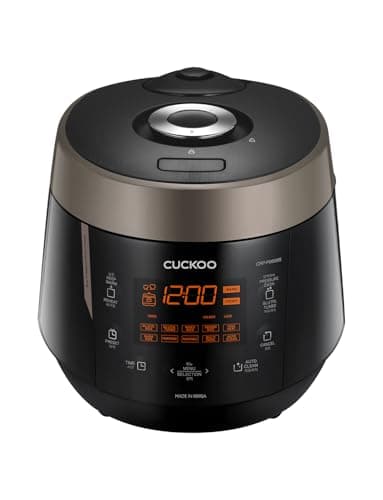
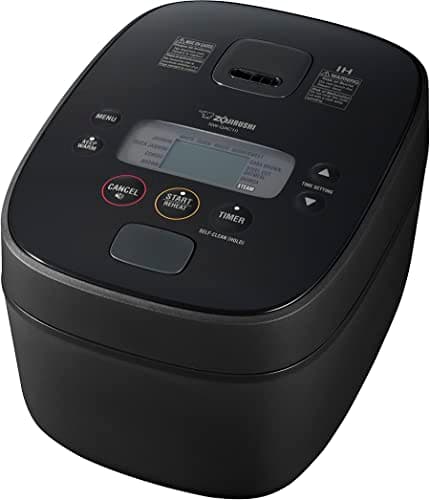
Buy the Zojirushi NW-QAC10.It is the only cooker in this catalog whose maker publishes a program for an aromatic long grain — Zojirushi lists 12 menu settings including a quick Jasmine setting— and it heats the whole pot by induction rather than from a plate underneath, which is the most controllable heat available in a home rice cooker. Made in Japan, 1,080 watts, 5.5 cups. Buy the Zojirushi NS-ZCC10 Neuro Fuzzy if you would rather spend less and steer the texture by hand: it has no named basmati program, but it publishes softer and harder settings alongside white, sushi, mixed, porridge, brown and rinse-free, and dialing a white-rice cycle drier is exactly what basmati wants. Buy the Tiger JAX-T10Uif made-in-Japan Micom at the lowest price is the brief — 641 W, ten auto-cook settings, and the tacook plate as a bonus. Buy the Cuckoo CRP-P0609S only if basmati is a minority of what you cook. It is a superb rice cooker and the winner of our main roundup, and the pressure that makes it so good at plump short-grain rice is working against you here.
Why basmati is a different problem
Rice cookers were designed in Japan, for Japanese rice, and the whole category still reflects that. Short-grain japonica is a high-amylopectin grain: you wantthe starch to gelatinize, cling and hold a shape, which is why sushi rice works at all. Basmati is the other end of the scale — a long, slender, aged, high-amylose grain, and the entire point of cooking it well is that the grains elongate and stay separate. Fluffy, not creamy. Distinct, not cohesive.
Three practical consequences follow, and they explain the order of this list.
- Basmati needs less water than the pot's lines assume.This is the one that catches people, and it is hiding in plain sight in the specification. Zojirushi notes on its own product pages that capacity is measured using a 180 ml rice measuring cup with raw short grain white rice, and that other grains may vary. The fill lines inside your inner pot were calibrated on a grain that drinks more water than basmati does. Follow them exactly and you get the soft, slightly clumped result basmati eaters call wrong. Our rice-to-water ratio page has the adjustment, and what a rice cooker cup is explains why the cup is 180 ml and not a US cup in the first place.
- It wants heat you can taper, not heat you can only switch off. A fuzzy-logic or induction cooker adjusts power through the cook; a cheap cooker runs the element flat out until the water is gone and then trips a switch. For short-grain rice the difference is quality. For basmati it is also texture control, because the last few minutes decide whether the grains finish dry or damp. This is the whole reason a fuzzy-logic cooker beats a timer, and induction versus fuzzy logic covers the step above it.
- More pressure is the wrong direction.Pressure cooking raises the boiling point, which drives starch gelatinization harder and faster. That is precisely why a pressure rice cooker produces such plump, glossy short-grain rice — and precisely why it is the least suitable mechanism on this page for a grain whose success is measured in separateness. It is not a build-quality judgment. The Cuckoo is the best-built cooker here.
How we ranked them
In order: does the manufacturer publish a program for a long aromatic grain, then how finely can you bias the texture dry, then how controllable is the heat, then build and price. Entry requirement: microcomputer heat control of some kind, because a fixed-timer cooker gives you no lever at all on the variable that matters.
As everywhere on this site, we have cooked rice in none of these machines. Every figure below is the manufacturer's own, cited on each card, and every pick carries a real disqualifying reason to skip it. Where a maker does not publish a named setting we say so rather than inferring one from a photograph of a control panel. The full rubric is in our methodology. Prices move, so they are not printed in prose — the live price sits on each card.
What each maker actually publishes
Published heat technology, menu settings and rated power. Every cell is the manufacturer's own statement; a blank is a figure the maker does not publish.| Cooker | Heat control | Published menus relevant to basmati | Rated power | Origin |
|---|
| Zojirushi NW-QAC10 | Superior induction heating (IH) | 12 settings, including quick Jasmine | 1,080 W | Made in Japan |
|---|
| Zojirushi NS-ZCC10 | Micom + Neuro Fuzzy logic | Softer and harder texture settings; no named long-grain program | 680 W | Made in Japan |
|---|
| Tiger JAX-T10U | Micom + heating | 10 auto-cook settings; Tiger does not name them on the spec page | 641 W | Made in Japan |
|---|
| Cuckoo CRP-P0609S | Heating pressure + fuzzy logic | No named long-grain or basmati program published | 890 W | Made in South Korea |
|---|
1. Zojirushi NW-QAC10 — the only published aromatic long-grain program
The NW-QAC10 wins this page on a single line of its specification. Zojirushi publishes 12 menu settings, including a quick Jasmine setting, alongside congee, GABA brown, quinoa and steam. Jasmine is not basmati, but it is the other great long aromatic grain, and it is the only acknowledgement anywhere in this catalog that a long-grain aromatic rice is a different cook from short-grain japonica. Every other cooker here gives you “white rice” and leaves the adaptation to you.
Underneath that it has the most controllable heat on this site. Superior induction heating (IH) technology
heats the inner pan itself electromagnetically rather than warming it from a plate below, so the machine can raise and drop power quickly and evenly through the cycle — which is what lets a cooker finish a long grain dry instead of merely finishing it. Zojirushi publishes the pan construction in detail (a spherical 1.7 mm aluminum and stainless-clad pan with a double nonstick coating), the full external footprint at 9‑1/4 x 12‑1/4 x 7‑7/8 inches, 1,080 watts at 120 volts, and Japanese manufacture.
Three honest limits. It is the most expensive cooker on this pageby a clear margin, and basmati alone does not justify it — the induction heat is the reason to buy it, the Jasmine setting is the reason it is first here. The pan is nonstick-coated, which Zojirushi states plainly and which will wear before the stainless pots in our multicooker section do. And Zojirushi does not publish a triple heater for this model as it does for the NP-HCC10 it replaced, so this is induction without the full lid-and-side heating package.
2. Zojirushi NS-ZCC10 Neuro Fuzzy — the texture lever, for less money
The Neuro Fuzzy has no basmati program and does not pretend to. What it has instead is the control that actually matters: Zojirushi publishes softer and harder settings next to white, sushi, mixed, porridge, brown and rinse-free. Running a white-rice cycle on harderwith slightly less water than the line is, mechanically, the basmati adaptation — a drier finish on a grain that does not want to be coddled. The Neuro Fuzzy microcomputer adjusts the heat through the cook rather than running a timer, it is made in Japan, and it draws 680 watts for 5.5 cups.
It is second rather than first because the adaptation is yours to make rather than the machine's. A hardersetting is a texture bias, not a grain program: it does not know what basmati is, it only knows to finish with less residual moisture. For a lot of cooks that is entirely sufficient and the price difference against the induction model is large. Two real limits beyond that: it is a Micom cooker, not induction, so the heat is applied from below rather than through the whole pan; and the specialized rice menus are fewer here than on Zojirushi's induction models. If budget is the binding constraint, the NS-TSC10 runs the same fuzzy-logic idea at 610 watts and lower cost, with the trade that it is made in China rather than Japan.
3. Tiger JAX-T10U — Japanese Micom at the bottom of the Japanese price band
Tiger publishes Micom plus heating, 10 auto-cook settings, 641 watts, 1.0 L / 5.5 cups and Japanese manufacture — and the honest finding here is that Tiger does not name those ten settings on its specification page. There may well be a long-grain program among them. We are not going to tell you there is on the strength of a control-panel photograph, and a page that counted an unnamed setting as a basmati program would be inventing the only fact you came for.
What is verifiable is good: a microcomputer-controlled Japanese-built cooker at the lowest price of the three Japanese machines here, with the tacook platefor cooking a dish above the rice. For basmati specifically it sits third because the published evidence is thinner: no named aromatic program like the NW-QAC10, no published texture bias like the Neuro Fuzzy's harder setting. You get good heat control and you do the grain adaptation with the water ratio alone.
4. Cuckoo CRP-P0609S — the best cooker here, and the wrong mechanism
This is awkward to write, because the Cuckoo CRP-P0609S is the cooker we recommend most often on this site. It wins the main roundup, it is built in South Korea with a 304 stainless-and-nonstick inner pot, it holds 6 cups uncooked / 12 cups cooked— the largest capacity in this catalog — and at 890 watts it cooks under genuine pressure, which is why its rice comes out plumper and glossier than anything else here.
All of which is the problem. Cooking above the normal boiling point gelatinizes starch harder, and plump and glossy is the opposite of the dry separation basmati is judged on. Cuckoo also publishes no named long-grain or basmati programfor this model, so there is no documented setting to lean on. You can of course cook perfectly good basmati in it — cut the water back and use the plain white cycle — but you are working against the machine's design intent rather than with it, and you would be paying for a pressure mechanism whose main benefit you are deliberately suppressing.
Buy it anyway if basmati is one rice among several and short-grain or mixed grains are the rest, or if 6 cups of capacity decides the purchase. For that argument in full, our pressure versus Micom comparison is the page to read.
What you still have to do yourself
No cooker on this page fixes basmati for you, and the two steps that matter most are both free. Rinse until the water runs nearly clear— surface starch is what glues long grains together, and it rinses off. Then cut the water backfrom whatever the fill line suggests, because those lines were calibrated on short-grain rice by the manufacturer's own admission. Many cooks also soak basmati for 20 to 30 minutes, which lets the grain hydrate before it meets heat and helps it elongate rather than split.
The full method, including the ratio to start from, is in how to cook basmati rice in a rice cooker, and the jasmine version is the near neighbor if you cook both. If your basmati has been coming out sticky or collapsed in a cooker you already own, why rice comes out mushy is the diagnostic page, and the answer is usually water rather than hardware. And if you are still deciding how big a machine to buy, what size rice cooker to buy explains why the number on the box is measured in 180 ml cups of short-grain rice and what that means for a household that mostly eats basmati.
What we would buy
Basmati most nights, budget open: the Zojirushi NW-QAC10, for the published aromatic long-grain program and induction heat. Basmati most nights, sensible money: the NS-ZCC10 Neuro Fuzzy, run on harder with less water. Japanese build, lowest price: the Tiger JAX-T10U. Mixed household where basmati is one rice of several: the Cuckoo CRP-P0609S, knowing you are suppressing the feature you paid for when the basmati goes in.