HUB 03 · Sous Vide
What Can You Cook Sous Vide?
Sous vide is brilliant at some things, useless at others, and knowing the difference is what stops a circulator from gathering dust. Here is the honest survey — the foods it transforms, the ones it merely does well, and the jobs you should not buy it for.
We earn a commission if you buy through our links. It does not change the price you pay, and it does not decide our picks — the scoring rubric is published in full, including what disqualifies a pick. How this works.
The one-line answer
Sous vide is great at anything where hitting an exact, even temperature is the point — and poor at anything defined by a texture that only high, dry heat produces. That single idea predicts almost everything below. If a food is at its best cooked precisely and gently and held there, sous vide will likely do it better than any other method. If a food is about a crust, a crumb or a char, sous vide can be a first step but never the finish. What sous vide actually is makes the mechanism clear; here is what that means for your dinner.
Tender proteins: the headline act
The thing sous vide is most famous for is a steak, and for good reason. Because the water never gets hotter than your target, the meat cooks edge to edge to one donenesswith no gray band, then you finish it with a hard sear for the crust — the full method is in how to sous vide steak. The same logic makes it the most reliable way to cook lamb, duck breast, pork chops and other tender cuts you would otherwise be nervous about overcooking. These are the foods where sous vide is not just convenient but genuinely produces a better result than a skilled cook with a pan can, every single time.
Tough cuts: time does what heat can't
The quieter magic is tough cuts. Brisket, short ribs, chuck, pork shoulder and the like are full of connective tissue that only breaks down with long exposure to heat — and sous vide lets you hold them at a low temperature for many hours, even a day or two, turning them tender while keeping them at a lower, juicier doneness than a braise would. A short rib cooked for 48 hours at a low temperature comes out tender like a braise but pink and steak-like inside, which no other method achieves. This is where a machine built for long, quiet, unattended cooks — like the silent-motor Greater Goods— shows its value.
Chicken, pork and the safety win
Chickenis one of the biggest wins, because sous vide finally makes breast reliably juicy instead of dry: you hold it at a lower temperature long enough to be just as safe as the instant 165°F everyone grew up with, which is the USDA's own time-and-temperature logic. The full breakdown is in how long to sous vide chicken. Pork benefits the same way — a pork chop cooked sous vide stays moist at a doneness that would be risky and dry to hit in a pan. For both, the method removes the usual tension between “safe” and “not overcooked,” which is exactly the problem home cooks struggle with most.
Eggs and fish: the delicate wins
At the gentle end, sous vide excels at foods too delicate for aggressive heat. Eggsare the classic showcase — the water temperature sets the texture, from a custardy onsen egg to a firm one, and you cook them right in the shell (see how to sous vide eggs). Fish like salmon comes out silky and even, with almost none of the white albumin a hot pan forces out (see how to sous vide salmon). These are the foods where the precise machines earn their keep, because a degree or two changes the result — and they are also where the safety notes matter most, since both can be cooked below the usual safe endpoints.
Vegetables need a higher temperature
Vegetables absolutely work sous vide, but with one important twist: they need a higher temperature than meat. Plant cell walls are held together by pectin and cellulose that only soften up around 183°F (about 85°C) and above, well past the temperature at which a steak is done. So you cannot cook carrots and a rare steak in the same bath at the same time. Cooked correctly, though, sous vide vegetables keep their color and flavor intensely — carrots taste more like carrots because nothing leaches into cooking water — and they are a genuinely good use of the machine once you know they belong in their own hotter cook.
Beyond dinner: custards, yogurt and infusions
The precise, gentle heat opens up things that are not really “cooking” at all. Custards and cheesecakes set beautifully at a controlled low temperature without cracking or curdling. Yogurt needs to be held at a precise warm temperature for hours, which is exactly what a circulator does. And you can make quick infusions — flavored oils, syrups and even spirits — by holding aromatics in a sealed bag at a gentle heat. None of these is the reason to buy a circulator, but they are the kind of thing that makes one earn its counter space once you own it.
What sous vide is not for
Be honest about the limits. Sous vide produces no crust, no char and no crispon its own — the water bath cannot brown anything, which is why nearly everything gets a finishing sear, and why deep-fried or roasted textures are out of its reach entirely. It is also not quick: even a steak is an hour-plus job, so it is the wrong tool for a fifteen-minute weeknight scramble. And it does nothing for breads and baked goods, which need dry oven heat and a crumb sous vide cannot create. The rule: reach for it when precision and evenness are the goal, and reach for a pan, oven or air fryer when a crisp or fast result is. If you are still weighing whether it belongs in your kitchen, start with is sous vide worth it? and the temperature guide.
The hardware
The cookers this page is about
The cookers referred to above, with prices pulled live from Amazon and dated on every card. Full rankings live in the roundups linked from this page.
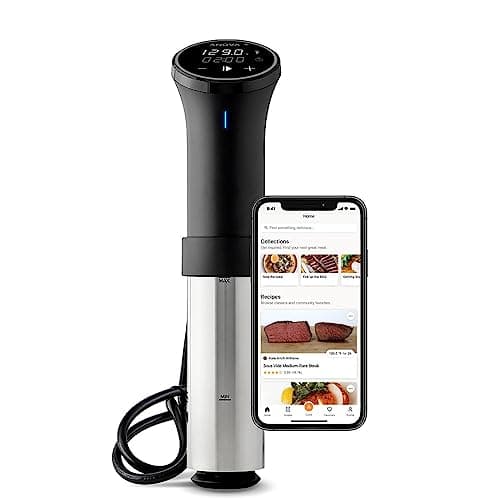
1,100 W
Anova Precision Cooker 3.0 (WiFi), 1100 W
The sous vide circulator most people should buy. Anova publishes the full specification — 1,100 W, a 0–92°C range, ±0.1°C accuracy, an 8 L/min pump — and backs it with a two-year warranty, the longest here. It has an on-device screen so it works without the app, which the Joule does not.
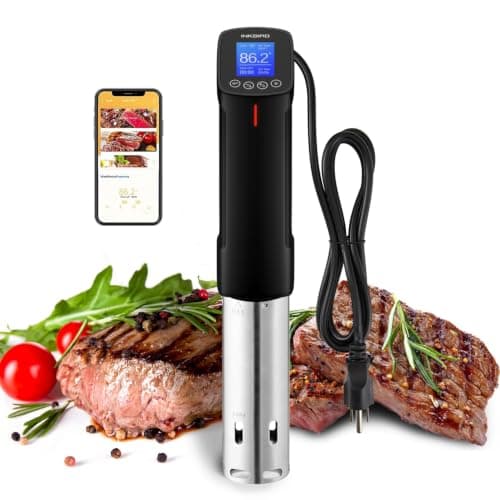
1,000 W
Inkbird ISV-100W WiFi Sous Vide, 1000 W
The value pick that does not feel like one. Under $100, and Inkbird still publishes the full specification: 1,000 W, a 25–99°C range, ±0.1°C accuracy, 15 L capacity, WiFi and an on-device dot-matrix screen. It undercuts the Anova by more than half and gives up remarkably little on paper.
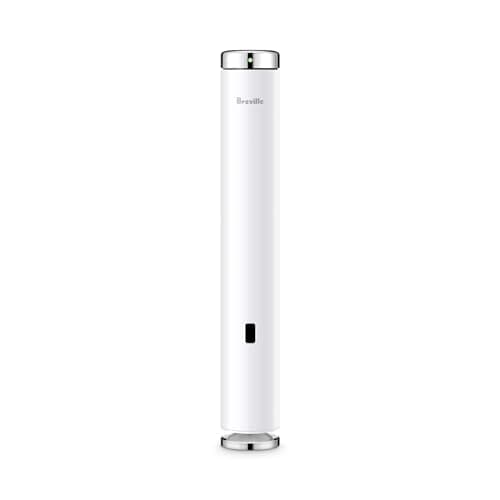
1,100 W
Breville Joule Turbo Sous Vide (BSV600), 1100 W
The smallest, cleverest and most divisive circulator here. It is app-only — there are no buttons and no screen, so your phone is the interface, full stop. In return you get the most compact body, a magnetic foot, IPX7 waterproofing, and a Turbo mode Breville claims can halve the time. 1,100 W.
#ad · As an Amazon Associate we earn from qualifying purchases.
Questions
Frequently asked
What foods are best cooked sous vide?
Can you cook vegetables sous vide?
What can't you cook sous vide?
Keep reading
Related
- How to sous vide vegetablesWhy veg needs a hotter bath than meat.
- What is sous vide?The mechanism behind all of it.
- Is sous vide worth it?Whether the technique earns its place for you.
- Sous vide temperature guideThe times and temperatures for every food.
- How to sous vide tri-tipA lean beef roast, cooked edge to edge.
- How to sous vide a chuck roastA cheap, tough cut, two ways.
- How to sous vide without a machineThe cooler-and-thermometer method, honestly.
Receipts
Sources
- Anova Culinary — Precision Cooker 3.0 product page
- USDA FSIS — cooking safely with time and temperature (pasteurization basics)
- USDA Food Safety and Inspection Service — safe minimum internal cooking temperatures
We have not tested these machines in a lab and we do not pretend to have. Specifications come from the manufacturer's own published documents; electricity rates come from the US Energy Information Administration; prices come from the live Amazon API. Where a figure is not published, the page says “not published” rather than guessing. Read the full method.