HUB 02 · Rice Cookers
Are Expensive Rice Cookers Worth It?
A rice cooker can cost forty dollars or four hundred, and both make edible rice. What the extra money buys is real but specific — heat that senses and adjusts, and heat that reaches the whole pot. Here is what each price tier genuinely delivers, and where the returns stop being worth it.
We earn a commission if you buy through our links. It does not change the price you pay, and it does not decide our picks — the scoring rubric is published in full, including what disqualifies a pick. How this works.
What you are actually paying for
The price of a rice cooker tracks one thing above all: how the heat is controlled. A budget cooker runs a fixed program or a dumb on/off thermostat — boil until the water is gone, then click off. A mid-price cooker adds fuzzy logic, a microcomputer that senses the temperature and adjusts the heat through the cook. A premium cooker adds induction, heating the entire pot electromagnetically instead of from a plate underneath. Every price jump is really a heat-control jump, and whether it is worth it depends on how much you notice the result.
The budget tier (around $40): honestly fine
A digital budget cooker like the Aroma runs a short list of programs — the current Aroma has just White and Brown — and whatever sensing it does (Aroma calls it “Sensor Logic”) is undocumented, so you cannot count on it to correct for a slightly-off water ratio or an unusual grain the way documented fuzzy logic does. But it makes perfectly good everyday rice, especially plain long-grain, and models like the Aroma throw in sauté-then-simmer and slow-cook functions that make them little multicookers for the money. For occasional rice, or a first cooker, this tier is genuinely enough, and spending more would be spending on a difference you may not notice.
The fuzzy-logic tier (around $150–$260): the real upgrade
This is where the money starts to earn itself. A fuzzy-logic cooker like the Zojirushi Neuro Fuzzy or a Cuckoo Micom senses and adjusts, which shows up most on the harder grains — brown rice, mixed rice, sushi rice — and on consistency cook to cook. If rice is a regular part of how you eat, this tier is the sweet spot: a clear, repeatable improvement in texture and reliability, without the top-tier price. It is the tier we point most regular rice eaters toward.
The premium tier (around $350–$420): for daily eaters
Induction, as in the Zojirushi NP-HCC10, heats the whole pot for the most even, most responsive result — the best rice on this site. But the improvement over a good fuzzy-logic cooker is incremental, not transformational, and it costs roughly double while drawing about twice the power. The math is simple: this tier is worth it if you eat rice most days and will use it for a decade, and hard to justify if you cook rice a couple of times a week. We work the two Zojirushis through directly in Neuro Fuzzy vs induction.
The other things money buys
Price is not only heat control. Spending more also tends to buy a better pot(a Cuckoo's 304-stainless-backed pot outlasts a thin budget nonstick), Japanese or Korean manufacturing, a fuller menu set (jasmine, GABA, porridge, sushi), and a keep-warm that holds rice for hours without drying it out. Whether those matter is personal: a fuller menu is worthless if you only cook white rice, and country of manufacture matters to some buyers and not others. Match the spend to the features you will actually use, not the longest spec list.
The honest answer
Expensive rice cookers are worth it if you eat rice often and care about the grain — the fuzzy-logic tier is a real, repeatable upgrade, and induction is the genuine best for a daily eater. They are not worth it if you cook rice occasionally or mostly eat plain long-grain, where a $40 cooker does 80% of the job for a fraction of the price. The trap is buying the most expensive cooker for aspirational reasons and using it twice a month. Buy for how you actually eat: start with whether you need one at all, then match the tier to your habit.
The hardware
The cookers this page is about
The cookers referred to above, with prices pulled live from Amazon and dated on every card. Full rankings live in the roundups linked from this page.
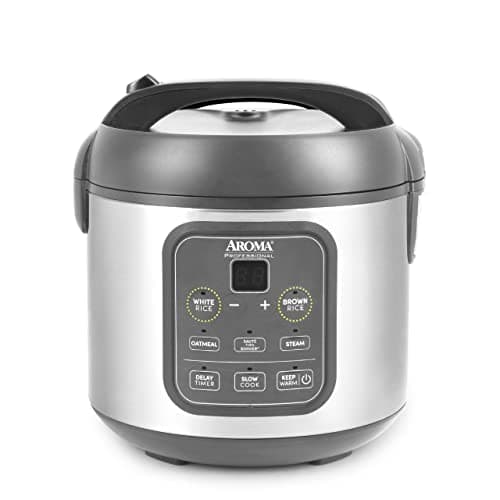
450 W
Aroma Professional ARC-994SG Digital Rice Cooker & Multicooker
The budget pick now, and an honest one. For around forty dollars it cooks white and brown rice, sautés then simmers, slow-cooks for 2 to 10 hours and steams — a genuine little multicooker in a small pot — and Aroma publishes its 450 W draw. What Aroma does not publish is how its 'Sensor Logic' works, and there are only two rice programs, so this is the versatility pick, not the rice-quality one.
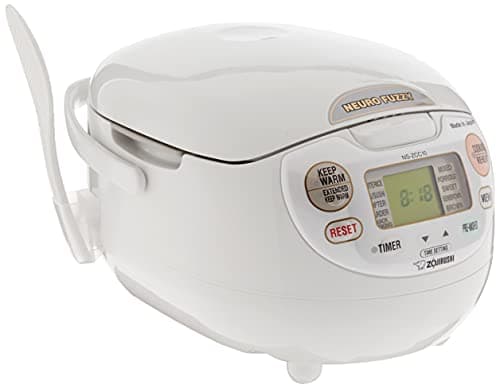
680 W
Zojirushi NS-ZCC10 Neuro Fuzzy Rice Cooker & Warmer, 5.5 Cup
The rice cooker every other one is measured against. Its Neuro Fuzzy microcomputer adjusts heat through the cook rather than running a fixed timer, which is the whole reason a $260 rice cooker cooks rice better than a $30 one. Made in Japan, 680 W, and the settings that matter are all there.
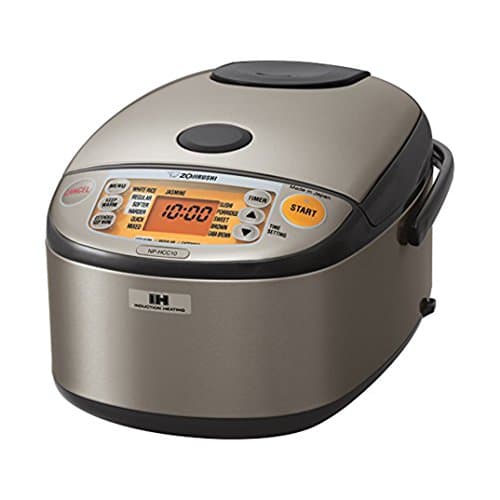
1,230 W
Zojirushi NP-HCC10 Induction Heating Rice Cooker & Warmer, 5.5 Cup
The best rice cooker on this site, and it is not close — for people who eat rice daily. Induction heats the entire pot electromagnetically rather than from a plate underneath, so the heat is more even and more responsive. It draws 1,230 W to do that, roughly double the Micom models, and it costs $420.
#ad · As an Amazon Associate we earn from qualifying purchases.
Questions
Frequently asked
Are expensive rice cookers worth it?
What is the difference between a cheap and an expensive rice cooker?
Do I need an induction rice cooker?
Keep reading
Related
Receipts
Sources
- Aroma Housewares — ARC-994SG Digital Rice & Grain Multicooker product page (Overview & Specs)
- Zojirushi — NS-ZCC10 Neuro Fuzzy Rice Cooker product page
- Zojirushi — NP-HCC10 Induction Heating Rice Cooker product page
We have not tested these machines in a lab and we do not pretend to have. Specifications come from the manufacturer's own published documents; electricity rates come from the US Energy Information Administration; prices come from the live Amazon API. Where a figure is not published, the page says “not published” rather than guessing. Read the full method.