The verdict
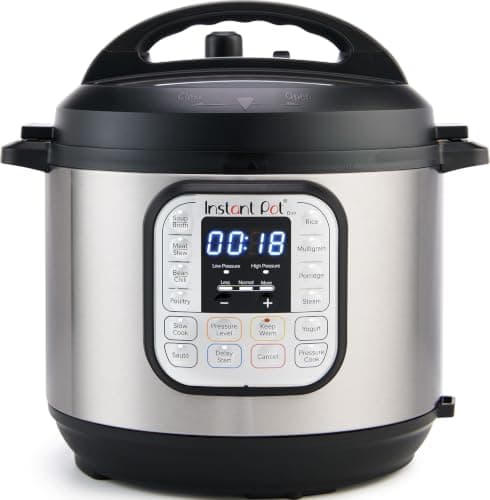
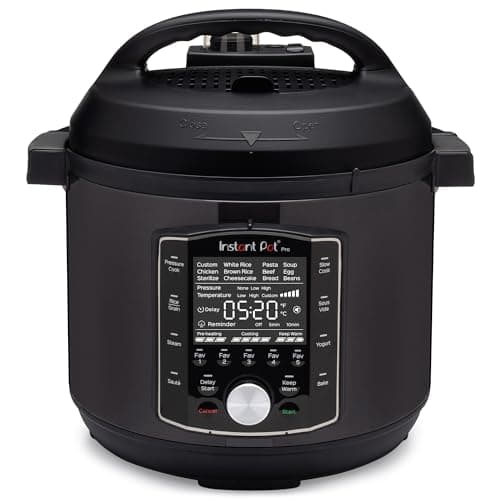
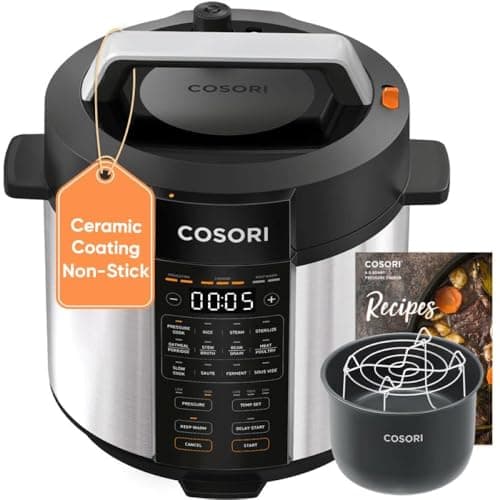
Buy the Instant Pot Duo unless the warranty is what you are shopping for. This is close, and it is close for an interesting reason: Cosori beats Instant Brands on two things that normally decide pages on this site — it publishes both working-pressure bands in psi and kPa, which not even Instant Pot does on its product pages, and it gives two years of warranty against Instant Brands' one. It loses on a single specification, and that specification is the pot: Cosori's inner pot has a nonstick interior coating and the Duo's is bare 18/8 stainless with a tri-ply base. Coatings wear; stainless does not. Buy the Cosori if two years of cover and a documented low-pressure band matter more to you than an uncoated cooking surface — that is a legitimate read, not a consolation prize. Buy the Instant Pot Pro if you want the best interface in the comparison and a sous vide program with it.
Where Cosori genuinely wins: the documentation
Cosori's own 6.0-quart product page publishes a working pressure of 9.4–12.3 psi (65–86 kPa) on high and 5.1–8 psi (35–55 kPa) on low. Instant Brands publishes 10.2–11.6 psi (70–80 kPa) high for the Duo — in the manual, not on the product page — and publishes no working-pressure figure at all for the Pro.
On a site that ranks machines on what their makers will tell you, that is a real win and we are not going to soften it. A published low-pressure band tells you the low setting is an engineered pressure rather than a label, which matters for delicate food, and it is the most complete pressure documentation of any electric cooker in our catalog. Cosori also publishes 1,100 W, thirteen cooking functions and the two-year term on the same page.
The high band is slightly wider at both ends than Instant Pot's — 12.3 psi at the top against 11.6. In cooking terms that is a marginally hotter maximum and therefore a marginally faster cook, and we would not buy a cooker for it. Nothing in our cooking-times reference changes meaningfully across that gap.
Where Instant Pot wins: the thing you cook in
Cosori states a “removable, nonstick interior coating.” Instant Brands states an 18/8 stainless pot with a tri-ply bottom for both the Duo and the Duo Plus, and dishwasher-safe stainless for the Pro.
A coating is a consumable. It is fine for years and then it is not, and when it goes the pot is the part you replace rather than the cooker. A bare stainless pot has no such clock on it: you can scour it, you can deglaze a hard sear in it, you can scrub scorched milk out of it, and it is the same pot in year ten. On a machine bought to last, that is the difference that compounds. It is also why the cooker that wins our pot-materials roundup is an Instant Pot.
Two caveats to be fair about. First, this is a durability argument and not a safety claim — we are not going to tell you a coated pot is dangerous, because the published documentation does not support that and plenty of good cookers use one. Second, Cosori's two-year warranty covers the pot for twice as long as Instant Brands covers theirs, which partly offsets the point. It does not erase it: a warranty runs out and stainless does not.
The ecosystem gap nobody mentions until year three
A pressure cooker has one part that reliably perishes: the silicone sealing ring. It goes hard, it picks up smells, and it needs replacing every year or two depending on use. Instant Pot's accessory and spare-parts ecosystem is the largest in the category by a wide margin — rings, spare pots, trivets, glass lids, all of it, from several sources. Cosori's is smaller.
That is not an exciting specification and it is the one that decides whether a cooker is still in use in year five or in a cupboard because nobody could find a ring for it. Our cleaning and care guide covers the ring, and how long Instant Pots last goes through which parts actually fail.
Head to head, on published figures
Every figure from the manufacturer's own product page or manual. Price is deliberately absent — see the live figures on the cards above. | Cosori 6-Quart | Instant Pot Duo 6qt | Instant Pot Pro 6qt |
|---|
| Rated power | 1,100 W | 1,000 W | 1,200 W |
|---|
| Capacity | 6.0 qt / 5.7 L | 6 Qt / 5.7 L | 6 Qt / 5.7 L |
|---|
| Working pressure, high | 9.4–12.3 psi (65–86 kPa) | 10.2–11.6 psi (70–80 kPa) | Not published |
|---|
| Working pressure, low | 5.1–8 psi (35–55 kPa) | Not published | Not published |
|---|
| Inner pot | Nonstick interior coating | 18/8 stainless, tri-ply base | Dishwasher-safe stainless |
|---|
| Published warranty | 2 years | 1 year | 1 year |
|---|
| Sous vide program | Yes | No | Yes |
|---|
One documentation wrinkle worth recording, since this page is about what each brand publishes: Cosori's Amazon listing and its own product page do not agree on the function count. Instant Brands' pages are internally consistent. That is a small thing and it cuts against the brand whose main advantage here is documentation.
Which one, for which buyer
Buy the Cosori if you want the longest warranty in the comparison, a published low-pressure band and a sous vide program for Duo money, and you are comfortable that the pot is coated. That is a coherent set of priorities. Buy the Instant Pot Duo if you want an uncoated pot, the biggest parts ecosystem in the category and the lowest price — which is most people, and it is why the Duo wins the main pressure-cooker roundup as well. Buy the Instant Pot Pro if you want the auto-sealing lid, the programmable buttons and a sous vide program on a stainless pot, and the extra money is not the deciding factor.
If you are earlier in the decision than this, which Instant Pot to buy sorts the range out first, and the best budget pressure cookers is the page if price is the constraint.