HUB 01 · Multicookers
The Instant Pot Burn Message, Explained
The most alarming thing a new Instant Pot does is flash BURN mid-cook. Good news: it almost never means your food is ruined, and it never means the machine is broken. Here is what the message actually is, the handful of causes, and how to clear and prevent it.
We earn a commission if you buy through our links. It does not change the price you pay, and it does not decide our picks — the scoring rubric is published in full, including what disqualifies a pick. How this works.
What the Burn message actually is
The Burn (or Food Burn) message is a safety feature working exactly as designed, not a fault. Your Instant Pot has a temperature sensor in the base, and when the bottom of the pot climbs faster or hotter than a normal come-to-pressure should, the cooker cuts the heat and flashes the warning to stop food scorching onto the pot. Nine times out of ten the food above the base is fine — the machine caught the problem before it became one. The fix is almost always about liquid and what is touching the bottom.
The usual causes, in order
Not enough thin liquid. A pressure cooker needs enough water or broth to make steam; most recipes want at least a cup for a 6-quart pot. Undissolved fond on the base. If you sautéed first and left browned bits stuck to the bottom, they scorch under pressure — you have to deglaze. Thick sauces on the bottom. Tomato sauce, cream, cornstarch and dairy sink and scorch; they belong layered on top, not stirred in. A pot not seated properly, or a bad seal letting steam and liquid escape. Work down that list and you will find it.
How to clear it mid-cook
Cancel the program and carefully release pressure if the pot came up to it. Open up, lift the inner pot out, and look at the base: if there is a scorched layer, that is your culprit. Move the food to a bowl, wipe or scrape the pot clean, add a cup of water and deglaze — scrape every stuck bit loose while the liquid is warm. Return the food (thick ingredients on top, not mixed into the liquid), reseat the pot, and restart. A properly deglazed, adequately wet pot will come to pressure without complaint.
How to prevent it next time
Always deglaze after sautéing — a cup of liquid and a wooden spoon, until nothing is stuck. Add the recipe's thin liquid before dense ingredients like rice or potatoes. Do not stir thick sauces into the base; pour them over the top and leave them. Make sure the sealing ring is seated and the steam valve is on Sealing, since a slow leak dries the pot out and triggers the same warning. On the Pro, the auto-sealing lid removes the valve mistake entirely — one reason it is a calmer machine to learn on.
When it is the machine, not the food
Rarely, a persistent Burn on a genuinely wet, deglazed pot points at hardware: a warped inner pot base that no longer sits flat on the sensor, or a worn sealing ring leaking steam. Both are cheap to replace, and both are why we favor cookers with an 18/8 stainless pot — it stays flat far longer than a thin nonstick one. If a clean, well-seated, properly filled pot still burns every time, that is the point to contact Instant Brands, not before. For everything else, it is technique, and it gets better fast — see how to use a pressure cooker.
The hardware
The cookers this page is about
The cookers referred to above, with prices pulled live from Amazon and dated on every card. Full rankings live in the roundups linked from this page.
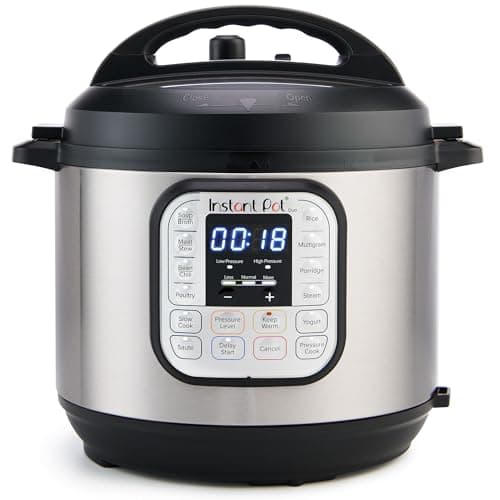
1,000 W
Instant Pot Duo 7-in-1 Electric Pressure Cooker, 6 Quart
The multicooker that made the category, and still the right default. Instant Brands publishes the wattage, the working pressure range and a stainless (not nonstick) inner pot, which is more than most of the field manages — and it costs less than almost all of them.
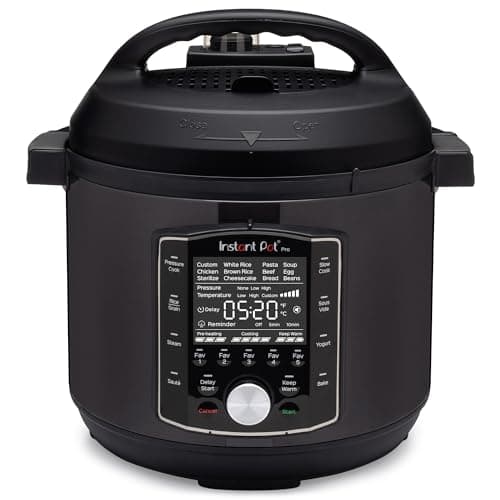
1,200 W
Instant Pot Pro 10-in-1 Pressure Cooker, 6 Quart
The Duo's mechanicals with the interface fixed: a genuine sous vide program, an auto-sealing lid, grab-and-go pot handles and five programmable buttons. It draws 1,200 W rather than the Duo's 1,000, and Instant Brands does not publish a working-pressure figure for it — the one gap in an otherwise well-documented cooker.
#ad · As an Amazon Associate we earn from qualifying purchases.
Questions
Frequently asked
Why does my Instant Pot say Burn?
How do I fix the Instant Pot Burn message?
Is the Instant Pot broken if it shows Burn?
Keep reading
Related
- How to cook pasta in an Instant PotThe layering that avoids the Burn message.
- Pot-in-pot (PIP) cookingLift delicate food off the base to avoid scorching.
- Instant Pot not sealing?Why it will not come to pressure, and the fixes.
- How to use a pressure cookerThe technique that prevents most Burn messages.
- How to clean an Instant PotKeeping the pot and seal in Burn-free shape.
- Instant Pot Pro reviewThe auto-sealing lid that removes one common cause.
- Instant Pot error codes, explainedWhere Burn sits among the other messages.
- How much liquid an Instant Pot needsToo little liquid is a top Burn cause.
Receipts
Sources
- Instant Brands — Instant Pot Duo 6qt product page
- USDA Food Safety and Inspection Service — safe minimum internal cooking temperatures
We have not tested these machines in a lab and we do not pretend to have. Specifications come from the manufacturer's own published documents; electricity rates come from the US Energy Information Administration; prices come from the live Amazon API. Where a figure is not published, the page says “not published” rather than guessing. Read the full method.