HUB 01 · Multicookers
Instant Pot Cooking Times
The most confusing thing about a new Instant Pot is that the time you set is not the time it takes. A '5-minute' cook can be twenty minutes end to end. Once you understand the three phases of every pressure cook — and why quantity and altitude move the numbers — the whole thing stops being a guessing game.
We earn a commission if you buy through our links. It does not change the price you pay, and it does not decide our picks — the scoring rubric is published in full, including what disqualifies a pick. How this works.
The number you set is not the time it takes
This is the single most common source of Instant Pot confusion, so it is worth stating plainly: the cook time you dial in is only the time spent at full pressure. It does not include the minutes the pot takes to build pressure before that, or the minutes it takes to release pressure after. So a recipe that says “5 minutes” can easily be fifteen to twenty-five minutes from the moment you press start to the moment you open the lid. Nothing is wrong with your machine when this happens — it is how every pressure cooker works — but it is the thing that makes people think their Instant Pot is broken or slow on the first few cooks. Understanding the phases fixes that for good.
The three phases of every pressure cook
Every single pressure cook has three phases, and only the middle one is the number you set. First, come-to-pressure:the pot heats the liquid until it generates enough steam to seal and pressurize, which can take anywhere from a few minutes to fifteen or more depending on how much cold food and liquid is inside. The display usually shows “On” or a preheat symbol during this phase, not a countdown. Second, the cook:once at pressure, the timer you set actually starts counting down — this is the “5 minutes” or “30 minutes.” Third, the release: either a natural release, where you let the pressure fall on its own over ten to thirty-plus minutes, or a quick release, where you vent it in a minute or two. The release is still cooking time — food keeps cooking during a natural release — which is why the method matters, and we cover it in full in natural vs quick release. Add all three together and you have the real time your dinner takes.
Why the same recipe takes different times for different people
A few things move these numbers, and knowing them stops you from blaming the recipe. Quantity is the biggest: a full pot of cold food and liquid takes much longer to come to pressure than a small batch, so doubling a recipe lengthens the come-to-pressure phase (though not usually the cook phase itself). Starting temperature matters too — cooking from frozen adds time on both the come-to-pressure and cook phases. Pot size and wattage play a part: the 3-quart Duo Mini draws 700 W and pressurizes a small volume quickly, while a full 7.5-quart RIO Wide takes longer to bring a big batch up. And altitudeis the one people forget: at higher elevations water boils at a lower temperature, so pressure cooks take longer, and a common rule of thumb is to add roughly 5% more cook time for every 1,000 feet above about 2,000 feet. None of this is a fault — it is physics — but it is why “the recipe said 8 minutes” is a starting point, not a promise.
Use a chart as a starting point, not gospel
You will find big Instant Pot cook-time charts everywhere, and they are useful — for a rough sense of whether something is a 3-minute job or a 40-minute job. But treat any chart as a starting point you verify, not a rule you trust blindly, because the same cut at a different size, quantity, altitude or starting temperature will land differently. Two habits make charts safe to use. First, for anything where safety depends on doneness — chicken, pork, ground meat — confirm the internal temperature with a thermometer rather than trusting the clock; the USDA safe minimums are the number that actually matters, as we stress in how to cook chicken in an Instant Pot. Second, if something comes out underdone, it is a trivial fix — lock the lid and cook a couple more minutes, or finish on sauté. Overcooking is the harder one to undo, so when in doubt, aim a little short and add time.
The staples people look up most
A few everyday jobs come up again and again, and rather than reprint a table that would be a rough guess for your exact quantity, each has its own dedicated guide with the method that matters: rice (a short cook with a natural release), dried beans (long, and dramatically faster than the stovetop), and meat from frozen (add time, verify temperature). The pattern across all of them is the same one this whole page is about: the set time is the cook phase only, quantity and starting temperature move the total, and doneness is confirmed by result — a thermometer for meat, texture for grains and beans — not by the timer alone. Learn the phases once and every recipe on the internet suddenly makes sense.
The rule: total time = come-to-pressure + the time you set + release. The time you dial in is only the middle phase. Bigger batches, frozen food and higher altitude all lengthen the total. Use cook-time charts as a starting point, verify meat with a thermometer, and remember that adding a couple of minutes to an underdone dish is easy while fixing an overcooked one is not.
The hardware
The cookers this page is about
The cookers referred to above, with prices pulled live from Amazon and dated on every card. Full rankings live in the roundups linked from this page.
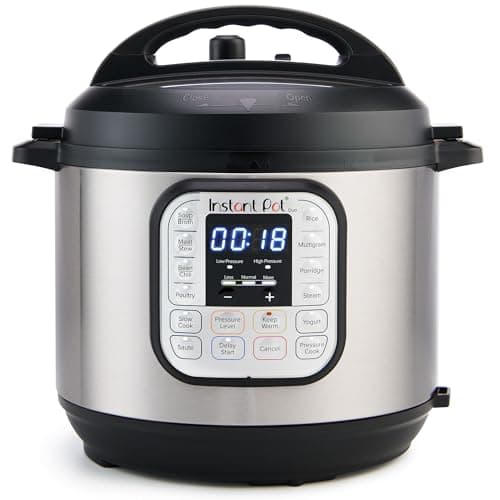
1,000 W
Instant Pot Duo 7-in-1 Electric Pressure Cooker, 6 Quart
The multicooker that made the category, and still the right default. Instant Brands publishes the wattage, the working pressure range and a stainless (not nonstick) inner pot, which is more than most of the field manages — and it costs less than almost all of them.
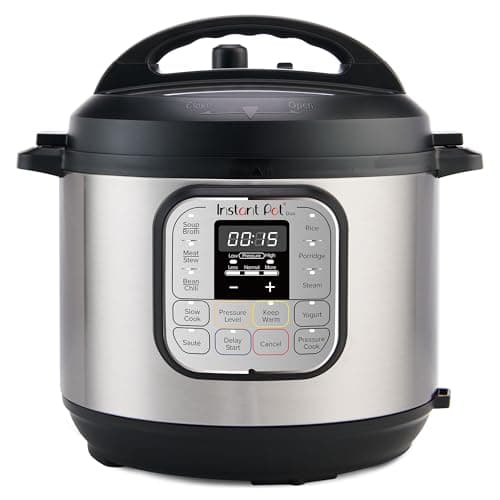
700 W
Instant Pot Duo Mini 7-in-1, 3 Quart Electric Pressure Cooker
The Duo shrunk to 3 quarts. It is the right size for one or two people, for a dorm or an RV, or as a second pot for a side dish while the big one does the main. The same 7-in-1 function set, the same stainless pot, in a footprint that actually fits a small kitchen.
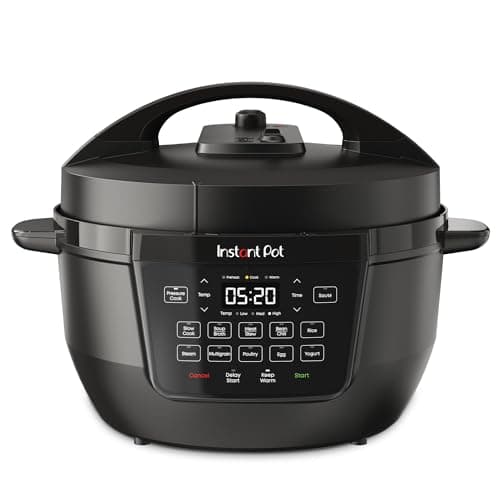
1,200 W
Instant Pot RIO Wide 7-in-1, 7.5 Quart Multi-Cooker
The Duo, rebranded RIO and widened. The 7.5-quart Wide has a larger searing base than the tall 6-quart pots, which is the one real ergonomic improvement in the line — more of the pot bottom touches the element, so browning is more even before you pressurize.
#ad · As an Amazon Associate we earn from qualifying purchases.
Questions
Frequently asked
Why does my Instant Pot take so long when I set a short time?
Does the amount of food change the cooking time?
Do I need to adjust Instant Pot times for altitude?
Keep reading
Related
Receipts
Sources
- USDA Food Safety and Inspection Service — safe minimum internal cooking temperatures
- Instant Brands — Instant Pot Duo 6qt product page
We have not tested these machines in a lab and we do not pretend to have. Specifications come from the manufacturer's own published documents; electricity rates come from the US Energy Information Administration; prices come from the live Amazon API. Where a figure is not published, the page says “not published” rather than guessing. Read the full method.