The short answer
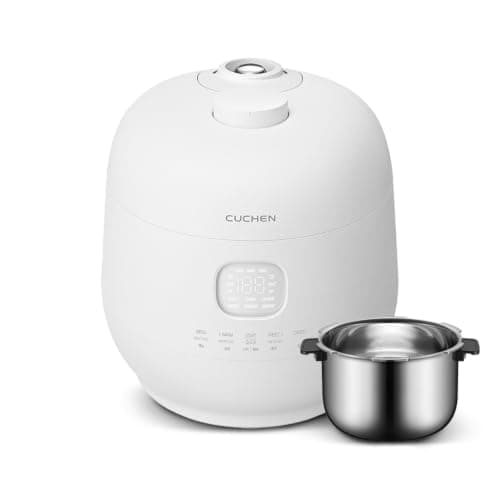
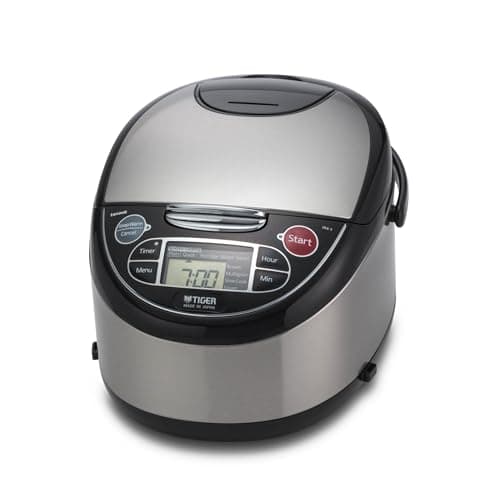
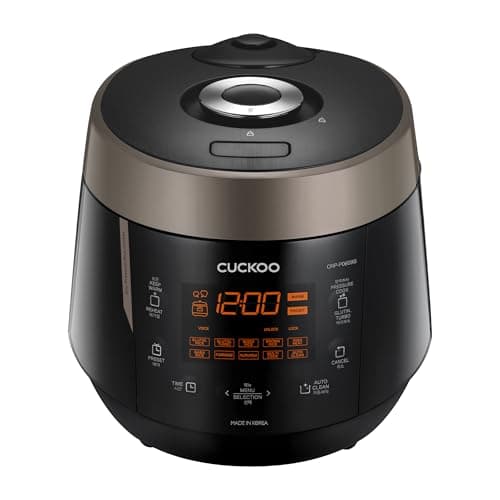
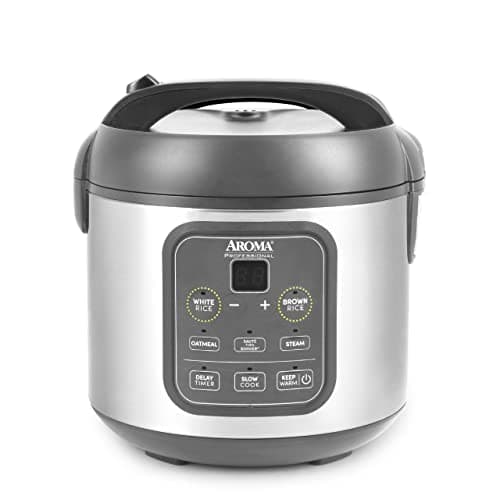
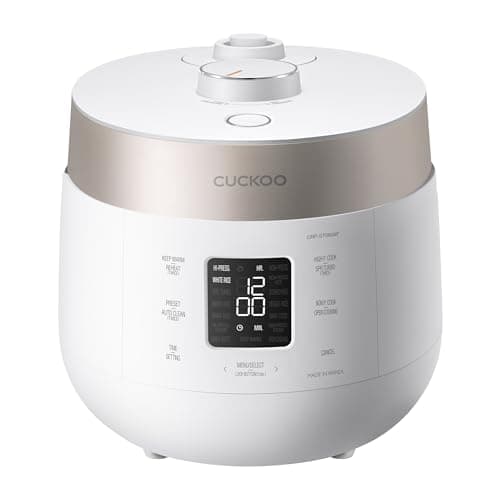
Buy the Cuckoo CRP-ST0609F Twin Pressure if you want the one thing Zojirushi does not sell: rice cooked under pressure, at a published 78.4 kPa (0.8 kgf/cm²), with a genuine non-pressure mode for the long-grain rice that pressure turns gluey. That is a different grain texture rather than a cheaper version of the same one. Buy the Cuchen CRH-TWS0610PWUSif the coating is your reason — it is the only rice cooker in this catalog whose maker states the stainless inner pot is uncoated, and every Zojirushi pan here is nonstick-coated. Buy the Tiger JAX-T10U if you want Japanese manufacture for less money: 641 W, ten auto-cook menus and the tacook plate, made in Japan like the Zojirushis and cheaper than any of them. The budget pick is the Aroma ARC-994SG, which costs a small fraction of a Zojirushi and is a digital multicooker rather than a rice specialist.
What Zojirushi is actually known for
Three things, and it is worth stating them precisely rather than as reputation.
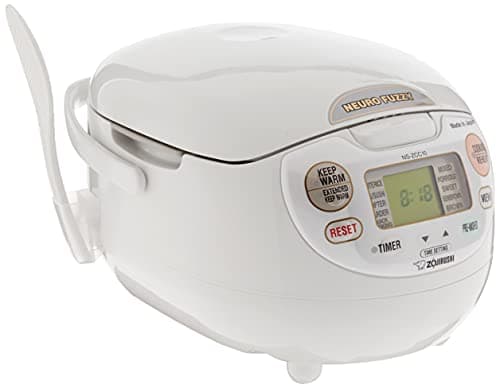
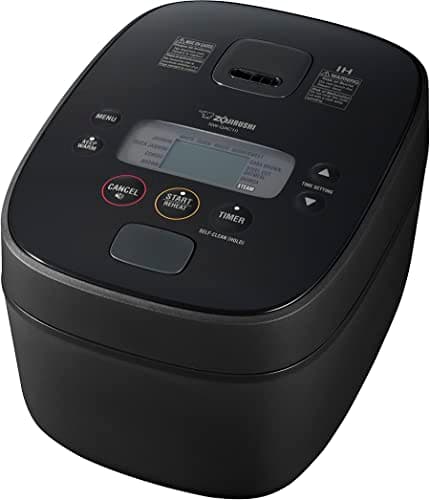
Heat control.Zojirushi publishes “Micom + Neuro Fuzzy logic” for the NS-ZCC10 and “superior induction heating” for the NW-QAC10. The practical meaning is that the cooker adjusts heat through the cook rather than running a fixed timer, which is the actual reason a $250 rice cooker makes better rice than a $30 one.
Documentation and origin. Zojirushi publishes the wattage, the capacity, the pan construction, the menu list and the country of manufacture, and the NS-ZCC10 and NW-QAC10 are both stated as made in Japan. On a site that ranks by what makers publish, that is a real advantage and it is why Zojirushi wins our general ranking.
Program breadth.The NS-ZCC10's settings are white, sushi, softer, harder, mixed, porridge, brown and rinse-free; the NW-QAC10 publishes twelve including quick jasmine, congee, GABA brown, quinoa and a real steam function. No alternative below matches the NW-QAC10's published list.
What Zojirushi does notoffer in this catalog, and this is the whole basis of the page: pressure cooking, an uncoated pot, or a one-year warranty that is longer than anyone else's — every cooker here, Zojirushi included, carries one year.
Reason 1: you want pressure
Zojirushi does not sell a pressure rice cooker in this catalog, and pressure is the only mechanism that genuinely changes the grain rather than refining it. Sealing the lid raises the internal pressure, which raises the boiling point above 100°C, and hotter water gelatinises starch more completely — chewier, glossier, more cohesive rice.
The Twin Pressure CRP-ST0609Fis the pick because it does both jobs: pressure at a published 78.4 kPa for short-grain and mixed rice, and documented non-pressure programs for white and veggie rice. 880 W, made in South Korea. The honest counterweight is in Cuckoo's own manual: the six-cup capacity applies to plain White Rice only, and High Heat, Super Turbo, Mixed Rice and GABA are each capped at one to four cups.
The CRP-P0609S is the cheaper version of the same idea with no non-pressure mode at all, which is exactly why it costs less. If every bowl of rice you cook is short-grain, it is the better value. Zojirushi versus Cuckoo is the head-to-head, and the Korean ranking is the category in full.
Reason 2: you do not want a coating
Every Zojirushi pan in this catalog is nonstick-coated. The NW-QAC10's is a spherical 1.7 mm aluminium pan, stainless clad, with a double nonstick surface — and Zojirushi publishes that, which is more than most makers do. But a coating has a finite life, and for some buyers that is the deciding fact.
The Cuchen CRH-TWS0610PWUSis the answer, and it is the only one in this catalog. Cuchen's own English user manual states that the stainless inner pot is uncoated, in those words, and documents an interchangeable coated pot as the alternative if you would rather have one. It also has induction heating and dual pressure modes.
Three honest caveats. It is the most expensive rice cooker on this entire site, by a wide margin — so this is an alternative on a stated strength, not on price. Uncoated stainless sticks, and Cuchen's own manual has a page on the water marks and rainbow-coloured mineral spots to expect. And Cuchen's US documentation contains no specification table at all: no wattage, no dimensions, no weight, which is why our card prints no wattage for it rather than borrowing a retailer's figure. The pot-materials question in full is in non-toxic rice cookers.
Reason 3: you want Japan for less money
The Tiger JAX-T10U is the straightforward answer to the straightforward version of this question. Tiger publishes “made in Japan”, 641 W, micom heat control, 5.5 cups and ten auto-cook menus — and it costs less than any Zojirushi in our catalog.
It also has the tacook plate, which Zojirushi has no equivalent of: a tray that sits above the rice so a piece of fish or a dish of vegetables cooks in the steam while the rice cooks beneath. For a one-pot weeknight that is a genuine capability rather than a feature count.
What you give up is the Neuro Fuzzy heat strategy and the longer published menu list. Zojirushi versus Tiger is the comparison, and Zojirushi versus Tiger versus Cuckoo puts all three Japanese and Korean brands side by side.
Reason 4: you want to spend a fraction of it
If the reason you are reading an alternatives page is the price, say it plainly: the Aroma ARC-994SG costs a small fraction of a Zojirushi and it is not as good at rice. It is a 4-cup (8-cup cooked) digital multicooker with a ceramic-coated nonstick pot, a one-year US warranty, and a published 450 Wdraw — the lowest published figure of any rice cooker in our catalog, and the thing its predecessor never printed at all.
The documentation gap is elsewhere, and it is the honest limit: Aroma publishes exactly two rice programsfor it, White Rice and Brown Rice, plus Oatmeal — no sushi setting, no porridge cycle and no texture control. It also claims a “Sensor Logic” heat control on its product page and explains it nowhere, and the manual does not mention it, so we cannot tell you how it compares with a Zojirushi's Neuro Fuzzy.
What it is good at is being the cheapest cooker here that does more than rice — rice, Sauté-then-Simmer, a 2-to-10-hour slow cook, a steam tray and a 15-hour delay timer in one small pot — and for a reader who is not sure a dedicated rice cooker earns its counter space that is the honest first purchase. Our Aroma versus Zojirushi comparison does this gap properly, and the budget ranking is where the cheap field gets ranked against itself. The ARC-954SBD that used to hold this slot is no longer sold.
When the answer is still a Zojirushi
Your rice is long-grain and you eat it daily. Pressure is the wrong treatment for basmati and jasmine, which removes the strongest alternatives here, and the NW-QAC10 is the only cooker in this catalog with a published quick-jasmine program.
You want the broadest published program list. Twelve settings including congee, quinoa, GABA brown and a real steam function with a tray. Nothing below matches it in writing.
You want the best-documented machine.Zojirushi publishes more about its cookers than anyone else here, and the Cuchen — the alternative with the most interesting pot — publishes the least.
Choosing by reason, in one minute
“I want pressure, and sometimes not.”Cuckoo CRP-ST0609F Twin Pressure. 78.4 kPa published, with real non-pressure programs.
“I want pressure and nothing else.” Cuckoo CRP-P0609S. Cheaper, because it leaves out the half you would not use.
“I do not want a coating on the pot.” Cuchen CRH-TWS0610PWUS. The only uncoated pot here, and the most expensive cooker on the site.
“I want made-in-Japan for less.” Tiger JAX-T10U, with the tacook plate as a bonus Zojirushi has no answer to.
“I want to spend a tenth of it.”Aroma ARC-994SG, 450 W, and accept two rice programs and rice that is not as good.
The two mistakes
Buying pressure to replace a Zojirushi when your rice is basmati or jasmine — that is a downgrade dressed as an upgrade. And assuming a cheaper Japanese or Korean cooker must publish less: the Tiger and both Cuckoos publish wattage, capacity, pot material and origin, while the dearest alternative here publishes almost nothing.