The verdict
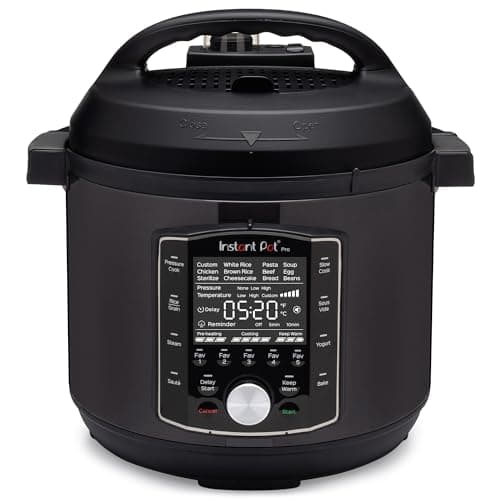
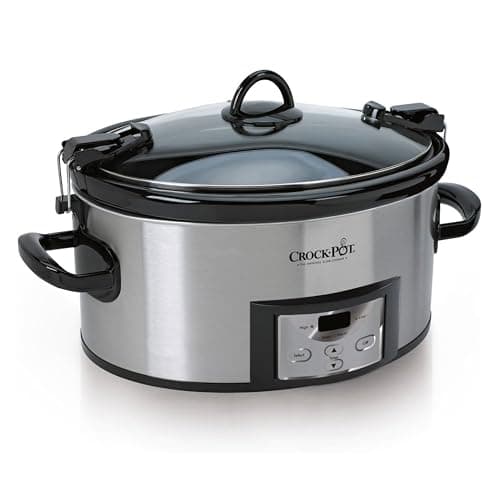
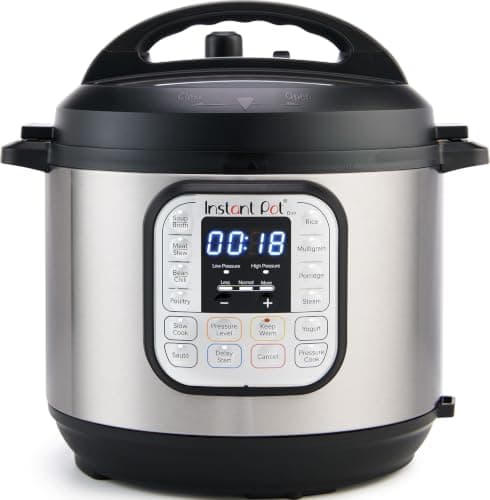
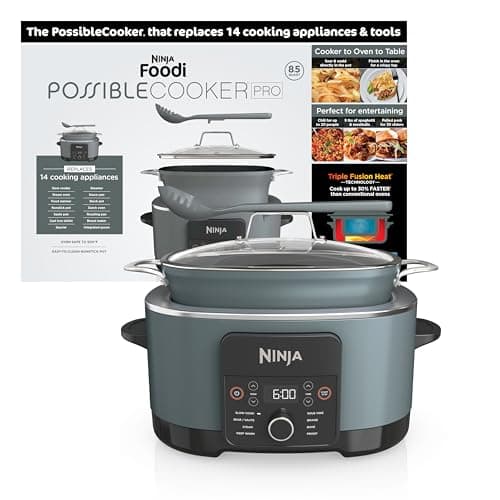
Buy the Ninja PossibleCooker PRO if slow cooking is genuinely the function you use. It is 8.5 quarts — the largest pot on this site — SharkNinja publishes its 1,200 W draw plainly, and the pot is oven-safe to 500 °F, which means one vessel takes a dish from searing on the hob through six hours of slow cooking to a browned finish under the broiler. It pointedly does not pressure cook, and for this buyer that is a feature rather than a gap. Buy the Instant Pot Pro instead if you want the pressure function too and are prepared to pay for mechanicals you will use occasionally; buy the Crock-Pot Cook & Carry if slow cooking is all you will ever do, because at 240 W it is the lowest-draw appliance on this site and costs a fraction of everything else here. The Instant Pot Duo is fourth and still a reasonable buy: it is the cheapest competent do-everything pot, and its Slow Cook program is real.
The uncomfortable premise of this page
The most common multicooker regret we can document from manufacturers' own feature lists is not that the machine was bad — it is that the buyer paid for a pressure mechanism, a sealing ring to replace, a float valve to keep clean and a pressure-release procedure to learn, in order to press Slow Cook. If that is you, the honest ranking is not the one that puts the most functions first.
So this page ranks on what a six-hour cook actually needs. Capacity, because a slow-cooked dish is usually a big-batch dish. Pot material and oven-safety, because browning before and after is where slow-cooked food either tastes developed or tastes boiled. Published draw, because an appliance that runs for eight hours is the one case where wattage genuinely shows up on a bill. And simplicity, because fewer parts is fewer things to fail across the years this category is bought to last.
Our multicooker versus slow cooker page is the decision page behind this one, and are slow cookers worth it is the honest version of the question for anyone starting from nothing.
Why the oven-safe pot is the specification that wins it
SharkNinja publishes an oven-safe rating of 500 °F for the PossibleCooker PRO's pot. That one line changes how a slow-cooked dish is cooked. A braise wants browning at the start, hours of low wet heat in the middle, and often a reduction or a crust at the end, and every transfer between vessels is a sink full of washing-up and a stage people skip. A pot that sears on its own element, slow-cooks, and then goes under a broiler keeps all three stages in one pan.
The honest caveat is in SharkNinja's own copy, and our catalog entry records it: Ninja describes the pot's material inconsistently, stainless in one place and nonstick in another. We cannot resolve that from published documents, so we do not. If an uncoated cooking surface is a requirement, the stainless-pot Instant Pots are the safer buy and the pot-materials roundup goes through what each maker actually states.
What eight hours actually costs to run
This is the one category on the site where the nameplate wattage matters, because the thing genuinely runs all day. The published draws: 240 W for the Crock-Pot, 1,000 W for the Instant Pot Duo, 1,200 W for both the Instant Pot Pro and the PossibleCooker PRO.
Those numbers look decisive and are less decisive than they look, for a reason this site repeats everywhere: a slow cooker's element does not run continuously. It energizes to reach temperature and then cycles to hold it, so an eight-hour cook does not consume eight hours at the rated draw. Nobody publishes duty-cycle figures, so we compute at full rated draw, label the result a ceiling and show the arithmetic in the running-cost guide so you can redo it with your own rate.
What the gap does tell you honestly is the ordering: the 240 W Crock-Pot is cheaper to run all day than anything else here, by a factor no duty cycle closes. If the appliance will be on for eight hours several times a week, that is a real argument and not a rounding error.
The four, on published figures
Manufacturer-published figures only. Price is deliberately absent — see the live figures on the cards above. | PossibleCooker PRO | Instant Pot Pro | Crock-Pot Cook & Carry | Instant Pot Duo |
|---|
| Capacity | 8.5 Quart | 6 Qt / 5.7 L | 6 Quart | 6 Qt / 5.7 L |
|---|
| Rated power | 1,200 W | 1,200 W | 240 W | 1,000 W |
|---|
| Pressure cooks | No | Yes | No | Yes |
|---|
| Oven-safe pot | Yes, to 500 °F | Not published | Removable stoneware | Not published |
|---|
| Travels with a locking lid | Not published | No | Yes | No |
|---|
The last row is not a throwaway. A slow cooker's second job in a lot of households is arriving somewhere full, and the Crock-Pot's locking Cook & Carry lid is the only one here designed for it. If potlucks are part of why you are buying, that single feature outranks everything above it.
The pressure cooker's slow-cook mode, honestly
A fair question: is the Slow Cook program on an Instant Pot actually as good as a slow cooker? The mechanism differs — a dedicated slow cooker heats a stoneware crock from around the sides, a multicooker heats a metal pot from a plate underneath — and the practical consequence is that multicooker slow cooking runs a little differently and benefits from a check-in. Our slow cooking in an Instant Pot page covers the settings, and converting slow cooker recipes handles the timings when you want to use the pressure side instead.
The answer we would stand behind: good enough that nobody should buy a second appliance to get it, and not so good that it is a reason to buy a pressure cooker you otherwise do not want. Which is exactly why this page is ranked the way it is.
Who should buy what
Slow cooking is most of your cooking: the PossibleCooker PRO, for the capacity and the oven-safe pot. Slow cooking is all of your cooking and the budget is tight: the Crock-Pot, at a quarter of the draw and a fraction of the price. You want both halves of the machine: the Instant Pot Pro, or the Duo if you would rather spend less and keep the stainless pot. And if the real question is which category you are shopping in at all, which kitchen appliance do you need is the page to read first.