HUB 03 · Sous Vide
Sous Vide vs Grilling
Sous vide and grilling chase opposite things: precision versus fire. One gives exact, even, edge-to-edge doneness with no crust of its own; the other brings speed, smoke and a Maillard char but a doneness gradient. Here is what each does best, and why the answer is often both.
We earn a commission if you buy through our links. It does not change the price you pay, and it does not decide our picks — the scoring rubric is published in full, including what disqualifies a pick. How this works.
Two techniques chasing opposite things
Sous vide and grilling are not really rivals so much as opposites, and understanding what each is for is the whole point. Sous vide chases precision: an exact, even doneness with nothing left to chance. Grilling chases flavor from fire: char, smoke and a seared crust you cannot get any other way. Neither does the other's job well, which is exactly why the smartest approach often uses both. We have cooked on none of these machines and this is not a taste test — it is an honest comparison of what each technique can and cannot do, so you can reach for the right one, or combine them.
What sous vide does best
Sous vide's superpower is control. Because the water bath never gets hotter than your target, the food cooks edge to edge to one exact doneness with no gray band, it is nearly impossible to overcook, and it is almost entirely hands-off— set the temperature, walk away, come back to a steak that is a perfect medium-rare from surface to center. It shines on anything where evenness is the goal, and on tough cuts that need long, gentle cooking. The honest cost is two things: it produces no crust, no char and no browning on its own, because water cannot brown anything, and it is slow— even a steak is an hour-plus affair. A precise circulator like the Anova or Inkbirdis what makes the “impossible to overcook” part true.
What grilling does best
Grilling's superpower is exactly what sous vide lacks: high, dry heat. It is fast, it delivers real smoke and char, and it drives the Maillard reaction— the browning that creates the deep, savory, crusty flavor a seared surface has and a poached one never will. That crust is the whole reason a grilled steak smells and tastes the way it does. The cost is the flip side of that intensity: because the heat is so much hotter than your target doneness, grilling produces a doneness gradient— a well-done band near the surface fading to your target only at the very center — and it is easy to overshoot, since the window between perfect and overdone is measured in a minute or two of inattention.
The doneness gradient versus edge to edge
This is the single clearest difference between the two, so it is worth seeing plainly. Cut a grilled steak in half and you see a gradient: gray and well-done at the edge, a ring of medium, then pink or red at the core — the signature of cooking with a heat far hotter than the doneness you want. Cut a sous vide steak in half and it is the same color all the way across, because it was never exposed to anything hotter than its target. Neither is “better” in the abstract — some people love the varied textures of a hard-grilled steak, and some want uniform edge-to-edge doneness — but it is the fundamental trade, and it explains why the two techniques taste and look so different from the same cut of meat.
The best of both: sous vide, then the grill
Here is the resolution, and it is why you do not actually have to choose. Sous vide first, then finish on the grill. Cook the steak sous vide to a precise, even doneness, then dry it and give it a hard, fast searover the hottest part of the grill (or in a screaming pan) for a minute or so a side — just long enough to build the char and crust without heating the interior back up. You get sous vide's flawless edge-to-edge doneness andgrilling's Maillard crust and smoke, with none of the overcooking risk, because the inside is already done and the sear is purely about the surface. It is the technique serious cooks reach for, and the full method is in how to sous vide steak.
When to pick each
So which do you reach for? Choose grilling alonewhen speed, smoke and the social ritual of live fire are the point — a quick weeknight cook, burgers and dogs for a crowd, vegetables you want charred — and a little doneness variation does not bother you. Choose sous vide alone when you want a guaranteed, even result with no babysitting, especially for expensive cuts you cannot afford to overcook, or delicate foods, or a long tough-cut cook. And choose sous vide then the grillwhen the result matters most and you have the time — a special-occasion steak where you want both perfect doneness and a real crust. It is not that one technique wins; it is that they are good at different things, and knowing which is which is what makes you a better cook.
The rule in one line: grill for speed, smoke and char when a little doneness gradient is fine; use sous vide for exact, even, hands-off doneness with no overcooking but no crust of its own; and for the best result, do both — sous vide to a precise doneness, then a hard, fast sear on the grill for the Maillard crust, per how to sous vide steak. New to the method? Start with what is sous vide?
The hardware
The cookers this page is about
The cookers referred to above, with prices pulled live from Amazon and dated on every card. Full rankings live in the roundups linked from this page.
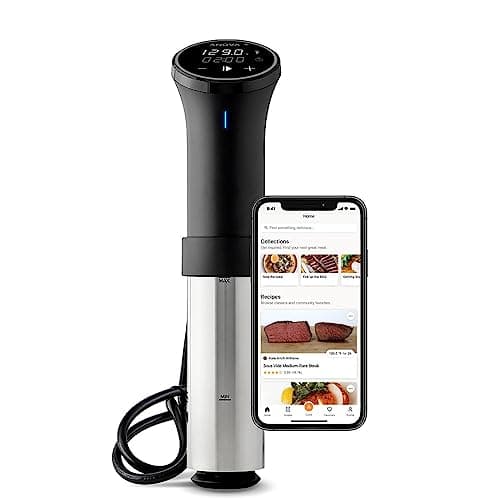
1,100 W
Anova Precision Cooker 3.0 (WiFi), 1100 W
The sous vide circulator most people should buy. Anova publishes the full specification — 1,100 W, a 0–92°C range, ±0.1°C accuracy, an 8 L/min pump — and backs it with a two-year warranty, the longest here. It has an on-device screen so it works without the app, which the Joule does not.
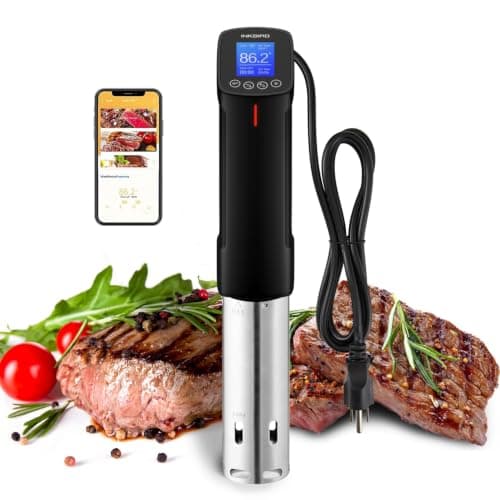
1,000 W
Inkbird ISV-100W WiFi Sous Vide, 1000 W
The value pick that does not feel like one. Under $100, and Inkbird still publishes the full specification: 1,000 W, a 25–99°C range, ±0.1°C accuracy, 15 L capacity, WiFi and an on-device dot-matrix screen. It undercuts the Anova by more than half and gives up remarkably little on paper.
#ad · As an Amazon Associate we earn from qualifying purchases.
Questions
Frequently asked
Is sous vide better than grilling?
Can you sous vide a steak and then grill it?
Why is a sous vide steak the same color all the way through?
Keep reading
Related
Receipts
Sources
We have not tested these machines in a lab and we do not pretend to have. Specifications come from the manufacturer's own published documents; electricity rates come from the US Energy Information Administration; prices come from the live Amazon API. Where a figure is not published, the page says “not published” rather than guessing. Read the full method.