HUB 01 · Multicookers
What is a multicooker?
Almost every "9-in-1" claim describes the same hardware: one heating element, one or two sensors, a sealing lid and a list of presets. Understanding that is the whole trick to buying one — it tells you which numbers on the box mean something and which are counting the same element twice.
We earn a commission if you buy through our links. It does not change the price you pay, and it does not decide our picks — the scoring rubric is published in full, including what disqualifies a pick. How this works.
The short answer
A multicooker is a countertop appliance with one heated cooking pot, a microprocessor and a locking, sealing lid, which uses that single set of hardware to run several different cooking methods from preset programs — typically pressure cooking, slow cooking, steaming, sautéing, rice and keep-warm. The lid is what makes it more than a slow cooker: sealed and pressurized, the same pot cooks food several times faster.
What the “N-in-1” number really counts
Here is the thing nobody selling you one will say plainly: on most machines, the big number counts programs, not mechanisms. A 9-in-1 cooker does not contain nine devices. It contains one heating element and a controller, and nine named set-point-and-time recipes for it. “Slow cook” is the element run low for hours. “Rice” is a short low-pressure cook with a particular release. “Yogurt” is the element held at roughly 110 °F. “Steam” is a full-power boil under a vented lid with your food on a trivet above the water.
That is not a scandal — the presets are genuinely useful, and getting those set points right is real engineering. But it means a 14-in-1 is not meaningfully more capable than a 9-in-1, and comparing cookers on the sticker number is the single most common way people overpay. The Ninja PossibleCooker PRO is billed as 14-in-1 and SharkNinja's own materials rest that count on eight actual cooking modes; the other six are appliances it claims to replace.
Which functions need genuinely different hardware
Four do, and these are the ones worth paying for because you cannot add them later:
| Function | What does the work | Real hardware, or a preset? |
|---|---|---|
| Pressure cook | Locking lid, gasket, pressure-regulating valve, float pin | Real hardware — a cooker either has it or does not |
| Air fry / crisp | A separate high-temperature element and a fan, usually in a second lid | Real hardware |
| Sous vide | Fine low-temperature control of the base element — but no pump | Mostly firmware; needs accurate low-end control |
| Slow cook | The same base element held low for hours | Preset |
| Rice | A short low-pressure cycle with a set release | Preset |
| Steam | Full-power boil, lid vented, food on a trivet | Preset — plus the trivet |
| Sauté / sear | Base element at high power with the lid off | Preset — pot material decides how well it browns |
| Yogurt | Element held near 110 °F for hours | Preset |
Read that table once and the buying decision simplifies enormously. Ask yourself only: do I need pressure? do I need air fry? do I want fine low-temperature control? Everything else on the box comes along with any machine you choose.
Multicooker, pressure cooker, slow cooker: the words
The terms get used interchangeably in shops and they are not interchangeable. A pressure cooker is defined by the sealed, pressurized lid — that is the whole category. A slow cooker (a Crock-Pot is one brand of slow cooker) has no seal and cooks low and long in an unpressurized pot. A multicookeris the umbrella term for a machine that does several of these from presets; most multicookers sold today are electric pressure cookers with extra programs, which is why “Instant Pot” has become a generic word for the whole category. But not all of them pressurize: the Ninja PossibleCooker PRO is a multicooker that deliberately does not, which makes it the wrong machine for anyone who wants weeknight speed and the right one for someone who only ever slow-cooked. We untangle the terms at length in pressure cooker vs multicooker and is a Crock-Pot the same as a slow cooker.
What a multicooker actually replaces
Honestly rather than aspirationally. It genuinely replaces a stovetop pressure cooker, a slow cooker, a steamer basket, a rice cooker for most households, and a yogurt maker. It partly replaces a Dutch oven for braises, although you lose the oven and the browning surface area. It does not replace a dedicated sous vide circulator (no pump, so the bath is less even), and unless you buy a model with a crisping lid it does not replace an air fryer or an oven. The cross-category version of this question — which appliance you should actually own — is worked through in which kitchen appliance do you need.
What to look for when you buy one
Having established that the function count is mostly noise, here is what is left, in the order it matters:
- Capacity. 3 quarts for one or two people, 6 for most households, 8 for four-plus or batch cooking. A pot you never fill comes to pressure slowly and takes counter space for nothing. See the sizing guide.
- Does it pressurize? This is the one function you cannot work around, and the one that delivers the time saving the category is bought for.
- Inner pot material. Bare stainless browns and lasts indefinitely; a ceramic or nonstick coating releases food more easily and is a wear part. Published materials for every cooker here are in the best non-toxic multicooker.
- Lid behavior. An auto-sealing lid removes the commonest beginner error — leaving the valve on Venting so the pot never pressurizes. A manual toggle is fine once you know; the water test is how you learn.
- Published wattage. Not for the cost — these are cheap to run — but because a maker that will not publish a wattage usually will not publish a pressure figure either, and that tells you how it treats documentation generally.
With those five answered, a multicooker is an easy purchase. Our how to choose a multicooker guide walks the same decision with the whole catalog in view, and if you already know you want an Instant Pot specifically, which Instant Pot to buy maps the range by who each model is for. First time with one in the kitchen? Start with how to use a pressure cooker and what the buttons actually mean.
The hardware
The cookers this page is about
The cookers referred to above, with prices pulled live from Amazon and dated on every card. Full rankings live in the roundups linked from this page.
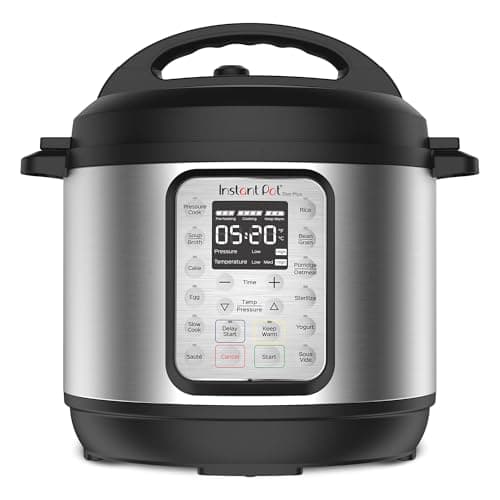
1,000 W
Instant Pot Duo Plus 9-in-1 Multicooker, 6 Quart
The Duo with two functions added that people genuinely use — sous vide and sterilize — plus a quieter WhisperQuiet steam release. Same 1,000 W, same stainless pot, same published working pressure, at a price between the Duo and the Pro.
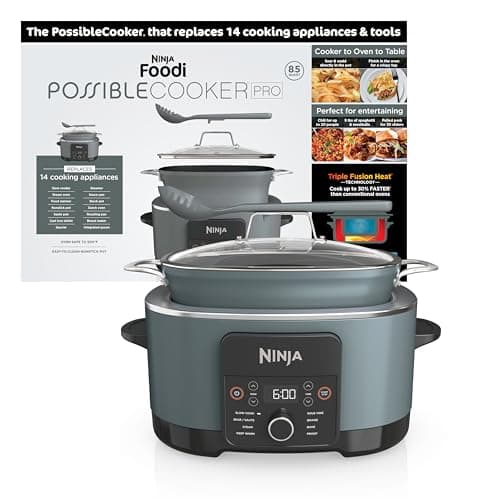
1,200 W
Ninja 14-in-1 PossibleCooker PRO, 8.5-Quart Multicooker (MC1001)
Ninja's current multicooker, and pointedly NOT a pressure cooker. It is an 8.5-quart pot that sears, slow-cooks, steams and goes in the oven to 500°F, at 1,200 W. If you never used the pressure function on your old Instant Pot, this is the more honest machine for how you actually cook.
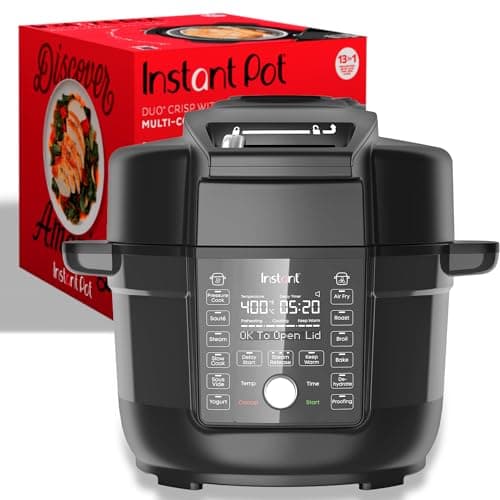
1,500 W
Instant Pot Duo Crisp Ultimate Lid, 13-in-1 Air Fryer & Pressure Cooker, 6.5 Quart
The one lid that both pressurizes and crisps, which is the whole argument against buying a pressure cooker and an air fryer separately. It draws 1,500 W — the most of any Instant Pot here — and that higher draw is the air-fry element doing real work, not a spec-sheet flourish.
#ad · As an Amazon Associate we earn from qualifying purchases.
Questions
Frequently asked
What is a multicooker?
What does a multicooker do that a slow cooker does not?
Is 14-in-1 better than 7-in-1?
Is an Instant Pot a multicooker?
Does every multicooker pressure cook?
Can a multicooker replace a rice cooker and an air fryer?
Keep reading
Related
- How to choose a multicookerThe same decision, with the whole catalog in view.
- Pressure cooker vs multicookerThe terms, untangled properly.
- The best multicookersWhere to start once you know what you want.
- What the buttons actually meanEvery program on the panel, decoded.
- How to use a pressure cookerFirst cook, step by step.
Receipts
Sources
- Instant Brands — Instant Pot Duo Plus 6qt product page
- SharkNinja — Ninja 14-in-1 PossibleCooker PRO 8.5qt (MC1001) product page
- Instant Brands — Instant Pot Duo Crisp with Ultimate Lid 6.5qt product page
We have not tested these machines in a lab and we do not pretend to have. Specifications come from the manufacturer's own published documents; electricity rates come from the US Energy Information Administration; prices come from the live Amazon API. Where a figure is not published, the page says “not published” rather than guessing. Read the full method.