HUB 01 · Multicookers
Instant Pot Lid Won't Open
A lid that will not open is the most alarming thing a new Instant Pot owner meets, and almost always it is the safety system doing its job: the pot is still under pressure. Here is how to tell, how to release it safely, the less-common cooled-down case, and the one thing you must never do.
We earn a commission if you buy through our links. It does not change the price you pay, and it does not decide our picks — the scoring rubric is published in full, including what disqualifies a pick. How this works.
The lid won't open because it is doing its job
If your Instant Pot lid will not turn to open, do not panic and do not force it — almost every time, it is the safety lock working exactly as designed. While there is pressure inside the pot, a small float valve (the metal pin next to the steam release) stays up, and while that pin is up the lid is physically locked so it cannot be opened onto a pot of superheated steam. This is the single most important safety feature on the machine. The lid not opening is not a fault; it is the pot telling you there is still pressure to release.
Confirm it is still under pressure
Look at the float valve. If it is up(raised, flush or popped above the lid), the pot is pressurized and the lid will stay locked. That is normal any time the pot has finished cooking but not yet released — the pressure comes down on its own over time (a natural release), which can take 10–30 minutes depending on how full the pot is. Many owners think the machine is broken when it is simply mid-release. The lid will not open until that valve drops.
Release the pressure safely
To open it sooner, do a quick release: turn the steam-release valve to Venting and let the steam jet out until it stops and the float valve drops back down. Keep your hand and face away from the plume — it is hot. (Do not quick-release a pot full of foamy or starchy food like beans or a big soup, which can sputter — let those release naturally.) Once the float valve has dropped completely, the lock disengages and the lid turns freely. If the valve is down but the lid still resists, nudge it slightly closed first, then open — sometimes the lock pin needs the lid to seat before it will release.
The opposite case: a cooled-down vacuum
There is a second, less common reason, and it is the reverse of the first: a pot that has cooled completely can form a slight vacuumas the steam inside condenses, sucking the lid down so it feels stuck even though there is no pressure. The fix is easy — turn the steam-release valve to Venting to let air back in, which breaks the vacuum, and the lid opens normally. If it still resists, briefly turn the pot back on to warm the contents and re-expand the air. This is why a fully cold pot sometimes seems locked when the float valve is clearly down.
What never to do
Never force, pry or lever the lid open, and never try to defeat the lock while the float valve is up — that lock exists to stop the lid coming off a pressurized pot, which is the one genuinely dangerous failure. The rule is simple: if the valve is up, release the pressure and wait; if the valve is down and it still won't budge, vent to break a vacuum. Do that and the lid always opens safely. For how the whole pressure cycle works, see how to use a pressure cooker, and if the opposite problem is happening — the pot won't build pressure at all — that is the not-sealing fix. Instant Pots are very safe precisely because of this lock.
The hardware
The cookers this page is about
The cookers referred to above, with prices pulled live from Amazon and dated on every card. Full rankings live in the roundups linked from this page.
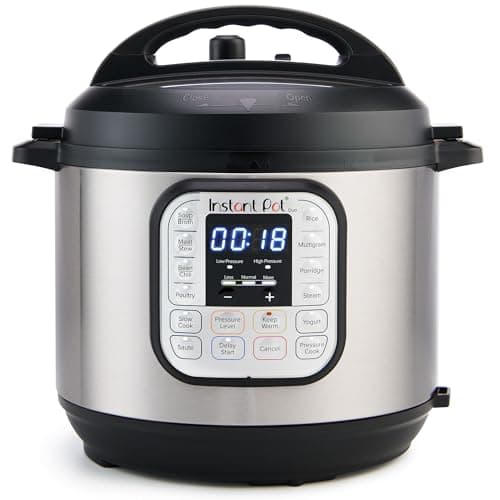
1,000 W
Instant Pot Duo 7-in-1 Electric Pressure Cooker, 6 Quart
The multicooker that made the category, and still the right default. Instant Brands publishes the wattage, the working pressure range and a stainless (not nonstick) inner pot, which is more than most of the field manages — and it costs less than almost all of them.
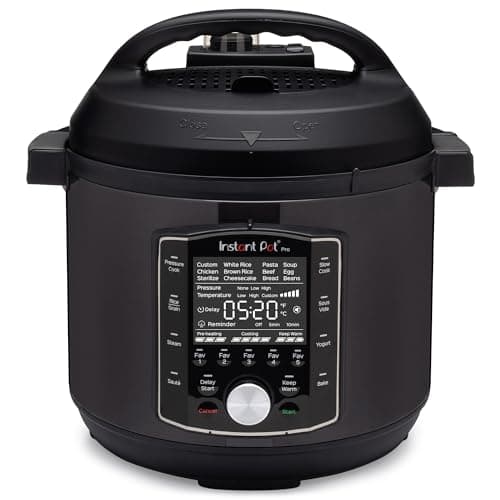
1,200 W
Instant Pot Pro 10-in-1 Pressure Cooker, 6 Quart
The Duo's mechanicals with the interface fixed: a genuine sous vide program, an auto-sealing lid, grab-and-go pot handles and five programmable buttons. It draws 1,200 W rather than the Duo's 1,000, and Instant Brands does not publish a working-pressure figure for it — the one gap in an otherwise well-documented cooker.
#ad · As an Amazon Associate we earn from qualifying purchases.
Questions
Frequently asked
Why won't my Instant Pot lid open?
How do I get my Instant Pot lid unstuck?
Is it safe to force an Instant Pot lid open?
Keep reading