The short answer
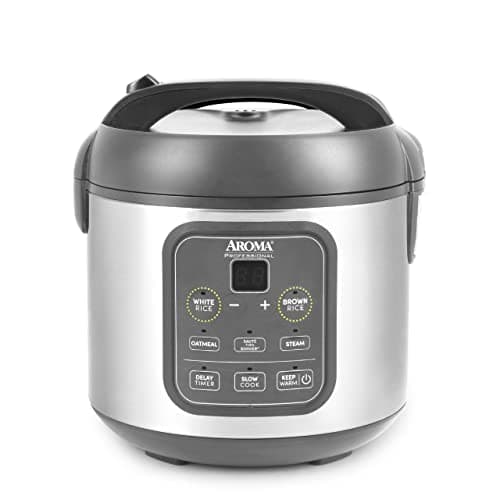
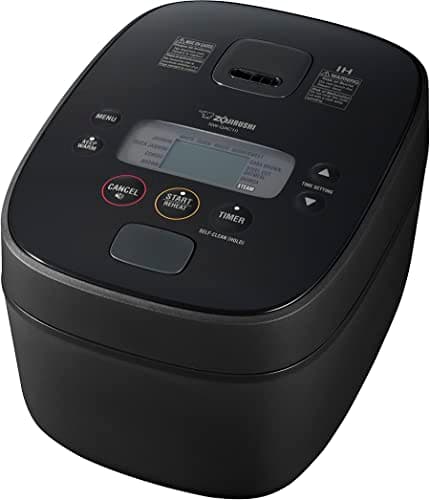
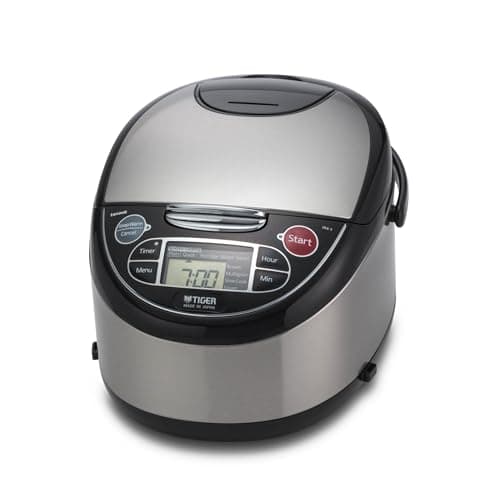
Buy the Tiger JAX-T10U. It is for the person who wants rice and a dish ready at the same moment: Tiger builds the tacook synchro-cookingsystem into the machine — it is in the model's own name — so a dish cooks on a plate above the grain rather than in it, at 641 W, across 10 published auto-cook settings, in a 5.5-cup pot made in Japan. The budget pick is the Aroma ARC-994SG, a fraction of the Tiger's price, which takes the other route: 450 W, a Sauté-then-Simmer function and a published Slow Cook program of 2 to 10 hours, so you brown aromatics in the pot and then cook the whole dish in it. If you want the deepest published menu list, the Zojirushi NW-QAC10 names steam among its twelve settings alongside congee and quinoa.
Prices come from our daily refresh and the Quick Picks table above prints the date of the most recent one. Treat the table as the authority over any sentence here.
What a one-pot meal actually asks of a rice cooker
Not more power and not more presets. It asks for a published mechanism for cooking something that is not rice, and there are only three in this catalog.
A plate above the grain.Tiger's tacook system is a cooking plate that sits over the rice so the dish above steams while the rice below cooks on its own cycle. This is the only one of the three that produces two separate things at once rather than one mixed thing, and no other brand in this catalog has an equivalent.
A sauté stage before the simmer.Aroma's Sauté-then-Simmer, plus a Slow Cook program it publishes as 2 to 10 hours, is the mechanism behind every rice-cooker jambalaya, pilaf and one-pot chicken-and-rice recipe worth making: you brown the aromatics and the protein in the pot first, and the fat and fond end up in the dish rather than in a second pan.
A named steam program. Zojirushi publishes twelve menu settings for the NW-QAC10 including steam, congee, quinoa and steel-cut oatmeal, which is the most non-rice cooking any maker here names individually.
Everything else is a pot with a lid. You can put chicken, stock and rice in any rice cooker and it will heat them; what you cannot do is control when each one finishes, and that is the entire problem a one-pot meal poses. The general version of the question is in what you can cook in a rice cooker.
The finding: the cooker that wins this is not the cooker that wins rice
Our general rice-cooker rankingis won on mechanism — pressure and induction, which change what plain rice tastes like. This page is won by a 641 W Micom machine that has neither, because the thing that decides a one-pot meal is a piece of plastic and a published program list rather than the heating element.
That is worth stating plainly because it cuts against the usual upgrade advice. If one-pot dinners are genuinely why you are buying, the premium induction and pressure machines are not the right spend: the Tiger costs well under the pressure Cuckoos and the induction Zojirushi, and does the job none of them do.
How we ranked
A published mechanism first, as above. A plate ranks above a sauté stage, which ranks above a steam program, because that is the order of how much control each gives you over two foods finishing together.
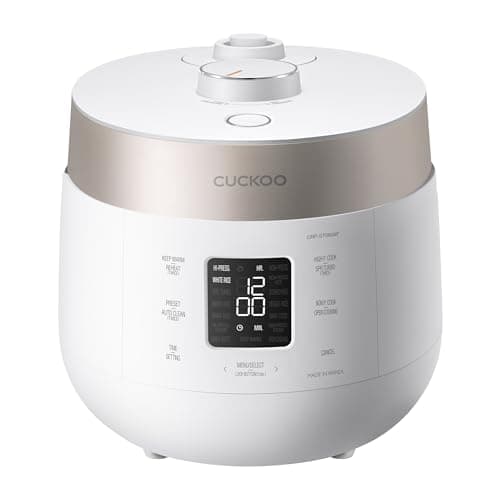
Then how much of a meal it holds. A one-pot meal is rice plus a protein plus vegetables, which fills a pot much faster than rice alone, so published capacity matters more here than on a plain-rice page. The Cuckoo CRP-ST0609F is where that bites: Cuckoo publishes a 1–4 cuplimit on high heat, Super Turbo, mixed rice and GABA against 1–6 for plain white rice.
Then the pot surface. One-pot dishes are starchy, oily and they stick. A coating you have to be careful with is a bigger consideration here than anywhere else on the rice hub, and it is covered in our page on pot materials.
Then price— which on this page is unusually kind, because the first pick is mid-priced and the second is the cheapest cooker on the whole site.
The winner, and the plate that earns it
The Tiger JAX-T10Uis 641 W, 1.0 L / 5.5 cups uncooked, Micom plus heating, 10 auto-cook settings, and made in Japan. The tacook plate is the whole argument: a chicken thigh and vegetables cook above while 3 cups of rice cook below, both on their own schedule, in one appliance, with one thing to wash.
Two honest limits. Capacity is the first — the plate occupies the headroom above the rice, so a full pot of rice and a full plate above it is not a combination that fits; one of the two gets smaller. The second is mechanism: this is a Micom cooker with no pressure and no induction, so on plain rice alone it will not match the machines that win our Japanese ranking. The full write-up is in our Tiger JAX-T10U review.
The budget pick is a genuine second mechanism
The Aroma ARC-994SGis not a concession here. 450 W, 4 cups uncooked / 8 cooked, Sensor Logic heat control, a ceramic-coated nonstick pot, a published Slow Cook range of 2 to 10 hours, and a Sauté-then-Simmer function that no premium cooker in this catalog offers at any price. For jambalaya, chicken and rice, a pilaf or a bean stew, browning in the pot first is the difference between a dish and a pile.
What it gives up is rice. Aroma publishes exactly two rice programs for it, White Rice and Brown Rice, with no sushi, mixed, GABA or aromatic cycle of any kind, and the pot is coated rather than stainless. If plain rice is 90% of what you cook, buy a better rice cooker and a frying pan. If dinner is the point, this does more of it than machines costing five times as much.
The deep menu, and the pressure option
The Zojirushi NW-QAC10is third: 1,080 W of whole-pot induction, made in Japan, 5.5 cups, and twelve published menu settings that include quick white, quick Jasmine, congee, GABA brown, quinoa and steam— with a steam tray. It is the machine for someone whose “one-pot meal” is really rice plus steamed fish or vegetables, and whose rice standards are high. It places third on price and because steaming above rice is less controllable than a tacook plate, and its pan is double-nonstick-coated aluminum rather than bare metal.
The Cuckoo CRP-ST0609F Twin Pressure is fourth and it is here for one published reason: it has a genuine non-pressure side, which Cuckoo names for white rice and veggie rice. 880 W at AC120V, a published 78.4 kPa (0.8 kgf/cm²) of working pressure, made in Korea. For a mixed pot that is mostly short-grain rice with vegetables and a tough grain in it, pressure genuinely helps, and being able to switch it off for a long-grain dish is the flexibility nothing else here has.
Its two limits are both published by Cuckoo. The 1–4 cup cap on high heat, Super Turbo, mixed rice and GABA on a six-cup cooker is the first, and it hits a one-pot meal hard. The second is the pot: a nonstick coating rather than the 304-stainless-backed pot of the cheaper CRP-P0609S, and Cuckoo's own manual is blunt that coating damage from a metal scrubber is a chargeable repair.
Two cookers we deliberately did not rank
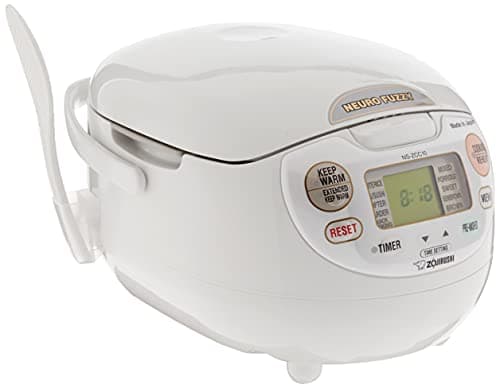
The Zojirushi NS-ZCC10 Neuro Fuzzyis the benchmark fuzzy-logic rice cooker and it is not on this list: 680 W, made in Japan, superb at rice, with nothing published about cooking anything else alongside it. It wins the fuzzy-logic ranking instead, which is the right page for it.
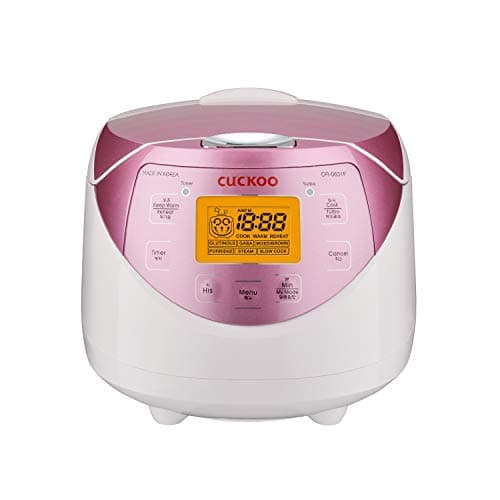
The Cuckoo CR-0631Fis the lowest-draw full-size cooker here at 580 W and the usual value pick in the Korean line-up, and Cuckoo publishes no sauté, steam or synchro-cooking mechanism for it. It is ranked in the Korean ranking.
Food safety, since this is meat and rice in a sealed pot
Two rules worth repeating because one-pot meals break them more often than plain rice does. Cook poultry to the USDA's published safe minimum internal temperature and check it with a thermometer rather than trusting a program; a rice cooker's cycle ends when the free water is gone, which is not the same event as a chicken thigh reaching temperature. And get leftovers into the fridge within two hours — cooked rice held warm is a textbook case for the USDA's 40–140°F Danger Zone guidance, which is also why leaving rice on Keep Warm has its own page.