What matters in a small kitchen
In a small kitchen, counter and cupboard space is the real budget, so the best cooker is the one that does the most for the footprint it asks — and the smart move is often a smaller version of a great machinerather than a cheap one. An immersion circulator that stores in a drawer, a 3-quart pressure cooker that lives in a cupboard, a mini rice cooker sized for one or two: each of these gives you a genuine category's worth of cooking without the bulk. These are our compact picks, one per format.
How we ranked them
We ranked on footprint first — how small it genuinely is to use and store — then on versatility per inch of counter, published documentation and live price. Every pick is a real recommendation on its own merits, sized down for a small space rather than a bargain-bin compromise. Where a manufacturer publishes no wattage or the price is intermittent, we say so plainly. The full rubric, including what disqualifies a pick, is in our methodology.
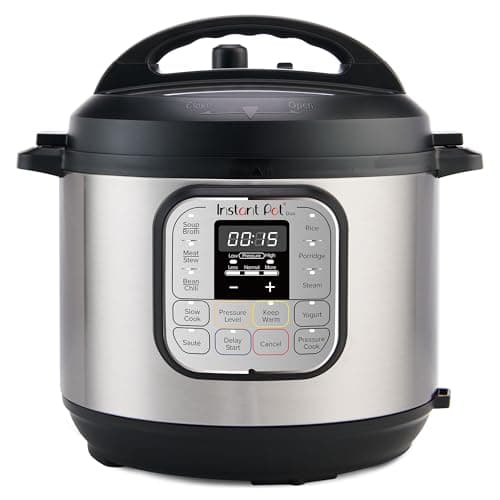
1. Instant Pot Duo Mini — the most cooking per inch
The Duo shrunk to 3 quarts is the most useful single appliance a small kitchen can own: pressure, slow cook, sauté, rice, steam and yogurt in a footprint that actually fits, drawing just 700 W — the lowest of any Instant Pot — on the same 18/8 stainless pot as the full-size model. The honest con: 3 quarts is a firm ceiling — it cooks for one or two, and doubling a recipe means two rounds — and it has no sous vide or air fry. If you ever cook for more than two, size up. See where it fits in what size Instant Pot to buy.
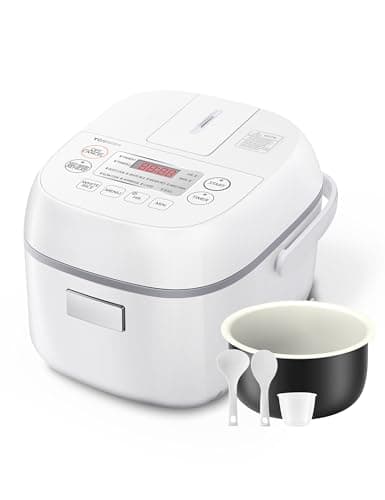
2. Toshiba Mini — the best small rice cooker
Most compact rice cookers drop to a dumb on/off thermostat; the Toshiba Mini keeps fuzzy-logic heat control in a genuinely small, 3-cup body, with a 24-hour delay so rice is ready when you walk in. For one or two people who still want the rice a good cooker makes, it is the right size. The honest con: Toshiba publishes no wattage for this mini SKU, so we show no running cost, and 3 cups is a hard ceiling — it will not cook for a family, and the budget-tier nonstick pot is thin.
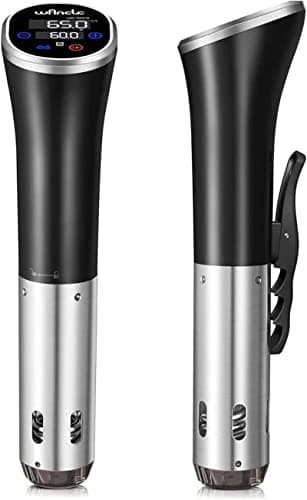
3. Wancle 1100 W — sous vide that stores in a drawer
A sous vide circulator is the ultimate small-kitchen appliance: it turns any pot you already own into a precision cooker and then stores away to nothing. The Wancle 1100 W is the cheapest way in, with physical controls, an 1,100 W element, an IPX7 body you can rinse under the tap, and a published minimum water depth of just 4.5 cm, so a normal saucepan will do. The honest con: its ±0.1°C accuracy is Wancle's own claim with nothing independent behind it, and Wancle publishes no warranty at all — it is the try-it-first machine, not the keep-it-forever one. (It took this slot when the Monoprice Strata that used to hold it was discontinued.)
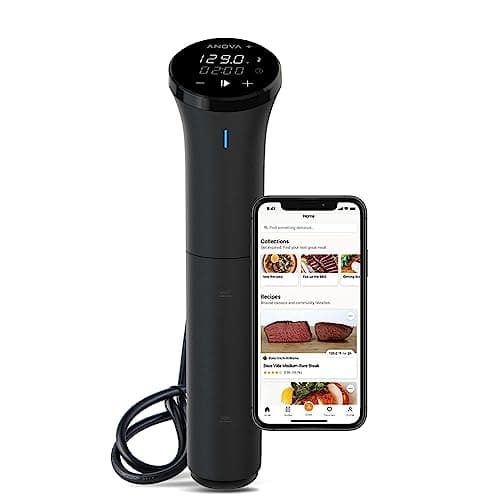
4. Anova Nano — the slim upgrade
If you want a compact circulator you will keep, the Anova Nano 3.0 is the slim, 850 W entry into Anova's build, app and two-year warranty — plenty for a single steak or a couple of portions in a normal pot, and it stores just as easily. The honest con: it had no live Amazon price at our last check, which usually means intermittent stock, so its button says “check price” rather than a number; and its lower power heats a big, deep bath more slowly than the full Precision Cooker. For everyday portions in a small kitchen, that is the right trade.
Which one for which small kitchen
If you can own only one appliance, make it the Duo Mini — it covers the most ground for its footprint. If rice is your staple and space is tight, the Toshiba Mini is the specialist worth its counter. And if you want precision cooking that stores away to nothing, a sous vide circulator is the small-kitchen secret weapon: the Wancle to try it cheaply, the Anova Nano to keep. None of these asks for much space, and each earns what it takes. For the bigger question of which category you need at all, see which cooker do you need. Prices are pulled live from Amazon and dated on each card.
How we picked
Machines we claim to have tested: 0
Everyone in this category tells you they tested twenty cookers. We have tested none, and we say so. Here is what we do instead: read the manufacturer's manual and spec page, record the published wattage, capacity, pressure or temperature figure and warranty term, work out what the machine costs to run per hour, show the arithmetic so you can redo it with your own electricity rate, and cite all of it. Where a brand publishes no wattage, we print no running cost rather than borrowing a number from a similar model. Prices come live from Amazon's API and disappear rather than go stale.
The scores above are judgments from that documented research — not test results. One of the five metrics is Documentation: whether the manufacturer will tell you what its cooker draws at all. The full rubric, including what disqualifies a pick, is published in full.