The short answer
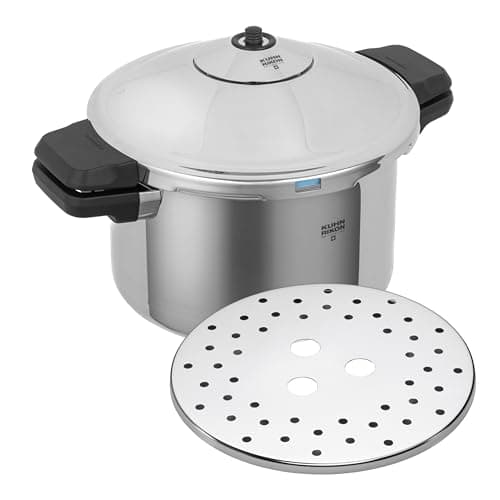
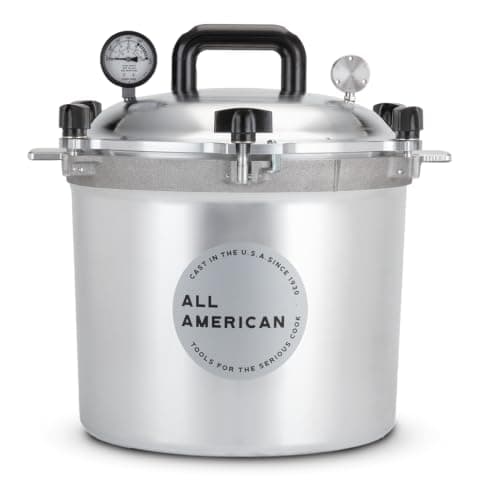
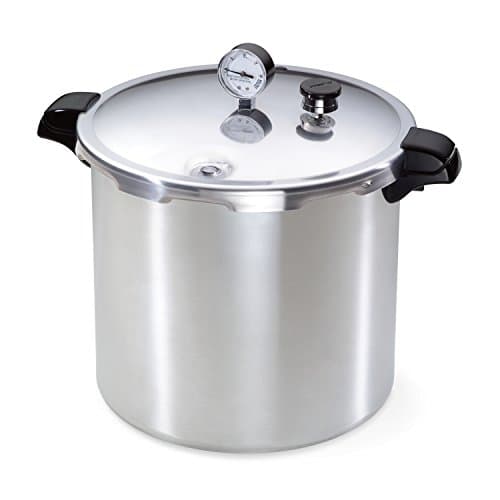
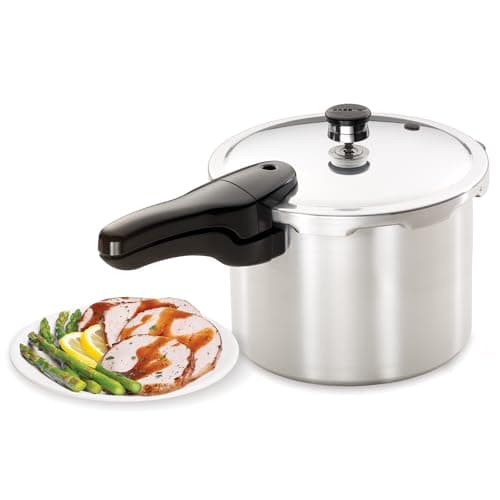
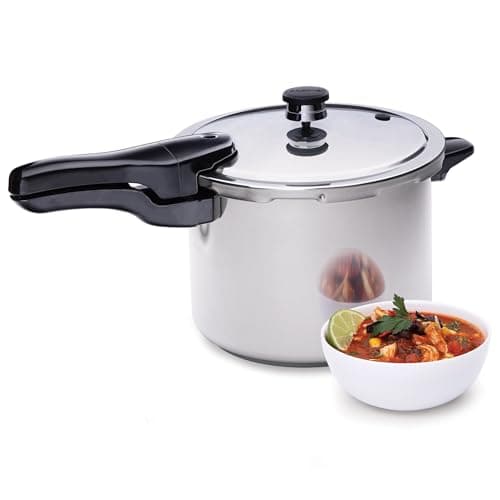
Buy the Presto 01362 stainless stovetop pressure cooker. Presto writes an extended 12-year limited warrantyon it — more than ten times what any electric multicooker on this site offers — in a tri-clad stainless body with no coating anywhere, and it still sells the only two parts that wear, the sealing ring and the over-pressure plug. Buy the Kuhn Rikon Duromatic if you want the same idea built in Switzerland from 18/10 stainless with a 10-year guarantee and a quiet spring valve instead of a rocking weight. Buy the All American 921 if you want the most extreme version of the argument: a cast-aluminium canner sealed metal-to-metal with no gasket at all, so the one consumable every other pressure vessel depends on does not exist on it. The budget pick is the Presto 01264— the plain aluminium 6-quart, which carries the identical 12-year warranty for a small fraction of the money and is the cheapest thing in this catalog with a decade-plus guarantee behind it.
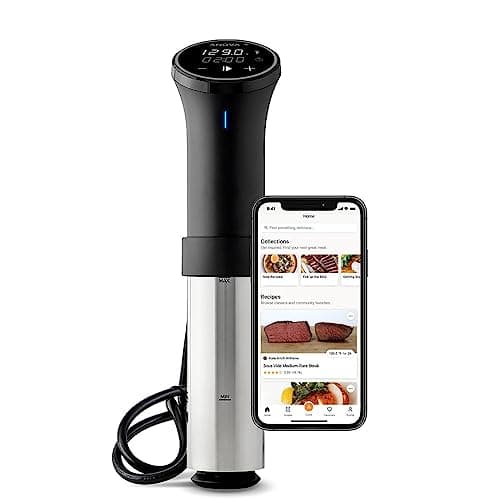
The only electric appliance that earns a place here is the Anova Precision Cooker 3.0, at two years — the longest warranty on any powered machine in our catalog, and double what every multicooker and every rice cooker offers.
The finding, stated plainly
We ranked our entire catalog on warrantyYears, which is a field we take from each manufacturer's own page rather than from a listing, and the distribution is stark:
Twelve years: the Presto 01362, 01282 and 01264 stovetop cookers, and the Presto 01755 and 01781 canners. Ten years: the Kuhn Rikon Duromatic. Two years: the Anova Precision Cooker 3.0, the Anova Nano, the Cosori pressure cooker and the Anova vacuum sealer. One year:everything else — every Instant Pot, every Ninja, every Zojirushi, every Cuckoo, the Tiger, both Aromas, the Toshiba, the Crock-Pot, the Inkbird, the Greater Goods, the Breville Joule, the FoodSaver, the Nesco, and the most expensive canner in the catalog.
The pattern is not about brand confidence. It tracks almost perfectly with how much electronics is inside. A stovetop pressure cooker is a pot, a lid, a ring, a plug and a weight; there is no board to fail, no sensor to drift, no display to go dark and no firmware to be abandoned. A multicooker is all of those things in a plastic housing, and one year is what a maker will promise on them.
That does not make a multicooker a bad purchase — a one-year warranty is not a one-year lifespan, and we work through what actually wears out in how long Instant Pots last. It does mean that if longevity is your top criterion rather than one of several, the honest answer is a different kind of appliance, not a better brand of the same kind.
How we ranked
1. Published warranty length, from the manufacturer's own page. It is the only hard, comparable, documented durability figure that exists across a catalog this varied.
2. Serviceability. Does the maker still sell the parts that wear, and do they fit more than one model year? Presto sells sealing rings and over-pressure plugs. All American lists parts as fitting its 910 through 941 canners and says on its own parts pages that most parts still fit older and discontinued models. Nobody in this catalog sells a replacement control board for a multicooker.
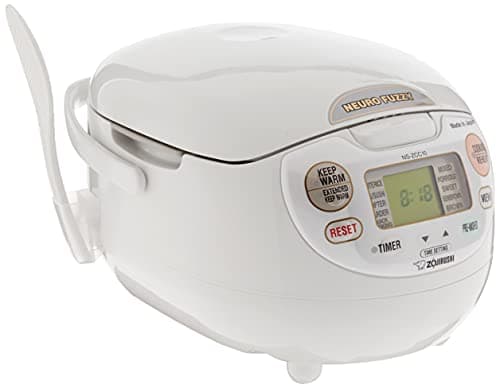
3. Coatings. A nonstick or ceramic surface has a finite life no warranty covers, so a machine whose cooking surface is bare stainless or bare aluminium has one fewer thing to outlive. This is where most rice cookers fall out: almost every pan in that category is coated, and the single exception is also the most expensive machine on this site.
4. Price, last. Which is why the cheapest cooker in the catalog places sixth rather than out, and the dearest canner places third rather than first.
We do not rank on reliability surveys, failure rates or longevity claims, because we have no verified data for any of them and our method does not permit inventing it. Warranty length is a promise in a document; a reliability estimate would be a guess in a table.
Why the Presto 01362 wins
Twelve years is the headline, and the body is the reason it is credible. Presto publishes a luxurious stainless steel construction with a tri-clad base — aluminium sandwiched between two stainless layers — and lists it for gas, electric, smooth-top and induction ranges, which makes it the one cooker here that will still fit whatever stove you own in a decade.
There is no coating on it, so there is nothing to scratch through. The two consumables are the sealing ring and the over-pressure plug, both of which Presto still sells and both of which cost a few dollars. And the regulator holds roughly 15 psi mechanically rather than electronically, which means the thing that controls the cook cannot go out of calibration in software.
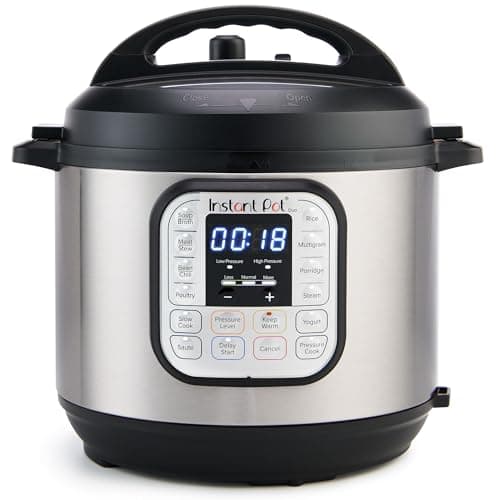
The honest cost of all of that is automation: no timer, no programs, and you hold pressure by watching the regulator and adjusting the burner. That is the bargain the whole top of this page makes, and we argue it at length in stovetop versus electric pressure cookers. If you read it and decide the automation is worth more than the decade, the Instant Pot Duo is the machine and our under-$100 ranking is where it wins.
The no-gasket argument
The All American 921 is third here rather than first, and the reason is a genuine contradiction we are not going to smooth over: it is the most durably built pressure vessel in this catalog and it carries a 1-year limited manufacturer warranty, which reads strangely on the most expensive canner on the site.
What it has instead is design. All American publishes a precision machined metal-to-metal sealwith no gasket, in professional cast aluminium, made in Wisconsin and UL Listed. The gasket is the part that perishes on every other pressure vessel here — it dries out, stretches, goes missing or fails on the morning you needed it. On this one it does not exist. All American also still sells steam gauges, regulator weights and racks listed as fitting its 910 through 941 canners, and states on its own parts pages that most parts still fit older and discontinued models.
So it ranks on serviceability rather than on the warranty, and the honest counterweight is the one our canning page already makes: the 16-quart Presto runs the identical USDA processes, holds the same seven quart jars, and costs a fraction of it with twelve years of cover. The canning ranking is where that argument belongs in full.
The one electric machine that belongs here
The Anova Precision Cooker 3.0 is on this page because two years is genuinely twice what every multicooker and every rice cooker in this catalog offers, and because a circulator is the simplest electric appliance we cover: a heating element, an impeller, a thermostat and a stainless sleeve, with no pressure vessel, no gasket and no cooking surface at all.
It also has the one failure mode worth planning for, and it is not mechanical. A WiFi appliance depends on a cloud service, and a cloud service is a company's decision rather than a physical part. Anova publishes dual-band WiFi and app control, and the machine has an on-device display and dial as well — which is the thing that matters for longevity, because a circulator you can run from its own panel survives the app being discontinued. The same cannot be said of an app-only machine, and we flag that in the WiFi sous vide ranking.
If what you want is the longest-lived circulator rather than the longest-lived appliance, the sous vide machine ranking compares all six on wattage, accuracy and build.
What this means for the appliances you actually want
Most people reading this will still buy a multicooker or a rice cooker, and that is a reasonable decision. Three things make the one-year warranty matter less than it looks:
The parts that wear are cheap and replaceable. On a multicooker it is the sealing ring and the condensation cup, both of which are consumables you buy anyway and neither of which a warranty was ever going to cover. Our cleaning guide is most of the maintenance story.
Buy the uncoated pot where you can.Instant Brands publishes an 18/8 stainless tri-ply inner pot for the Duo, and a stainless pot has no coating to fail — which is the single biggest difference in how a cheap cooker ages. The non-toxic ranking works through which makers publish what about their surfaces, and the rice-cooker version is non-toxic rice cookers.
Prefer a machine with its own controls. Anything that can only be driven by a phone has a dependency that outlives no hardware. A dial and a display on the device is a longevity feature even when it looks like a styling choice.
And if you want the cross-category version of this decision from the other end — what to buy first rather than what lasts longest — the best countertop cooking appliances worth owning and which kitchen appliance you actually need are the two pages for that.
Choosing in one minute
You want the longest warranty on a cooker you will use weekly. Presto 01362 stainless. Twelve years, no coating, induction-capable, parts still sold.
You want the same idea, built in Switzerland.Kuhn Rikon Duromatic. 18/10 stainless, ten years, and a quiet spring valve — with no published pressure figure, which we count against it.
You want the vessel with nothing to perish. All American 921, sealed metal-to-metal with no gasket at all. One-year warranty, thirty-year design.
You preserve food and want twelve years of cover. Presto 01781, 23 quarts, not listed for induction.
You want the longest-lived powered appliance here. Anova Precision Cooker 3.0, two years, with its own display so it survives the app.
You want a decade of warranty for the least money. Presto 01264, twelve years, aluminium rather than stainless.
The three mistakes
Reading a one-year warranty as a one-year lifespan — it is not, and the parts that actually wear on a multicooker were never covered anyway. Buying a coated pot for a machine you intend to keep for a decade. And buying an app-only appliance, which adds a dependency no amount of build quality outlives.