HUB 04 · Buying Guides
Slow Cooker vs Pressure Cooker
They sound like rivals but they are really two routes to the same destination: a tough cut turned tender. One takes all day at a gentle simmer, the other forty minutes under pressure. The right choice depends on your schedule more than your cooking. Here is how they differ, and why one machine can do both.
We earn a commission if you buy through our links. It does not change the price you pay, and it does not decide our picks — the scoring rubric is published in full, including what disqualifies a pick. How this works.
Opposite routes to the same tender result
A slow cooker holds food at a low, gentle simmer for many hours; a pressure cooker seals in steam to cook hot and fast in a fraction of the time. What surprises people is that they often arrive at the same place— a tough, collagen-rich cut turned meltingly tender — just by opposite roads. So this is less a rivalry than a choice of pace, and the honest deciding factor is usually your schedule. It also overlaps with multicooker vs slow cooker and Instant Pot vs Crock-Pot, which put specific machines against each other.
Speed: hours vs minutes
The headline difference is time. A slow cooker takes 6–10 hours on low; a pressure cooker does a comparable braise in under an hour. If you want to load a pot before work and come home to dinner, the slow cooker's all-day pace is the feature, not the flaw. If you decided at 6pm to make a pot roast, only a pressure cooker gets it on the table that night. Neither is faster in some absolute sense — they suit different moments, and many households genuinely want both modes at different times.
What each does better
Beyond speed, each has real strengths. A slow cookeris forgiving and gentle: it is hard to overcook, it needs no watching, and the long, low heat is lovely for chilis, stews, pulled pork and anything you want to develop over a day — and it draws very little power doing it (the Crock-Pot Cook & Carry pulls just 240 W). A pressure cookeris about speed and also does jobs a slow cooker simply cannot — dried beans from scratch, a whole batch of stock, or rice — and its sealed environment is what makes it, per how to use a pressure cooker, the faster tool for a weeknight. The trade-off: a pressure cooker is less forgiving of getting the liquid or timing wrong.
The decision rule — and why you may not have to choose
Choose a slow cooker if you cook by loading a pot in the morning, you value gentle, forgiving, walk-away cooking, and you rarely need dinner in a hurry. Choose a pressure cooker if speed on a weeknight is the goal, or you want to cook beans, stock and rice as well as braises. But here is the real answer for most people: a multicooker does both. An Instant Pot Duohas a Slow Cook button and a Pressure Cook button in the same pot, so you are not actually forced to pick — which is why, if you only buy one machine, the versatile multicooker usually wins. The best multicooker roundup takes it from there.
The hardware
The cookers this page is about
The cookers referred to above, with prices pulled live from Amazon and dated on every card. Full rankings live in the roundups linked from this page.
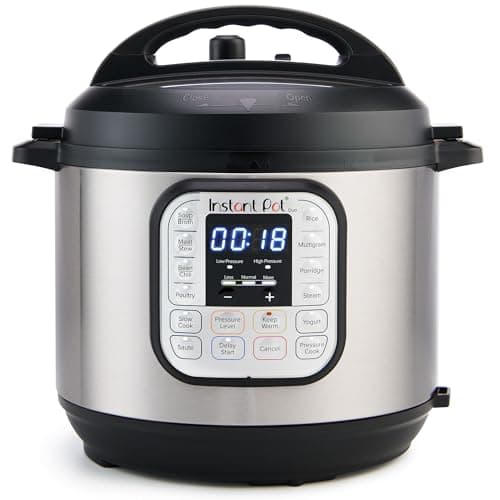
1,000 W
Instant Pot Duo 7-in-1 Electric Pressure Cooker, 6 Quart
The multicooker that made the category, and still the right default. Instant Brands publishes the wattage, the working pressure range and a stainless (not nonstick) inner pot, which is more than most of the field manages — and it costs less than almost all of them.
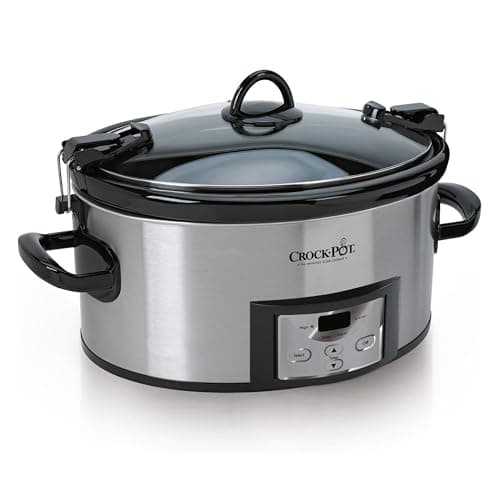
240 W
Crock-Pot 6-Quart Cook & Carry Programmable Slow Cooker
Not a multicooker and not a pressure cooker — a plain 6-quart programmable slow cooker with a locking Cook & Carry lid. It is here as the honest counterweight to the whole category: if the only function you ever used on a multicooker was Slow Cook, this does that one job for a fraction of the price.
#ad · As an Amazon Associate we earn from qualifying purchases.
Questions
Frequently asked
What is the difference between a slow cooker and a pressure cooker?
Is a pressure cooker or slow cooker better?
Can one machine do both slow and pressure cooking?
Keep reading