HUB 04 · Buying Guides
Do You Need Both a Rice Cooker and a Multicooker?
Your Instant Pot already has a rice button, so buying a second machine just for rice can feel like a duplicate. Sometimes it is, and sometimes it genuinely is not. This is the ownership question — do I need both? — not a head-to-head of which cooks better. The answer comes down to how much rice you eat, how good you want it, and whether you ever want to cook two things at once.
We earn a commission if you buy through our links. It does not change the price you pay, and it does not decide our picks — the scoring rubric is published in full, including what disqualifies a pick. How this works.
The question is ownership, not which cooks better
This is a specific question, and it is worth keeping it specific. It is not “rice cooker vs Instant Pot,” which pits the two machines against each other as if you had to choose one. It is the ownership question: you probably already own, or are about to buy, a multicooker with a rice function built in, so does it make sense to also own a dedicated rice cooker, or is that just a duplicate appliance eating your counter? The honest answer is that it depends entirely on how much rice you eat and how good you want it to be — for some households two machines is genuinely redundant, and for others the two do different enough jobs that owning both is the right call. This guide is about telling which one you are.
Yes, your Instant Pot really does cook rice
Start with the honest baseline: an Instant Pot Duo genuinely does cook rice, and for a lot of people it cooks it well enough. It has a rice program, it is a sealed pressure vessel, and white rice out of it is perfectly good everyday rice — no one is going to push their plate away. So the starting assumption should be that you might not need a second machine. If rice is an occasional side for you, a couple of times a month, and you are happy with what the pressure cooker turns out, then a dedicated rice cooker really is a duplicate, and the honest advice is to skip it and save the counter space and the money. A guide that told everyone to buy both would be selling, not advising. It is genuinely fine to run rice in your multicooker for years and never feel you are missing anything — plenty of good home cooks do exactly that. Most of the reasons to own both only start to matter once rice becomes a regular, frequent part of how you eat, so the honest first question is not “which is better” but “how often is rice actually on my table.”
What a dedicated rice cooker actually adds
Once rice is frequent, three real differences start to earn a second machine their keep. The first is rice quality through better heat control. An Instant Pot runs its rice program on a fairly fixed sequence; a fuzzy-logic cooker like the Zojirushi Neuro Fuzzy uses a Micom microcomputer to sense and adjust the heat through the cook rather than following a timer, which is the whole reason a good rice cooker turns out more consistent, better-textured rice batch after batch — and the difference is largest on the fussier grains, short-grain, sushi and brown rice, where texture matters most. The second is the keep-warm. A dedicated rice cooker is built to hold rice warm and pleasant for hours without drying it into a crust or turning it gummy, which an Instant Pot's keep-warm does far less gracefully — and if your household eats at staggered times, that extended, gentle keep-warm is a genuine daily convenience, not a spec-sheet nicety. Anyone who has come back to Instant Pot rice that has gone stiff and shellacked to the bottom of the pot after an hour on its keep-warm knows exactly what a dedicated cooker is protecting against here. The third is the one people underrate.
The real reason: cooking two things at once
Here is the argument that convinces most people who end up owning both: a second machine frees the first one. If your Instant Pot is busy cooking the rice, it cannot be cooking the curry, the chili, the braise or the stew that the rice is meant to go under. On any night you want a main dish andrice — which, if you eat rice regularly, is most of them — one pot forces you to cook them in sequence: rice first, keep it warm somehow, then the main, or the other way around. A dedicated rice cooker running the rice on the counter lets the multicooker do what it is uniquely good at — pressure-cooking the main dish fast — at the same time. Two machines, two dishes, done together. For a household that eats rice with dinner several nights a week, that parallelism alone is often worth more than the quality upgrade, because it changes weeknight cooking from sequential to simultaneous. It is also the benefit that survives no matter how good the Instant Pot's own rice gets, because it is not about rice quality at all — it is about not making one appliance do two jobs back to back on a busy evening. That is why people who dismiss a second rice cooker on quality grounds alone often change their minds the first time they cook a curry and its rice at the same time instead of one after the other.
The costs of owning both: counter, cupboard and budget
The case against a second machine is just as real, and it is mostly physical and financial. A rice cooker is another appliance to find counter or cupboard spacefor, and in a small kitchen that is a genuine cost — a good fuzzy-logic cooker is not tiny, and it competes for the same scarce space as everything else. It is also money: a benchmark cooker like the Neuro Fuzzy is a real spend, and if you already own a capable multicooker, that budget could go elsewhere. If space and budget are tight and rice is not central to your cooking, those costs tip the decision firmly toward “no, one machine is enough.” This is exactly why the answer is not universal: the quality, keep-warm and parallel-cooking benefits are real, but so are the space and cost, and which side wins depends on how much you actually cook rice. It is worth being honest with yourself about storage in particular: an appliance you have to dig out of a deep cupboard every time is one you will use less than you imagined when you bought it, and a rice cooker only pays back the space it takes if it earns a permanent spot on the counter. If it would live in a box, that is a strong sign one machine is enough for you.
A middle path if you are on the fence
There is a sensible in-between for the household that wants better rice than the Instant Pot makes but is not sure it eats enough to justify a flagship. A Micom fuzzy-logic cooker like the Zojirushi NS-TSC10brings the same core advantage as the Neuro Fuzzy — a microcomputer that senses and adjusts the heat through the cook — for less money, at 610 W, with the trade that it is made in China rather than Japan. It still frees the Instant Pot for the main dish and still holds rice warm far better than a pressure cooker does; it simply does it at a lower price and with a slightly shorter menu of specialized settings. If the parallel-cooking and keep-warm benefits appeal but the price of the benchmark is what is stopping you, a Micom cooker is the way to own both without the flagship spend — and it changes the calculation for a lot of fence-sitters, because the real question stops being “is a great rice cooker worth it” and becomes “is a good one worth freeing up my main pot,” which is a much easier yes.
The decision rule
Own both if: you eat rice most days, you care about the texture of short-grain, sushi or brown rice specifically, you often want a main dish and rice cooking at the same time, or you value an all-day keep-warm because your household eats at different times. For a daily or serious rice eater, a dedicated fuzzy-logic cooker like the Zojirushi Neuro Fuzzy earns its place alongside the multicooker — the rice is better, it holds better, and it frees the Instant Pot for the main dish. Stick with just the multicooker if: rice is an occasional side, you are happy with the everyday rice your Instant Pot already makes, or counter space and budget are tight — in that case a second machine really is a duplicate, and the honest move is to skip it. The single deciding question is frequency: the more often rice is on your table, the more a dedicated cooker stops being a duplicate and starts being the machine that makes both dishes possible at once. If you can only afford or house one machine and you are not yet a daily rice eater, buy the multicooker and revisit the question in a year — you will know by then whether rice has become frequent enough to justify the second pot, and nothing about that decision expires. Still weighing the two categories in the abstract? See are rice cookers worth it and is an Instant Pot worth it.
The hardware
The cookers this page is about
The cookers referred to above, with prices pulled live from Amazon and dated on every card. Full rankings live in the roundups linked from this page.
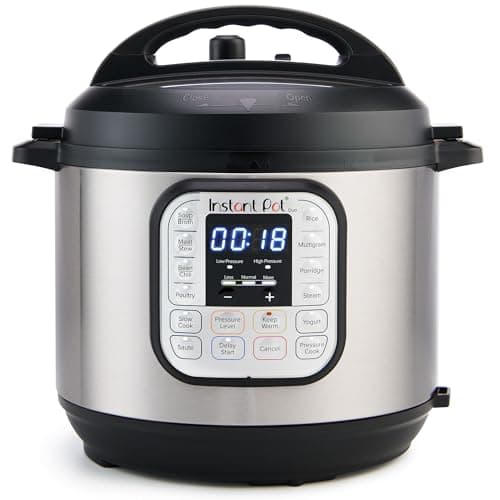
1,000 W
Instant Pot Duo 7-in-1 Electric Pressure Cooker, 6 Quart
The multicooker that made the category, and still the right default. Instant Brands publishes the wattage, the working pressure range and a stainless (not nonstick) inner pot, which is more than most of the field manages — and it costs less than almost all of them.
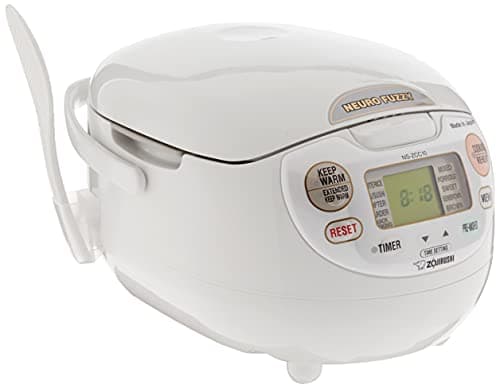
680 W
Zojirushi NS-ZCC10 Neuro Fuzzy Rice Cooker & Warmer, 5.5 Cup
The rice cooker every other one is measured against. Its Neuro Fuzzy microcomputer adjusts heat through the cook rather than running a fixed timer, which is the whole reason a $260 rice cooker cooks rice better than a $30 one. Made in Japan, 680 W, and the settings that matter are all there.
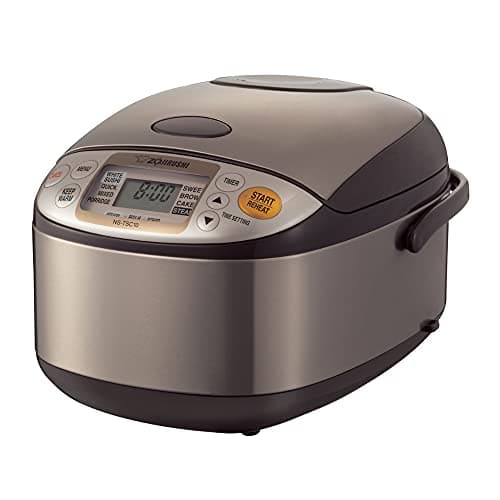
610 W
Zojirushi NS-TSC10 Micom Rice Cooker & Warmer, 5.5 Cup
A Micom fuzzy-logic Zojirushi at meaningfully less than the Neuro Fuzzy, with a couple of trades: it is made in China rather than Japan, and it adds a steam and cake function the NS-ZCC10 lacks. Same fundamental advantage — the microcomputer adjusts heat as it cooks — at 610 W.
#ad · As an Amazon Associate we earn from qualifying purchases.
Questions
Frequently asked
Do I need a rice cooker if I have an Instant Pot?
Is rice better in a rice cooker or an Instant Pot?
What is the main advantage of owning both?
Keep reading
Related
- Do you need a slow cooker if you have an Instant Pot?The same ownership question, for slow cooking.
- Rice cooker vs Instant PotThe head-to-head, if you are choosing just one.
- Are rice cookers worth it?Whether a dedicated rice cooker earns its keep at all.
- Is an Instant Pot worth it?Whether the do-everything machine is the one to own.
Receipts
Sources
- Instant Brands — Instant Pot Duo 6qt product page
- Zojirushi — NS-ZCC10 Neuro Fuzzy Rice Cooker product page
- Zojirushi — NS-TSC10 Micom Rice Cooker product page
We have not tested these machines in a lab and we do not pretend to have. Specifications come from the manufacturer's own published documents; electricity rates come from the US Energy Information Administration; prices come from the live Amazon API. Where a figure is not published, the page says “not published” rather than guessing. Read the full method.