HUB 03 · Sous Vide
How to Sous Vide Vegetables
Vegetables break the usual sous vide rule: they need a much higher bath temperature than meat, up around the mid-180s°F, because plant cell walls only soften near the boil. Here is the mechanism, why veg and a rare steak can't share a bath, and how to keep the bags from floating.
We earn a commission if you buy through our links. It does not change the price you pay, and it does not decide our picks — the scoring rubric is published in full, including what disqualifies a pick. How this works.
Vegetables break the usual sous vide rule
Almost everything you read about sous vide is about cooking things gently— low temperatures, delicate proteins, nothing near a boil. Vegetables flip that on its head. They need a higher bath temperature than meat, up around the mid-180s°F (roughly the mid-80s°C), well above the temperature at which any steak is done. That single fact is the thing to understand before you start, because it changes how you plan a cook. Get it right and sous vide vegetables come out with their color and flavor intensely intact; get it wrong and you get warm, raw, disappointing crunch. We have not cooked these ourselves — this is the mechanism, explained — and the exact temperatures belong in the temperature guide, not guessed at.
The mechanism: pectin and cellulose
The reason is structural. Meat becomes tender when its proteins and connective tissue soften, which happens at relatively low temperatures. Vegetables are held together by something completely different: plant cell walls, built largely from pectin and cellulose, and those compounds only begin to break down and soften up near the boil — far higher than where a protein is done. Until you reach that range, a carrot stays hard no matter how long you hold it, because the temperature simply is not high enough to soften its structure. This is why “low and slow” does nothing useful for a raw vegetable, and why the vegetable bath runs so much hotter than the meat bath. The temperature is doing chemistry, not just warming the food.
Why you can't cook vegetables and a rare steak together
This follows directly, and it trips people up constantly. Because vegetables need the mid-180s°F and a rare-to-medium steak wants something far lower, the two cannot share a bath— the temperature that softens a carrot would cook your steak to gray, well past well-done. So plan them as separate cooks: do the vegetables first at their high temperature, then drop the bath down (or use a second pot) for the meat, or cook the vegetables while the meat rests. It is the one scheduling wrinkle sous vide vegetables add, and once you know it, it stops being a surprise. Two foods, two temperatures, two cooks.
Firm vegetables versus tender ones
Not all vegetables behave the same. The firm, dense ones— carrots, potatoes, beets, winter squash, parsnips — are the classic sous vide vegetables: they hold their shape beautifully, cook evenly all the way through, and taste more intensely of themselves because nothing leaches out into cooking water the way it does when you boil them. Tender, quick-cooking vegetables— asparagus, green beans, leafy greens — also work but are less forgiving, because their window between done and mushy is short and they can go soft if you overhold. As a rule, the denser and firmer the vegetable, the better a sous vide candidate it is, and the more the method rewards you over boiling or steaming. Exact temperatures and times differ by vegetable, so set them from the temperature guide.
Seasoning and fat in the bag
Sous vide vegetables take especially well to seasoning in the bag, because nothing you add can wash away. A little butter or oil, salt, and an aromatic — a sprig of thyme with carrots, a clove of garlic with potatoes — go straight into the pouch and infuse the vegetable as it cooks, with no dilution and no runoff. The fat also helps the heat transfer evenly across the vegetable's surface and carries fat-soluble flavor into it. Do not overfill the bag; a single layer cooks far more evenly than a jumbled pile, since every piece needs even contact with the heat. Because the flavors concentrate rather than leach, you generally need less seasoning than you would boiling the same vegetable, not more.
Why the bags float, and how to weigh them down
Here is the practical snag nobody warns you about: vegetable bags float. Raw vegetables and the air you could not fully remove make the pouch buoyant, and any part that bobs above the water line does not cook — it sits in cooler air and stays raw while the submerged part cooks through. Even, full submersion is the whole game in sous vide, so you have to hold the bag down. Fixes are simple: get more air out with the water-displacement method, clip the bag to the side of the pot, or drop in a weight— a heavy spoon, a purpose-made sous vide weight, or a small ceramic dish set inside the bag. Some cooks add a couple of stainless steel spoons to the pouch just to sink it. Keep every piece under the water and the cook is foolproof; let it float and you will find raw patches.
The rule in one line: vegetables need a much higher bath temperature than meat — up around the mid-180s°F (mid-80s°C) — because plant cell walls made of pectin and cellulose only soften near the boil, so you cannot cook vegetables and a rare steak in the same bath. Season and add a little fat right in the bag, cook in a single layer, and weigh the bag down so nothing floats. A precise circulator like the Inkbird or Anova holds that higher temperature just as steadily as a low one. Get exact temperatures per vegetable from the temperature guide.
The hardware
The cookers this page is about
The cookers referred to above, with prices pulled live from Amazon and dated on every card. Full rankings live in the roundups linked from this page.
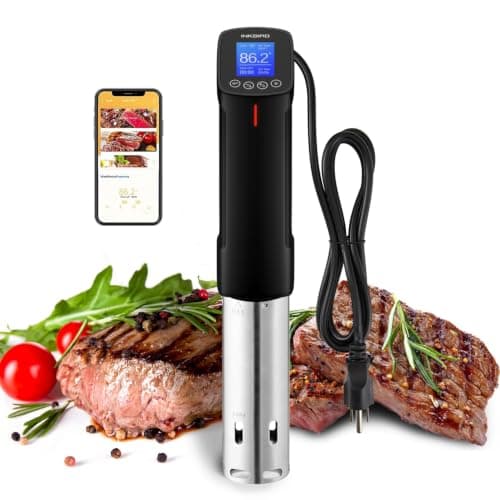
1,000 W
Inkbird ISV-100W WiFi Sous Vide, 1000 W
The value pick that does not feel like one. Under $100, and Inkbird still publishes the full specification: 1,000 W, a 25–99°C range, ±0.1°C accuracy, 15 L capacity, WiFi and an on-device dot-matrix screen. It undercuts the Anova by more than half and gives up remarkably little on paper.
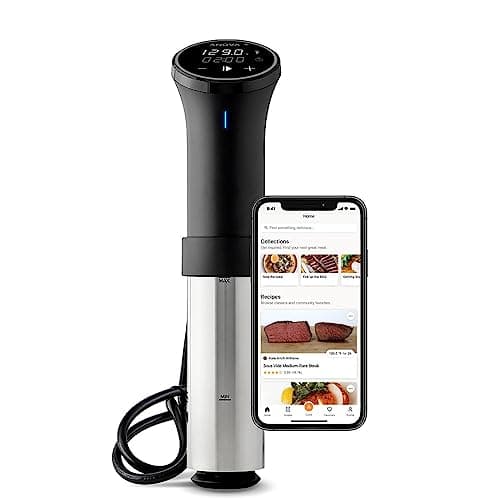
1,100 W
Anova Precision Cooker 3.0 (WiFi), 1100 W
The sous vide circulator most people should buy. Anova publishes the full specification — 1,100 W, a 0–92°C range, ±0.1°C accuracy, an 8 L/min pump — and backs it with a two-year warranty, the longest here. It has an on-device screen so it works without the app, which the Joule does not.
#ad · As an Amazon Associate we earn from qualifying purchases.
Questions
Frequently asked
What temperature do you sous vide vegetables?
Can you cook vegetables and meat in the same sous vide bath?
Why does my vegetable sous vide bag float?
Keep reading
Related
Receipts
Sources
We have not tested these machines in a lab and we do not pretend to have. Specifications come from the manufacturer's own published documents; electricity rates come from the US Energy Information Administration; prices come from the live Amazon API. Where a figure is not published, the page says “not published” rather than guessing. Read the full method.