HUB 02 · Rice Cookers
How to Cook Basmati Rice in a Rice Cooker
Basmati is not short-grain rice, and treating it like it is one is why it comes out sticky. This long, aromatic grain wants a good rinse, a little less water, and — optionally — a short soak, so it cooks up long, separate and fragrant. Here is how to get it right in any rice cooker.
We earn a commission if you buy through our links. It does not change the price you pay, and it does not decide our picks — the scoring rubric is published in full, including what disqualifies a pick. How this works.
Basmati is a different grain, and wants different handling
Basmati is a long-grain aromatic rice, and the whole point of it is grains that stay long, separate and distinct — the opposite of the soft cling you want in sushi rice. If your basmati keeps coming out sticky or clumped, it is almost always because it was treated like a generic white rice with too much water. A rice cooker makes excellent basmati, but the prep differs in a couple of specific ways from the plain-white routine in how to cook white rice, and those differences are what keep it fluffy and fragrant. It is also a great grain to pair with a synchronized-cooking cooker like the Tiger with its tacook tray, where a curry steams above the rice as it cooks.
Rinse it well — really well
Basmati benefits from a thorough rinse more than most rice. Rinse it in several changes of cold water, swirling gently, until the water runs clear — you are washing away the surface starch that would otherwise make the long grains stick together. Be gentle: basmati grains are long and comparatively fragile, and aggressive stirring can snap them, which hurts that prized length. A good rinse is the single biggest factor in whether basmati comes out separate or gummy, so it is worth the extra thirty seconds. Drain it well afterward so the rinse water does not throw off your cooking-water measurement.
Use a little less water than short-grain
Because you want basmati dry and separate rather than soft and clingy, it generally takes slightly less water than short- or medium-grain white rice. Too much water is the classic basmati mistake — it turns those long grains into a soft mush. The exact ratio is a matter of grain and preference, so we keep the numbers in the one place they stay accurate: the rice-to-water ratio guide, which lists basmati separately from plain white rice for exactly this reason. If you are using the pot's fill lines, note that they are typically set for standard white rice, so for basmati many cooks fill to just under the matching line — and remember those lines assume the cooker's own 180 ml cup, not a US cup.
Consider a short soak
One optional step sets great basmati apart: a short soak. Letting rinsed basmati sit in its cooking water for fifteen to thirty minutes before you start the cooker hydrates the grains evenly so they cook through without the outside overcooking, and it encourages them to expand lengthwise into that signature long, slender grain. It is genuinely optional — basmati cooks fine without it — but if you want restaurant-style, extra-long grains, it is the trick. If you do soak, remember the rice has already absorbed some water, so you may want a touch less cooking water; if you skip it, do not reduce the water. Then cook on the plain White setting, not a specialty mode.
Rest and fluff — gently
As with all rice, the finish matters. When the cooker switches to Keep Warm, let the basmati rest with the lid closed for about ten minutes, then fluff it gently with a fork or the paddle, lifting and separating rather than stirring — stirring long grains is how you break and compact them. Done right, basmati comes out of a rice cooker long, dry, separate and fragrant, ideal alongside a curry, a biryani-style dish or grilled meat. The core habits are the same as any white rice — rinse, ratio, rest, fluff — just tuned drier, gentler, and with the optional soak that basmati rewards more than most. If it still comes out sticky, the fix is in why is my rice mushy.
The method: rinse basmati thoroughly and gently until the water runs clear; use slightly lesswater than you would for short-grain (see the ratio guide); optionally soak for 15–30 minutes for extra-long grains; cook on the plain White setting; then rest ten minutes and fluff gently. Treat it as a long, dry, separate grain — not a soft, sticky one — and it comes out perfect.
The hardware
The cookers this page is about
The cookers referred to above, with prices pulled live from Amazon and dated on every card. Full rankings live in the roundups linked from this page.
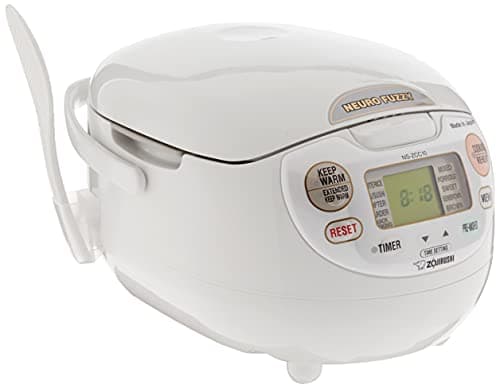
680 W
Zojirushi NS-ZCC10 Neuro Fuzzy Rice Cooker & Warmer, 5.5 Cup
The rice cooker every other one is measured against. Its Neuro Fuzzy microcomputer adjusts heat through the cook rather than running a fixed timer, which is the whole reason a $260 rice cooker cooks rice better than a $30 one. Made in Japan, 680 W, and the settings that matter are all there.
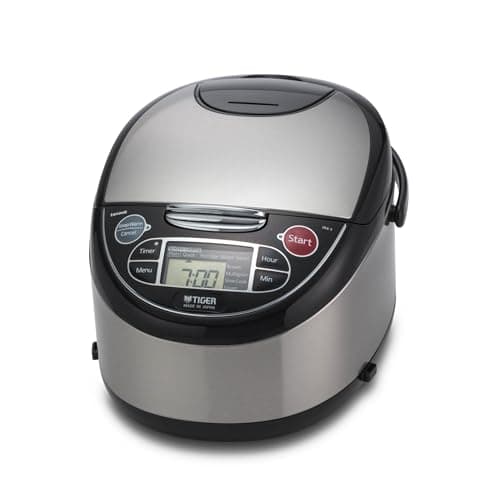
641 W
Tiger JAX-T10U Micom Rice Cooker & Warmer with tacook, 5.5 Cup
Tiger's answer to Zojirushi, with one trick the Zojirushis do not have: the tacook synchronous-cooking tray steams a dish above the rice while it cooks below, from the same 641 W. A Micom fuzzy-logic cooker made in Japan, with a genuinely useful feature the marketing did not invent.
#ad · As an Amazon Associate we earn from qualifying purchases.
Questions
Frequently asked
How much water do you use for basmati rice in a rice cooker?
Should you soak basmati rice before cooking?
Why is my basmati rice sticky?
Keep reading
Related
Receipts
Sources
- Zojirushi — NS-ZCC10 Neuro Fuzzy Rice Cooker product page
- USDA FoodData Central — rice, cooked (nutrition reference)
We have not tested these machines in a lab and we do not pretend to have. Specifications come from the manufacturer's own published documents; electricity rates come from the US Energy Information Administration; prices come from the live Amazon API. Where a figure is not published, the page says “not published” rather than guessing. Read the full method.