HUB 02 · Rice Cookers
Rice-to-Water Ratio, by Rice Type
Get the ratio right and a cheap cooker makes good rice; get it wrong and the best cooker on the counter makes mush. Here are sensible starting ratios for each common rice, why rinsing shifts them, and the measuring-cup gotcha that trips up almost every new rice-cooker owner.
We earn a commission if you buy through our links. It does not change the price you pay, and it does not decide our picks — the scoring rubric is published in full, including what disqualifies a pick. How this works.
Start here: the rice-cooker cup is not a US cup
The single most common rice-cooker mistake has nothing to do with the ratio and everything to do with the cup. The measuring cup that ships with almost every rice cooker is a Japanese rice cup, 180 ml — not a US measuring cup of 240 ml. The lines inside the pot assume you measured rice with that 180 ml cup. So the reliable method is simple: measure rice with the cup that came with the cooker, add water to the matching line in the pot, and ignore US-cup ratios entirely. The pot lines are calibrated; trust them.
If you are measuring by volume yourself
When you do not have the pot lines — measuring in a regular cup, or cooking on the stovetop — these are sensible starting ratios by volume (rice : water), to adjust to your taste after the first batch:
- White long-grain: 1 : 1.25 to 1 : 1.5
- Jasmine: 1 : 1.25 — it likes a little less water, rinsed well
- Basmati: 1 : 1.5, soaked 20 minutes for the longest, separate grains
- Short-grain / sushi: 1 : 1.1 to 1 : 1.2 — less water for a firm, distinct-but-sticky grain
- Brown rice: 1 : 2 to 1 : 2.25 — the bran needs more water and longer
Why rinsing changes the ratio
Rinsing rice until the water runs clear removes surface starch, which is what makes rice gluey and prone to boiling over. Rinsed rice also carries some water into the pot, so rinsed rice generally needs slightly less added water than the package assumes. Rinse white, jasmine, basmati and sushi rice; you can skip it only for rice explicitly labeled “rinse-free.” A good fuzzy-logic cooker like the Zojirushi Neuro Fuzzy even has a rinse-free setting that accounts for the difference.
Why the cooker still matters
The ratio gets you to good rice; the cooker's technology gets you to great rice from the same ratio. A fuzzy-logic cooker adjusts the heat as it goes, so it forgives small ratio errors and nails the texture; a basic cooker runs a fixed program, so your ratio has to be more precise, and even a budget Aroma — which claims a “Sensor Logic” Aroma never explains — gives you only white and brown rice settings to work with. Same water, different result — which is the whole argument for spending more, laid out in induction vs fuzzy logic.
Dialing in your own perfect ratio
Cook one batch at the starting ratio, then adjust by a tablespoon or two of water per cup: wetter or clumpy means slightly less water next time; dry or firm at the bottom means slightly more. Two or three batches and you will have your ratio for your rice and your cooker — which is more reliable than any chart, because it accounts for the one variable a chart cannot. Let the rice rest, lid on, for 10 minutes after cooking before you fluff it. See how to use a rice cooker for the full routine.
The hardware
The cookers this page is about
The cookers referred to above, with prices pulled live from Amazon and dated on every card. Full rankings live in the roundups linked from this page.
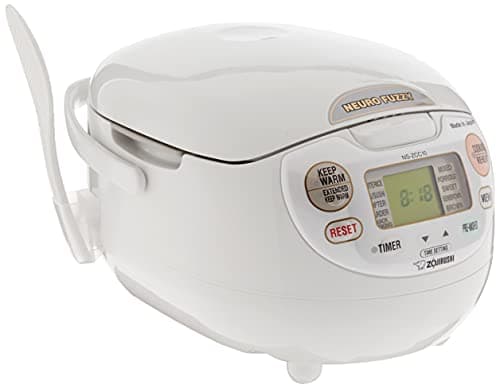
680 W
Zojirushi NS-ZCC10 Neuro Fuzzy Rice Cooker & Warmer, 5.5 Cup
The rice cooker every other one is measured against. Its Neuro Fuzzy microcomputer adjusts heat through the cook rather than running a fixed timer, which is the whole reason a $260 rice cooker cooks rice better than a $30 one. Made in Japan, 680 W, and the settings that matter are all there.
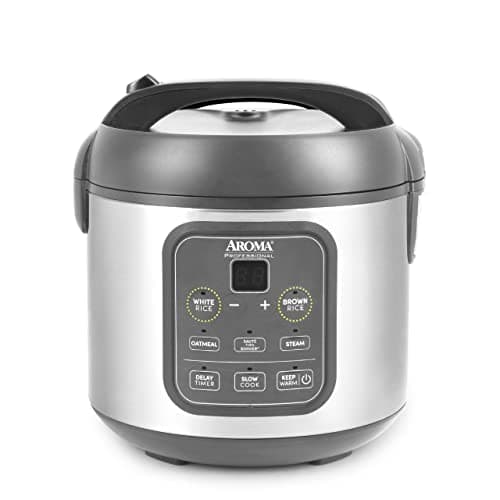
450 W
Aroma Professional ARC-994SG Digital Rice Cooker & Multicooker
The budget pick now, and an honest one. For around forty dollars it cooks white and brown rice, sautés then simmers, slow-cooks for 2 to 10 hours and steams — a genuine little multicooker in a small pot — and Aroma publishes its 450 W draw. What Aroma does not publish is how its 'Sensor Logic' works, and there are only two rice programs, so this is the versatility pick, not the rice-quality one.
#ad · As an Amazon Associate we earn from qualifying purchases.
Questions
Frequently asked
What is the correct rice-to-water ratio?
Is the cup that comes with a rice cooker a normal cup?
Do you use more or less water for rinsed rice?
Keep reading
Related
- What is a rice cooker cup?Why the 180 ml cup changes every ratio.
- How much rice per personPortioning, and the rice-cooker-cup vs US-cup trap.
- How to use a rice cookerThe full routine, from rinse to rest.
- The best rice cookers for brown riceWhere the higher water ratio matters most.
- Are rice cookers worth it?Why the machine forgives ratio errors.
Receipts
Sources
- Zojirushi — NS-ZCC10 Neuro Fuzzy Rice Cooker product page
- USDA FoodData Central — rice, cooked (nutrition reference)
We have not tested these machines in a lab and we do not pretend to have. Specifications come from the manufacturer's own published documents; electricity rates come from the US Energy Information Administration; prices come from the live Amazon API. Where a figure is not published, the page says “not published” rather than guessing. Read the full method.