The short answer
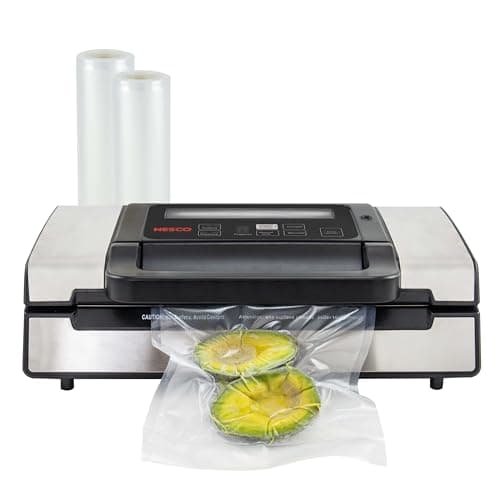
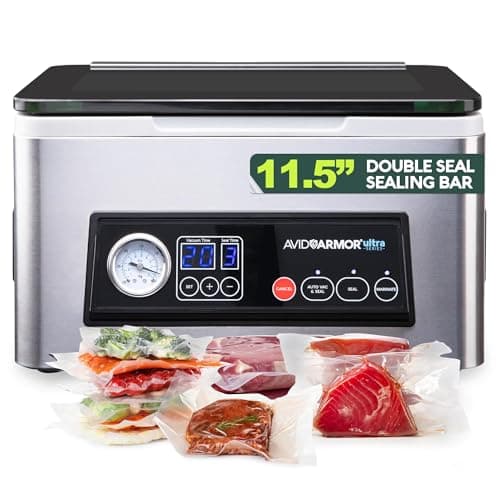
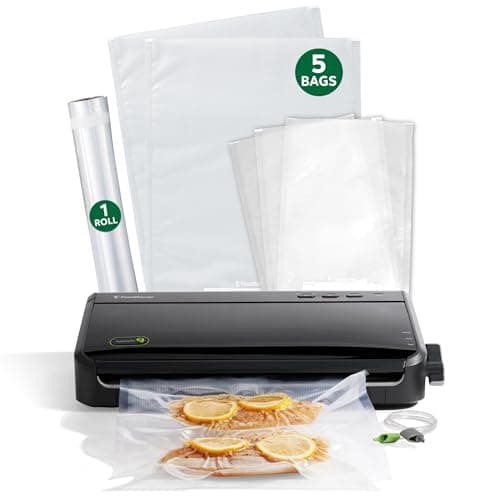
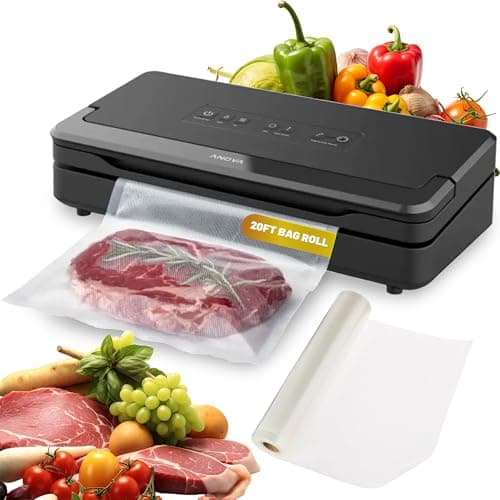
Buy the Anova Precision Vacuum Sealer Pro.It is the best-documented edge sealer here — 110 W, a published 12 L/min extraction rate (the only one on this page), an accessory port with the hose in the box and a two-year warranty, the longest of the four — and Anova describes it in terms of exactly the problem sous vide has: a low-pressure suction function and a double seal for juicy food. Buy the Nesco VS-12 if you want control rather than convenience: it is the only machine here with separate Dry/Moist seal timing and Normal/Gentle vacuum pressure and a pulse vacuum and a manual seal, which together are how you stop a pump from crushing a fish fillet. Buy the Avid Armor USV20if you actually seal liquid — soup, brine, a wet marinade — because a chamber machine is a different mechanism rather than a better edge sealer, and no edge sealer on earth does that job. The FoodSaver FM2100 is the cheapest here and the only one whose own listing says sous vide on it; it also has no pulse, no manual seal and no published wattage at all.
Why sous vide is a different sealing problem
An edge sealer works by clamping the open end of a bag and pulling air across it with a pump, then welding the mouth shut. That is close to ideal for a dry steak going into a freezer. Sous vide breaks it in three specific ways.
- Liquid travels with the air.Marinade, brine or the juice already in a piece of meat gets dragged toward the pump as the air leaves. Once it reaches the seal line, the weld fails — a bag with liquid in the seal is a bag that will open in the bath. Every machine on this page addresses this and none of the edge sealers solves it; Nesco is at least honest enough to document a removable tray in the chamber that catches what gets pulled out.
- A full vacuum is too much vacuum. Sous vide does not need a hard vacuum. It needs the air out so the bag makes contact with the water. Pull harder than that and you compress the food: fish flakes, a soft fruit turns to pulp, a delicate custard mixture is ruined. This is why a pulse or manual-seal control matters far more here than raw suction does.
- The bag has to survive hours at temperature.A freezer bag is cold and still. A sous vide bag sits at 55–85°C for anywhere up to two days with water moving past it. That is a demand on the weld, which is why double-sealing — two parallel welds rather than one — is a feature worth looking for and three of these four have it.
Notice what is not on that list: suction power in kPa or inHg, the number sealer marketing leads with. For sous vide, the ability to stop pulling is worth more than the ability to pull hard.
How we ranked them
Wet-food and liquid handling first. Then manual control — a pulse vacuum or a manual seal that lets you cut the vacuum short. Then bag freedom, because a machine tied to one brand of textured roll is a subscription in disguise. Then published specification, which is where this page splits sharply: two of the four makers publish a wattage and two publish nothing we could reach. Price is the last tie-breaker, not the first.
As everywhere on this site, we have not tested these machines. Every figure is the manufacturer's own, cited on each card, and where a maker publishes nothing the card prints no number rather than borrowing one from a similar model. Anova's product page and Nesco's own care-and-use guide gave us full specifications. FoodSaver's site refused every request we made on 2026-11-04, and Avid Armor publishes a voltage, a pump type and a pouch size but no power rating — so neither of those two cards shows a running cost, and the 300 W figure in circulation for the USV20 is a retailer number we are not going to print as if it were the maker's. The full rubric is in our methodology.
Edge versus chamber: the distinction that decides everything
This is the one piece of category knowledge worth having, and almost nobody selling sealers explains it.
An edge sealer— the Anova, the Nesco, the FoodSaver — grips the mouth of the bag and sucks air out through it. The bag is outside the machine, so bag size is limited only by the width of the seal bar, and the machines are small, light and cheap. It cannot handle standing liquid, because the liquid is on the path the air takes.
A chamber sealer— the Avid Armor — puts the whole bag inside a box and drops the pressure in the box. Because the pressure falls equally inside and outside the bag, liquid does not get pulled anywhere; it just sits there while the air leaves. Then the seal bar welds the bag and the box is repressurized. That is how commercial kitchens bag soup and brines. The costs are real: the machine is heavy, it costs several times as much, and the bag has to fit inside a 4-liter chamber, so a whole brisket is not going in it however wide the seal bar is.
There is one more thing chamber machines do that edge sealers cannot, and it is worth knowing before you spend the money: because the pressure drops around the liquid, water in the bag will bubble as it approaches its boiling point at that reduced pressure. Experienced users stop the cycle just before that happens. It is a technique, not a fault, and it is why a chamber machine is a slightly more involved tool as well as a better one.
The specs that decide it, side by side
| Sealer | Type | Published power | Pulse / manual seal | Published warranty |
|---|
| Anova Precision Pro | Edge | 110 W, 12 L/min | Not in the spec table | 2 years |
| Nesco VS-12 | Edge | 130 W | Both, documented | 1 year limited |
| Avid Armor USV20 | Chamber | Not published | Chamber cycle control | Not published on the listing |
| FoodSaver FM2100 | Edge | Not published | Neither | Not published on the listing |
The pattern in the middle column is the interesting one. The two brands that publish a wattage are the two that publish a full specification generally; the two that do not publish a wattage do not publish much else either. That is a signal about documentation culture rather than about build quality, but on a site whose entire authority claim is traceability it is a signal we score.
What a sealer costs to run, and why it barely matters
Every product card on this site shows a running cost at full rated draw, and on a vacuum sealer that figure is almost comically irrelevant: the machine runs for perhaps thirty seconds per bag. At 110 W the Anova Pro consumes less electricity sealing a week of dinners than the circulator uses in ten minutes. If you want to see where the electricity in sous vide actually goes, that is the circulator and the length of the cook, not the sealer.
The consumable cost is the real one. Edge sealers need textured or embossed bags — the channels are what let air travel out — and those cost meaningfully more than plain bags. Chamber machines use smooth, generic pouches, which are cheaper per bag. If you seal twenty bags a week, the bag cost will exceed the machine cost inside a year, and the cheapest machine on this page is not the cheapest system.
Bags, and the one thing not to do
Use bags rated for the temperature. Sous vide bags and vacuum rolls from these makers are, and the better listings say so. What you should not do is reuse a bag that held raw meat, or seal a bag that has food residue across the seal line — Nesco's own guide tells you to wipe the inside of the bag mouth smooth before sealing, which is the single most useful sentence in any of this documentation.
You also do not need a sealer at all, and we are not going to pretend otherwise on a page that earns money from selling them. The water-displacement method gets the air out of a zip bag for free and works for the great majority of home cooks, and our page on Ziploc bags sets out where it stops being good enough: long cooks, higher temperatures, anything you want to freeze afterwards, and anything with enough liquid that the displacement trick is awkward. If those are your cooks, a sealer is a real upgrade. If they are not, buy a better containerinstead — it will change your results more.
One last note on where the marinade goes. A vacuum sealer is often sold on the idea that it marinates faster, and the Nesco has a program built around exactly that. The physics is thinner than the marketing: pressure cycling moves liquid into surface tissue, but it is not a shortcut to a cure. If deep flavor is the goal, salt early and cook long — which is what sous vide is for anyway, and what our temperature and time guide is built around.
If you are working to a budget, the chamber machine is the thing a ceiling takes away: the best vacuum sealers under $200applies that cap to the cent and explains what you give up with it — which is the ability to seal standing liquid at all.
Rank these same four machines on meat instead of on a bath and the order inverts. The best vacuum sealers for meat ranks on the weld rather than on the control — because meat releases liquid of its own and then sits in a freezer for months — which puts the chamber machine first and the Anova third.
Choosing in one minute
You cook sous vide and want one sealer that fits the hobby. Anova Precision Vacuum Sealer Pro. Best documentation here, longest warranty, accessory port in the box, and built by the brand whose circulators we already rank.
You seal delicate food. Nesco VS-12. The pulse vacuum and manual seal let you stop the pump at the point the bag is tight and the fillet is intact, which no one-touch machine can do.
You seal soup, brine or wet marinade. Avid Armor USV20. It is the only machine here that physically can, and no amount of money spent on an edge sealer gets you there.
You want the cheapest machine and mostly seal dry portions. FoodSaver FM2100. Bags are available everywhere, which is worth real money over a few years.
The three mistakes
Shopping on suction. For sous vide, the ability to stop pulling beats the ability to pull hard. Ignoring the bag cost: textured rolls will outspend the machine inside a year if you seal often. And buying a sealer when a lid and a rack for your containerwould improve your cooking more — the bag is rarely the weak link in a home setup.