HUB 02 · Rice Cookers
How Much Rice Per Person?
Cooking the right amount of rice comes down to one rule of thumb and one piece of unit trivia. The rule: figure about a quarter to a third of a rice-cooker cup of uncooked rice per person for a side. The trivia: a rice-cooker cup is smaller than a US cup, which is why a 5.5-cup cooker feeds more people than its number suggests.
We earn a commission if you buy through our links. It does not change the price you pay, and it does not decide our picks — the scoring rubric is published in full, including what disqualifies a pick. How this works.
The rule of thumb
Here is the short answer you came for: as a rough guide, plan on about a quarter to a third of a rice-cooker cup of uncooked rice per person for a side dish, and closer to half a cup or a bit more per person if the rice is the main event — a bowl of fried rice, a curry over rice, a rice-heavy meal. Uncooked rice roughly triples in volume as it cooks, so a small measure of dry rice becomes a generous serving on the plate. That tripling is why people so often over-cook rice: a couple of dry cups looks like nothing in the pot and comes out as a mountain. When in doubt, measure a little conservatively — leftover rice keeps and reheats well, but there is no unmaking too much in one go.
The catch: a rice-cooker cup is not a US cup
The one thing that trips up almost every first-time buyer: a rice cooker's “cup” is the little 180 mL cup that ships in the box, not the 240 mL US measuring cup. So every capacity number and every portioning figure on this page is in rice-cooker cups, and if you measure with a US cup instead you will add too much rice and too much water. Use the plastic cup that came with your cooker, fill the water to the matching line in the pot, and the machine's calibration does the rest. This single unit difference is behind most “my rice came out wrong” problems.
Why a “5.5-cup” cooker feeds more than it sounds
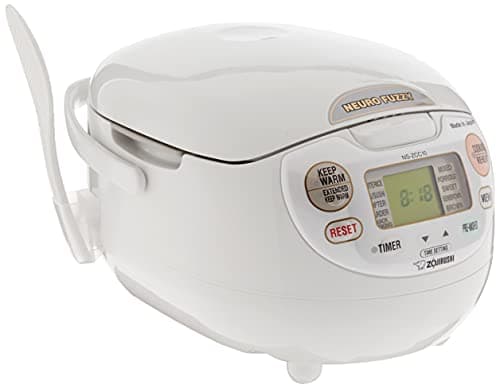
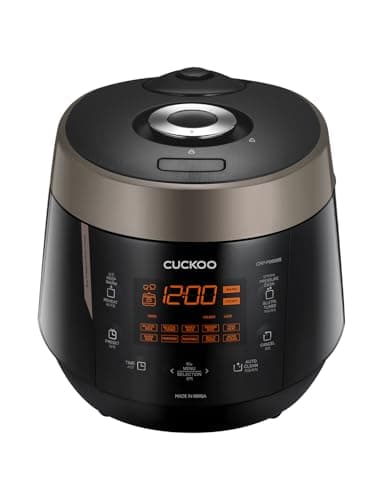
Put the two facts together and the capacity numbers stop being scary. A Zojirushi Neuro Fuzzy is rated 5.5 cup (1.0 L uncooked) — and that is 5.5 of the small 180 mL cups of uncookedrice. Because the rice roughly triples as it cooks, a full pot turns out far more finished rice than “5.5 cups” sounds like — plenty for a family dinner with leftovers. At the side-dish rate of a quarter to a third of a cup per person, even a modest batch stretches across a table, and a full pot covers a crowd. A 6-cup cooker like the Cuckoo CRP-P0609Smakes about 12 US-cups of cooked rice from a full load. So “5.5-cup” and “6-cup” are both genuinely household-sized once you account for the smaller cup and the way rice expands.
A cooked-rice reference point
If you would rather think in finished servings than dry measures, it helps to anchor on cooked rice. A typical cooked portion of rice as a side is on the order of a cupful of cooked rice per person, more for a main — the USDA's nutrition reference for cooked rice (see our sources) catalogs cooked rice by a standard cooked-cup serving, which is a useful sanity check against your own plates. Working back from that, since uncooked rice roughly triples, a cup of cooked rice per person comes from roughly a third of a rice-cooker cup of dry rice — which lines up with the side-dish rule above. You do not need to be precise; rice is forgiving, and a cooker holds extra warm without trouble. The point of the reference is simply to give you a feel for how little dry rice a generous serving actually takes.
Scaling up for a household
For a family or a gathering, multiply the per-person figure and then round up a little for seconds and leftovers. Four people eating rice as a side is comfortably covered by a small batch; the same four as a main, or six or more people, is where a full pot earns its keep. Two practical cautions when you scale: first, keep measuring in rice-cooker cups, because the unit error compounds — get the cup wrong on six cups and you have wasted far more rice than on one. Second, a cooker makes its best rice when the pot is reasonably full but not overfilled — do not fill past the max line, and do not ask a big cooker to make a single cup, which it does less well than a batch it is sized for. If you routinely cook for a crowd, a larger or pressure cooker is the better tool — see the best large rice cookers and, across categories, the best cookers for families.
Leftovers, not shortfalls
When you are unsure, cook a touch more rather than a touch less, because rice is one of the best leftovers there is. Cooked rice keeps for a few days chilled and reheats close to fresh with a splash of water, and brown and mixed rice in particular hold up well for the week — which is exactly why batch cooking rice is such a common habit. The one caveat is food safety: cool leftover rice promptly rather than leaving a full pot at room temperature for hours, then refrigerate it, and reheat it hot when you use it. A cooker's keep-warm is meant to hold a batch through a meal, not to store rice all day, so treat it as a few-hours convenience and move the rest to the fridge.
The honest imprecision
Portioning rice is a rule of thumb, not a formula, and appetites, rice types and the rest of the meal all move the number. Someone eating a rice bowl as their whole dinner needs far more than someone having a spoonful alongside a stew; sticky short-grain eats differently from fluffy long-grain; a rich main means less rice, a light one means more. The figures here — a quarter to a third of a rice-cooker cup per person for a side, up from there for a main — are a reliable starting point that you should adjust to your own table after a couple of meals. What is nota matter of taste is the unit: always measure in rice-cooker cups, and let the pot's water lines do the rest.
The hardware
The cookers this page is about
The cookers referred to above, with prices pulled live from Amazon and dated on every card. Full rankings live in the roundups linked from this page.
680 W
Zojirushi NS-ZCC10 Neuro Fuzzy Rice Cooker & Warmer, 5.5 Cup
The rice cooker every other one is measured against. Its Neuro Fuzzy microcomputer adjusts heat through the cook rather than running a fixed timer, which is the whole reason a $260 rice cooker cooks rice better than a $30 one. Made in Japan, 680 W, and the settings that matter are all there.
890 W
Cuckoo CRP-P0609S High-Pressure Rice Cooker, 6 Cup
A pressurized rice cooker, which is the Korean approach and a genuinely different one: cooking rice under pressure raises the boiling point and produces a distinctly fluffier, stickier grain, especially for short-grain and mixed rice. 890 W, a 304 stainless pot, and Cuckoo's signature talking interface.
#ad · As an Amazon Associate we earn from qualifying purchases.
Questions
Frequently asked
How much uncooked rice per person?
How many people does a 5.5-cup rice cooker feed?
Why is a rice-cooker cup smaller than a measuring cup?
Keep reading
Related
Receipts
Sources
- USDA FoodData Central — rice, cooked (nutrition reference)
- Zojirushi — NS-ZCC10 Neuro Fuzzy Rice Cooker product page
We have not tested these machines in a lab and we do not pretend to have. Specifications come from the manufacturer's own published documents; electricity rates come from the US Energy Information Administration; prices come from the live Amazon API. Where a figure is not published, the page says “not published” rather than guessing. Read the full method.