Skip to content
DD

HUB 03 · Sous Vide

The best sous vide machines for a crowd

Sous vide is the easiest way there is to serve twelve people a perfect steak at the same moment - and the machine that handles one steak beautifully can stall completely at twelve. The constraint is not accuracy. It is how much water the circulator can heat, move and hold while you drop a cold load into it.

By Stephen V.Updated How we rank
#ad

We earn a commission if you buy through our links. It does not change the price you pay, and it does not decide our picks — the scoring rubric is published in full, including what disqualifies a pick. How this works.

The short answer

Quick picks

#CookerBest forScorePrice
01
Anova Anova Precision Cooker 3.0 (WiFi), 1100 W
Anova Precision Cooker 3.0 (WiFi), 1100 W

The default, and it earned it

1,100 W
9.0
$169.00Amazon
02
Breville Breville Joule Turbo Sous Vide (BSV600), 1100 W
Breville Joule Turbo Sous Vide (BSV600), 1100 W

The smallest, if you live in the app

1,100 W
8.1
$223.61Amazon
03
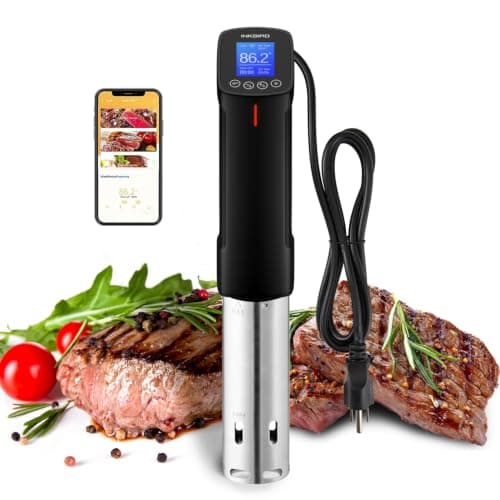
Inkbird Inkbird ISV-100W WiFi Sous Vide, 1000 W
Inkbird ISV-100W WiFi Sous Vide, 1000 W

WiFi and a screen for under $100

1,000 W
8.8
$95.99Amazon
041,100 W
8.1
$89.99Amazon
051,100 W
7.4
$41.99Amazon

#ad· Prices pulled live from Amazon's official Creators API, last checked October 22, 2026. Where we have no verified live price we show none — we would rather leave a gap than print a number that has gone stale. The wattage column is what the manufacturer publishes; “not published” means exactly that, and we have not estimated one. Scores are ours, compiled from published specifications, and are not test results.

The short answer

Buy the Anova Precision Cooker 3.0. For a crowd you want power and water movement, and it is the only machine here that publishes both: 1,100 W and an 8 L/min pump, the fastest published flow rate in this catalog, plus a ±0.1°C accuracy figure and a two-year warranty — the longest here. Buy the Breville Joule Turbo if your vessel is going to be genuinely large: Breville publishes a vessel capacity of up to 10 gallons, the biggest figure any manufacturer on this page states, and the magnetic foot means it stands in a stockpot without a clamp. It is app-only, which is a real cost. Buy two Inkbird ISV-100Wsif the honest answer to your problem is more circulators rather than a better one — it publishes 1,000 W, a 15 L capacity and WiFi for under a hundred dollars, so two of them cost about one Anova and heat two baths. The Greater Goods cooker is the pick for the longest cooks: a silent brushless motor rated for 99 hours continuous, no app to drop out overnight. The Wanclepublishes the single largest maximum bath figure on this page — 20 L— for the least money, and carries no published warranty at all.

Why cooking for a crowd is a different problem

A circulator's job is to hold a bath at a set point. With one steak in a pot that is nearly effortless: the water is already at temperature, the bag barely changes it, and the machine idles. Scale the same cook to twelve portions and three things change at once, and none of them is the thing the marketing talks about.

  1. The bath gets big, and heating it is work.Water takes a fixed amount of energy to warm, so a bath four times the size takes roughly four times as long to come up — and the only lever is rated power. This is where a 1,100 W machine pulls away from an 850 W one, and the gap is wall-clock time before you have even started cooking.
  2. A cold load pulls the temperature down. Twelve bags out of the fridge dump real cold into the bath, and the machine has to claw it back. Recovery depends on power and on how fast the pump can distribute the heat it is making, which is why flow rate stops being a spec-sheet curiosity above about four portions.
  3. A full bath circulates badly. Pack a container with bags and the water cannot move between them; you get cold pockets, and the machine happily reports the right temperature at its own sensor while a bag in the middle sits cooler. The fix is partly the pump, mostly the rack, and never a better set point.

Notice what is noton that list: accuracy. Every circulator here that publishes an accuracy figure publishes ±0.1°C, and a tenth of a degree is irrelevant next to a cold pocket. Shopping a crowd cook on precision is shopping the wrong number.

How we ranked them

Rated power first, then published pump flow, then published maximum bath volume, then continuous-run rating and warranty, then whether the machine can be run and monitored without a phone. As everywhere on this site, we have cooked with none of these machines— every figure comes from the manufacturer's own product page or safety guide, cited on each card, and every pick carries a real disqualifying con. The full rubric is in our methodology. Prices move, so we do not print them in prose; the live price sits on each card.

The volume specs, side by side

This is the table the category does not usually print, and the gaps in it are as informative as the numbers. Three of the five publish a maximum bath or vessel figure; two do not.

Published rated power, pump flow, maximum bath or vessel capacity and continuous-run rating. Every cell is the manufacturer's own figure.
CirculatorRated powerPump flowMax bath / vesselContinuous run
Anova Precision Cooker 3.01,100 W8 L/minNot publishedNot published
Breville Joule Turbo1,100 WNot publishedUp to 10 gallonsNot published
Inkbird ISV-100W1,000 WNot published15 LNot published
Greater Goods1,100 WNot publishedNot published99 hours
Wancle 8201,100 WNot published20 L (min depth 4.5 cm)Timer to 99 hr 59 min

Read it carefully, because the headline number is a trap. Wancle's 20 L is the largest bathfigure and Breville's 10 gallons — about 38 L — is the largest vesselfigure, and neither is directly comparable to the other or to the three blanks. A maximum bath figure is the maker saying “above this we do not promise the machine holds temperature,” and the makers that publish nothing are not thereby unlimited. What the table genuinely tells you is that no circulator on this page is rated for the 20-gallon coolerpeople sometimes reach for, and that four of the five put 1,100 W behind whatever they do cover.

1. Anova Precision Cooker 3.0 — power and water movement, both published

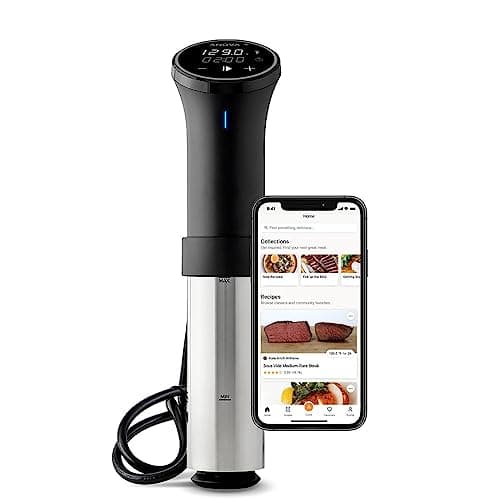
The Anova Precision Cooker 3.0 wins because it is the only machine here that publishes the two numbers a crowd cook actually consumes: 1,100 W of heating and an 8 L/min pump. Flow rate is the spec that decides whether a loaded bath has cold pockets, and Anova is the only brand in this catalog that will tell you what its pump moves — which, on a page about batch cooking, is close to decisive. Add a published 0–92°C range, ±0.1°C accuracy, an on-device touchscreen so it runs with no phone involved, and a two-year warranty— double everything else here — and it is the machine we would put in a kitchen that cooks for groups regularly.

The honest cons. It is large: 325 mm tall and a bulkier clamp-and- skirt design than the Joule's magnetic foot, which matters for storage rather than cooking. Anova publishes no maximum bath volume, so for the one spec this page is built around you are inferring from power and flow rather than reading a number. And 1,100 W is a genuine draw — irrelevant for one cook, worth knowing if the bath runs all day on a circuit with other things on it.

2. Breville Joule Turbo — the biggest published vessel, if you live in the app

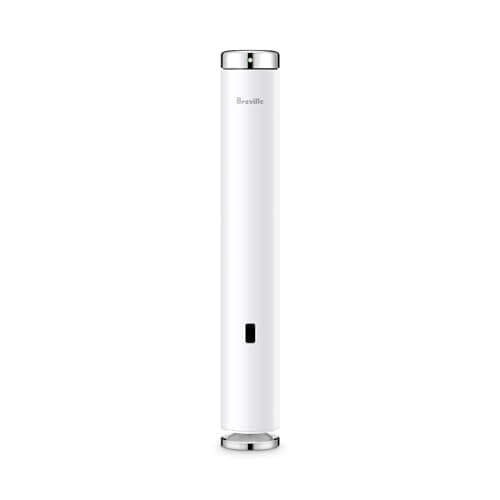
On most pages of this site the Joule is penalized for being app-only. Here it places second anyway, because Breville publishes a vessel capacity of up to 10 gallons— roughly 38 liters, and the largest figure any maker on this page states. Paired with 1,100 W at 120 V from the BSV600 safety guide and a magnetic foot that lets the machine stand in a stockpot or a cooler without clamping to a rim, that makes it the natural pick if your plan involves a genuinely big vessel rather than a 12-liter tub. Turbo mode shortens cook times, which on a day when the bath has to turn over twice is a real schedule gain, and IPX7 means the body survives being rinsed.

The costs are not small and you should weigh them before a party. It is app-only — no buttons, no screen. If your phone is dead, the app has an outage, or the WiFi drops while twenty people are in your kitchen, you cannot change the set point. Breville also publishes no temperature range and no accuracy figureon any manual we have found, which for a precision device is a real documentation gap, and the warranty is one year against Anova's two. For a hosted meal specifically, the no-screen limitation is worth more thought than it gets: the WiFi roundup covers what app control does and does not buy.

3. Inkbird ISV-100W — the one to buy two of

The Inkbird ISV-100Wis third on merit and first on a strategy nobody sells you: for a crowd, two circulators often beat one better circulator. Inkbird publishes 1,000 W, a 25–99°C range, ±0.1°C accuracy, a 15 L capacityand WiFi with an on-device dot-matrix screen — a complete spec sheet at a price where most rivals publish nothing — and it lands under a hundred dollars. Two of them cost about what one Anova costs, and two 15-liter baths solve problems one 30-liter bath cannot: you can run steak at one temperature and vegetables or chicken at another, which is what cooking for a group actually looks like.

That is also the fix for the packing problem. Two moderately loaded containers circulate far better than one crammed one, and you have removed the single-point failure: if one machine quits an hour before service, half the food is still on schedule. The cons are the ordinary ones — a one-year warranty against Anova's two, an app that is functional rather than good, 2.4 GHz WiFi only, and a weight figure on Inkbird's own page that is internally inconsistent, which is a small sign the documentation is less polished. For two-bath cooking none of that outweighs the arithmetic.

4. Greater Goods — for the cooks that run overnight

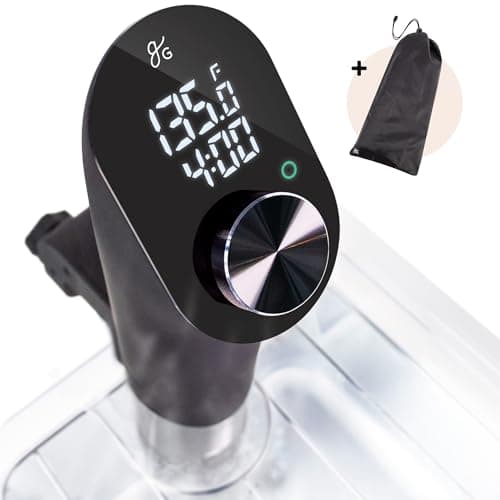
Crowd cooking and long cooking overlap more than you would think: the cuts that feed twelve cheaply are the ones that want 12 to 24 hours or more. The Greater Goods cookeris built for that. Greater Goods publishes 1,100 W, a 20–95°C range and a silent brushless motor rated for 99 hours of continuous running— the only continuous-run rating any manufacturer on this page states, and it covers the longest sous vide cooks there are. There is no app and no WiFi at all, which is the right answer for an unattended overnight bath: nothing to update, nothing to disconnect, no notification to miss. And it is quiet, which you notice when the machine is running in a kitchen at 2 a.m. rather than for forty minutes.

The cons are documentation and connectivity, in that order. Greater Goods publishes no temperature-accuracy figure and no warranty durationon its product page, so two of the things you would want to know before trusting it with a 24-hour cook are simply absent. There is no remote monitoring by design, which is a genuine loss if you wanted to check a bath from bed or from work. And it publishes no bath-volume figure, so again you are inferring capacity from its 1,100 W. Can you sous vide overnight covers the safety and practical side of long unattended cooks.

5. Wancle 820 — the biggest published bath, for the least money

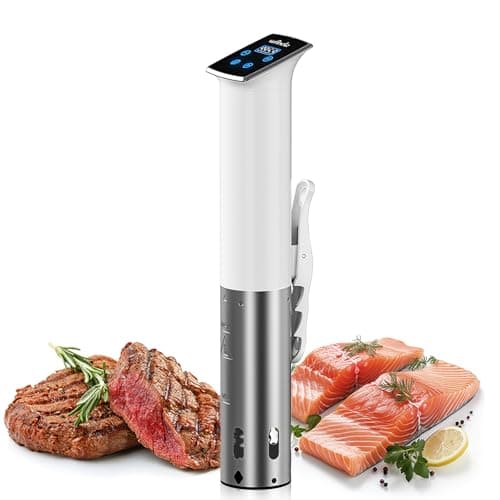
The Wancle 820publishes the single largest maximum bath on this page — 20 L, with a stated minimum water depth of 4.5 cm — at 1,100 W, with a timer that runs to 99 hours 59 minutes and an IPX7 body you can rinse under a tap. Wancle prints a real spec sheet: wattage, range, timer, maximum bath and minimum depth are all on its own product page, which at this price is more than you have any right to expect. If the plan is a one-off party and the budget is the binding constraint, this is the honest pick, and buying two of them is cheaper than one of almost anything else here.

Three real cons. It tops out at 90°C, below the 95–99°C the others reach — fine for everything sous vide actually asks for, not fine if you wanted a near-boiling bath for vegetables. The ±0.1°C accuracy is Wancle's own claim with no third-party verification behind it, and at this price we would read it as a claim. And Wancle publishes no warranty term at all, anywhere in its own materials, so you are buying on the retailer's return window. For a machine that will run a 20-liter bath for twelve hours on the day it matters most, that is the risk you are accepting.

The container is half the answer, and no circulator comes with one

This is the part people discover on the day. The circulator you buy sets a ceiling on bath size; the vessel you put it in decides whether you get anywhere near it. A stockpot works for one or two portions and is hopeless at eight — tall, narrow, and bags stack against each other. What a crowd cook wants is wide and shallow: more surface area for bags to sit side by side, with water able to move between them.

Three practical rules, none of which costs anything. Bags must not touch. Two bags pressed together behave as one thick piece of food and the middle lags; a rack, or binder clips on the rim, or honestly just spacing them by hand, fixes the commonest cause of an undercooked portion in a big batch. Cover the bath.A big surface area evaporates fast over a long cook, the water level falls below the circulator's minimum, and the machine shuts off hours into a 12-hour cook — cling film, a lid or a layer of ping-pong balls all work, and the cover also cuts the energy the machine wastes reheating. Respect the minimum depth.Wancle publishes 4.5 cm and every machine has one; a wide shallow vessel can hold plenty of water and still be too shallow at the circulator. What container to use for sous vide goes through the options properly, and how to keep a bag from floating is the other thing that goes wrong at volume.

The food-safety arithmetic nobody mentions

Cooking for one, the safety question barely arises. Cooking for twelve, two things change and both are worth planning around rather than improvising.

First, a loaded bath takes longer to come back up. Sous vide safety is a function of time andtemperature — food is pasteurized by being held long enough at a given temperature, which is why the method works at temperatures below a conventional “done” reading at all. If a cold load of twelve bags drops the bath by several degrees and it takes half an hour to recover, your held-at-temperature clock starts later than you think. Load the bags, let the bath return to the set point, and start timing from there. The USDA's own guidance on cooking safely with time and temperature is the reference worth reading before you scale a recipe up.

Second, service is the risky part, not the cooking.A crowd means food sitting out while people serve themselves, and the USDA is unambiguous about the 40–140°F danger zone and the two-hour rule for food left at room temperature. The sous vide answer is pleasant: leave the bags in the bath until the moment you serve, because the bath is a holding oven at exactly the right temperature. That is the real reason sous vide suits a crowd — not precision, but the fact that nothing is ever waiting. Is sous vide safe covers the mechanism in full, and whether you can overcook sous vide answers the question that follows, which is how long you can leave things in.

Searing twelve steaks, which is the actual bottleneck

Worth saying plainly, because the circulator is not the hard part of this meal. Twelve bagged steaks come out of the bath perfect and identical; then you have to sear twelve steaks in a pan that holds two, and the first ones go cold while the last ones cook. This is where a sous vide dinner party goes wrong, and no machine on this page helps.

What helps: a second pan, a griddle or a grill with real surface area; drying the meat thoroughly out of the bag so the sear takes seconds rather than minutes; the hottest fat you are comfortable with; and accepting that a sous-vide steak is already at serving temperature so the sear is purely a crust and should take well under a minute a side. Searing before or after sous vide is the full argument, and the pre-sear option is genuinely worth considering for a crowd precisely because it moves work off the critical path.

What we would buy

You cook for groups regularly:the Anova Precision Cooker 3.0 — the most power and the only published pump flow, with two years of warranty behind it. Your vessel is a cooler or a stockpot and you want the biggest rated bath: the Breville Joule Turbo, accepting that your phone is the only control. You want two temperatures, or redundancy on the day: two Inkbird ISV-100Ws, which is the best value on this page and the answer we would actually choose for a party. The cook runs overnight: the Greater Goods cooker, for 99 rated hours and nothing to disconnect. One-off, tight budget: the Wancle, with its published 20-liter bath and its missing warranty both taken seriously.

And if you are not yet sure sous vide is the technique you want for the occasion, the general best-sous-vide ranking is the page to start from, with the beginner roundup if this would be your first machine.
In detail

The picks, in full

01
Anova Anova Precision Cooker 3.0 (WiFi), 1100 W

The default, and it earned it

Anova Precision Cooker 3.0 (WiFi), 1100 W

Fully specifiedWorks without the app
9.0/10

The sous vide circulator most people should buy. Anova publishes the full specification — 1,100 W, a 0–92°C range, ±0.1°C accuracy, an 8 L/min pump — and backs it with a two-year warranty, the longest here. It has an on-device screen so it works without the app, which the Joule does not.

Capability
9.5
Capacity
8.5
Documentation
10
Build
8.5
Value
8.5

What it gets right

  • Anova publishes the complete specification — wattage, temperature range, accuracy and pump flow — which almost nobody else in this class does
  • An on-device touchscreen means it works fully without a phone, unlike the app-only Joule
  • A two-year warranty, the longest of any sous vide machine on this site

What it doesn't

  • At 325 mm tall it is a large device to store next to the slimmer Nano or Joule
  • The clamp-and-skirt design is bulkier than the Joule's magnetic foot
  • 1,100 W is a real draw — powerful, but the most per hour of the sub-premium circulators here alongside the Joule and Greater Goods

What it costs to run

About 20.7¢ an hour at full rated draw, at the US average of 18.83¢ per kWh.

1,100 W ÷ 1000 × 1 h × 18.83¢ = 20.7¢

1100 W, published on Anova Culinary's own Precision Cooker 3.0 product page alongside the temperature range, accuracy and pump rate. This is an upper bound: the element only draws full power while it is heating up or pressurizing, then cycles off to hold temperature, and no manufacturer publishes a duty cycle — so we compute at full rated draw rather than invent a correction factor. The full method is published.

Skip this if…

…you want the smallest possible device or you cook small portions in shallow water — the slimmer Nano is cheaper, lighter and enough for a single steak, and this is the one to buy only if you want the full power and the longer range.

$169.00on Amazon

$229.0026% off

Price last checked October 22, 2026. Prices move constantly — Amazon's at checkout is the one that counts.

#ad · we may earn a commission from this link to Anova Precision Cooker 3.0 (WiFi), 1100 W

02
Breville Breville Joule Turbo Sous Vide (BSV600), 1100 W

The smallest, if you live in the app

Breville Joule Turbo Sous Vide (BSV600), 1100 W

Smallest body hereApp-only, no screen
8.1/10

The smallest, cleverest and most divisive circulator here. It is app-only — there are no buttons and no screen, so your phone is the interface, full stop. In return you get the most compact body, a magnetic foot, IPX7 waterproofing, and a Turbo mode Breville claims can halve the time. 1,100 W.

Capability
8.5
Capacity
9
Documentation
6
Build
9
Value
8

What it gets right

  • The most compact circulator on this site, with a magnetic foot that lets it stand in a pan without a clamp
  • Turbo mode genuinely shortens cook times, and the app's visual doneness guide is the best beginner tool in the category
  • IPX7 waterproofing and a polished build that feels a tier above its rivals

What it doesn't

  • It is app-only — no buttons, no screen. If your phone is dead or the app has an outage, the machine does nothing
  • Breville does not publish a temperature range or accuracy figure on any manual we could find, which for a precision device is a real documentation gap
  • A one-year warranty, half the Anova's

What it costs to run

About 20.7¢ an hour at full rated draw, at the US average of 18.83¢ per kWh.

1,100 W ÷ 1000 × 1 h × 18.83¢ = 20.7¢

1100 W at 120 V / 60 Hz, published in Breville's own BSV600 Joule safety guide. This is an upper bound: the element only draws full power while it is heating up or pressurizing, then cycles off to hold temperature, and no manufacturer publishes a duty cycle — so we compute at full rated draw rather than invent a correction factor. The full method is published.

Skip this if…

…you do not want your cooking gated behind a phone app. The Joule cannot be operated any other way, and if that bothers you at all it will bother you every time — the Anova 3.0 has an on-device screen for exactly this reason.

$223.61on Amazon

$249.9511% off

Price last checked October 22, 2026. Prices move constantly — Amazon's at checkout is the one that counts.

#ad · we may earn a commission from this link to Breville Joule Turbo Sous Vide (BSV600), 1100 W

03
Inkbird Inkbird ISV-100W WiFi Sous Vide, 1000 W

WiFi and a screen for under $100

Inkbird ISV-100W WiFi Sous Vide, 1000 W

Fully specified under $100On-device screen + WiFi
8.8/10

The value pick that does not feel like one. Under $100, and Inkbird still publishes the full specification: 1,000 W, a 25–99°C range, ±0.1°C accuracy, 15 L capacity, WiFi and an on-device dot-matrix screen. It undercuts the Anova by more than half and gives up remarkably little on paper.

Capability
9
Capacity
8.5
Documentation
9.5
Build
7.5
Value
9.5

What it gets right

  • Publishes the complete specification — wattage, range, accuracy, capacity — at a price where most rivals publish nothing
  • An on-device dot-matrix screen and WiFi both, so it works with or without the app
  • ±0.1°C accuracy on paper matches the Anova, for less than half the money

What it doesn't

  • A one-year warranty against the Anova's two
  • The listed weight figure on Inkbird's own page is internally inconsistent — a small sign the documentation is less polished than Anova's
  • The app is functional rather than good, and the WiFi is 2.4 GHz only

What it costs to run

About 18.8¢ an hour at full rated draw, at the US average of 18.83¢ per kWh.

1,000 W ÷ 1000 × 1 h × 18.83¢ = 18.8¢

1000 W, published on Inkbird's own ISV-100W product page alongside the range, accuracy and capacity. This is an upper bound: the element only draws full power while it is heating up or pressurizing, then cycles off to hold temperature, and no manufacturer publishes a duty cycle — so we compute at full rated draw rather than invent a correction factor. The full method is published.

Skip this if…

…you want the longest warranty and the most refined app — that is the Anova, and it costs the difference. On the cooking specification itself, this gives up very little.

$95.99on Amazon

Price last checked October 22, 2026. Prices move constantly — Amazon's at checkout is the one that counts.

#ad · we may earn a commission from this link to Inkbird ISV-100W WiFi Sous Vide, 1000 W

04
Greater Goods Greater Goods Sous Vide Precision Cooker, 1100 W

Quiet, simple, no app

Greater Goods Sous Vide Precision Cooker, 1100 W

Silent brushless motorWarranty length not published
8.1/10

The circulator for people who want none of the connectivity. No WiFi, no app, no phone — a dial, a screen and a silent brushless motor rated to run 99 hours straight. 1,100 W, a 20–95°C range, and a build that is quieter than anything else here.

Capability
8
Capacity
8.5
Documentation
7
Build
8.5
Value
8.5

What it gets right

  • A silent brushless motor genuinely is quieter than the geared pumps in most rivals — noticeable on a long overnight cook
  • No app and no WiFi to set up, fail or update: a dial, a screen, done
  • Rated for 99 hours of continuous running, which covers the longest sous vide cooks there are

What it doesn't

  • Greater Goods does not publish a temperature-accuracy figure or a warranty duration on its product page
  • No connectivity at all, which is a genuine loss if you wanted to start a cook from work
  • The specification is otherwise thinner than the Anova's or Inkbird's

What it costs to run

About 20.7¢ an hour at full rated draw, at the US average of 18.83¢ per kWh.

1,100 W ÷ 1000 × 1 h × 18.83¢ = 20.7¢

1100 W, published on Greater Goods' own product page alongside the temperature range and motor rating. This is an upper bound: the element only draws full power while it is heating up or pressurizing, then cycles off to hold temperature, and no manufacturer publishes a duty cycle — so we compute at full rated draw rather than invent a correction factor. The full method is published.

Skip this if…

…you want to control or monitor a cook from your phone — this model has no connectivity by design. If remote start matters, the Inkbird gives you WiFi for a similar price.

$89.99on Amazon

Price last checked October 22, 2026. Prices move constantly — Amazon's at checkout is the one that counts.

#ad · we may earn a commission from this link to Greater Goods Sous Vide Precision Cooker, 1100 W

05
Wancle Wancle 1100 W Sous Vide Immersion Circulator (820)

The floor of the category

Wancle 1100 W Sous Vide Immersion Circulator (820)

Cheapest hereNo published warranty
7.4/10

The cheapest way to find out whether you actually like sous vide, now that the Monoprice is gone. 1,100 W, a published 25–90°C range, an IPX7 body you can rinse under the tap, and a spec sheet Wancle actually prints. It claims ±0.1°C, which nobody independent has checked — and it publishes no warranty at all.

Capability
6.5
Capacity
8
Documentation
7
Build
6
Value
9.5

What it gets right

  • The lowest price of any sous vide machine on this site, and 1,100 W — more heating power than the 800 W Monoprice it replaces, so it comes up to temperature faster
  • Wancle publishes a real spec: wattage, temperature range, timer range, maximum bath size and minimum water depth are all on its own product page
  • IPX7 means the body can be rinsed under running water rather than wiped around, which is a genuine convenience on a machine that lives in a water bath

What it doesn't

  • It tops out at 90°C (194°F), below the 100°C the Monoprice reached — fine for everything sous vide actually asks for, but it will not hold a near-boiling bath
  • The ±0.1°C accuracy is Wancle's own number with no third-party verification behind it, and at this price we would treat it as a claim rather than a measurement
  • Wancle publishes no warranty term anywhere in its own materials, so you are buying on the retailer's return window and nothing more

What it costs to run

About 20.7¢ an hour at full rated draw, at the US average of 18.83¢ per kWh.

1,100 W ÷ 1000 × 1 h × 18.83¢ = 20.7¢

1100 W, published on Wancle's own 820 product specification page. This is an upper bound: the element only draws full power while it is heating up or pressurizing, then cycles off to hold temperature, and no manufacturer publishes a duty cycle — so we compute at full rated draw rather than invent a correction factor. The full method is published.

Skip this if…

…you want a machine you can still get parts or support for in five years. Wancle publishes no warranty at all and is not a brand with a service network — if that matters, the Anova or the Inkbird cost more for exactly that reason.

$41.99on Amazon

Price last checked October 22, 2026. Prices move constantly — Amazon's at checkout is the one that counts.

#ad · we may earn a commission from this link to Wancle 1100 W Sous Vide Immersion Circulator (820)

Sizing it properly: how much bath do you actually need?

Work from the food, not the guest count. Bags need to sit side by side without touching, and water needs room to move around them, so the practical rule is that a bath holds comfortably about half what it looks like it should. A 12-liter container handles roughly six to eight steak-sized bags laid out properly. Beyond that you are choosing between a bigger vessel and a second circulator, and for most home kitchens the second circulator is the better buy: cheaper than the step up in machine class, gives you two temperatures, and removes the single point of failure.

Power, flow and why only two numbers matter

Rated powersets how fast the bath comes up from cold and how fast it recovers after you load it. Four of the five picks here are 1,100 W and the Inkbird is 1,000 W; the machines to avoid for volume are the small ones, which is why the 850 W Anova Nanois deliberately not a pick on this page — it is an excellent circulator for one or two portions and the wrong tool here. Pump flowsets how evenly that heat is distributed through a loaded bath, and Anova is the only brand in this catalog that publishes it. Everything else — accuracy to a tenth of a degree, program count, app polish — is noise at this scale.

The things to have ready before the day

A wide, shallow, food-safe container rather than a stockpot. Something to keep bags apart: a rack, or clips, or planning. A cover against evaporation, because a 12-hour cook in an uncovered wide bath can drop below the circulator's minimum water line and shut it off. And a sear plan with more surface area than one frying pan, since that is the genuine bottleneck. None of those is a product on this page, and all four matter more than the difference between the first and fifth pick.

One more read worth your time if you are weighing this against the obvious alternative: sous vide versus the ovenis the honest comparison for feeding a group, and the oven wins more often than this hub usually admits — roasts for twelve are what ovens are for. Sous vide wins when the food is portioned and the doneness has to be identical across every plate. If the plan is a braise rather than a portioned protein, a pressure cooker is the better machine and the best pressure cookers for meat ranks that field on capacity for a roast and on the working pressure that turns a cheap cut tender.

How we picked

Machines we claim to have tested: 0

Everyone in this category tells you they tested twenty cookers. We have tested none, and we say so. Here is what we do instead: read the manufacturer's manual and spec page, record the published wattage, capacity, pressure or temperature figure and warranty term, work out what the machine costs to run per hour, show the arithmetic so you can redo it with your own electricity rate, and cite all of it. Where a brand publishes no wattage, we print no running cost rather than borrowing a number from a similar model. Prices come live from Amazon's API and disappear rather than go stale.

The scores above are judgments from that documented research — not test results. One of the five metrics is Documentation: whether the manufacturer will tell you what its cooker draws at all. The full rubric, including what disqualifies a pick, is published in full.

Questions

Frequently asked

What is the best sous vide machine for cooking for a crowd?
The Anova Precision Cooker 3.0. For volume the specs that matter are rated power and pump flow, and it is the only machine in this catalog that publishes both - 1,100 W and 8 L/min, the fastest published flow rate here - along with a 0-92C range, a plus/minus 0.1C accuracy figure and a two-year warranty, the longest of any circulator we cover. If your vessel will be genuinely large, Breville publishes a vessel capacity of up to 10 gallons for the Joule Turbo, the biggest figure any maker on this page states.
How many portions can one sous vide circulator handle?
It depends on the container far more than the machine. Bags must sit side by side without touching so water can move between them, so a bath holds comfortably about half what it looks like it should - a 12-liter container handles roughly six to eight steak-sized bags laid out properly. Beyond that, two circulators in two containers usually beat one machine in a bigger one: you get two temperatures and you are not relying on a single machine on the day.
Is it better to buy one big sous vide machine or two cheaper ones?
For a crowd, two is often the better buy. Two Inkbird ISV-100Ws - each publishing 1,000 W, a 15 L capacity, plus/minus 0.1C accuracy and WiFi - cost roughly what one premium circulator costs, and they let you run steak at one temperature and chicken or vegetables at another, which is what feeding a group actually requires. Two moderately loaded baths also circulate better than one crammed one, and if a machine fails an hour before service only half the food is affected.
What is the biggest water bath a sous vide circulator can handle?
Only three of the five machines here publish a figure: Wancle states a 20 L maximum bath with a 4.5 cm minimum water depth, Inkbird states 15 L, and Breville states a vessel capacity of up to 10 gallons (about 38 liters) for the Joule. Anova and Greater Goods publish no maximum bath volume at all, so for those two you are inferring from rated power. No circulator on this page is rated for a 20-gallon cooler, and a maker publishing no figure is not the same as a machine without a limit.
Does adding a lot of cold food ruin a sous vide cook?
It does not ruin it, but it changes your timing and that is the part people get wrong. A cold load of a dozen bags pulls the bath down by several degrees and the machine needs time to recover - more power and more pump flow recover faster. Load the bags, wait for the bath to return to the set point, and start timing from there, because sous vide safety depends on how long the food is held at temperature rather than how long it has been in the water.
How do you keep sous vide food hot while serving a crowd?
Leave it in the bath. The water is a holding oven at exactly the temperature you want, so bags can stay in it until the moment you plate - which is the real reason sous vide suits a group. It also avoids the genuine risk, which is food sitting out: the USDA is clear about the 40-140F danger zone and the two-hour limit for food left at room temperature. Pull bags one serving at a time rather than all at once.
Do you need a special container for cooking sous vide for a crowd?
You need a wide, shallow one rather than a tall pot, and no circulator includes it. Surface area is what lets bags sit side by side with water moving between them; a stockpot makes them stack and the middle of the stack lags. You also want a cover - a wide bath evaporates fast, and over a long cook the water can drop below the circulator's minimum depth and shut the machine off hours in.
What is the hardest part of a sous vide dinner for twelve?
The searing, not the cooking. Twelve bags come out of the bath identical and perfect; then you have to crust twelve steaks in a pan that holds two, and the first go cold while the last cook. Plan for more surface area than one frying pan, dry the meat thoroughly out of the bag so the sear takes seconds, and remember the food is already at serving temperature - the sear is a crust and should take well under a minute a side.

Keep reading

Receipts

Sources

We have not tested these machines in a lab and we do not pretend to have. Specifications come from the manufacturer's own published documents; electricity rates come from the US Energy Information Administration; prices come from the live Amazon API. Where a figure is not published, the page says “not published” rather than guessing. Read the full method.