HUB 01 · Multicookers
How to Cook Rice in an Instant Pot
An Instant Pot cooks perfectly good everyday rice, and the method is simple once you understand one thing: the sealed pot loses almost no steam, so you use less water than you would on the stove. Here is the technique for white and brown rice, the mistakes that cause mush or crunch, and an honest note on when a dedicated rice cooker does it better.
We earn a commission if you buy through our links. It does not change the price you pay, and it does not decide our picks — the scoring rubric is published in full, including what disqualifies a pick. How this works.
Yes, an Instant Pot cooks rice — and it is easy
Every Instant Pot has a rice program, and even without it you can cook rice on the manual pressure setting. The result is genuinely good everyday rice — fluffy, evenly cooked, hands-off — and the whole method comes down to four steps: rinse, get the water right, cook on high pressure, and release the pressure the right way. The one thing that trips people up is the water, because the amount that works on the stove is too much in a sealed pressure cooker. Understand why, and the rest is mechanical. The plain Duo does this as well as any Instant Pot; a fancier model does not cook rice better, it just has more buttons. For the exact water amounts by rice type, the full breakdown lives in rice-to-water ratio, and this guide is the technique that goes with it.
Rinse the rice first
Start by rinsing the rice under cold water until the water runs mostly clear. This washes off surface starch, and it matters more in a pressure cooker than on the stove: excess loose starch is what makes rice gluey and, in a sealed pot, what foams up and can spit through the steam-release valve. A minute of rinsing gives you cleaner, more separate grains and a calmer release. There are a couple of exceptions — some enriched and “rinse-free” rices are meant to be cooked unrinsed to keep their added nutrients — so follow the bag if it says so. For ordinary white and brown rice, though, rinse. It is the least glamorous step and one of the most effective, and skipping it is a common reason Instant Pot rice comes out stickier than expected.
Why you use less water than the stovetop
This is the key idea, so it is worth being clear about the mechanism rather than just handing you a number. On the stove, an open or loosely lidded pot loses a steady stream of steam the whole time it cooks, so a stovetop recipe builds that evaporation into its water amount — you add extra water knowing much of it will boil away. An Instant Pot is sealed. Almost no steam escapes, so almost none of the water is lost; nearly all of it ends up in the rice. If you use the stovetop amount, you get wet, mushy rice. So you use less water. As a common starting point, roughly equal parts rice and water— about one to one by volume — works for most white rice in a pressure cooker, which is noticeably less than the stovetop's usual ratio. That one-to-one is a rule of thumb that follows from the sealed environment, not a specification Instant Brands prints on the box — treat it as a starting point and adjust to your taste and your rice, and see rice-to-water ratio for how it shifts by variety.
The method, step by step
Once the rice is rinsed and the water measured, the rest is quick. Add the rice and water to the inner pot with a pinch of salt and, if you like, a small pat of butter or oil to keep the grains separate. Make sure nothing is stuck to the bottom, seat the lid, and set the steam valve to Sealing (or let the auto-sealing lid on a Pro handle it). Cook on high pressure — the built-in Rice program uses high pressure for a short time, and manual high pressure works just as well. The display time is not the whole story: the pot spends a few minutes coming up to pressure first and then releasing after, so budget for all three phases. When the cook ends, resist the urge to open it immediately, which brings us to the single most important step for good rice.
Let it natural release for fluffier grains
After the cook finishes, let the pressure come down on its own — a natural release — rather than flipping the valve to vent. During a natural release the rice keeps steaming gently and the moisture redistributes evenly through the grains, which is what gives you fluffy, separate rice instead of a wet clump. A quick release on rice does the opposite: it drops the pressure suddenly, agitates the starchy water, and tends to spit foam through the valve and leave the grains gummy and unevenly done. Give it roughly ten minutes of natural release, then fluff with a fork. The difference between natural-released and quick-released rice is one of the most noticeable in the whole method, and it costs you nothing but a little patience. The full logic of the two methods is in natural vs quick release.
White vs brown rice
The method is the same for brown rice, with two changes. Brown rice keeps its bran layer, so it needs a little more water than white and a longer cook at high pressure to soften — it is denser and takes more time to hydrate. It also benefits even more from a full natural release, because that extra resting steam is what tenderizes the bran. White rice, by contrast, wants the leaner water amount and the shorter cook described above. Because exact times and water amounts vary by variety — long-grain, short-grain, basmati, jasmine, brown — this guide keeps them qualitative on purpose; for the specific numbers by rice type, use rice-to-water ratio rather than guessing. The principle to carry over is constant: less water than the stove, high pressure, natural release, and more of all three for brown than for white.
The common mistakes
Almost every disappointing pot of Instant Pot rice comes from one of a few errors. Too much water is the big one — using the stovetop amount in a sealed pot that loses no steam, which gives you mush. Quick-releasing instead of natural-releasing agitates the grains, spits foam and leaves the rice gummy. Skipping the rinse leaves surface starch that makes rice gluey and more prone to foaming. And overfilling matters here too: rice foams and expands, so never fill past the max line — half full is the safe ceiling for rice and other starchy, foaming foods, both to cook it evenly and to keep froth from blocking the steam-release path. Get the water down, let it natural release, rinse first, and do not crowd the pot, and Instant Pot rice comes out reliably well.
The honest limit: a fuzzy-logic cooker does it better
Here is the honest caveat, because an Instant Pot is a pressure cooker that also cooks rice, not a purpose-built rice machine. It makes fine everyday rice, but it runs a fixed pressure program — it does not sense the rice and adjust. A dedicated fuzzy-logic rice cooker like the Zojirushi Neuro Fuzzy uses a microcomputer to adjust the heat through the cook for better, more consistent texture, and it has a genuinely good long-hold keep-warmthat an Instant Pot cannot match — the Instant Pot's keep-warm dries and yellows rice over a few hours, where a good rice cooker holds it fresh. So if rice is a daily staple and texture is the point, a fuzzy-logic cooker is the upgrade. If rice is one of many things your Instant Pot does, its rice is more than good enough. The full trade-off is in rice cooker vs Instant Pot.
The hardware
The cookers this page is about
The cookers referred to above, with prices pulled live from Amazon and dated on every card. Full rankings live in the roundups linked from this page.
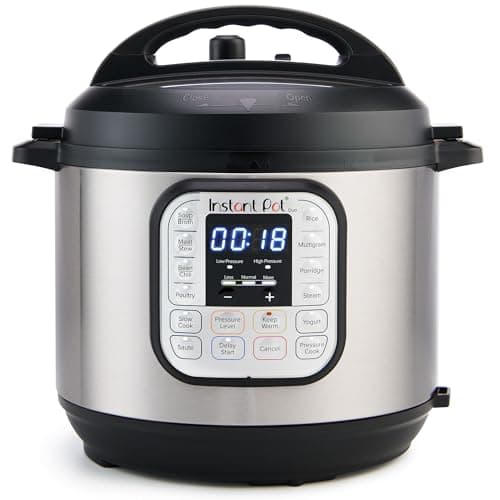
1,000 W
Instant Pot Duo 7-in-1 Electric Pressure Cooker, 6 Quart
The multicooker that made the category, and still the right default. Instant Brands publishes the wattage, the working pressure range and a stainless (not nonstick) inner pot, which is more than most of the field manages — and it costs less than almost all of them.
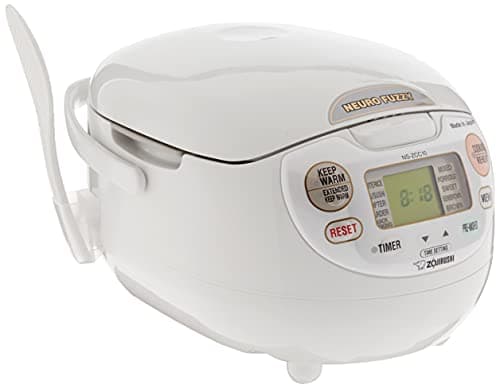
680 W
Zojirushi NS-ZCC10 Neuro Fuzzy Rice Cooker & Warmer, 5.5 Cup
The rice cooker every other one is measured against. Its Neuro Fuzzy microcomputer adjusts heat through the cook rather than running a fixed timer, which is the whole reason a $260 rice cooker cooks rice better than a $30 one. Made in Japan, 680 W, and the settings that matter are all there.
#ad · As an Amazon Associate we earn from qualifying purchases.
Questions
Frequently asked
How much water do you use for rice in an Instant Pot?
Should you natural release or quick release rice in an Instant Pot?
Is an Instant Pot as good as a rice cooker for rice?
Keep reading
Related
Receipts
Sources
- Instant Brands — Instant Pot Duo 6qt product page
- Zojirushi — NS-ZCC10 Neuro Fuzzy Rice Cooker product page
We have not tested these machines in a lab and we do not pretend to have. Specifications come from the manufacturer's own published documents; electricity rates come from the US Energy Information Administration; prices come from the live Amazon API. Where a figure is not published, the page says “not published” rather than guessing. Read the full method.