The short answer
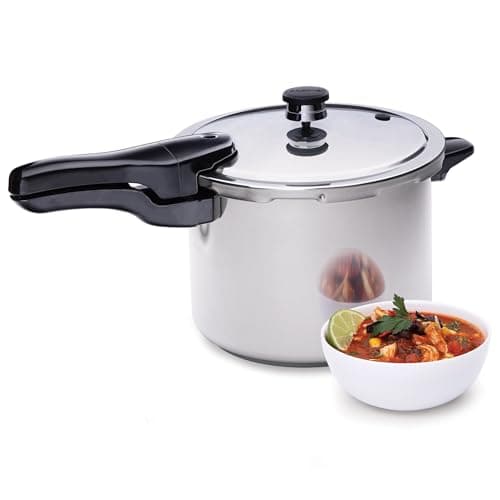
Buy the Presto 01362. It is for the person who wants a stovetop pressure cooker and has a glass cooktop of either kind: Presto clears it for gas, electric, smooth-top and induction ranges, it is stainless with a tri-clad base for even heating, and it carries a 12-year limited warranty. If your cooktop is induction it is the only stovetop pot on this site that will work on it at all. The runner-up is the Instant Pot Duo, and it is the answer for anyone whose real worry is the cooktop: a corded cooker sits on the counter and never touches the glass, so weight, base flatness and magnetism all stop mattering. The budget pick is the Presto 01264at the lowest price here — but only if your glass top is radiant, because Presto does not clear it for induction.
Prices come from our daily refresh and the Quick Picks table above prints the date of the most recent one. Treat the table as the authority over any sentence here.
The finding: “glass top” is two different stoves
This is the whole page, so it goes first.
A radiant smooth-top is a sheet of ceramic glass over electric coils. The coil heats, the glass heats, the pot heats by contact. Any flat-bottomed pot works, whatever it is made of.
An induction top is a sheet of the same glass over an electromagnetic coil. Nothing heats except the pot itself, and only if the pot is ferromagnetic. Aluminum is not. A perfectly good aluminum pressure cooker will sit on an induction hob and stay stone cold.
Both look identical: flat, black, glass. And the makers' own clearance lists split precisely along that line. Presto publishes, for the stainless 01362, that it “works on gas, electric, smooth-top, and induction ranges”. For the aluminum 01264 and the aluminum 01282 it publishes “works on electric, smooth-top, and gas ranges”— the same sentence with induction removed. Kuhn Rikon publishes that the Duromatic is “suitable for all hobs (Induction / Gas / Ceran / Cast / Electric / Halogen)”, and Ceran is the trade name for exactly the glass-ceramic surface this question is about.
So: if your glass top is radiant, every pot on this page works and you can buy on price. If it is induction, the field collapses to the stainless 01362, the Kuhn Rikon, and any corded cooker at all.
What about scratching the glass?
We are not going to invent a finding here. No manufacturer in this catalog publishes a weight limit, a base-flatness tolerance or a scratch warning tied to glass cooktops, so anything specific we told you about it would be made up. What is published and relevant: the Kuhn Rikon is 22 cm (8.66 in)in diameter, which is a real number to check against your element rings, and Presto's canners carry a 12,000 BTU burner limit that matters on gas rather than glass. Beyond that, the honest advice is the obvious advice: lift pots rather than sliding them, and do not drag a loaded 16-quart canner across a ceramic surface.
How we ranked
Published range clearance first, because it is the only part of this question that is written down. A pot cleared for induction is cleared for every glass top there is; a pot cleared for smooth-top only is a gamble you can resolve in one second with a fridge magnet on your own cookware.
Then whether the cooktop is involved at all. This is why a corded cooker places second on a stovetop-compatibility page. If your concern is your cooktop, the strongest move available is to stop using it.
Then base construction, then warranty, then price.A tri-clad or multi-layer base spreads heat across a glass element's fixed ring rather than concentrating it, which is the one construction detail that genuinely favors one pot over another here.
The winner
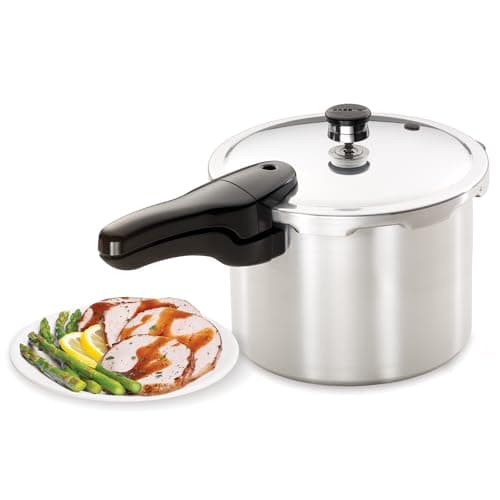
The Presto 01362is a 6-quart (5.7 L) stainless cooker with a tri-clad base, a regulator that holds roughly 15 pounds of pressure, a 12-year limited warranty, and the only four-way range clearance on this site. It is also our pick in the stovetop ranking on its own merits, so this is not a compatibility consolation prize — it is the best stovetop pot here that also happens to be the only one an induction hob will heat.
Skip it if you want a timer, a preset or a keep-warm. It has none, by design. The full trade is in stovetop versus electric pressure cookers.
The pot that ignores your cooktop
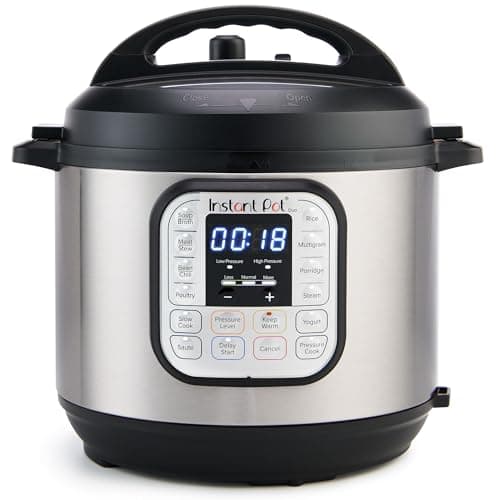
The Instant Pot Duois second because it answers the question by refusing it. 1,000 W, 6 Qt / 5.7 L, a published 10.2–11.6 psi high band, an 18/8 stainless pot with a tri-ply base, 13 programs — and it sits on a countertop. Glass-top owners worried about a heavy pot on a ceramic surface, about element rings smaller than the pot base, or about whether their new induction range will heat anything they already own, can make all three problems vanish by buying a cooker with a cord.
The honest counterweight: a corded cooker runs at a lower pressure than the stovetop pots here — 10.2–11.6 psi published against Presto's roughly 15 — and it occupies permanent counter space. The 6-quart field in full is in the 6-quart ranking.
The premium stainless option
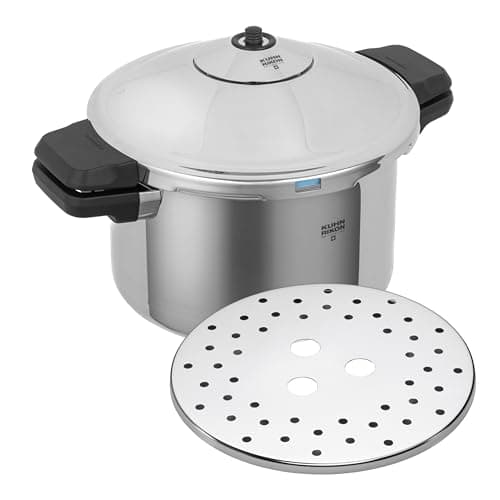
The Kuhn Rikon Duromatic 5.0 Lis third: 18/10 stainless, made in Switzerland, a published 22 cm diameter, a 10-year guarantee, and a clearance list that names Induction, Gas, Ceran, Cast, Electric and Halogen— the most explicit glass-ceramic clearance of anything in this catalog. It is the quiet spring-valve design rather than a jiggling weight, which some cooks much prefer.
It places third on price alone: it costs several times the Presto 01362 and Kuhn Rikon publishes no working-pressure figure for it, so you are paying for materials, country of manufacture and valve design rather than for a documented performance advantage. The head-to-head is in Kuhn Rikon versus Presto.
The cheapest route, and its one condition
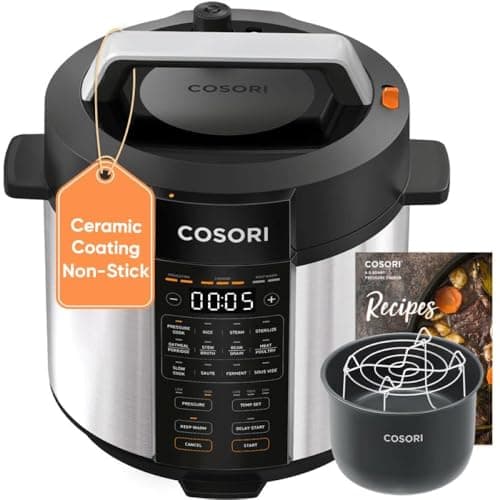
The Cosori 6-Quartis fourth: a corded cooker at 1,100 W that, like the Instant Pot, never touches the hob, and the only cooker on this site publishing botha high (9.4–12.3 psi) and a low (5.1–8 psi) pressure band, with a two-year warranty. If you want the cooktop out of the equation for as little as possible, this is usually the cheapest way to do it. Its pot is coated rather than bare stainless, which is the trade.
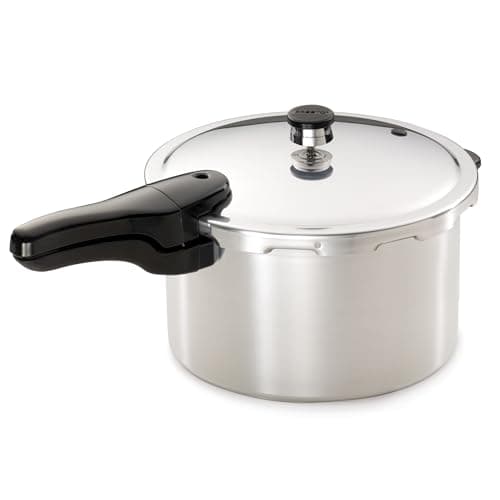
The Presto 01264is the budget pick and carries the page's one real caveat. Same 6-quart capacity, same regulator pressure, same 12-year warranty as the winner, in heavy-gauge aluminum — and Presto's clearance list for it is electric, smooth-top and gas, with induction absent. On a radiant smooth-top it is a bargain and the cheapest honest answer on this page. On an induction top it will not heat. Check which stove you have before you order, and if you are unsure, put a fridge magnet on the bottom of a pan that already works on it.
If you are canning on a glass top
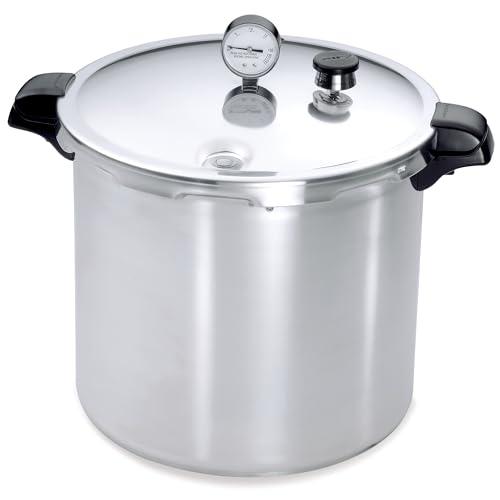
Different question, published differently, and worth flagging because it is the case where getting it wrong costs the most. Presto clears the 01784 23-quart canner for gas, electric, smooth-top and induction, with the caveat in Presto's own words that it “may not work on all portable induction ranges”, and both it and the 16-quart 01755 carry the 12,000 BTU burner limit. The 01755 is cleared for regular and smooth-top only. If canning is your reason for being on this page, go to the pressure canner ranking, and note that a digital canner needs no cooktop at all.
Work out which glass top you have, first
Put a fridge magnet on the base of a pan you already cook with. If the hob heats that pan and the magnet sticks, you may have induction; if the hob glows red through the glass, it is radiant. The reliable test is the appliance's own model documentation. It matters because it changes which half of this list is available to you.
Choosing in one minute
Induction, and you want a stovetop pot.Presto 01362 — the only one here Presto clears for it — or the Kuhn Rikon Duromatic if the budget stretches.
Radiant smooth-top, cheapest possible. Presto 01264. Same pressure, same warranty, aluminum body, cleared for smooth-top.
You would rather not use the cooktop at all. Instant Pot Duo, or the Cosori if price is the deciding factor.
You are canning. Presto 01784 for a canner cleared for smooth-top and induction, or a digital canner that needs no stove.
The two mistakes
Buying aluminum for an induction hob.It is the single most common failed purchase in this category and it is entirely preventable: the clearance list on the maker's own page tells you, in one line, whether induction is included.
Assuming a bigger pot is a worse idea on glass. Nobody in this catalog publishes a weight limit for a ceramic cooktop, so the real constraints are the ones that are published: element ring diameter against pot diameter, and for canners, the 12,000-BTU burner limit.