The one thing to know before you buy a rice cooker as a gift
The price gap in rice cookers is real, and it comes down to one mechanism. A cheap cooker runs a timer and a thermostat; a fuzzy-logic (“Micom”) cooker runs a microcomputer that adjusts the heat as it goes; a pressure cooker raises the boiling point for a fluffier grain; an induction cooker heats the whole pot at once. For someone who eats rice daily, the step from a timer to fuzzy logic is the one they will notice most — so every pick below has at least that. Our rice cooker rankings explain the technology in full; this page re-reads them for a gifter.
Capacity is the first check. Rice cookers are sized in uncooked cups, and a 5.5-cup or 6-cup cooker feeds a family; a 3-cup cooker feeds one or two. Cooking a single cup in a big pot works but is not what the machine is best at, so match the size to the household before you compare features. Our how much rice per person guide has the numbers.
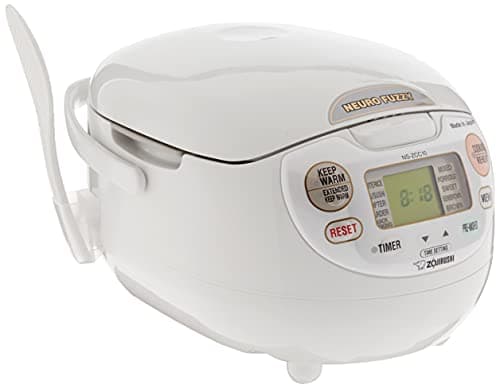
The classic, for the daily eater: Zojirushi NS-ZCC10 Neuro Fuzzy
Who it suits: someone who eats rice most days and is still using a basic cooker. Why it lands: it is the benchmark fuzzy-logic rice cooker, made in Japan, with every setting people actually use — white, sushi, softer, harder, mixed, porridge, brown — and a step up they will notice at every meal. It tops our rankings and our full review says why. Check before buying: 5.5 cups is family-sized; it is Micom, not induction; and the styling is unapologetically retro.
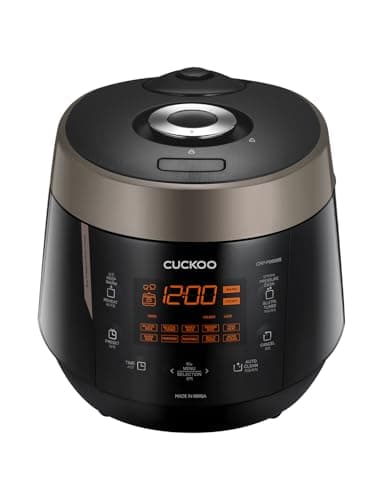
For the sticky-rice fan: Cuckoo CRP-P0609S pressure
Who it suits: a lover of Korean or Japanese short-grain rice who cares about texture. Why it lands: pressure produces a fluffier, stickier grain than any non-pressure cooker here, on a stainless-backed pot, with fuzzy logic, GABA, porridge and a scorched-rice mode. Our Cuckoo pressure review and the sushi rice roundup cover it. Check before buying: the sealing gasket is a wear part, the voice guide divides opinion, and if the recipient mostly eats long-grain or basmati the pressure premium buys them little.
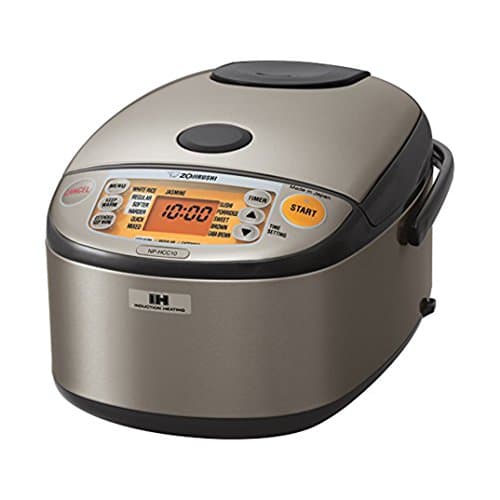
The splurge: Zojirushi NP-HCC10 induction
Who it suits: the rice devotee who has everything except this. Why it lands: induction heats the entire pot rather than the base, with a triple heater and the fullest menu on the site, and it is made in Japan — the best rice we rank, per our induction review. Check before buying: it draws roughly double the Micom Zojirushis, and for a twice-a-week rice eater the difference over the Neuro Fuzzy is small for a lot more money.
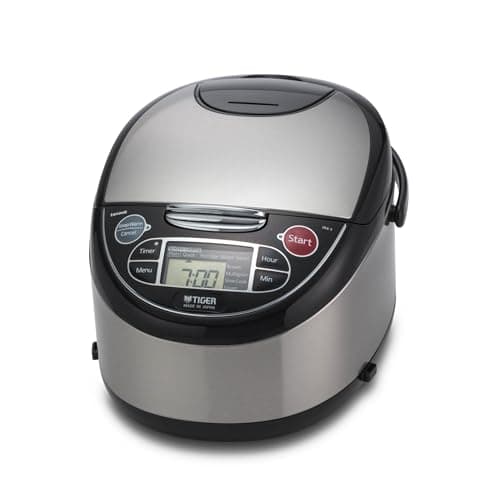
For the weeknight cook: Tiger JAX-T10U with tacook
Who it suits: a busy household that eats rice with dinner most nights. Why it lands: the tacook tray cooks a main dish above the rice at the same time — a genuine shortcut — with fuzzy logic, ten named settings, and Japanese manufacture. Full detail in our Tiger review. Check before buying: the tray holds a portion, not a second course, and Tiger's documentation is thinner than Zojirushi's.
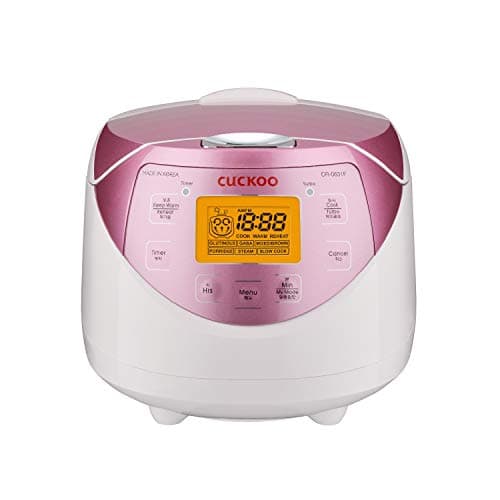
The value pick: Cuckoo CR-0631F Micom
Who it suits: a daily rice eater when the budget is tighter. Why it lands: Cuckoo's build and fuzzy-logic control without paying for a pressure mechanism, a full menu including GABA and porridge, and at a published 580 W the lowest draw of any full-size cooker here. Our Cuckoo Micom review and fuzzy-logic roundup place it. Check before buying: no pressure, so no CRP-style texture, and a plain nonstick pot.
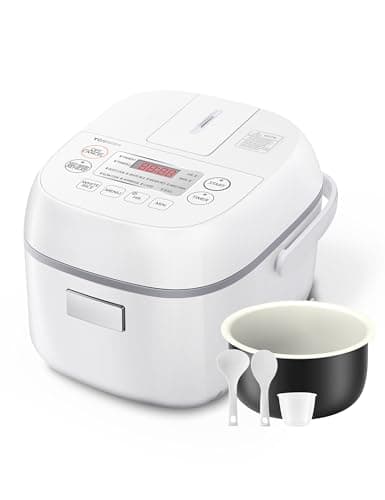
For a one- or two-person kitchen: Toshiba mini
Who it suits: a student, a new apartment, a couple. Why it lands: fuzzy logic in a 3-cup cooker, where most compact rivals drop to an on/off thermostat, plus a 24-hour delay timer. It leads our small rice cooker roundup. Check before buying: three cups is a firm ceiling, the build is budget-tier, and Toshiba publishes no wattage for the mini, so we show no running cost.
Three things to check before you buy any cooker as a gift
1. Counter and cupboard space. A 6-quart multicooker takes real counter space; a full-size rice cooker is smaller but lives on the counter permanently if it is used daily; a sous vide circulator is a stick that goes in a drawer but needs a pot or container to clip onto. The manufacturer's page linked from every spec chip lists the exact dimensions. If the recipient has a small kitchen, our small-kitchen picks are the safer list.
2. Whether they already own one. The most common way a cooking gift fails is duplication. An Instant Pot owner does not need a second 6-quart; they might love a rice cooker or a circulator instead — our do-you-need-both guides explain what each adds.
3. The return window and the warranty. Every warranty term on this site is read from the manufacturer's own document and shown on the product card; a few brands publish none at all, and we say so on the card rather than guessing. Buy from a listing with a clear return policy, and keep the box until the recipient has used it once.
How we picked
Machines we claim to have tested: 0
Everyone in this category tells you they tested twenty cookers. We have tested none, and we say so. Here is what we do instead: read the manufacturer's manual and spec page, record the published wattage, capacity, pressure or temperature figure and warranty term, work out what the machine costs to run per hour, show the arithmetic so you can redo it with your own electricity rate, and cite all of it. Where a brand publishes no wattage, we print no running cost rather than borrowing a number from a similar model. Prices come live from Amazon's API and disappear rather than go stale.
The scores above are judgments from that documented research — not test results. One of the five metrics is Documentation: whether the manufacturer will tell you what its cooker draws at all. The full rubric, including what disqualifies a pick, is published in full.