HUB 01
Multicookers & Electric Pressure Cookers
The Instant Pot category, and everything that chases it. One pot that pressure-cooks, slow-cooks, sautés and — on some — air-fries, with a marketing layer thick enough that most buyers cannot tell a 7-in-1 from a 13-in-1 that does the same four things. We rank on what the manufacturer publishes and what it costs to run.
We earn a commission if you buy through our links. It does not change the price you pay, and it does not decide our picks — the scoring rubric is published in full, including what disqualifies a pick. How this works.
Start here
The Best Multicookers
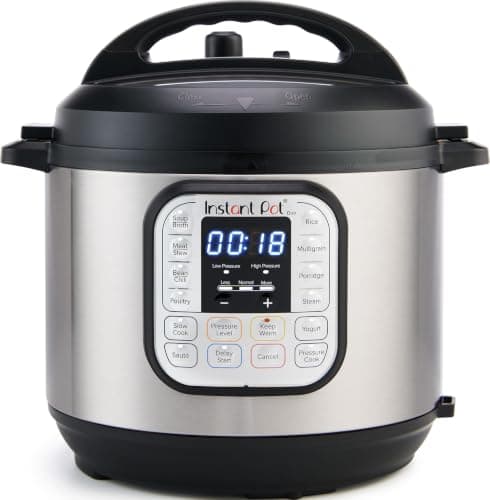
Our top pick: Instant Pot Duo 7-in-1 Electric Pressure Cooker, 6 Quart — The multicooker that made the category, and still the right default. Instant Brands publishes the wattage, the working pressure range and a stainless (not nonstick) inner pot, which is more than most of the field manages — and it costs less than almost all of them.
What a multicooker actually is
A multicooker is an electric pot with a heating element in the base, a lid that seals for pressure, and a microcontroller running both. Pressure cooking is the reason to own one — sealing the lid raises the boiling point to around 250°F, which turns dried beans tender in 40 minutes and a tough chuck roast to shreds in an hour. Every other function on the front panel is that same element at a different power level: slow cook is low and long, sauté is high and open, keep-warm is barely on.
Understanding that saves you money immediately, because it tells you the “7-in-1 versus 13-in-1” number on the box means very little. Most of those functions are the same heat relabeled. What genuinely differs between these machines is four things: the pot material, whether and how the lid seals for pressure, whether it also crisps with hot air, and how honestly the manufacturer documents any of it.
The pot is the spec that actually varies
Almost every multicooker here draws between 700 and 1,500 watts and pressurizes to roughly the same 10–12 psi that Instant Pot publishes on its manuals. The real hardware difference is the inner pot. Instant Pot uses an 18/8 stainless pot with a tri-ply base on its core models — no coating to scratch off, so it outlives everything and takes metal utensils and hard searing. Ninja and most budget cookers use a nonstick pot that cleans more easily and wears out faster. Neither is wrong, but the stainless pot is why a well-kept Duo is still going a decade later, and it is worth knowing which you are buying before the price tag decides for you.
Pressure, crisp, or neither
Three machines in this hub are not really in the same class, and the honest thing is to say so. The combo unit — the Instant Pot Duo Crisp — air-fries as well as pressure-cooks, switching jobs under one convertible lid, so a pot roast pressure-cooks and then crisps in the same pot. (The dual-lid Ninja Foodi that used to sit beside it is discontinued.) The Ninja PossibleCooker deliberately drops pressure entirely for people who never used it. And the Crock-Pot is a plain slow cooker, here as the honest floor: if Slow Cook is the only button you ever pressed, it does that job for a fraction of the price. Being clear about those distinctions is more useful than pretending they all compete head-on.
The running cost, in the open
A 1,000-watt cooker like the Duo costs about 18.8¢ an hour to run at full draw, at the US average of 18.83¢ per kWh. But a pressure cook only draws full power while it is coming up to pressure — once sealed, the element cycles to hold it — so a typical session costs a few cents, not the hourly figure. We publish the wattage and the sum on every pick so you can redo it with your own bill; the combo units that air fry draw the most, because the crisping element is doing real work.
The mistake almost everyone makes
Buying on function count instead of the pot and the lid. A thirteen-in-one cooker does not do thirteen things a seven-in-one cannot; it has more labels for the same heat. What you will actually feel every week is whether the pot is stainless or nonstick, whether the lid seals itself so you never forget the valve, and whether it fits the food you cook. Get those three right — start with the model that fits how you cook — and the preset count on the box becomes exactly as irrelevant as it should be.
Everything in this section
All of Multicookers
Roundup
The Best Multicookers
Eight multicookers ranked on wattage, pressure, pot material and live price. The Duo wins on documentation and value; the picks say who should skip each.
Top pick: Instant Pot Duo 7-in-1 Electric Pressure Cooker, 6 Quart · 8 ranked, 8 with live prices
$71.89on Amazon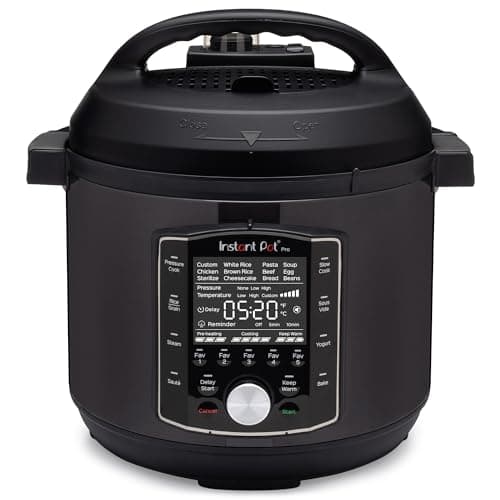
Roundup
The Best Electric Pressure Cookers
Seven electric pressure cookers ranked on wattage, working pressure and pot material. The Pro's auto-sealing lid and sous vide program lead; live prices on every pick.
Top pick: Instant Pot Pro 10-in-1 Pressure Cooker, 6 Quart · 7 ranked, 7 with live prices
$169.99on AmazonRoundup
Which Instant Pot Should You Buy?
The Instant Pot lineup sorted: Duo, Pro, Duo Plus in 6 and 8 quarts, Duo Crisp, the current 6-quart RIO and Duo Mini, compared on the specs that actually differ. Live prices on each.
Top pick: Instant Pot Duo 7-in-1 Electric Pressure Cooker, 6 Quart · 7 ranked, 7 with live prices
$71.89on Amazon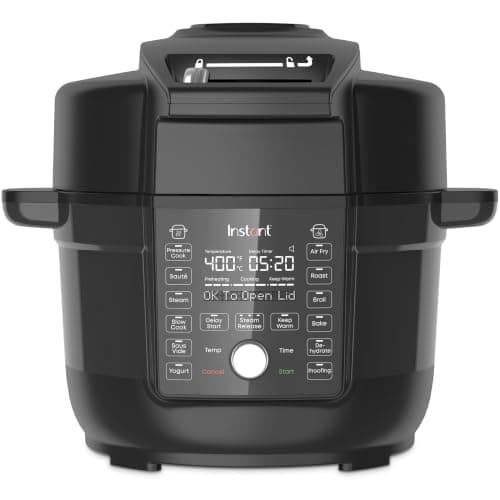
Head to head
Instant Pot vs Ninja Foodi
Duo Crisp vs Ninja Foodi: same two jobs, different pot and lid. The Instant Pot ships new with a stainless pot; the Foodi OS300 is discontinued, with no buyable Amazon offer left.
Top pick: Instant Pot Duo Crisp Ultimate Lid, 13-in-1 Air Fryer & Pressure Cooker, 6.5 Quart · 2 ranked, 1 with live prices
$219.95on AmazonRoundup
The Best Budget Multicookers
Four multicookers under about $150, ranked. The plain Instant Pot Duo wins on the two specs that matter at this price; the Duo Plus adds sous vide for a little more; the Duo Mini is the cheapest way in; the Crock-Pot is here as the honest floor.
Top pick: Instant Pot Duo 7-in-1 Electric Pressure Cooker, 6 Quart · 4 ranked, 4 with live prices
$71.89on AmazonRoundup
The Best Multicookers With an Air Fryer
The pressure-cook-and-crisp combos, ranked. The Instant Pot Duo Crisp is the only one that still ships new; the discontinued Ninja Foodi is kept here for the people who own one; the PossibleCooker crisps in the oven instead. The combo's real cost is counter and cupboard space.
Top pick: Instant Pot Duo Crisp Ultimate Lid, 13-in-1 Air Fryer & Pressure Cooker, 6.5 Quart · 3 ranked, 2 with live prices
$219.95on Amazon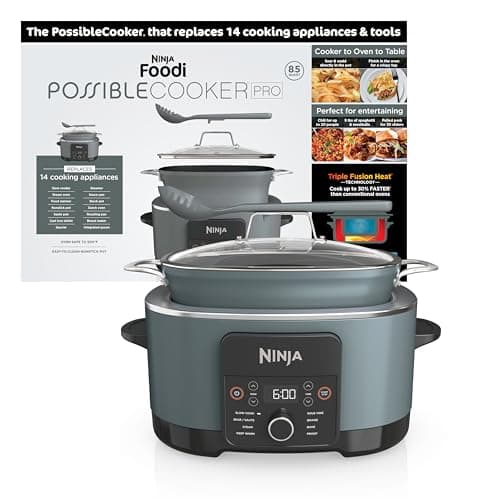
Roundup
The Best Large-Capacity Multicookers
The large-capacity field from 6.5 to 8.5 quarts, ranked. The 8.5-quart Ninja PossibleCooker holds the most; the 8-quart Instant Pot Duo Plus is the biggest that still pressure-cooks. Bigger is not free — it eats counter.
Top pick: Ninja 14-in-1 PossibleCooker PRO, 8.5-Quart Multicooker (MC1001) · 5 ranked, 4 with live prices
$129.95on AmazonHead to head
Instant Pot Duo vs Pro
The value default vs the keep-it-a-decade model. The Duo wins on price and simplicity; the Pro adds a real sous vide program, an auto-sealing lid and five programmable buttons. Same pot, same cooking underneath.
Top pick: Instant Pot Duo 7-in-1 Electric Pressure Cooker, 6 Quart · 2 ranked, 2 with live prices
$71.89on AmazonReview
Instant Pot Duo Crisp Review
The 13-in-1 pressure-and-air-fry Instant Pot, reviewed. One lid does both jobs; it draws the most of any Instant Pot on the site; and switching from pressure to air fry means lifting out a hot protective cover first. The safe combo pick that ships new.
Top pick: Instant Pot Duo Crisp Ultimate Lid, 13-in-1 Air Fryer & Pressure Cooker, 6.5 Quart
$219.95on AmazonReview
Instant Pot Duo Review
The original 7-in-1, reviewed. A 1,000 W, 6-quart pressure cooker with a published working-pressure range and an 18/8 stainless pot, at the lowest price of any well-documented multicooker here. The default, and it earned it.
Top pick: Instant Pot Duo 7-in-1 Electric Pressure Cooker, 6 Quart
$71.89on AmazonReview
Instant Pot Pro Review
The 10-in-1 Instant Pot, reviewed. A 1,200 W pressure cooker that adds sous vide, an auto-sealing lid and five programmable buttons to the Duo's core — the most complete Instant Pot without the air-fry lid. Same cooking, nicer to live with.
Top pick: Instant Pot Pro 10-in-1 Pressure Cooker, 6 Quart
$169.99on AmazonReview
Ninja PossibleCooker PRO Review
The 14-in-1 PossibleCooker PRO, reviewed. An 8.5-quart, 1,200 W multicooker with an oven-safe pot to 500°F and a sous vide program — the big-batch, no-pressure choice. The catch: it deliberately does not pressure-cook, so it is slow where an Instant Pot is fast.
Top pick: Ninja 14-in-1 PossibleCooker PRO, 8.5-Quart Multicooker (MC1001)
$129.95on AmazonHead to head
Instant Pot vs Crock-Pot
Pressure cooker versus slow cooker, settled. The Instant Pot is faster and far more versatile; the Crock-Pot is simpler, cheaper and the lowest-draw appliance here at 240 W. A rule for which one you actually need.
Top pick: Instant Pot Duo 7-in-1 Electric Pressure Cooker, 6 Quart · 2 ranked, 2 with live prices
$71.89on Amazon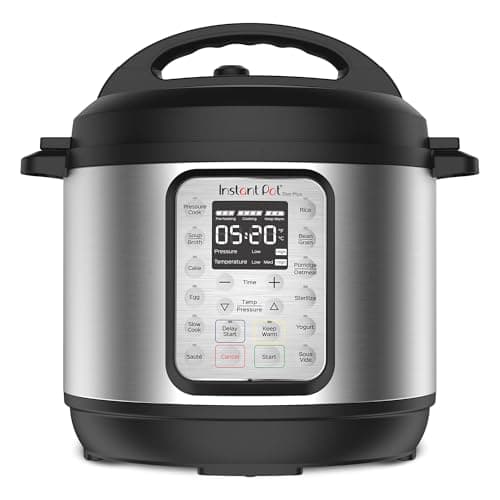
Review
Instant Pot Duo Plus Review
The 9-in-1 middle child, reviewed. Same 1,000 W, same 18/8 stainless pot and same published working pressure as the Duo, with sous vide, sterilize and a WhisperQuiet release added. The question is whether the Pro just above it is the smarter spend.
Top pick: Instant Pot Duo Plus 9-in-1 Multicooker, 6 Quart
$64.08on Amazon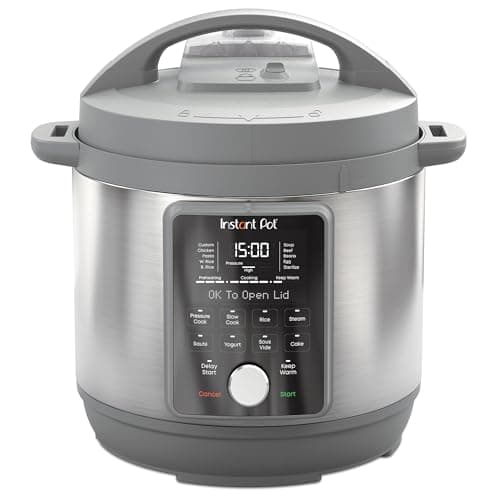
Review
Instant Pot Duo Plus 8 Qt Review
The 8-quart Duo Plus, reviewed. Instant Brands' biggest pressure pot: 1,200 W, nine functions including sous vide and cake, 25 recipe presets, an 18/8 stainless tri-ply pot and a WhisperQuiet one-touch release. The honest limits: no wide searing floor, a tall body that eats cupboard space, and identical functions in a 6-quart for roughly half the money.
Top pick: Instant Pot Duo Plus 9-in-1 Multicooker, 8 Quart
$176.99on Amazon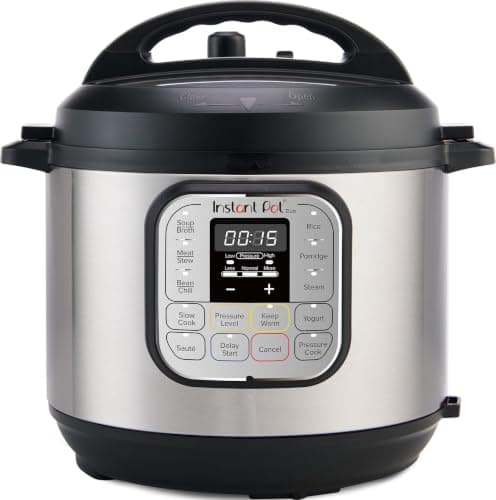
Review
Instant Pot Duo Mini Review
The 3-quart Duo, reviewed. Same 18/8 stainless pot and 7-in-1 set as the full model, at just 700 W — the smallest footprint and lowest draw of any Instant Pot here. Right-sized for one or two; a firm ceiling for everyone else.
Top pick: Instant Pot Duo Mini 7-in-1, 3 Quart Electric Pressure Cooker
$89.99on AmazonHead to head
Instant Pot Duo vs Duo Plus
Same 1,000 W, same 18/8 stainless pot, same published working pressure. The Duo Plus adds sous vide, sterilize and a WhisperQuiet steam release; the Duo is cheaper and simpler. Which extras are worth paying for, laid out plainly.
Top pick: Instant Pot Duo 7-in-1 Electric Pressure Cooker, 6 Quart · 2 ranked, 2 with live prices
$71.89on Amazon
Head to head
Ninja Foodi vs PossibleCooker PRO
One Ninja pressure-cooks and air-fries (Foodi, 1,460 W, 6.5 qt); the other is a big oven-safe multicooker with no pressure (PossibleCooker PRO, 1,200 W, 8.5 qt). Which fits you comes down to one question: do you use the pressure function?
Top pick: Ninja 14-in-1 PossibleCooker PRO, 8.5-Quart Multicooker (MC1001) · 2 ranked, 1 with live prices
$129.95on AmazonHead to head
Instant Pot Duo vs RIO Wide Plus
The same cooking core in two footprints. The 6-quart, 1,000 W Duo is the narrow, cheap, cheaper-to-run default; the 7.5-quart, 1,400 W RIO Wide Plus adds capacity, a wider searing base and two programs at the cost of counter space, running cost and a lot of money. A clear rule for which size you need.
Top pick: Instant Pot Duo 7-in-1 Electric Pressure Cooker, 6 Quart · 2 ranked, 1 with live prices
$71.89on AmazonHead to head
Instant Pot Duo Crisp vs Ninja Foodi
The two pressure-and-air-fry combos, head to head. The 1,500 W Duo Crisp uses a single convertible Ultimate Lid and ships new with full documentation; the 1,460 W Ninja Foodi OS300 uses a genuinely good dual-lid TenderCrisp system but has since been discontinued, with no buyable listing left. Why the Duo Crisp is the one to buy today.
Top pick: Instant Pot Duo Crisp Ultimate Lid, 13-in-1 Air Fryer & Pressure Cooker, 6.5 Quart · 2 ranked, 1 with live prices
$219.95on AmazonHead to head
Instant Pot Duo vs Duo Crisp
The plain 1,000 W 7-in-1 Duo against the 1,500 W 13-in-1 Duo Crisp, whose Ultimate Lid pressure-cooks and air-fries under one lid. What the Crisp genuinely adds, the running-cost gap between them, the cupboard cost of the extra lid, and a clear rule for which one belongs on your counter.
Top pick: Instant Pot Duo 7-in-1 Electric Pressure Cooker, 6 Quart · 2 ranked, 2 with live prices
$71.89on AmazonHead to head
Instant Pot Pro vs Duo Crisp
Two step-up Instant Pots that both do sous vide. The 1,200 W Pro is the best pressure-cooking interface in the line — auto-sealing lid, dial, programmable buttons — but has no air fry. The 1,500 W Duo Crisp adds a crisp finish under its Ultimate Lid. The real fork: do you want to air-fry, or do you want the best pressure interface without it?
Top pick: Instant Pot Pro 10-in-1 Pressure Cooker, 6 Quart · 2 ranked, 2 with live prices
$169.99on AmazonHead to head
Instant Pot Pro vs Duo Plus
Two mid/upper Instant Pots that both add sous vide over the base Duo. The 1,200 W Pro has an auto-sealing lid and a programmable dial; the 1,000 W Duo Plus is cheaper and quieter, ships with a steam rack and two spare sealing rings, and publishes a 10.2 to 11.6 psi working range. The Pro has the better interface; the Duo Plus is the value pick.
Top pick: Instant Pot Pro 10-in-1 Pressure Cooker, 6 Quart · 2 ranked, 2 with live prices
$169.99on Amazon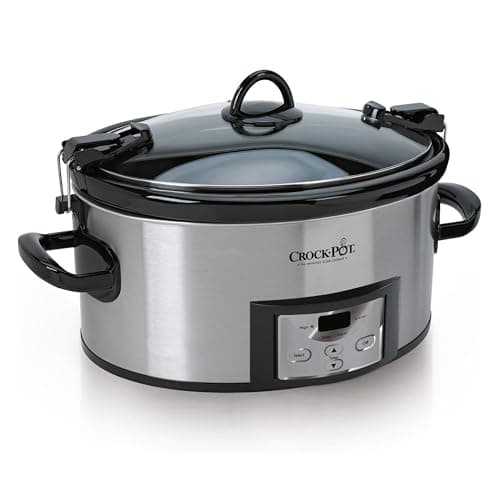
Review
Crock-Pot 6-Quart Cook & Carry Review
The plain 6-quart Cook & Carry, reviewed. A 240 W programmable slow cooker — the lowest draw on this site — with a removable oval stoneware crock and a locking travel lid. It only slow-cooks, and that honesty is the whole review: who it is for, and who should buy an Instant Pot instead.
Top pick: Crock-Pot 6-Quart Cook & Carry Programmable Slow Cooker
$89.06on AmazonHead to head
Ninja PossibleCooker PRO vs Crock-Pot Cook & Carry
The 8.5-quart, 1,200 W Ninja PossibleCooker PRO against the 6-quart, 240 W Crock-Pot Cook & Carry. One sears, slow-cooks and roasts in a much bigger pot; the other does one job simply and cheaply and travels with a locking lid. The capacity, searing, running-cost and portability trade-offs, and a clear rule for which is for you.
Top pick: Ninja 14-in-1 PossibleCooker PRO, 8.5-Quart Multicooker (MC1001) · 2 ranked, 2 with live prices
$129.95on AmazonHead to head
Instant Pot Duo Mini vs Duo
The 3-quart Duo Mini and the 6-quart Duo are the same 7-in-1 cooker at two sizes. The Mini (700 W, smallest footprint, lowest draw) suits one or two people or a second-pot side dish; the standard Duo (1,000 W, 6 qt) is the default for a household and only a little more money. A sizing decision, not a features one, on the published specs.
Top pick: Instant Pot Duo 7-in-1 Electric Pressure Cooker, 6 Quart · 2 ranked, 2 with live prices
$71.89on AmazonHead to head
Instant Pot Duo Plus vs RIO Wide Plus
The same nine Instant Pot functions in two pots. The 6-quart, 1,000 W Duo Plus is the standard tall body; the 7.5-quart, 1,400 W RIO Wide Plus spreads the same program set across a base wider than a 12-inch skillet, for more counter, more draw and a lot more money. A clean rule for deciding which.
Top pick: Instant Pot Duo Plus 9-in-1 Multicooker, 6 Quart · 2 ranked, 1 with live prices
$64.08on AmazonRoundup
The best non-toxic multicooker
Decided by one published spec — the inner pot. The Instant Pot Duo's bare 18/8 stainless tri-ply pot has no coating to wear through, which is the whole question for most people asking this. The Ninja HyperHeat's ceramic coating is PFAS-free and SharkNinja says so plainly. What nobody publishes: leach testing.
Top pick: Instant Pot Duo 7-in-1 Electric Pressure Cooker, 6 Quart · 5 ranked, 5 with live prices
$71.89on AmazonRoundup
The best multicooker for rice
Ranked for rice specifically, not overall. The Instant Pot Duo's 6-quart stainless pot and published 1,000 W make it the pick for most households; the 8-quart Duo Plus is the batch-cooking answer, the Duo Mini the single-portion one, and the Ninja HyperHeat is the Ninja with a named rice program. Plus when a rice cooker is genuinely the better buy.
Top pick: Instant Pot Duo 7-in-1 Electric Pressure Cooker, 6 Quart · 5 ranked, 5 with live prices
$71.89on AmazonHead to head
Instant Pot vs Ninja HyperHeat
Ninja's current 6.5-quart pressure cooker against the 6-quart Instant Pot Duo Plus. Same 9-in-1 billing, both with sous vide and yogurt. The Instant Pot has a bare 18/8 stainless pot and a published working-pressure range; the Ninja has a PFAS-free ceramic pot, 200 more watts and half a quart more. Plus the Duo as the cheaper third option.
Top pick: Instant Pot Duo Plus 9-in-1 Multicooker, 6 Quart · 3 ranked, 3 with live prices
$64.08on AmazonRoundup
The best budget pressure cooker
Six pressure cookers in the budget bracket, ranked. The Instant Pot Duo wins on a bare stainless pot and fully published specs; the Cosori is the best non-Instant-Pot option; a stovetop Presto is the cheapest route to pressure cooking at all.
Top pick: Instant Pot Duo 7-in-1 Electric Pressure Cooker, 6 Quart · 6 ranked, 6 with live prices
$71.89on Amazon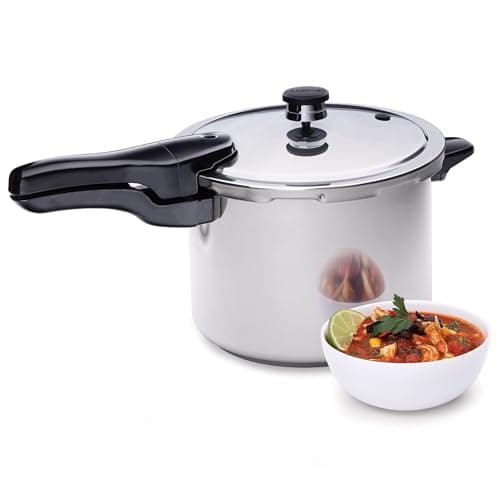
Roundup
The best stovetop pressure cooker
Four stovetop pressure cookers ranked. The Presto 01362 wins on an induction-capable stainless body and a 12-year warranty; the 8-quart is the cheapest large-batch pot; the Kuhn Rikon is the quiet premium option.
Top pick: Presto 01362 6-Quart Stainless Steel Pressure Cooker · 4 ranked, 4 with live prices
$98.99on AmazonRoundup
The best pressure cooker for beans
Beans are a capacity problem before they are a pressure problem: the half-full rule means a 6-quart cooker holds about 2 pounds of dried beans, not 6 quarts of them. Four picks ranked on usable headroom, published working pressure and whether the pot can take a sofrito first.
Top pick: Instant Pot Duo 7-in-1 Electric Pressure Cooker, 6 Quart · 4 ranked, 4 with live prices
$71.89on AmazonRoundup
The best pressure cooker for an induction stove
Aluminum is not magnetic, so the two cheap Presto cookers will not work on induction at all - Presto's own range list says electric, smooth-top and gas only. The stainless Presto 01362 and the Kuhn Rikon Duromatic are the two stovetop pots listed for induction; an electric cooker ignores your hob completely.
Top pick: Presto 01362 6-Quart Stainless Steel Pressure Cooker · 3 ranked, 3 with live prices
$98.99on AmazonHead to head
Presto vs Instant Pot
Presto's regulator holds what Presto calls the ideal cooking pressure, usually 15 pounds; Instant Brands publishes 10.2-11.6 psi for the Duo. That is the whole speed story. The rest is a 12-year warranty and a pot you must watch against a 1-year warranty and a machine you can walk away from.
Top pick: Instant Pot Duo 7-in-1 Electric Pressure Cooker, 6 Quart · 3 ranked, 3 with live prices
$71.89on AmazonHead to head
Kuhn Rikon vs Presto
Presto's rocking regulator tells you the pressure is right by rattling; Kuhn Rikon's spring valve holds it silently behind a sight indicator. The Kuhn Rikon is 18/10 Swiss stainless with a 10-year guarantee. The Presto publishes its pressure, is warranted for twelve years, and costs about a third as much.
Top pick: Presto 01362 6-Quart Stainless Steel Pressure Cooker · 3 ranked, 3 with live prices
$98.99on AmazonReview
Presto 01362 Review
Six quarts of stainless with a tri-clad base, listed for induction, a regulator holding what Presto calls the ideal pressure - usually 15 pounds - and an extended 12-year limited warranty. What it has none of: a timer, a program, a display, or any way to walk away from it.
Top pick: Presto 01362 6-Quart Stainless Steel Pressure Cooker
$98.99on Amazon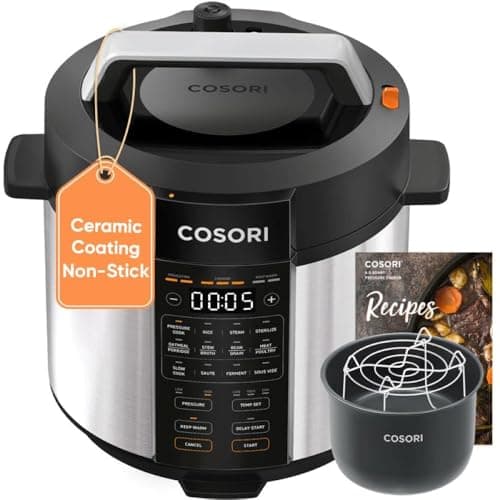
Review
Cosori 6-Quart Pressure Cooker Review
1,100 W, 6.0 qt / 5.7 L, 9.4-12.3 psi high and 5.1-8 psi low both published, 13 functions including sous vide and ferment, and a 2-year limited warranty. The inner pot has a nonstick interior coating rather than bare stainless, and that is the reason it does not win its bracket.
Top pick: Cosori 6-Quart Electric Pressure Cooker
$80.98on Amazon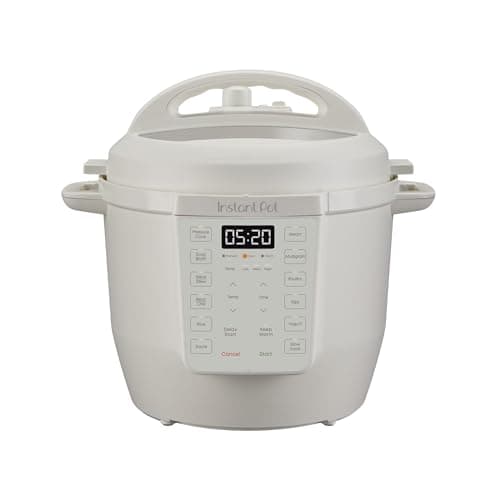
Review
Instant Pot RIO 6 Qt Review
1,000 watts at 120 V, 6.0 quarts, 7 cooking functions with 13 one-touch options, an 18/8 stainless pot with a tri-ply bottom and a one-year limited warranty - all published by Instant Brands. The same element and the same pot as the Duo, in a newer body, for more money.
Top pick: Instant Pot RIO 7-in-1 Multi-Cooker, 6 Quart
$89.99on AmazonRoundup
The best Instant Pot for a small apartment
Ranked on the constraints that actually bite in an apartment: published external dimensions, cabinet height, rated draw on a shared kitchen circuit, and whether the machine lets you own one appliance instead of three. The 3-quart Duo Mini wins for one or two people; the 6-quart Duo is the step up that still fits.
Top pick: Instant Pot Duo Mini 7-in-1, 3 Quart Electric Pressure Cooker · 4 ranked, 4 with live prices
$89.99on AmazonHead to head
Pressure cooker vs pressure canner
A canner has to be big enough for four quart jars upright on a rack, and it has to prove its internal temperature with a dial or weighted gauge - the NCHFP puts 240 F at a gauge pressure of 10.5 lbs at sea level. A cooker proves nothing. What each is for, which foods need which, and why the swap only works in one direction.
Covered here: Instant Pot Duo 7-in-1 Electric Pressure Cooker, 6 Quart
$71.89on AmazonRoundup
The Best Pressure Cookers for Bone Broth
Ranked on the two specs that decide a broth batch: litres you can legally fill and whether the pot is bare stainless. The 8-quart Duo Plus takes it on 8.0 quarts and an 18/8 tri-ply pot; the 6-quart Duo is the value answer, the Pro adds a sterilize program, and Presto's 8-quart stovetop reaches a higher pressure than any electric here.
Top pick: Instant Pot Duo Plus 9-in-1 Multicooker, 8 Quart · 4 ranked, 4 with live prices
$176.99on AmazonRoundup
The Best Multicookers for Slow Cooking
Ranked for the function people actually use: Ninja's 8.5-quart PossibleCooker PRO takes it on capacity and a pot that goes in the oven to 500F, the Instant Pot Pro is the pick if you want pressure as well, and the 240 W Crock-Pot is the honest answer if slow cooking is all you will ever do.
Top pick: Ninja 14-in-1 PossibleCooker PRO, 8.5-Quart Multicooker (MC1001) · 4 ranked, 4 with live prices
$129.95on AmazonRoundup
The Best Instant Pot for Yogurt
Which Instant Pots list a yogurt function on Instant Brands' own product pages - the Duo, the Duo Plus in both sizes, the Pro and the RIO - and which to buy. The 6-quart Duo Plus wins on a sous vide program alongside yogurt and an 18/8 stainless pot; the Pro adds sterilize; the Duo is the cheapest route in.
Top pick: Instant Pot Duo Plus 9-in-1 Multicooker, 6 Quart · 4 ranked, 4 with live prices
$64.08on AmazonHead to head
Cosori vs Instant Pot
Cosori publishes both pressure bands (9.4-12.3 psi high, 5.1-8 psi low) and two years of warranty; Instant Pot publishes 10.2-11.6 psi high and gives one year. The deciding spec is the pot: Cosori's is nonstick-coated, the Duo's and the Pro's are bare stainless.
Top pick: Cosori 6-Quart Electric Pressure Cooker · 3 ranked, 3 with live prices
$80.98on AmazonGuide
How to Use a Pressure Cooker
What pressure cooking does, natural vs quick release, and the two beginner mistakes — sealing the valve and not enough liquid. Then the cookers that do it best.
Covered here: Instant Pot Duo 7-in-1 Electric Pressure Cooker, 6 Quart
$71.89on AmazonGuide
Is an Instant Pot Worth It?
Yes for most home cooks — but the case rests on one function, speed under pressure. The honest breakdown of what it does better than a pot, and who is better off with a plain slow cooker.
Covered here: Instant Pot Duo 7-in-1 Electric Pressure Cooker, 6 Quart
$71.89on AmazonGuide
How to Clean an Instant Pot
Clean every part properly — inner pot, lid, sealing ring, anti-block shield and condensation cup — and how to de-smell the gasket. The parts people miss are the ones that cause the problems.
Covered here: Instant Pot Duo 7-in-1 Electric Pressure Cooker, 6 Quart
$71.89on AmazonGuide
What Size Instant Pot Should I Buy?
3 vs 6 vs 8 quart, matched to household and cooking style. The 6-quart is the default for a reason; the mini is right for one or two; and buying too big cooks small batches worse, not just wastefully.
Covered here: Instant Pot Duo Mini 7-in-1, 3 Quart Electric Pressure Cooker
$89.99on AmazonGuide
The Instant Pot Burn Message, Explained
Why your Instant Pot flashes Burn, what it really means (an anti-scorch safety sensor, not a broken machine), and the handful of fixes: enough thin liquid, deglaze the base, layer thick sauces on top, and check the sealing ring and valve.
Covered here: Instant Pot Duo 7-in-1 Electric Pressure Cooker, 6 Quart
$71.89on AmazonGuide
What Can You Cook in an Instant Pot?
A realistic capability guide for a new pressure cooker: what an Instant Pot does genuinely well (dried beans, tough cuts, stock, rice, yogurt, eggs), what it does adequately, and the handful of jobs — crisping, big-batch searing, delicate fish — it is the wrong tool for.
Covered here: Instant Pot Duo 7-in-1 Electric Pressure Cooker, 6 Quart
$71.89on AmazonGuide
Natural Release vs Quick Release
Natural release lets pressure fall on its own (gentle, keeps cooking); quick release vents it fast (stops the cook immediately). Which foods need which, why quick-releasing a foamy soup sprays, and how to do each safely.
Covered here: Instant Pot Duo 7-in-1 Electric Pressure Cooker, 6 Quart
$71.89on AmazonGuide
Can You Pressure Can in an Instant Pot?
The USDA and the National Center for Home Food Preservation do NOT approve any electric multicooker for pressure canning low-acid foods, because it cannot verify the exact temperature and time the process requires. Why that matters, what an Instant Pot can safely can, and the botulism risk behind the rule.
Covered here: Instant Pot Duo 7-in-1 Electric Pressure Cooker, 6 Quart
$71.89on AmazonGuide
Can You Slow Cook in an Instant Pot?
Every Instant Pot has a Slow Cook program. How it works (off the bottom element, not a Crock-Pot's wrap-around heat), which lid to use and how to set it, what Less, Normal and More roughly mean, and the honest verdict: if you own an Instant Pot you probably don't need a separate slow cooker.
Covered here: Instant Pot Duo 7-in-1 Electric Pressure Cooker, 6 Quart
$71.89on AmazonGuide
How to Convert a Recipe for a Pressure Cooker
A practical guide to adapting stovetop, oven and slow-cooker recipes for an electric pressure cooker: reduce added liquid (but keep at least ~1 cup of thin liquid to reach pressure), cut cook times by food type, layer dense items, thicken only after pressure, and never fill past the max line.
Covered here: Instant Pot Duo 7-in-1 Electric Pressure Cooker, 6 Quart
$71.89on AmazonGuide
Instant Pot Not Sealing? Here's Why
Why an Instant Pot won't seal or come to pressure, in order of likelihood: steam valve left on Venting (the number-one cause), a missing, misseated, dirty or warped sealing ring, a stuck float valve, too little thin liquid, a lid not fully locked, or food on the rim. The fix for each, plus how to tell sealing from just taking time.
Covered here: Instant Pot Duo 7-in-1 Electric Pressure Cooker, 6 Quart
$71.89on AmazonGuide
Stovetop vs Electric Pressure Cooker
The real trade-off between the two ways to pressure-cook: a stovetop model reaches higher pressure (around 15 psi) for faster cooking and hotter searing with no electronics, but must be watched on a burner; an electric cooker runs lower pressure (the Duo's manual publishes 10.2 to 11.6 psi), is set-and-forget, safer for beginners and multifunction. A clear rule for which to buy.
Covered here: Instant Pot Duo 7-in-1 Electric Pressure Cooker, 6 Quart
$71.89on AmazonGuide
Are Instant Pots Safe?
Yes — modern electric pressure cookers are very safe, thanks to layered safety systems: a lid that locks and won't open under pressure, a float valve, over-pressure release and independent safety certification. The safe-operation habits that matter, and the one real limitation: home pressure canning is not safe in most electric multicookers.
Covered here: Instant Pot Duo 7-in-1 Electric Pressure Cooker, 6 Quart
$71.89on AmazonGuide
How to Cook Rice in an Instant Pot
The method for good everyday rice in an Instant Pot: rinse, use roughly equal parts rice and water for white rice (less than the stovetop because the sealed pot loses no steam), cook on high pressure, and natural release for fluffier grains. White vs brown, the common mistakes, and when a fuzzy-logic rice cooker does it better.
Covered here: Instant Pot Duo 7-in-1 Electric Pressure Cooker, 6 Quart
$71.89on AmazonGuide
How to Cook Dried Beans in an Instant Pot
How to cook dried beans under pressure with no overnight soak — the pressure-cooker advantage. Rinse, cover with water, cook on high pressure, natural release, and add salt and acid only after they soften. Never fill past the max line (beans foam), cook them fully soft, and reach for a bigger pot like the 8-quart Duo Plus for batch beans.
Covered here: Instant Pot Duo 7-in-1 Electric Pressure Cooker, 6 Quart
$71.89on AmazonGuide
Instant Pot Pot-in-Pot (PIP) Cooking
Pot-in-pot (PIP) cooking sets a heat-safe dish on the trivet above water so food cooks in the inner vessel, not against the hot base. It is how you cook delicate foods and small batches, cook two things at once, avoid scorching and the Burn message, and reheat without drying. Which vessels are safe, and why the small Duo Mini suits small PIP.
Covered here: Instant Pot Duo 7-in-1 Electric Pressure Cooker, 6 Quart
$71.89on AmazonGuide
How to Cook Frozen Meat in an Instant Pot
Cooking meat from frozen in an Instant Pot: unlike a slow cooker, pressure cooking from frozen is safe because the pot reaches a safe temperature fast. Add cook time, separate frozen pieces where you can, expect block-frozen meat to cook unevenly, and always check the internal temperature against USDA safe minimums with a thermometer.
Covered here: Instant Pot Duo 7-in-1 Electric Pressure Cooker, 6 Quart
$71.89on AmazonGuide
How to Cook Chicken in an Instant Pot
Fresh or frozen, breasts or thighs: how to pressure-cook chicken in an Instant Pot, why it needs at least a cup of liquid, roughly how long each cut takes, and the only number that decides doneness — 165 F internal, per the USDA, checked with a thermometer rather than the clock.
Covered here: Instant Pot Duo 7-in-1 Electric Pressure Cooker, 6 Quart
$71.89on AmazonGuide
Instant Pot Cooking Times
Why the time you set on an Instant Pot is not how long it takes: the three phases of every pressure cook (come-to-pressure, cook, release), how quantity and altitude change the numbers, and why any cook-time chart is a starting point you confirm with a thermometer — not a rule.
Covered here: Instant Pot Duo 7-in-1 Electric Pressure Cooker, 6 Quart
$71.89on AmazonGuide
How to Cook Hard-Boiled Eggs in an Instant Pot
Why Instant Pot eggs peel so much more easily than stovetop eggs, the popular 5-5-5 method (5 minutes at pressure, 5 minutes natural release, 5 minutes in ice water), how to shift the timing for soft or medium yolks, and the small adjustments to dial it in for your own machine and altitude.
Covered here: Instant Pot Duo 7-in-1 Electric Pressure Cooker, 6 Quart
$71.89on AmazonGuide
What Do the Instant Pot Buttons Mean?
The reassuring truth about the Instant Pot's wall of buttons: most presets are just the same pressure cooking at different preset times. What Manual / Pressure Cook, Saute, Slow Cook and Keep Warm actually do, how the +/- time and pressure-level buttons work, and why those few are all you really need to learn.
Covered here: Instant Pot Duo 7-in-1 Electric Pressure Cooker, 6 Quart
$71.89on AmazonGuide
How to Make Yogurt in an Instant Pot
Making yogurt in an Instant Pot is a two-temperature job the Yogurt button automates: heat the milk to about 180F to set the final texture, cool it to roughly 110F, stir in a spoon of live-culture starter, then let the pot hold it warm for around 8 hours. The full step-by-step, plus which Instant Pots have the Yogurt function and which do not.
Covered here: Instant Pot Duo 7-in-1 Electric Pressure Cooker, 6 Quart
$71.89on AmazonGuide
How to Cook a Pot Roast in an Instant Pot
A pressure-cooked pot roast is fall-apart tender in roughly a quarter of the oven time. Sear the beef on Saute for flavor, deglaze and build the braise, pressure cook about 20 minutes per pound, then let the pressure release naturally so the roast stays moist. The full method, timing per pound, and why the natural release matters.
Covered here: Instant Pot Duo 7-in-1 Electric Pressure Cooker, 6 Quart
$71.89on AmazonGuide
How to Cook Potatoes in an Instant Pot
The Instant Pot cooks potatoes fast and evenly: whole medium potatoes on the trivet for about 12 to 15 minutes give a baked-potato texture, while 1-inch cubes in the water for 6 to 8 minutes are ready to mash. The water amount, timing by size and cut, and whether to use the trivet, laid out for both.
Covered here: Instant Pot Duo 7-in-1 Electric Pressure Cooker, 6 Quart
$71.89on AmazonGuide
How to Cook Pasta in an Instant Pot
Pasta cooks in the Instant Pot as a one-pot meal with no draining, but it needs enough thin liquid to reach pressure and the right layering to avoid the Burn message. The rule of thumb: set the timer to half the box's stovetop time minus a minute, cover the pasta with liquid, and keep thick tomato sauce on top, not the bottom.
Covered here: Instant Pot Duo 7-in-1 Electric Pressure Cooker, 6 Quart
$71.89on AmazonGuide
The Instant Pot Water Test
The water test is the recommended first run for any new Instant Pot: 3 cups of water, lid sealed, a few minutes under pressure, then a release. It proves the sealing ring and steam valve are seated correctly and walks you through the controls with no food at stake, so the first real cook is not the first time you have used the pot.
Covered here: Instant Pot Duo 7-in-1 Electric Pressure Cooker, 6 Quart
$71.89on AmazonGuide
How to Cook Ribs in an Instant Pot
The Instant Pot gets ribs fall-off-the-bone tender in about half an hour instead of three, then a few minutes under the broiler sets a sticky, caramelized glaze the sealed pot cannot. How to prep the rack, how much liquid, how long to pressure cook by rib type, and the natural-release step that keeps them from drying out.
Covered here: Instant Pot Duo 7-in-1 Electric Pressure Cooker, 6 Quart
$71.89on AmazonGuide
How to Make Bone Broth in an Instant Pot
A rich, gelatinous bone broth takes 12 to 24 hours on the stove but about two hours under pressure, which is why the Instant Pot is the tool for it. How to pick and roast the bones, why a splash of vinegar helps pull minerals from them, how much water, how long to cook, and how to strain and store it.
Covered here: Instant Pot Duo 7-in-1 Electric Pressure Cooker, 6 Quart
$71.89on AmazonGuide
How to Cook Corned Beef in an Instant Pot
The classic corned beef and cabbage, in about 90 minutes instead of three hours. Pressure cook the brined brisket fork-tender first, then cook the cabbage, carrots and potatoes in the same beefy liquid while the meat rests. How long per pound, why you slice against the grain, and the natural-release step that keeps it moist.
Covered here: Instant Pot Duo 7-in-1 Electric Pressure Cooker, 6 Quart
$71.89on AmazonGuide
How to Cook Soup in an Instant Pot
One pot, deep flavor, a fraction of the simmering time: sauté the aromatics right in the Instant Pot, add the rest, and pressure cook. The order that builds flavor, why you never fill past the max line for soup, and when to add dairy, pasta and tender greens — at the end, not the start.
Covered here: Instant Pot Duo 7-in-1 Electric Pressure Cooker, 6 Quart
$71.89on AmazonGuide
How to Cook Chili in an Instant Pot
Deep, all-day chili flavor in about half an hour, one pot. Brown the meat and bloom the spices on Sauté, cook dried beans right in the chili with no soak, and — the key move — layer the tomato on top without stirring so it doesn't scorch and trigger the Burn message. How long to cook, and how to fix the thickness.
Covered here: Instant Pot Duo 7-in-1 Electric Pressure Cooker, 6 Quart
$71.89on AmazonGuide
Instant Pot Lid Won't Open
A stuck Instant Pot lid is almost always the safety lock working: while there is pressure inside, the float valve is up and the lid will not turn — by design. How to confirm it is pressure, release it safely with a quick or natural release, the opposite cooled-vacuum case, and why you must never force or pry the lid.
Covered here: Instant Pot Duo 7-in-1 Electric Pressure Cooker, 6 Quart
$71.89on AmazonGuide
Instant Pot Error Codes, Explained
A plain decoder for the Instant Pot messages people actually see: Burn / Food Burn (the overheat cutout at the base), Lid (lid position), noPr (never reached pressure), OvHt (overheat) and the C6/sensor codes. What each one is telling you, which are a quick fix and which mean a service call, with links to the full fix for the common ones.
Covered here: Instant Pot Duo 7-in-1 Electric Pressure Cooker, 6 Quart
$71.89on AmazonGuide
How Much Liquid Does an Instant Pot Need?
A pressure cooker needs enough thin liquid to make the steam that builds pressure: roughly 1 cup for a 3-quart pot, 1.5 cups for a 6-quart and 2 cups for an 8-quart. The minimum by size, why thick sauces and frozen food do not count toward it, and how it differs from the water that rice actually absorbs.
Covered here: Instant Pot Duo 7-in-1 Electric Pressure Cooker, 6 Quart
$71.89on AmazonGuide
How to Cook Oatmeal in an Instant Pot
Steel-cut oats are a great pressure-cooker breakfast: 1 cup oats to 3 cups water, about 4 minutes on high with a full natural release, for creamy, hands-off oatmeal. Rolled oats cook too fast to bother pressurizing - do those on Saute. The ratios, the timing, and the natural-release-and-don't-overfill rule that stops oats foaming into the valve.
Covered here: Instant Pot Duo 7-in-1 Electric Pressure Cooker, 6 Quart
$71.89on AmazonGuide
How to Cook Quinoa in an Instant Pot
Quinoa in the Instant Pot is a 1-minute job: rinse it well to remove the bitter saponin coating, use about 1 cup quinoa to 1.25 cups water, pressure cook 1 minute on high, let it release naturally for 10 minutes, then fluff. The rinse, the slightly-drier-than-stovetop ratio, and why the natural release finishes the grain.
Covered here: Instant Pot Duo 7-in-1 Electric Pressure Cooker, 6 Quart
$71.89on AmazonGuide
How to Steam Vegetables in an Instant Pot
Steaming vegetables in an Instant Pot takes 1 cup of water, the trivet or a steamer basket, and a very short cook - often 0 to 3 minutes on high - followed by an immediate quick release so they do not overcook. The timing by vegetable (broccoli and green beans at 0-1 min, carrots and potatoes longer) and why the quick release is non-negotiable.
Covered here: Instant Pot Duo 7-in-1 Electric Pressure Cooker, 6 Quart
$71.89on AmazonGuide
How to Cook Lentils in an Instant Pot
Lentils cook fast in an Instant Pot with no soaking: brown and green lentils in about 8-10 minutes stay firm and separate for salads and sides, while red and yellow lentils in about 6 minutes break down into a soft dal or soup base. The water ratios for firm versus soupy, the natural release, and why salt goes in at the end.
Covered here: Instant Pot Duo 7-in-1 Electric Pressure Cooker, 6 Quart
$71.89on AmazonGuide
What is a multicooker?
One heated pot, a microprocessor and a sealing lid, running several cooking methods from presets. What the 7-in-1 and 14-in-1 counts actually describe, which functions need real extra hardware, and what a multicooker genuinely replaces on your counter.
Covered here: Instant Pot Duo Plus 9-in-1 Multicooker, 6 Quart
$64.08on AmazonGuide
The best pressure cooker brands
Six pressure cooker brands compared on documentation and warranty rather than marketing. Instant Pot leads on the combination of published specs and parts availability; Presto's 12-year warranty is the longest on the site; Cosori publishes the most complete pressure data.
Covered here: Instant Pot Duo 7-in-1 Electric Pressure Cooker, 6 Quart
$71.89on Amazon
Filed elsewhere, written for you
Also worth reading
These live under a different section of the site but answer the same question a multicookers buyer is actually asking.
Buying Guides
Rice Cooker vs Instant Pot
The Instant Pot is far more versatile; the rice cooker makes better rice, hands-off. Which to buy comes down to how much rice you actually eat.
Top pick: Instant Pot Duo 7-in-1 Electric Pressure Cooker, 6 Quart · 2 ranked, 2 with live prices
$71.89on AmazonBuying Guides
Multicooker vs Slow Cooker
The multicooker does everything the slow cooker does and much more — but the slow cooker is cheaper, simpler, and better at the one job if that is all you do.
Top pick: Instant Pot Duo 7-in-1 Electric Pressure Cooker, 6 Quart · 2 ranked, 2 with live prices
$71.89on AmazonBuying Guides
Black Friday & Cyber Monday Kitchen Cooker Deals 2026: Multicookers, Rice Cookers & Sous Vide
The evergreen Black Friday and Cyber Monday hub for the cookers we rank: what has historically discounted (Instant Pot and Anova, reliably; Zojirushi, irregularly and not always at its lowest) and what has no public record, buy-now vs wait guidance by product class, and our current category winners with live prices. Verified deals are posted here when they go live in November 2026.
Top pick: Instant Pot Duo 7-in-1 Electric Pressure Cooker, 6 Quart · 8 ranked, 8 with live prices
$71.89on AmazonBuying Guides
The Best Kitchen Gifts Under $200
Six gift-worthy cookers under $200 from our rankings: the 6-quart Instant Pot Duo as the safe crowd-pleaser, the Anova Precision Cooker 3.0 for the steak lover (two-year warranty, works without a phone), the Instant Pot Pro for the cook who keeps things a decade, the Cuckoo CR-0631F fuzzy-logic rice cooker, the 8-quart Instant Pot Duo Plus for a big household, and the Tiger JAX-T10U that cooks rice and a dish at once.
Top pick: Instant Pot Duo 7-in-1 Electric Pressure Cooker, 6 Quart · 6 ranked, 6 with live prices
$71.89on Amazon