The short answer
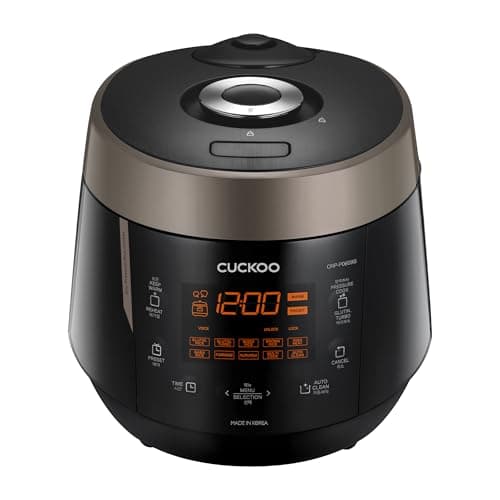
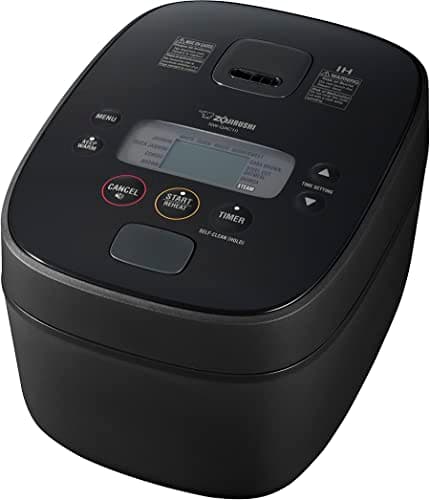
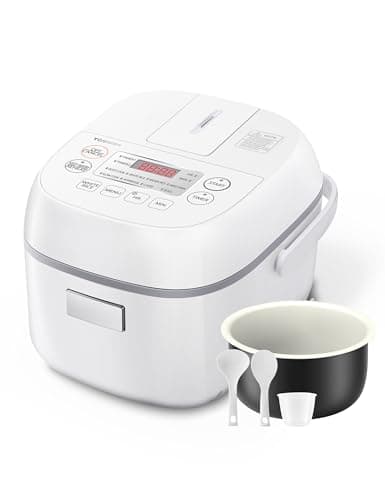
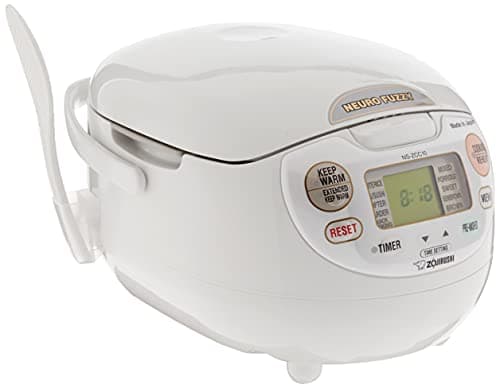
Buy the Zojirushi NS-ZCC10 Neuro Fuzzy. It is the only cooker in this catalog whose maker publishes a Sushi setting and a Softer settingalongside white, harder, mixed, porridge, brown and rinse-free — and those two programs are precisely the ones that produce glossy, cohesive short-grain rice. 680 W, made in Japan, with the Neuro Fuzzy heat control that adjusts through the cook rather than running a timer. Buy the Cuckoo CRP-P0609Sif you want cohesion taken further: at a published 78.4 kPa of working pressure it gelatinises starch more completely than any non-pressure cooker can, which is the chewiest, glossiest grain available here. Buy the Zojirushi NW-QAC10 if you mean true Thai glutinous rice— it is the only cooker in this catalog with a published steam function and a steaming tray, and steaming is the correct method for that grain. The budget pick is the Toshiba mini, a 3-cup fuzzy-logic cooker: fuzzy logic is the mechanism that gets short-grain right, and this is the cheapest machine here that has it.
“Sticky rice” is two different grains
This is the whole reason the page splits, and almost nothing else written about it says so.
Short-grain rice cooked sticky.Japanese and Korean short-grain rice — the rice in sushi, onigiri and a Korean rice bowl — is ordinary rice with a high amylopectin content, and it becomes glossy and cohesive when it is cooked with the right amount of water and the right heat curve. It is boiled, in the normal way, in a rice cooker. Most people searching for a sticky-rice cooker mean this.
Glutinous rice. Thai or Lao sweet rice, the kind served in a bamboo basket, is a different cultivar and it is not boiled at all. It is soaked for hours and then steamedover water, because boiling it produces a paste. A rice cooker is the wrong tool for it unless the cooker can steam — which is exactly why the NW-QAC10 is on this page and most of the others are not the answer for this grain.
Our method page for the first kind is how to make sushi rice, and for the second it is how to cook sticky rice in a rice cooker, which is honest about the compromise involved. Read whichever matches your grain before you buy anything.
How we ranked
Three criteria, all of them documented by the manufacturer.
1. A published program for the texture.Not “works for sushi rice” on a retail listing — a setting the maker names in its own specification. Zojirushi names Sushi and Softer on the NS-ZCC10. That is the strongest single piece of evidence available in this catalog.
2. A mechanism that increases cohesion.Pressure does this physically: Cuckoo publishes 78.4 kPa, water in a sealed pot boils hotter than 100°C, and hotter water gelatinises starch more completely. Fuzzy logic does it by control rather than physics, holding a heat curve rather than a timer.
3. A documented steam function, for glutinous rice. One cooker here has one, and the ranking reflects that rather than hiding it.
We did not rank on claimed sticky-rice performance, user texture reports or any testing — we have not cooked in these machines and our method says so plainly.
Why water, not the machine, does most of the work
The uncomfortable truth about this query is that technique outweighs hardware. Sticky short-grain rice is mostly a question of rinsing, water ratio and resting:
Rinse until the water runs nearly clear, which removes the loose surface starch that turns into gluey coating rather than cohesive grain. Our water-ratio page has the numbers, and the one that matters here is that less water with a longer rest produces stickier rice than more water, which produces mush. Why rice goes mushy is the failure mode in full.
Rest it with the lid on for ten minutes after the cycle ends. This is where the grain finishes absorbing and firms into something cohesive rather than wet. Every cooker here does it automatically if you leave it alone, and almost nobody does.
Measure with the cup the cooker came with.A rice-cooker cup is 180 ml, not a US cup, and Zojirushi states its capacities are measured with one using raw short-grain white rice. Using a kitchen cup is the single commonest cause of wrong-texture rice, and what a rice cooker cup actually is explains why.
A good machine makes that technique repeatable. It does not replace it.
The pressure option, and its limit
The Cuckoo CRP-P0609S is second rather than first for one reason: it has no setting named for the texture. What it has is the mechanism, published — 890 W, a 304-stainless-backed pot, made in South Korea, and the 78.4 kPa working pressure Cuckoo documents for its pressure line. That produces the chewiest, glossiest grain in this catalog, and for Korean short-grain and mixed rice it is genuinely the best result available here.
Its limit is in the other direction. Pressure's extra cohesion is a defect on basmati and jasmine, so a household that cooks both will want the switchable Twin Pressure modelinstead, and a household that cooks only long-grain should not be on this page at all — the basmati ranking is the right one.
The one cooker that can steam
The Zojirushi NW-QAC10 publishes twelve menu settings, and the one that matters here is steam, with a tray — the only published steam function with a tray in this catalog. For true glutinous rice, soaked and then steamed over water rather than boiled in it, that is the correct method rather than an approximation of it.
It is also the most expensive cooker on this page by a clear margin, it is whole-pot induction rather than fuzzy logic, and its pan is double-nonstick-coated aluminium with a stainless clad layer — a coating with a finite life, which Zojirushi publishes and we count against it. Buying it purely to steam a pound of sweet rice is a lot of money for a bamboo basket's job; buying it because you also want the best induction rice in this catalog and the steam tray comes with it is a different calculation. The single-machine version is our NW-QAC10 review.
If a steamer basket is actually the feature you want, rather than a premium cooker that happens to have one, the best rice cookers with a steamer basket ranks the field on exactly that and starts a great deal cheaper.
The cheap end, honestly
The Toshiba mini is the budget pick because it has the right mechanism rather than the right label: three cups uncooked, fuzzy logic, and a 24-hour delay timer. Fuzzy logic is what holds a heat curve instead of a timer, and that is the thing that separates cohesive short-grain rice from wet short-grain rice at this price.
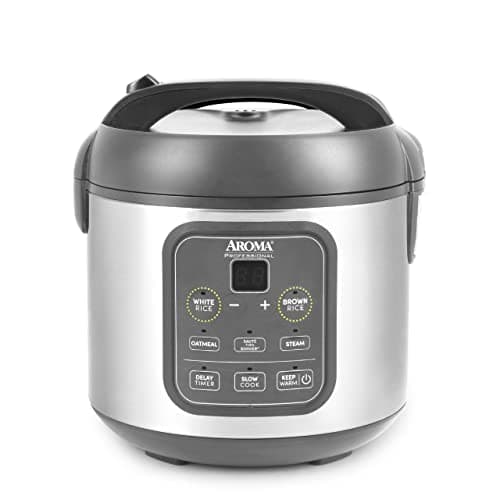
We did not rank the Aroma ARC-994SG for this job, even though it is the cheapest cooker on the site and we recommend it elsewhere, and the reason is in its own documentation: Aroma publishes exactly two rice programs for it, White Rice and Brown Rice. There is no sushi setting and no sweet-rice cycle. It will cook short-grain rice on White Rice and you will do the texture work yourself with the water ratio, which is a reasonable outcome but not one that earns a ranking on a page about this specific texture.
Choosing in one minute
You want sushi rice, onigiri rice, Japanese short-grain. Zojirushi NS-ZCC10. A published Sushi setting and a published Softer setting, which nothing else here has.
You want the chewiest, glossiest grain available.Cuckoo CRP-P0609S, at a published 78.4 kPa.
You mean Thai or Lao glutinous rice.Zojirushi NW-QAC10, for the published steam function and tray — or a bamboo steamer and a pan, which costs almost nothing.
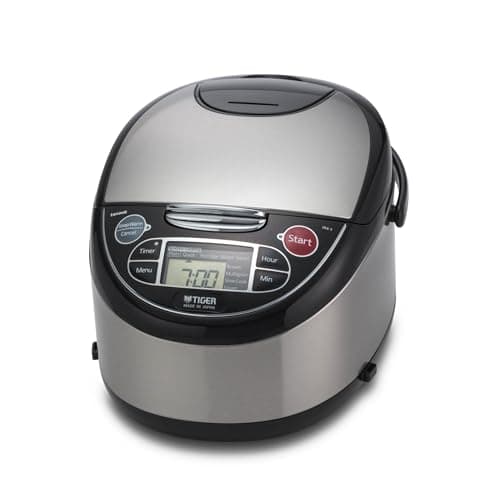
You cook short-grain and long-grain in the same week. Tiger JAX-T10U. Ten menus, made in Japan, and no pressure to over-soften your basmati.
You are cooking for one or two. Toshiba mini, 3 cups, fuzzy logic.
The three mistakes
Adding more water to get stickier rice — it makes mush, not cohesion. Skipping the rinse, which leaves surface starch that coats rather than binds. And buying a boiling rice cooker for true glutinous rice, which needs to be soaked and steamed; the cheapest correct tool for that is a basket, not a machine.