HUB 03 · Sous Vide
Sous Vide Temperature Guide
The single most useful thing to have next to your circulator: a reference for the temperature that produces the result you want. Here are the doneness temperatures home cooks commonly use, why sous vide relies on time as well as temperature for safety, and where to check the official guidance.
We earn a commission if you buy through our links. It does not change the price you pay, and it does not decide our picks — the scoring rubric is published in full, including what disqualifies a pick. How this works.
How to read this guide
Sous vide works by holding food at the exact temperature you want the finished result to be, so the temperature you set is the doneness. That is the whole appeal — but it also means the number matters, and it means food safety depends on time as well as temperature. The ranges below are the doneness temperatures home cooks commonly use; treat them as a starting reference, set your circulator precisely, and read the safety note before you cook poultry or anything at the lower end. When in doubt, cook hotter or hold longer.
Steak and red meat (beef, lamb)
Common doneness targets, held until heated through (roughly an hour for a steak, longer for a thick roast), then seared hard in a hot pan or with a torch:
- Rare: about 120–128°F (49–53°C)
- Medium-rare: about 129–134°F (54–57°C) — the most popular target
- Medium: about 135–144°F (57–62°C)
- Medium-well to well: about 145–155°F (63–68°C)
The USDA's recommended safe minimum for whole beef and lamb steaks and roasts is 145°F with a rest; below that, safety comes from holding the food long enough at temperature to pasteurize it, which is the principle sous vide is built on — see the safety note below.
Chicken and poultry
Sous vide is transformative for chicken breast because you can hold it juicy at a temperature well below the oven-roast result — but poultry is exactly where the time-and-temperature safety rule matters most:
- Very juicy, tender breast: about 140–146°F (60–63°C), held long enough to pasteurize
- Traditional firm texture: about 150–160°F (65–71°C)
- Dark meat / thighs: about 165–175°F (74–79°C) for a fall-apart result
The USDA's recommended safe minimum internal temperature for poultry is 165°F when measured instantly. Cooking below that is safe only if the food is held at temperature long enough to pasteurize; if you are unsure, cook at 165°F.
Pork, fish and eggs
- Pork chops / loin: about 135–145°F (57–63°C) for tender and slightly pink; USDA safe minimum is 145°F with a rest
- Fish (salmon, etc.): about 120–130°F (49–54°C) for silky to firm — a wide texture range that pan-cooking cannot hit reliably
- Eggs: about 145°F (63°C) for a soft, custardy “onsen” egg; higher for firmer — the classic sous vide showpiece, and where tight accuracy pays off most
The safety note: time matters, not just temperature
This is the part a temperature chart alone leaves out. At the lower doneness temperatures above, food is made safe by being held at that temperature long enoughto pasteurize — a function of both temperature and time — not by hitting a number for an instant. The USDA has specific guidance on cooking safely with time and temperature; read it before cooking poultry or anything at the low end, and if you are ever unsure, cook to the USDA instant-read minimums (165°F poultry, 145°F beef/pork/fish with a rest). Accurate temperature control is what makes the low-and-slow approach reliable, which is why a machine with a tight, honest accuracy spec — like the Anova or Inkbirdat ±0.1°C — matters more here than anywhere else.
The hardware
The cookers this page is about
The cookers referred to above, with prices pulled live from Amazon and dated on every card. Full rankings live in the roundups linked from this page.
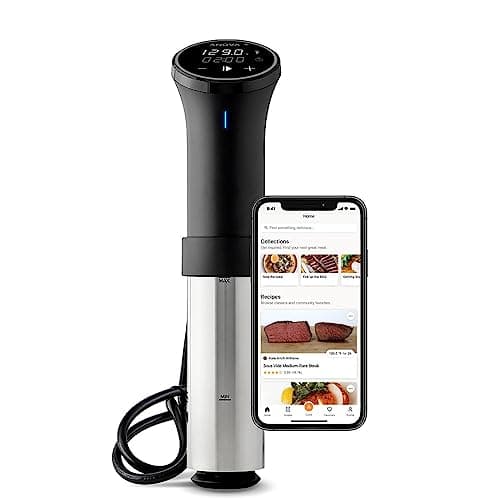
1,100 W
Anova Precision Cooker 3.0 (WiFi), 1100 W
The sous vide circulator most people should buy. Anova publishes the full specification — 1,100 W, a 0–92°C range, ±0.1°C accuracy, an 8 L/min pump — and backs it with a two-year warranty, the longest here. It has an on-device screen so it works without the app, which the Joule does not.
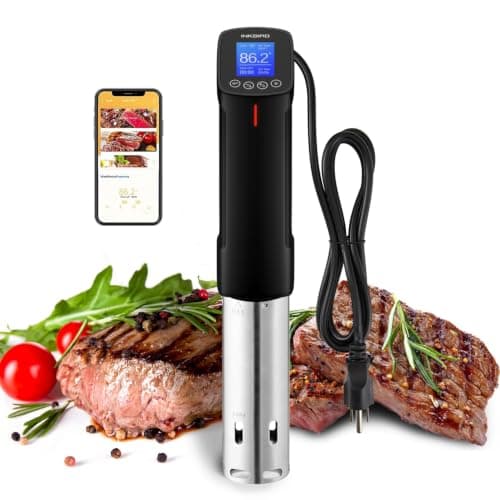
1,000 W
Inkbird ISV-100W WiFi Sous Vide, 1000 W
The value pick that does not feel like one. Under $100, and Inkbird still publishes the full specification: 1,000 W, a 25–99°C range, ±0.1°C accuracy, 15 L capacity, WiFi and an on-device dot-matrix screen. It undercuts the Anova by more than half and gives up remarkably little on paper.
#ad · As an Amazon Associate we earn from qualifying purchases.
Questions
Frequently asked
What temperature do you sous vide a steak?
Is sous vide chicken at 140°F safe?
Does sous vide accuracy really matter?
Keep reading
Related
- Can you sous vide frozen meat?Yes, straight from the freezer, safely.
- How to sous vide eggsWhere precise temperature control matters most.
- How to sous vide salmonSilky texture, and the USDA safety tradeoff.
- How to sous vide a steakPutting these temperatures to work.
- How long to sous vide chickenPoultry times and temperatures, done safely.
- Is sous vide safe?Why time and temperature together keep it safe.
- What is sous vide?The method behind the numbers.
- The best sous vide machinesAccuracy matters most here — pick well.
- Is sous vide worth it?Whether the technique fits how you cook.
Receipts
Sources
- USDA FSIS — cooking safely with time and temperature (pasteurization basics)
- USDA Food Safety and Inspection Service — safe minimum internal cooking temperatures
- Anova Culinary — Precision Cooker 3.0 product page
We have not tested these machines in a lab and we do not pretend to have. Specifications come from the manufacturer's own published documents; electricity rates come from the US Energy Information Administration; prices come from the live Amazon API. Where a figure is not published, the page says “not published” rather than guessing. Read the full method.