The verdict, first
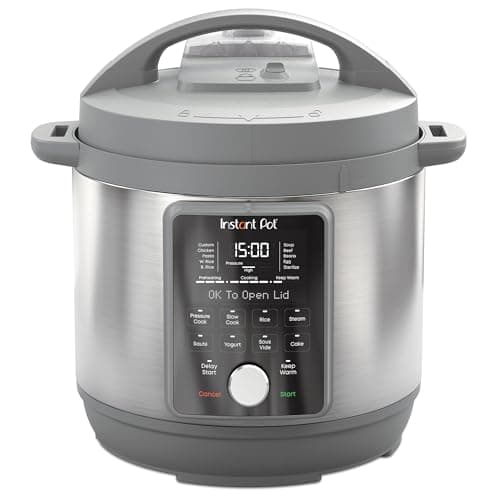
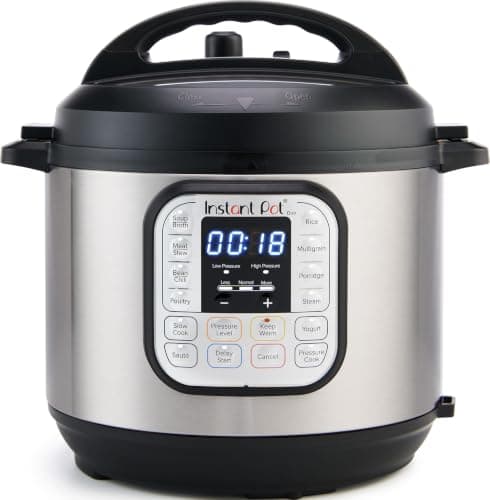
Buy the Instant Pot Duo — for the cook who makes dal, rajma, chana or chole regularly and wants one pot that does the whole sequence. Its bare 18/8 stainless tri-ply pot takes the high-heat tadka step without a coating in the way, Instant Brands publishes a working pressure of 10.2–11.6 psi so you can actually reason about legume times, and at 1,000 W into 6 quarts it is the right size for a household batch. If you cook for a large family or batch for the week, the 8-quart Duo Plus. For the rice half — and this is the part most guides get wrong — a pressure preset is good rather than great at long-grain basmati, so if rice is daily, the Zojirushi Neuro Fuzzy or the Tiger JAX-T10U earns its place beside the pressure cooker. The Aroma ARC-994SG is the forty-dollar way to cover the rice half if the budget is going on the pressure cooker.
Why this cuisine is a two-machine answer
Most pages on this site conclude with one appliance. This one does not, and the reason is structural rather than fussy. Indian home cooking leans hard on two techniques that want opposite things from a pot:
- Legumes under pressure. Chana, rajma, whole urad, kabuli chana, toor and masoor dal — these are the daily backbone, and they are exactly what pressure cooking exists for. An unsoaked chickpea is an hour-plus job on the stovetop and a fraction of that under pressure. The published working-pressure figure matters here more than on any other page we write, because legume cook times are pressure-dependent and a cooker whose maker will not publish a psi range is a cooker you cannot calibrate against a recipe.
- Long-grain rice by absorption. Basmati wants to come out dry, separate and elongated — the opposite of the sticky short-grain result a pressure preset is tuned for. Rice cooked under pressure is fine, and it is what millions of people do; rice cooked in a machine that senses the cook and has a long-grain-appropriate profile is better, visibly.
A pressure cooker does the first job excellently and the second one adequately. That is the whole shape of this page.
What to look for, in order
- A bare stainless pot, for the tadka. Nearly every dish starts by blooming whole spices in ghee or oil at high heat — jeera, mustard seed, hing, curry leaves — and frying onion, ginger and garlic to a base. That is the hottest, most abrasive thing you will do in the pot, and you want metal rather than a coating under it. The whole Instant Pot pressure range publishes uncoated 18/8 stainless; we set the published materials out in the best non-toxic multicooker.
- A published pressure range. As above: legume times are only transferable between cookers if you know the pressure. Instant Brands publishes 10.2–11.6 psi for the Duo and Duo Plus; several makers publish nothing.
- Enough pot. Dal doubles in volume and foams, and pressure cookers should not be filled past half with foaming food. Six quarts is the right default; eight if you cook for a joint family or batch for the week.
- A real sauté program, not a token one. You need sustained high heat with the lid off to get the base right. Every cooker here has it; the pot material decides how well it browns.
- For the rice half: a sensing cooker, not a timer. Fuzzy logic adjusts heat through soaking, boiling and steaming — which is the entire reason a good rice cooker beats a cheap one. See what fuzzy logic actually does.
The published specs, side by side
Manufacturer-published figures only, cited on each product card below. Two categories of machine, so the columns that matter differ — which is the point of the page.| Cooker | Job | Capacity | Rated power | The figure that matters here |
|---|
| Instant Pot Duo | Legumes, curries, tadka | 6 Qt / 5.7 L | 1000 W | 10.2–11.6 psi published; 18/8 stainless pot |
|---|
| Instant Pot Duo Plus, 8 Qt | Big-batch legumes and biryani | 8.0 Qt | 1200 W | Largest pressure pot here; 18/8 stainless |
|---|
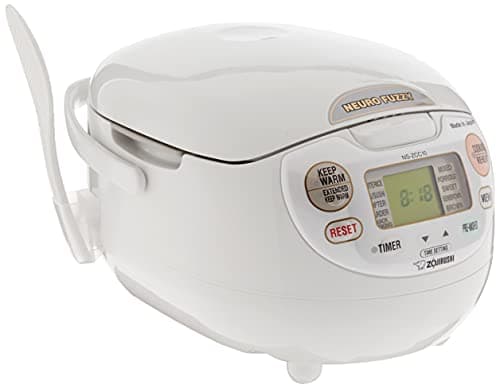
| Zojirushi NS-ZCC10 | Rice, daily | 5.5 cup / 1.0 L | 680 W | Neuro Fuzzy heat control; made in Japan |
|---|
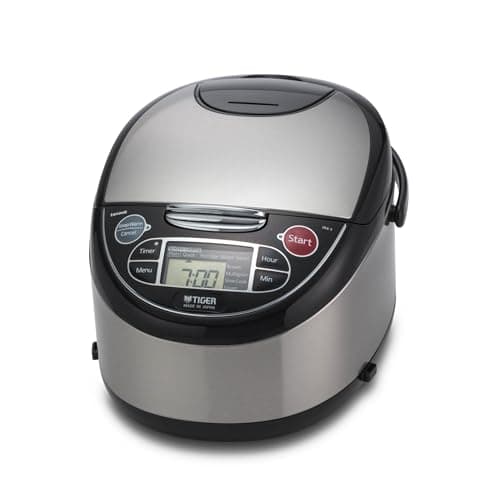
| Tiger JAX-T10U | Rice plus a side, together | 1.0 L / 5.5 cup | 641 W | tacook tray cooks a dish above the rice |
|---|
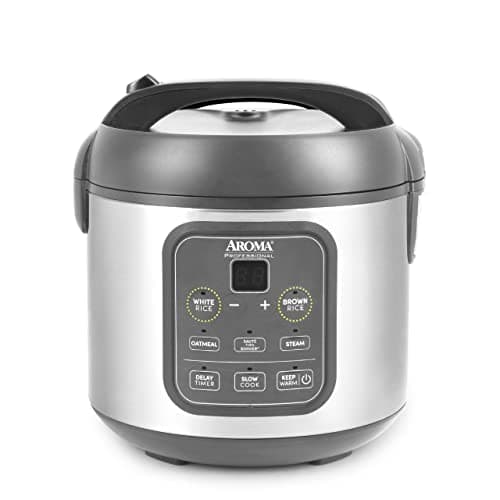
| Aroma ARC-994SG | Budget rice + slow cook | 4 cup uncooked | 450 W | Two rice programs only; steam tray included |
|---|
Who each pick is for
- Instant Pot Duo — for the household making dal or a legume curry several times a week. The uncoated pot and the published pressure range are the two things this cuisine actually needs.
- Instant Pot Duo Plus, 8 Qt — for a joint family, regular guests, or anyone cooking a week of chana and rajma at once. Same stainless pot, two quarts more.
- Zojirushi NS-ZCC10 — for the cook who eats rice daily and notices texture. The best rice of the three rice machines here, and the one to buy if the pressure cooker is already handled.
- Tiger JAX-T10U — for weeknights: the tacook tray steams a portion of vegetables or protein above the rice while it cooks, so one machine makes two parts of the meal.
- Aroma ARC-994SG — for covering the rice half cheaply. Two rice programs and a published 450 W; the versatility pick, not the rice-quality one.
The trick that collapses two machines into one: pot-in-pot
Before you buy both, know that an electric pressure cooker can make dal and rice in the same cycle. The rice and its water go in a heatproof bowl on a trivet above the dal in the main pot, and one pressure cook does both. This is the single most useful technique for this cuisine in the whole catalog, it works in every multicooker on this page, and our pot-in-pot guide covers the bowl, the trivet and the water adjustment. If that covers your rice needs, buy the Duo alone and stop — a second appliance you use twice a month is not worth the counter.
The stovetop pressure cooker question
It deserves a straight answer, because in a lot of Indian kitchens the pressure cooker is a stovetop one and has been for decades. Stovetop cookers reach a higherpressure than electric ones — typically around 15 psi against the Instant Pot's published 10.2–11.6 — which means faster legume cooking and the whistle-count timing that recipes are written around. What an electric cooker gives you instead is unattended, repeatable cooking: set it and leave the kitchen, with no whistle to count and no scorching if you get distracted. One is faster and one does not need watching. We take the comparison on properly in stovetop vs electric pressure cooker, and the honest summary is that a lot of people keep the stovetop cooker and add an electric one rather than replacing it.
Converting recipes written in whistles
The practical consequence of that pressure difference is that “three whistles” does not translate directly to minutes on an electric pot. Lower pressure means longer times — expect to add rather than subtract, soak where the recipe soaks, and treat the first attempt at any dal as calibration. Our recipe-conversion guide sets out the method, and the two pages we would read first for this cuisine are beans and chickpeas in an Instant Pot and lentils in an Instant Pot, which cover soaked-versus-unsoaked timing and the liquid minimums that keep a thick dal off the bottom of the pot.
Two things that will go wrong, and the fixes
The Burn message on a thick gravy. Tomato-and-onion bases are dense and they sit on the element; the cooker reads that as scorching and stops. The fixes are mechanical — deglaze properly after the tadka so nothing is stuck, layer rather than stir the tomato in, and keep enough thin liquid at the bottom. Full diagnosis in the Burn message guide.
Foaming dal blocking the valve. Legumes foam, and foam can reach the steam release. Keep the pot under half full, add a teaspoon of oil or ghee to the cooking water, and use a natural release rather than venting a foaming pot — natural vs quick release covers when each is right. For how much liquid a thick dish actually needs, see how much liquid an Instant Pot needs.
Which one to buy
Buy the Instant Pot Duo first, always. It is the half of this kitchen that cannot be improvised: legumes under pressure, a bare stainless pot that takes the tadka, and a published pressure range you can calibrate recipes against. If you buy one appliance for this cuisine, buy that one — and use pot-in-pot for rice until you know whether you want a dedicated rice cooker.
Size up to the 8-quart Duo Plus if you cook for a large household, batch for the week, or make biryani for guests. Dal doubles and foams, so the practical capacity of any pressure cooker is about half its stated volume — which is why 6 quarts runs out sooner than the number suggests.
Add a rice cooker only if rice is daily. Then the Zojirushi NS-ZCC10 is the one that makes the best rice here, the Tiger JAX-T10U is the one that also cooks a side above it, and the Aroma ARC-994SG is the one that costs about as much as a takeaway. All three beat a pressure preset on long-grain basmati, and none of them is necessary if you are happy with pot-in-pot. No price appears in this paragraph on purpose — these discount independently, and the live, dated figure is on each card above.
How we picked
Machines we claim to have tested: 0
Everyone in this category tells you they tested twenty cookers. We have tested none, and we say so. Here is what we do instead: read the manufacturer's manual and spec page, record the published wattage, capacity, pressure or temperature figure and warranty term, work out what the machine costs to run per hour, show the arithmetic so you can redo it with your own electricity rate, and cite all of it. Where a brand publishes no wattage, we print no running cost rather than borrowing a number from a similar model. Prices come live from Amazon's API and disappear rather than go stale.
The scores above are judgments from that documented research — not test results. One of the five metrics is Documentation: whether the manufacturer will tell you what its cooker draws at all. The full rubric, including what disqualifies a pick, is published in full.