HUB 03 · Sous Vide
How to Keep a Sous Vide Bag From Floating
A floating sous vide bag isn't just annoying — the part sticking out of the water cooks less than the part submerged, so your food comes out uneven. The cause is nearly always trapped air, and the fixes are simple. Here's why it matters and how to keep the bag down for good.
We earn a commission if you buy through our links. It does not change the price you pay, and it does not decide our picks — the scoring rubric is published in full, including what disqualifies a pick. How this works.
Why a floating bag is a real problem, not just annoying
It looks like a minor irritation, but a floating sous vide bag actually undermines the whole technique. The entire point of sous vide is that food sits in water held at one precise temperature so it cooks evenly to that doneness — and any part of the bag bobbing above the waterline is not in that controlled environment. It cooks less than the submerged part, so a steak comes out perfect on one side and underdone on the other, and, worse, on a long cook, food held out of the hot water can sit in a temperature range that raises food-safety questions. So keeping the bag fully submerged is not fussiness; it is what makes the results even and safe. The good news is the cause is almost always the same one thing, and it is easy to fix.
The real cause: trapped air
A bag floats because there is air trapped inside it. Air is buoyant and insulating, so a bag with a pocket of air both rises to the top and shields the food from the water. Fix the air and you fix most floating. The best way to remove it is the water-displacement method: seal the bag almost all the way, leaving a small gap, and lower it slowly into the water so the pressure pushes the air out through the gap, then seal the last bit when the water reaches the line. A vacuum sealer does the same job more thoroughly. This is the first thing to check every time a bag floats — nine times out of ten, there was air you did not get out, and the full technique is in can you use Ziploc bags for sous vide.
Why food can float even with the air out
Sometimes you remove all the air and the bag still rises, and there is an honest reason: some foods are simply less dense than water. Fatty cuts, some vegetables, and anything that releases gases or steam as it warms can lift a well-sealed bag. Long cooks are especially prone to it, because food can off-gas over hours even after a perfect initial seal. So while removing air is the first and most important step, it is not always the whole answer, and that is when you need a physical way to hold the bag down. Do not just push it under and hope — a bag that keeps surfacing needs one of the following.
Ways to hold the bag down
Several fixes work, and you can combine them. The simplest is to weigh the bag down: drop something heavy and food-safe into the bag with the food — a stainless steel spoon or a sous-vide weight — or set a heavy object on top of the bag in the water, such as a plate or a spoon rest, as long as it does not block circulation. Second, clip the bag to the side of the container with a binder clip or a clothespin so its top edge stays anchored above the water while the food hangs below the surface. Third, use a sous vide rack — an inexpensive slotted rack that holds bags upright and separated, which is the tidiest solution if you cook multiple bags at once and also improves water flow around each one. Fourth, on a stubborn floater, add a little more weight or re-seal the bag to expel gas that built up during the cook. Between removing the air and one of these anchors, you can keep any bag fully under.
A note on circulation
One thing worth keeping in mind while you battle a floater: whatever you use to hold the bag down should not block the water moving around it. A circulator like the Inkbird or the quiet Greater Goods relies on flowing water to keep the whole bath at one temperature, so cramming bags against the machine or piling weights that seal off circulation can create cold spots even if nothing is floating. A rack that separates bags is ideal for exactly this reason. Keep the bag submerged, keep the water moving, and you get the even, precise result the machine is capable of — which, along with the right container, is most of what makes a sous vide setup work well (what container to use for sous vide covers the rest).
The fix:a floating bag is almost always trapped air — remove it with the water-displacement method (or a vacuum sealer) first. If a well-sealed bag still rises, weigh it down with a food-safe object, clip it to the side of the container, or use a sous vide rack. Keep the whole bag submerged so it cooks evenly, and make sure whatever holds it down doesn't block the water circulating around it.
The hardware
The cookers this page is about
The cookers referred to above, with prices pulled live from Amazon and dated on every card. Full rankings live in the roundups linked from this page.
1,000 W
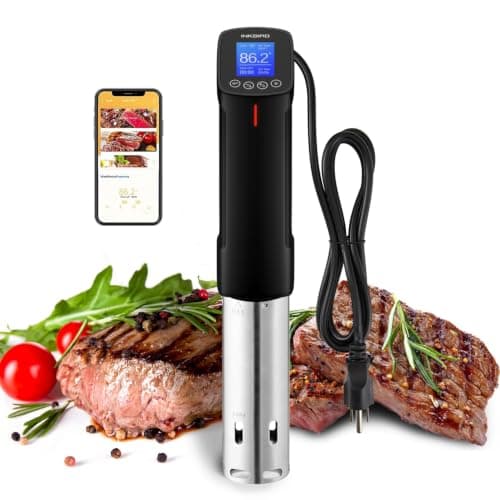
Inkbird ISV-100W WiFi Sous Vide, 1000 W
The value pick that does not feel like one. Under $100, and Inkbird still publishes the full specification: 1,000 W, a 25–99°C range, ±0.1°C accuracy, 15 L capacity, WiFi and an on-device dot-matrix screen. It undercuts the Anova by more than half and gives up remarkably little on paper.
1,100 W
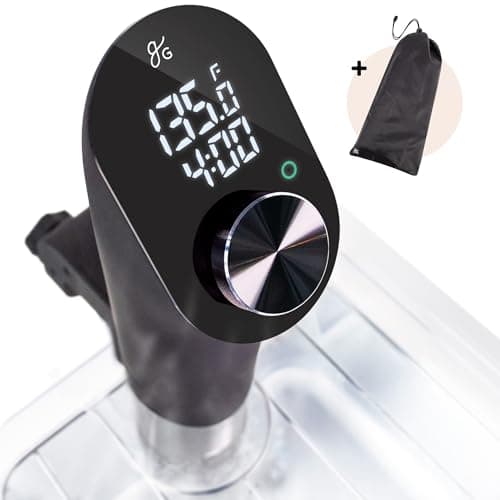
Greater Goods Sous Vide Precision Cooker, 1100 W
The circulator for people who want none of the connectivity. No WiFi, no app, no phone — a dial, a screen and a silent brushless motor rated to run 99 hours straight. 1,100 W, a 20–95°C range, and a build that is quieter than anything else here.
#ad · As an Amazon Associate we earn from qualifying purchases.
Questions
Frequently asked
Why does my sous vide bag float?
How do I stop a sous vide bag from floating if the air is out?
Does it matter if a sous vide bag floats?
Keep reading
Related
Receipts
Sources
- USDA FSIS — cooking safely with time and temperature (pasteurization basics)
- Inkbird — ISV-100W WiFi Sous Vide product page
We have not tested these machines in a lab and we do not pretend to have. Specifications come from the manufacturer's own published documents; electricity rates come from the US Energy Information Administration; prices come from the live Amazon API. Where a figure is not published, the page says “not published” rather than guessing. Read the full method.