When bigger genuinely helps
Capacity in a multicooker is not linear with usefulness. A 6-quart pot already cooks for a family of four; the jump to 7.5 or 8.5 quarts matters in three specific situations — batch cooking a week of dinners at once, large cuts like a whole chicken or a big pot roast that a tall 6-quart pot cannot fit flat, and stock and soupin volume. If none of those describe you, a large cooker just takes more counter and costs marginally more to heat. If one or more do, the extra quarts are the best money you can spend in this category. The stock case has its own page now — the best pressure cookers for bone broth ranks the same field on the fill line and the pot material instead — and if slow cooking rather than pressure is what you actually do with a big pot, the slow-cooking roundup reorders it again.
Two numbers matter, not one
Total volume is the headline, but the searing baseis the one people miss. A tall pot and a wide pot can hold the same quarts while browning very differently — more of a wide pot's bottom touches the element, so you brown more food at once and more evenly before you pressurize. That was the RIO Wide Plus's whole argument: at 7.5 quarts Instant Brands describes a base wider than a 12-inch skillet (its published 35% figure is a cooking-capacity comparison against 8-quart cookers, not a searing-area one). It is also the reason the Wide Plus leaving Amazon is a real loss rather than a reshuffle — no cooker still on sale here has a wide base, so on every pick below you brown a big batch in rounds.
The field, from biggest down
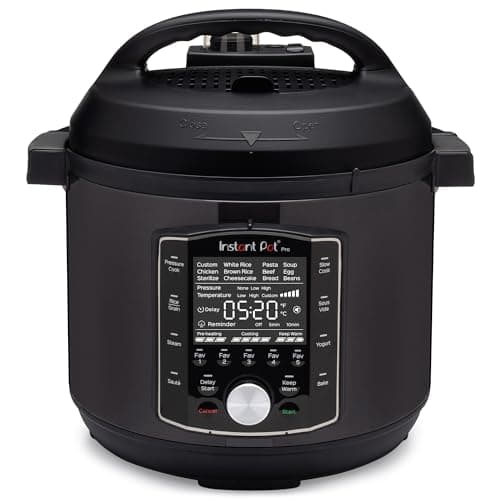
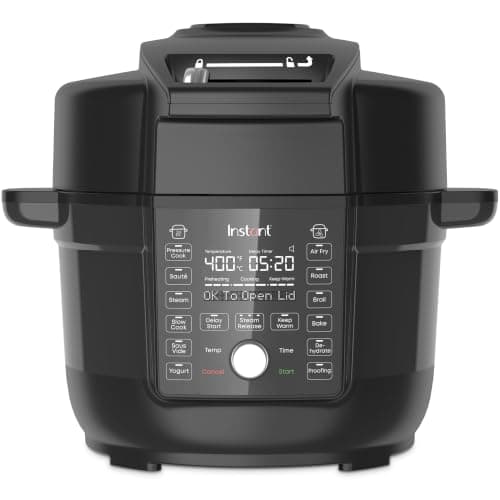
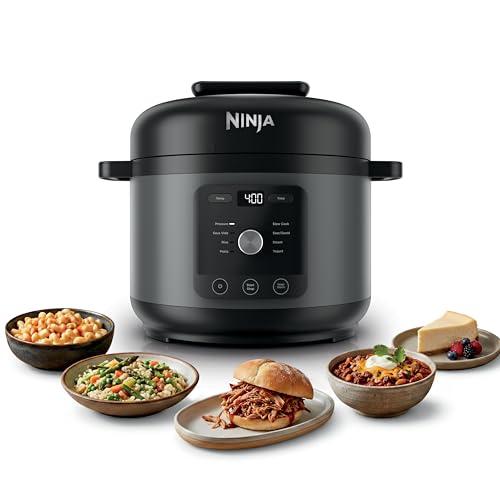
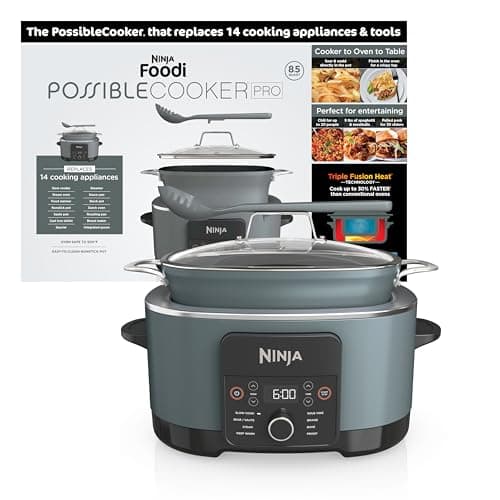
The Ninja PossibleCooker PRO holds the most at 8.5 quarts and its pot is oven-safe to 500°F, so it doubles as a braiser you can finish under the broiler — but note it does not pressure-cook, which is a real limitation if speed is why you want a big pot. The 8-quart Instant Pot Pro is the pick for most large households that still want pressure: 8.0 quarts rated for up to 8 servings, ten functions including sous vide and bake, a dishwasher-safe stainless pot, 1,400 W and a fully published spec. The Duo Crisp(6.5 qt) is here for the household that wants large-ish capacity and a crisping lid — it is the only pick on this page that air-fries, and it is covered in full in our air-fryer multicooker roundup. The Ninja HyperHeat(6.5 qt) is the large-ish Ninja you can buy today: 1,200 W, sous vide and yogurt programs, a PFAS-free ceramic-coated pot, and no crisping lid. It takes the slot the discontinued dual-lid Foodi OS300 used to hold here. The RIO Wide Plus(7.5 qt) stays on the list for reference only: it had the one wide searing base in the category, and Amazon no longer has a buyable offer for it.
The trade-off nobody mentions
A big pot cooks a small meal worse, not just less efficiently. Pressure cookers and multicookers need a minimum amount of liquid to build steam, and a nearly empty 8.5-quart pot takes longer to come to pressure and can leave a small batch overcooked at the edges. Buy for the meals you actually make most weeks, not the biggest one you make twice a year — and if you routinely cook for one or two, a smaller pot is the better tool.
This list is restricted to electric multicookers, which leaves out two vessels a big household should see. The best pressure cookers for a large family is pressure-first, so it can rank an 8-quart stovetop cooker and a 23-quart canner that doubles as a stockpot alongside the electrics.
How we ranked on size
We ranked the large field on real, published capacity first, then on searing base, wattage and documentation, using the same five-metric rubric as the rest of the site. Capacity figures come from each manufacturer's own product page — never estimated — and where a brand describes its pot material inconsistently (as Ninja does for the PossibleCooker), we say so on the card rather than picking the flattering version. Our full method is here.
How we picked
Machines we claim to have tested: 0
Everyone in this category tells you they tested twenty cookers. We have tested none, and we say so. Here is what we do instead: read the manufacturer's manual and spec page, record the published wattage, capacity, pressure or temperature figure and warranty term, work out what the machine costs to run per hour, show the arithmetic so you can redo it with your own electricity rate, and cite all of it. Where a brand publishes no wattage, we print no running cost rather than borrowing a number from a similar model. Prices come live from Amazon's API and disappear rather than go stale.
The scores above are judgments from that documented research — not test results. One of the five metrics is Documentation: whether the manufacturer will tell you what its cooker draws at all. The full rubric, including what disqualifies a pick, is published in full.