Skip to content
DD

HUB 03 · Sous Vide

The best sous vide circulators for film developing

Kodak specifies the C-41 developer at 37.8 plus or minus 0.15 degrees C and tells sink-line users to hold it with a tempered-water bath around the tanks. That is exactly what an immersion circulator is - which is why a $90 kitchen gadget replaced a $900 lab tempering unit, and why the spec that matters is not the one on the box.

By Stephen V.Updated How we rank
#ad

We earn a commission if you buy through our links. It does not change the price you pay, and it does not decide our picks — the scoring rubric is published in full, including what disqualifies a pick. How this works.

The short answer

Quick picks

#CookerBest forScorePrice
01
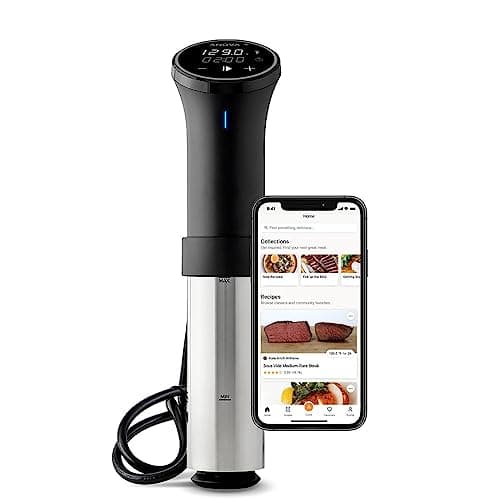
Anova Anova Precision Cooker 3.0 (WiFi), 1100 W
Anova Precision Cooker 3.0 (WiFi), 1100 W

The default, and it earned it

1,100 W
9.0
$169.00Amazon
02
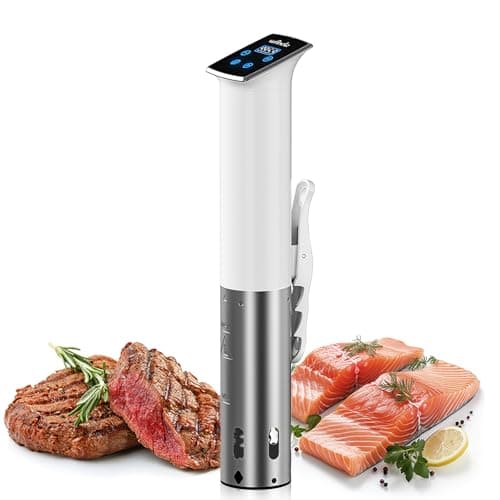
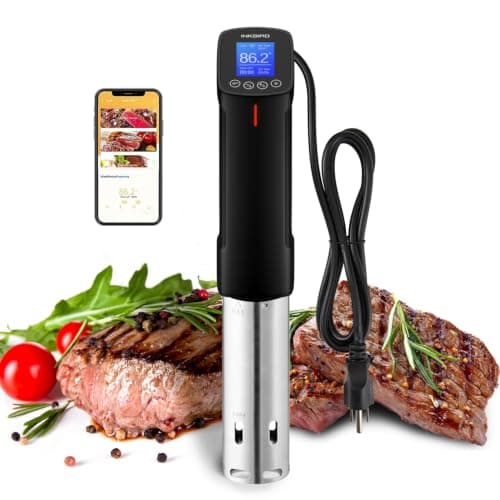
Inkbird Inkbird ISV-100W WiFi Sous Vide, 1000 W
Inkbird ISV-100W WiFi Sous Vide, 1000 W

WiFi and a screen for under $100

1,000 W
8.8
$95.99Amazon
031,100 W
8.1
$89.99Amazon
041,100 W
7.4
$41.99Amazon

#ad· Prices pulled live from Amazon's official Creators API, last checked November 13, 2026. Where we have no verified live price we show none — we would rather leave a gap than print a number that has gone stale. The wattage column is what the manufacturer publishes; “not published” means exactly that, and we have not estimated one. Scores are ours, compiled from published specifications, and are not test results.

The short answer

Buy the Anova Precision Cooker 3.0. It publishes an accuracy of ±0.1 °C, which is inside Kodak's own C-41 developer tolerance of ±0.15 °C; 1,100 W to bring a tank bath up quickly; an 8 L/min pump so the bath is genuinely uniform; and a published range of 0–92 °C, which is the widest set range here and the only one that reaches down to black-and-white territory. It also carries a two-year warranty, the longest of any circulator in this catalog. Buy the Inkbird ISV-100Wif you want the same published ±0.1 °C accuracy and an on-device screen for far less money — with one hard limit covered below. Buy the Greater Goods circulator if you want no app and no connectivity at all: it is the only machine here that reaches 20 °C and has no radio in it, and the trade is that Greater Goods publishes no accuracy figure. The budget pick is the Wancle 820, which states ±0.1 °C itself and publishes a timer range of 1 minute to 99 hours 59 minutes— more than enough for any process you will ever run.

Why a kitchen circulator is the right tool

This is not a workaround. Kodak's own technical publication Z-131, Using KODAK FLEXICOLOR Chemicals, specifies the Process C-41 developer at 37.8 ± 0.15 °C (100.0 ± 0.25 °F)for 3:15 — and under its sink-line processing section it says, in these words, that to maintain a solution processing temperature of 37.8 °C you should use a tempered-water bath for the processing tanks, deep enough to surround the tank to solution level.

An immersion circulator is a tempered-water bath with a pump and a thermostat. It is the same instrument the kitchen version of this site is built around, doing the same job: hold a volume of water at a set point, move it so the temperature is uniform, and keep doing it for as long as you like. The only difference is what you stand in it.

Kodak is also explicit about the difficulty, which is the other half of the argument. In the section on rotary-tube processors it notes that maintaining the developer at 37.8 ± 0.15 °C “can be difficult” and that some loss of developer temperature occurs. A bath that holds to a tenth of a degree for an hour removes that problem rather than compensating for it.

One thing to be clear about before anything else: the chemistry never goes in the bath water. The developer, bleach and fixer stay in their own sealed bottles or in the processing tank, and the bath is plain water around them. A circulator is a food-grade appliance with a stainless sleeve and an impeller, and putting photographic chemistry through it would destroy the machine and contaminate every future cook. Our cleaning guide is written for scale and food residue, not for solvents.

How we ranked

1. Published accuracy against ±0.15 °C.Three of these four machines publish ±0.1 °C and one publishes no accuracy figure at all. That is the ranking's first cut, and it is a documentation cut rather than a performance claim — we have not metered these circulators and our method says so.

2. The published temperature floor. This is the criterion nobody writing about this mentions and it is the one that disqualifies machines. See below.

3. Can you run it without a phone? A darkroom is dark, your hands are wet, and a phone app is a bad interface for a timed process. An on-device display and dial is worth real money here even though it is a minor consideration for cooking.

4. Wattage and pump rate.Both matter for a tank bath, which is a deeper, denser load than a steak in a bag: wattage sets how fast you reach 37.8 °C from tap temperature, and the pump sets how uniform the bath is around a stainless tank that is itself a heat sink.

The floor is the figure that decides it

Here is the thing to check before you buy, and it is in the specification of every machine:

Anova Precision Cooker 3.0: 0–92 °C. Greater Goods: 20–95 °C. Inkbird ISV-100W: 25–99 °C. Wancle 820:25–90 °C.

All four comfortably cover 37.8 °C, so for colour negative work the floor is irrelevant and the choice comes down to accuracy, interface and price. Black-and-white developing is a different story: it is conventionally timed at a temperature well below body heat, and your own developer's data sheet will state which one. The Inkbird and the Wancle cannot be set below 25 °C at all. If your process calls for anything lower, those two machines will not do it, and no firmware update changes a published range.

The crucial caveat, and it applies to every circulator ever made: a circulator heats, it does not cool.The Anova's 0 °C floor is the lowest set point its controller accepts, not a refrigeration capability. If your room is 24 °C and your process wants 20 °C, the circulator can hold 20 only once you have brought the bath down with ice or cold water, after which it will maintain it. For summer black-and-white developing that is a real constraint on the whole category, not on any one machine.

The darkroom interface problem

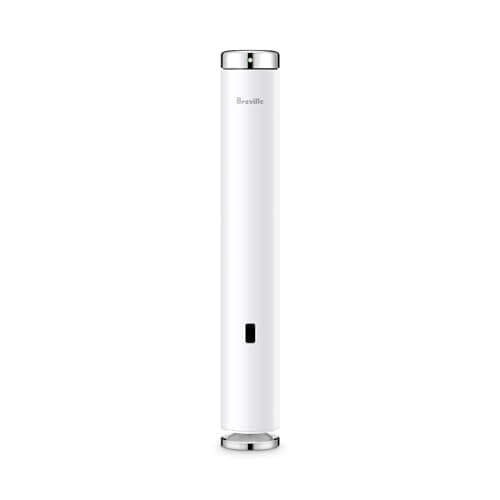
The Breville Joule is the best-built circulator in our catalog and we have put it in the related products rather than the ranking, for one reason: Breville publishes its connectivity as WiFi + Bluetooth, app-only. There is no display and no dial on the device. It cannot be operated any other way.

In a kitchen that is a preference. In a darkroom, under safelight or in total darkness with wet hands and a running clock, a phone is the wrong instrument — and if the app loses the device mid-process you have no local control at all. The same logic is why the Inkbird places above the Greater Goods on interface despite having a radio in it: Inkbird gives you WiFi and an on-device screen, so the phone is optional rather than mandatory.

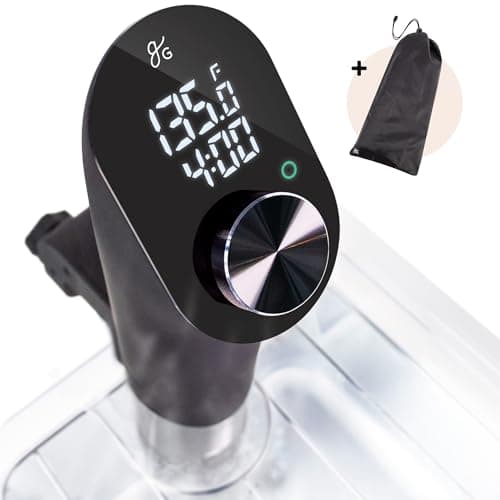
The Greater Goods machine goes furthest in that direction, with connectivity published as none, on-device only, plus a silent brushless motor rated for a 99-hour run. For a reader who wants a dial, a display and nothing else, it is the pick — and the price of that simplicity is that Greater Goods publishes no accuracy figure for it, so you are trusting the category rather than a document.

The vessel matters as much as the machine

Kodak's sink-line guidance is specific about the shape of the bath: deep enough to surround the tank to solution level. A tank standing in four inches of water is being tempered on its bottom third and cooled by the room on the rest, which is how you get the temperature loss Kodak warns about.

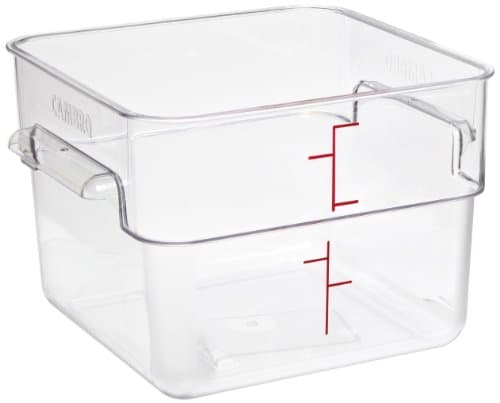
A 12-quart polycarbonate tub is the easy answer, and it is the one we already rank. Cambro's 12SFSCW publishes a temperature range of -40 °F to 210 °F, NSF listing and a cover sold separately; it is the best-documented tub in our catalog and it is cheap. The full list, with usable depth measured against each machine's minimum water line, is in the best sous vide containers.

Two practical notes that come straight from the registry rather than from us. The Wancle publishes a minimum water depth of 4.5 cm and a maximum bath of 20 L, and the Inkbird publishes a 15 L water capacity — so if you are tempering a tall tank in a big tub, check the machine's rated volume rather than assuming more water is always safer. And a lid matters more here than in cooking: evaporation from an uncovered bath cools it continuously, which is the same reason long sous-vide cooks need a cover.

What this page will not tell you

We are a cooking-appliance site and the honest boundary is this: every temperature and time figure above comes from Kodak's own published process document, and every machine figure comes from the manufacturer's own specification. We have not developed film, we have not metered these circulators against a certified thermometer, and we are not going to tell you a push-processing compensation or a developer time for a film we have never run.

Read your own chemistry's data sheet for the process temperature and time, check that it sits inside the published range of whichever machine you buy, and verify the bath with a thermometer you trust before you pour anything. Kodak's own minilab guidance tells operators to check developer temperature often with an accurate thermometer, which is good advice whatever is heating the water.

In detail

The picks, in full

01
Anova Anova Precision Cooker 3.0 (WiFi), 1100 W

The default, and it earned it

Anova Precision Cooker 3.0 (WiFi), 1100 W

Fully specifiedWorks without the app
9.0/10

The sous vide circulator most people should buy. Anova publishes the full specification — 1,100 W, a 0–92°C range, ±0.1°C accuracy, an 8 L/min pump — and backs it with a two-year warranty, the longest here. It has an on-device screen so it works without the app, which the Joule does not.

Capability
9.5
Capacity
8.5
Documentation
10
Build
8.5
Value
8.5

What it gets right

  • Anova publishes the complete specification — wattage, temperature range, accuracy and pump flow — which almost nobody else in this class does
  • An on-device touchscreen means it works fully without a phone, unlike the app-only Joule
  • A two-year warranty, the longest of any sous vide machine on this site

What it doesn't

  • At 325 mm tall it is a large device to store next to the slimmer Nano or Joule
  • The clamp-and-skirt design is bulkier than the Joule's magnetic foot
  • 1,100 W is a real draw — powerful, but the most per hour of the sub-premium circulators here alongside the Joule and Greater Goods

What it costs to run

About 20.7¢ an hour at full rated draw, at the US average of 18.83¢ per kWh.

1,100 W ÷ 1000 × 1 h × 18.83¢ = 20.7¢

1100 W, published on Anova Culinary's own Precision Cooker 3.0 product page alongside the temperature range, accuracy and pump rate. This is an upper bound: the element only draws full power while it is heating up or pressurizing, then cycles off to hold temperature, and no manufacturer publishes a duty cycle — so we compute at full rated draw rather than invent a correction factor. The full method is published.

Skip this if…

…you want the smallest possible device or you cook small portions in shallow water — the slimmer Nano is cheaper, lighter and enough for a single steak, and this is the one to buy only if you want the full power and the longer range.

$169.00on Amazon

$229.0026% off

Price last checked November 13, 2026. Prices move constantly — Amazon's at checkout is the one that counts.

#ad · we may earn a commission from this link to Anova Precision Cooker 3.0 (WiFi), 1100 W

02
Inkbird Inkbird ISV-100W WiFi Sous Vide, 1000 W

WiFi and a screen for under $100

Inkbird ISV-100W WiFi Sous Vide, 1000 W

Fully specified under $100On-device screen + WiFi
8.8/10

The value pick that does not feel like one. Under $100, and Inkbird still publishes the full specification: 1,000 W, a 25–99°C range, ±0.1°C accuracy, 15 L capacity, WiFi and an on-device dot-matrix screen. It undercuts the Anova by more than half and gives up remarkably little on paper.

Capability
9
Capacity
8.5
Documentation
9.5
Build
7.5
Value
9.5

What it gets right

  • Publishes the complete specification — wattage, range, accuracy, capacity — at a price where most rivals publish nothing
  • An on-device dot-matrix screen and WiFi both, so it works with or without the app
  • ±0.1°C accuracy on paper matches the Anova, for less than half the money

What it doesn't

  • A one-year warranty against the Anova's two
  • The listed weight figure on Inkbird's own page is internally inconsistent — a small sign the documentation is less polished than Anova's
  • The app is functional rather than good, and the WiFi is 2.4 GHz only

What it costs to run

About 18.8¢ an hour at full rated draw, at the US average of 18.83¢ per kWh.

1,000 W ÷ 1000 × 1 h × 18.83¢ = 18.8¢

1000 W, published on Inkbird's own ISV-100W product page alongside the range, accuracy and capacity. This is an upper bound: the element only draws full power while it is heating up or pressurizing, then cycles off to hold temperature, and no manufacturer publishes a duty cycle — so we compute at full rated draw rather than invent a correction factor. The full method is published.

Skip this if…

…you want the longest warranty and the most refined app — that is the Anova, and it costs the difference. On the cooking specification itself, this gives up very little.

$95.99on Amazon

Price last checked November 13, 2026. Prices move constantly — Amazon's at checkout is the one that counts.

#ad · we may earn a commission from this link to Inkbird ISV-100W WiFi Sous Vide, 1000 W

03
Greater Goods Greater Goods Sous Vide Precision Cooker, 1100 W

Quiet, simple, no app

Greater Goods Sous Vide Precision Cooker, 1100 W

Silent brushless motorWarranty length not published
8.1/10

The circulator for people who want none of the connectivity. No WiFi, no app, no phone — a dial, a screen and a silent brushless motor rated to run 99 hours straight. 1,100 W, a 20–95°C range, and a build that is quieter than anything else here.

Capability
8
Capacity
8.5
Documentation
7
Build
8.5
Value
8.5

What it gets right

  • A silent brushless motor genuinely is quieter than the geared pumps in most rivals — noticeable on a long overnight cook
  • No app and no WiFi to set up, fail or update: a dial, a screen, done
  • Rated for 99 hours of continuous running, which covers the longest sous vide cooks there are

What it doesn't

  • Greater Goods does not publish a temperature-accuracy figure or a warranty duration on its product page
  • No connectivity at all, which is a genuine loss if you wanted to start a cook from work
  • The specification is otherwise thinner than the Anova's or Inkbird's

What it costs to run

About 20.7¢ an hour at full rated draw, at the US average of 18.83¢ per kWh.

1,100 W ÷ 1000 × 1 h × 18.83¢ = 20.7¢

1100 W, published on Greater Goods' own product page alongside the temperature range and motor rating. This is an upper bound: the element only draws full power while it is heating up or pressurizing, then cycles off to hold temperature, and no manufacturer publishes a duty cycle — so we compute at full rated draw rather than invent a correction factor. The full method is published.

Skip this if…

…you want to control or monitor a cook from your phone — this model has no connectivity by design. If remote start matters, the Inkbird gives you WiFi for a similar price.

$89.99on Amazon

Price last checked November 13, 2026. Prices move constantly — Amazon's at checkout is the one that counts.

#ad · we may earn a commission from this link to Greater Goods Sous Vide Precision Cooker, 1100 W

04
Wancle Wancle 1100 W Sous Vide Immersion Circulator (820)

The floor of the category

Wancle 1100 W Sous Vide Immersion Circulator (820)

Cheapest hereNo published warranty
7.4/10

The cheapest way to find out whether you actually like sous vide, now that the Monoprice is gone. 1,100 W, a published 25–90°C range, an IPX7 body you can rinse under the tap, and a spec sheet Wancle actually prints. It claims ±0.1°C, which nobody independent has checked — and it publishes no warranty at all.

Capability
6.5
Capacity
8
Documentation
7
Build
6
Value
9.5

What it gets right

  • The lowest price of any sous vide machine on this site, and 1,100 W — more heating power than the 800 W Monoprice it replaces, so it comes up to temperature faster
  • Wancle publishes a real spec: wattage, temperature range, timer range, maximum bath size and minimum water depth are all on its own product page
  • IPX7 means the body can be rinsed under running water rather than wiped around, which is a genuine convenience on a machine that lives in a water bath

What it doesn't

  • It tops out at 90°C (194°F), below the 100°C the Monoprice reached — fine for everything sous vide actually asks for, but it will not hold a near-boiling bath
  • The ±0.1°C accuracy is Wancle's own number with no third-party verification behind it, and at this price we would treat it as a claim rather than a measurement
  • Wancle publishes no warranty term anywhere in its own materials, so you are buying on the retailer's return window and nothing more

What it costs to run

About 20.7¢ an hour at full rated draw, at the US average of 18.83¢ per kWh.

1,100 W ÷ 1000 × 1 h × 18.83¢ = 20.7¢

1100 W, published on Wancle's own 820 product specification page. This is an upper bound: the element only draws full power while it is heating up or pressurizing, then cycles off to hold temperature, and no manufacturer publishes a duty cycle — so we compute at full rated draw rather than invent a correction factor. The full method is published.

Skip this if…

…you want a machine you can still get parts or support for in five years. Wancle publishes no warranty at all and is not a brand with a service network — if that matters, the Anova or the Inkbird cost more for exactly that reason.

$41.99on Amazon

Price last checked November 13, 2026. Prices move constantly — Amazon's at checkout is the one that counts.

#ad · we may earn a commission from this link to Wancle 1100 W Sous Vide Immersion Circulator (820)

Choosing in one minute

You shoot colour negative and want the best machine.Anova Precision Cooker 3.0. ±0.1 °C published, 1,100 W, an 8 L/min pump, a 0–92 °C range and a two-year warranty.

You want the same accuracy figure for much less.Inkbird ISV-100W, with an on-device screen as well as WiFi — but it will not go below 25 °C.

You want no app, no radio, just a dial.Greater Goods. The only machine here that reaches 20 °C and the only one with no connectivity at all; it publishes no accuracy figure.

You want the cheapest circulator that states ±0.1 °C.Wancle 820, with a 99-hour timer and a published minimum water depth of 4.5 cm. Wancle publishes no warranty at all.

You want a tub. A 12-quart polycarbonate container, deep enough to surround the tank to solution level, with a cover.

The four mistakes

Putting chemistry in the bath water, which destroys the circulator. Buying a 25 °C-floor machine for a process that runs cooler than that. Expecting a circulator to cool a warm room's worth of water — it only heats, so you bring the bath down with ice first and let it hold. And running a shallow bath, which tempers the bottom of the tank while the room cools the top.
The hardware

The cookers this page is about

The cookers referred to above, with prices pulled live from Amazon and dated on every card. Full rankings live in the roundups linked from this page.

  • Breville Breville Joule Turbo Sous Vide (BSV600), 1100 W

    1,100 W

    Breville Joule Turbo Sous Vide (BSV600), 1100 W

    The smallest, cleverest and most divisive circulator here. It is app-only — there are no buttons and no screen, so your phone is the interface, full stop. In return you get the most compact body, a magnetic foot, IPX7 waterproofing, and a Turbo mode Breville claims can halve the time. 1,100 W.

  • Cambro Cambro 12SFSCW CamSquare Camwear 12-Quart Container

    No element

    Cambro 12SFSCW CamSquare Camwear 12-Quart Container

    A commercial-kitchen container that happens to be the right shape for a water bath: 12 quarts, clear Camwear polycarbonate, NSF Listed, with a published temperature range that covers every sous vide temperature with room to spare. The cover is sold separately and there is no rack - Cambro is not selling you a sous vide kit.

#ad · As an Amazon Associate we earn from qualifying purchases.

How we picked

Machines we claim to have tested: 0

Everyone in this category tells you they tested twenty cookers. We have tested none, and we say so. Here is what we do instead: read the manufacturer's manual and spec page, record the published wattage, capacity, pressure or temperature figure and warranty term, work out what the machine costs to run per hour, show the arithmetic so you can redo it with your own electricity rate, and cite all of it. Where a brand publishes no wattage, we print no running cost rather than borrowing a number from a similar model. Prices come live from Amazon's API and disappear rather than go stale.

The scores above are judgments from that documented research — not test results. One of the five metrics is Documentation: whether the manufacturer will tell you what its cooker draws at all. The full rubric, including what disqualifies a pick, is published in full.

Questions

Frequently asked

Can you use a sous vide circulator to develop film?
Yes, and it is the tool Kodak's own process guidance describes. Kodak's Z-131 publication specifies the Process C-41 developer at 37.8 plus or minus 0.15 C (100.0 plus or minus 0.25 F) and, for sink-line processing, says to maintain that temperature with a tempered-water bath around the processing tanks, deep enough to surround the tank to solution level. An immersion circulator is exactly that: a pumped, thermostatted water bath. The chemistry stays in its own tanks and bottles - it never goes in the bath water.
What temperature does C-41 film developing need?
Kodak's own Z-131 technical publication specifies the FLEXICOLOR developer step at 37.8 plus or minus 0.15 C (100.0 plus or minus 0.25 F) for 3:15. It also notes that holding that temperature can be difficult in rotary-tube processors and that some loss of developer temperature occurs - which is the reason a bath that holds to a tenth of a degree is worth having. Read your own chemistry's data sheet rather than relying on a general figure, and verify the bath with a thermometer you trust.
What is the best sous vide machine for film developing?
The Anova Precision Cooker 3.0. It publishes an accuracy of plus or minus 0.1 C, which is inside Kodak's plus or minus 0.15 C developer tolerance, draws 1,100 W so a tank bath comes up quickly, moves 8 L/min so the bath is uniform around a stainless tank, and has a published range of 0-92 C - the widest here. It also carries a two-year warranty, the longest of any circulator in our catalog. The Inkbird publishes the same accuracy figure for far less money, with a 25 C floor as its limit.
Will a sous vide circulator cool water down?
No. Every immersion circulator heats only - the published low end of its range is the lowest set point the controller accepts, not a refrigeration capability. If your room is warmer than your target temperature you bring the bath down with ice or cold water first, and the circulator then holds it there. That is a constraint on the whole category rather than on any one machine, and it matters most for summer black-and-white developing.
Does the circulator's minimum temperature matter?
It decides whether the machine can do black-and-white work at all. The published floors in our catalog are 0 C for the Anova 3.0, 20 C for the Greater Goods, and 25 C for both the Inkbird and the Wancle. All four clear 37.8 C for colour negative, so for C-41 the floor is irrelevant. For a process that runs below 25 C, the Inkbird and the Wancle simply cannot be set there, and no firmware changes a published range.
Is an app-only circulator a problem for film developing?
Yes, and it is why the Breville Joule is not ranked on this page despite being an excellent machine. Breville publishes its connectivity as WiFi plus Bluetooth, app-only: there is no display and no dial on the device. In a darkroom, with wet hands and a running clock, a phone is the wrong interface, and if the app loses the device mid-process you have no local control. An on-device screen is worth real money here even though it barely matters for cooking.
What size container should I use for tempering film tanks?
Deep enough to surround the tank to solution level, which is Kodak's own wording for sink-line processing. A tank standing in a few inches of water is tempered on its bottom third and cooled by the room on the rest, which is exactly the temperature loss Kodak warns about. A 12-quart polycarbonate tub with a cover is the cheap answer; check the circulator's rated water volume too, because the Inkbird publishes 15 L and the Wancle publishes a 20 L maximum with a 4.5 cm minimum depth.
Can I use the same circulator for food afterwards?
Only if no chemistry ever touched it. The developer, bleach and fixer belong in sealed bottles or in the processing tank standing in the bath - the bath itself is plain water. Keep it that way and the machine is a food appliance that happened to warm some water. Run chemistry through the impeller and it is contaminated permanently, as well as damaged: our cleaning guidance is written for scale and food residue, not solvents.
Do I need the most expensive circulator for this?
No. Three of the four machines on this page publish the same plus or minus 0.1 C accuracy figure, including the cheapest one, and all four cover 37.8 C comfortably. What the money buys is wattage for faster warm-up, pump rate for a more uniform bath around a tank, warranty length and support - Anova publishes two years where Wancle publishes none at all. For occasional colour work the budget machine is genuinely adequate.

Keep reading

Receipts

Sources

We have not tested these machines in a lab and we do not pretend to have. Specifications come from the manufacturer's own published documents; electricity rates come from the US Energy Information Administration; prices come from the live Amazon API. Where a figure is not published, the page says “not published” rather than guessing. Read the full method.