Skip to content
DD

HUB 04 · Buying Guides

Rice cooker vs pressure cooker

These two get compared constantly and they are not really rivals. A rice cooker is a sensor: it detects the moment the free water is gone. A pressure cooker is a sealed vessel: it raises the boiling point so tough things give up faster. The overlap is one food, and the answer for most kitchens is not the one people expect.

By Stephen V.Updated How we rank
#ad

We earn a commission if you buy through our links. It does not change the price you pay, and it does not decide our picks — the scoring rubric is published in full, including what disqualifies a pick. How this works.

The short answer

Quick picks

#CookerBest forScorePrice
011,000 W
8.6
$71.89Amazon
02680 W
8.1
$223.98Amazon
03
Cuckoo Cuckoo CRP-P0609S High-Pressure Rice Cooker, 6 Cup
Cuckoo CRP-P0609S High-Pressure Rice Cooker, 6 Cup

The fluffiest rice, under pressure

890 W
8.1
$210.82Amazon

#ad· Prices pulled live from Amazon's official Creators API, last checked October 20, 2026. Where we have no verified live price we show none — we would rather leave a gap than print a number that has gone stale. The wattage column is what the manufacturer publishes; “not published” means exactly that, and we have not estimated one. Scores are ours, compiled from published specifications, and are not test results.

The short answer

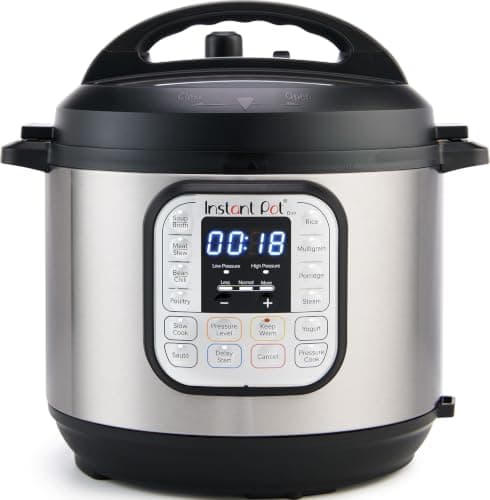
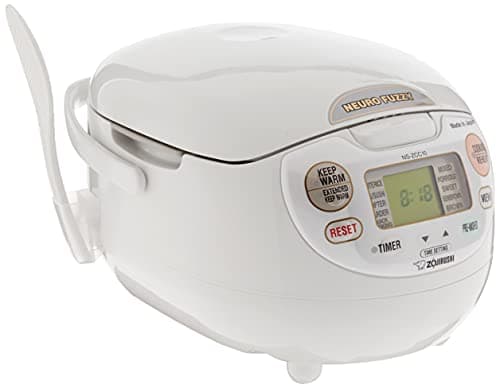
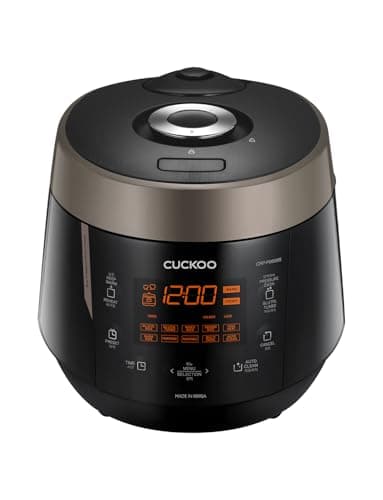
If you can only own one, own a pressure cooker.An Instant Pot Duo cooks rice acceptably — there is a Rice button, and it works — while also pressure-cooking beans, stock, shanks and a pot roast, which no rice cooker can do at all. It publishes 1,000 W, a working pressure of 10.2–11.6 psi and an 18/8 stainless pot. If you eat rice several times a week, own a rice cooker — the Zojirushi NS-ZCC10 runs a microcomputer that adjusts heat through the cook, which is a kind of control a pressure preset simply does not have, and it is the difference between good rice and dialed-in rice. And if the answer is “both, in one box”, that machine exists and it is a pressure ricecooker: the Cuckoo CRP-P0609S cooks rice at 890 W under pressure, which raises the boiling point and gives a distinctly fluffier short-grain result.

They are not doing the same thing at all

A rice cookeris fundamentally a thermostat with a good idea. Rice cooks by absorption: the grain sits in a measured amount of water, the pot heats, and while there is free water the contents stay at boiling point. Once the water is gone the temperature climbs past 212 °F — and that climb is the signal. A basic cooker reads it with a bimetallic switch and flips to keep-warm. A fuzzy-logic cooker reads the whole temperature curve with a microcomputer and adjusts the heat as it goes, which is why it can have separate programs for sushi rice, brown rice and porridge that behave differently rather than just running for different lengths of time.

A pressure cookerdoes something unrelated: it seals, so steam cannot escape, so pressure rises, so the boiling point rises with it. Instant Brands publishes 10.2–11.6 psi for the Duo on high, which puts the pot near 240 °F; a stovetop Presto's regulator holds roughly 15 pounds, nearer 250. Higher temperature means faster chemistry, which is why dried beans go from two hours to twenty-five minutes and a shank becomes tender in forty. Nothing about that mechanism knows or cares when rice is done.

Side by side

What each machine type is actually built to do, with published figures from the three picks on this page.
Rice cookerPressure cookerPressure rice cooker
Core mechanismDetects the temperature rise when water is absorbedSeals to raise the boiling pointBoth — sensing, under pressure
Example hereZojirushi NS-ZCC10, 680 WInstant Pot Duo, 1,000 WCuckoo CRP-P0609S, 890 W
Rice qualityBest — separate sensing programs per grainGood. A fixed pressure preset, not a sensing programBest for short-grain and sticky rice
Beans, stock, tough cutsNoYes — this is the point of itNo. It is a rice cooker that uses pressure
Also doesSteam, porridge, oatmeal, slow cook on someSlow cook, sauté, steam, yogurtPorridge, GABA rice, scorched rice
Walk away?Yes, and it keeps warm for hoursYes on an electric; no on a stovetop potYes

Are rice cookers pressure cookers?

Mostly no, and sometimes yes — which is why the question keeps getting asked. The great majority of rice cookers, including every Zojirushi, Tiger and Toshiba in this catalog, are not sealed vessels at all: they vent freely, they run at ordinary boiling point, and there is no pressure involved anywhere. But the Korean pressure cookers are a real category. Cuckoo's CRP-P0609S is a rice cooker that seals and cooks under pressure, with a gasket, 890 W, a 304 stainless pot under its nonstick, and the full rice program set including GABA and scorched rice. It is a pressure cooker in the literal sense and a rice cooker in every practical one, and it will not cook you a pot roast.

The confusion runs the other way too, because an Instant Pot has a Rice button. That button is a fixed pressure program, not a sensor reading a curve — which is why cooking rice in an Instant Pot works but needs the ratio to be right, where a fuzzy-logic cooker is more forgiving. What a fuzzy-logic rice cooker is explains the difference in the control, and the ratio table is the thing that matters most on either machine.

Where each one wins, concretely

Rice cooker wins:rice you eat several times a week; brown rice, which wants a long soak-and-sense cycle; sushi rice, where texture is the entire point; porridge and congee; and the unglamorous one — keep-warm. A rice cooker will hold rice at a safe, edible temperature for hours, which a pressure cooker's keep-warm does less kindly to grain. Whether it is safe to leave rice on warm covers that properly, and how long a rice cooker takes sets expectations, because it is slower than people assume.

Pressure cooker wins: anything dried or tough. Beans and chickpeas from dry, which is the strongest single argument for the category — see the best pressure cooker for beans — plus stock, shanks, oxtail, brisket, pot roast, and hard-boiled eggs that peel cleanly. It also replaces a slow cooker in one direction (the Duo has a slow-cook mode; how well that works is its own page) and sautés in the same pot, which a rice cooker cannot.

Neither winsat the thing both are often bought for: browning. A rice cooker has no sear at all, and a pressure cooker's Sauté program browns adequately in a tall narrow pot. If a crust is the goal, both machines are a step on the way to a hot pan, not a replacement for one.

The honest two-machine answer

If you cook rice daily and cook from dried, two appliances is genuinely the right answer and we are not going to pretend otherwise — it is the same conclusion our best cookers for Indian cooking page reaches for the same reason, because dal under pressure and long-grain basmati by absorption are two different jobs. A 680 W fuzzy-logic rice cooker and a 1,000 W pressure cooker together draw less than a single oven element and cost less than one mid-range stand mixer.

If you only have room for one, the counter-space question is settled by what you cook, not by the machines: do you need both is the page for that, and the best cookers for small kitchens is the one to read if the constraint is physical.

Stovetop pressure cookers belong in this comparison too

People comparing “rice cooker vs pressure cooker” often mean a stovetop pot, not an appliance — the sealed pan with a rattling weight on top. Those cook at higher pressure than any electric (Presto's regulator holds what Presto calls the ideal pressure, usually 15 pounds), cost less, and carry warranties measured in decades rather than a single year. They also cannot be left alone for a second, and they are a genuinely poor choice for rice, because rice wants to be sensed rather than blasted. The best stovetop pressure cookers ranks them, and stovetop vs electric is the choice inside that category. If rice is anywhere in your week, do not let a stovetop cooker be your only machine.

The one-line rule

Buy the pressure cooker if the question is “what can this machine cook?”; buy the rice cooker if the question is “how good will my rice be?” The first is a versatility purchase and the Instant Pot Duo answers it for less money than a decent rice cooker costs. The second is a quality purchase and no multicooker answers it, because a pressure preset is not a sensor. If you want a longer walk through that decision across all three categories on this site, which kitchen appliance do you need ends in a rule rather than a shrug.
In detail

The picks, in full

01
Instant Pot Instant Pot Duo 7-in-1 Electric Pressure Cooker, 6 Quart

The one to buy if you are not sure

Instant Pot Duo 7-in-1 Electric Pressure Cooker, 6 Quart

Stainless inner potWattage & pressure published
8.6/10

The multicooker that made the category, and still the right default. Instant Brands publishes the wattage, the working pressure range and a stainless (not nonstick) inner pot, which is more than most of the field manages — and it costs less than almost all of them.

Capability
7.5
Capacity
8
Documentation
9.5
Build
8.5
Value
9.5

What it gets right

  • Instant Brands publishes the wattage, the working-pressure range and the pot material — the full set, which most of the field does not
  • The 18/8 stainless inner pot has no coating to scratch off, so it outlives the nonstick pots in cookers costing more
  • At the current price it is the cheapest genuinely well-documented multicooker on this site

What it doesn't

  • No sous vide or air-fry program — this is the plain pressure-and-slow-cook model, by design
  • The steam release is a manual toggle, not the quiet auto-release of the Duo Plus or Pro
  • Seven functions is fewer than the sticker-count leaders, though most of those are the same element at different set points

What it costs to run

About 18.8¢ an hour at full rated draw, at the US average of 18.83¢ per kWh.

1,000 W ÷ 1000 × 1 h × 18.83¢ = 18.8¢

1000 W at 120 V / 60 Hz, published on the Instant Pot Duo product page and confirmed on the IP-DUO60 manual specification page. This is an upper bound: the element only draws full power while it is heating up or pressurizing, then cycles off to hold temperature, and no manufacturer publishes a duty cycle — so we compute at full rated draw rather than invent a correction factor. The full method is published.

Skip this if…

…you specifically want sous vide, a quieter steam release, or an air-fry lid — the Duo has none of those, and reaching for it and then wishing it did more is the most common Instant Pot regret. Step up to the Pro or Duo Crisp instead.

$71.89on Amazon

Price last checked October 20, 2026. Prices move constantly — Amazon's at checkout is the one that counts.

#ad · we may earn a commission from this link to Instant Pot Duo 7-in-1 Electric Pressure Cooker, 6 Quart

02
Zojirushi Zojirushi NS-ZCC10 Neuro Fuzzy Rice Cooker & Warmer, 5.5 Cup

The benchmark fuzzy-logic rice cooker

Zojirushi NS-ZCC10 Neuro Fuzzy Rice Cooker & Warmer, 5.5 Cup

Made in JapanFuzzy-logic heat control
8.1/10

The rice cooker every other one is measured against. Its Neuro Fuzzy microcomputer adjusts heat through the cook rather than running a fixed timer, which is the whole reason a $260 rice cooker cooks rice better than a $30 one. Made in Japan, 680 W, and the settings that matter are all there.

Capability
8.5
Capacity
7.5
Documentation
9
Build
8
Value
7.5

What it gets right

  • Neuro Fuzzy logic adjusts the heat during the cook, which is what actually separates good rice from timer-and-hope rice
  • Zojirushi publishes the wattage, the capacity and the origin plainly — and it is genuinely made in Japan
  • The settings people actually use are all present: white, sushi, softer, harder, mixed, porridge, brown, rinse-free

What it doesn't

  • It is a Micom cooker, not induction — the NP-HCC10 heats the whole pot electromagnetically and cooks marginally better, for a lot more money
  • At this price you are paying for the logic, not the build; the pot and body are ordinary
  • The retro 1990s styling has not changed in years and looks it

What it costs to run

About 12.8¢ an hour at full rated draw, at the US average of 18.83¢ per kWh.

680 W ÷ 1000 × 1 h × 18.83¢ = 12.8¢

680 W at 120 V, published on Zojirushi's own NS-ZCC10 product page. This is an upper bound: the element only draws full power while it is heating up or pressurizing, then cycles off to hold temperature, and no manufacturer publishes a duty cycle — so we compute at full rated draw rather than invent a correction factor. The full method is published.

Skip this if…

…you eat rice most days and want the genuine best — then the induction NP-HCC10 is the upgrade, not this. Or if you cook rice a couple of times a week and $260 feels steep for the job, a budget Aroma does 80% of it for a sixth of the price.

$223.98on Amazon

Price last checked October 20, 2026. Prices move constantly — Amazon's at checkout is the one that counts.

#ad · we may earn a commission from this link to Zojirushi NS-ZCC10 Neuro Fuzzy Rice Cooker & Warmer, 5.5 Cup

03
Cuckoo Cuckoo CRP-P0609S High-Pressure Rice Cooker, 6 Cup

The fluffiest rice, under pressure

Cuckoo CRP-P0609S High-Pressure Rice Cooker, 6 Cup

Cooks under pressure304 stainless pot
8.1/10

A pressurized rice cooker, which is the Korean approach and a genuinely different one: cooking rice under pressure raises the boiling point and produces a distinctly fluffier, stickier grain, especially for short-grain and mixed rice. 890 W, a 304 stainless pot, and Cuckoo's signature talking interface.

Capability
9
Capacity
8
Documentation
7.5
Build
8.5
Value
7.5

What it gets right

  • Pressure cooking raises the boiling point and produces a fluffier, stickier grain — the real advantage of the Korean-style cooker
  • A 304 food-grade stainless pot under the nonstick, which is a step up from the plain nonstick pots at this price
  • Fuzzy logic plus a full menu set including GABA rice, porridge and a scorched-rice (nurungji) mode

What it doesn't

  • The wattage is on Cuckoo's manual, not the retail product page — you have to go looking for it
  • The talking voice guide is not to everyone's taste and, on the US model, the default voice options are limited
  • A pressure rice cooker has a sealing gasket that eventually needs replacing, unlike a plain Micom cooker

What it costs to run

About 16.8¢ an hour at full rated draw, at the US average of 18.83¢ per kWh.

890 W ÷ 1000 × 1 h × 18.83¢ = 16.8¢

890 W as published in Cuckoo's own CRP-P0609S series manual specification page. This is an upper bound: the element only draws full power while it is heating up or pressurizing, then cycles off to hold temperature, and no manufacturer publishes a duty cycle — so we compute at full rated draw rather than invent a correction factor. The full method is published.

Skip this if…

…you mostly cook long-grain or basmati, where the pressure advantage is smallest and a good fuzzy-logic cooker matches it. The pressure difference shows most on short-grain, sticky and mixed rice.

$210.82on Amazon

$269.9922% off

Price last checked October 20, 2026. Prices move constantly — Amazon's at checkout is the one that counts.

#ad · we may earn a commission from this link to Cuckoo CRP-P0609S High-Pressure Rice Cooker, 6 Cup

How we picked

Machines we claim to have tested: 0

Everyone in this category tells you they tested twenty cookers. We have tested none, and we say so. Here is what we do instead: read the manufacturer's manual and spec page, record the published wattage, capacity, pressure or temperature figure and warranty term, work out what the machine costs to run per hour, show the arithmetic so you can redo it with your own electricity rate, and cite all of it. Where a brand publishes no wattage, we print no running cost rather than borrowing a number from a similar model. Prices come live from Amazon's API and disappear rather than go stale.

The scores above are judgments from that documented research — not test results. One of the five metrics is Documentation: whether the manufacturer will tell you what its cooker draws at all. The full rubric, including what disqualifies a pick, is published in full.

Questions

Frequently asked

Can a pressure cooker replace a rice cooker?
For most people, yes, with a caveat. An Instant Pot's Rice button is a fixed pressure program rather than a sensor reading the cook, so the rice is good but the water ratio has to be right and it is less forgiving across grain types. A fuzzy-logic rice cooker adjusts heat through the cook, which is why its sushi, brown and porridge programs behave differently rather than just running for different times.
Can a rice cooker replace a pressure cooker?
No. A rice cooker is not a sealed vessel - it vents freely and runs at ordinary boiling point - so it cannot cook dried beans, stock or tough cuts in any reasonable time. Some rice cookers add a slow cook or saute function, which is useful, but none of them raises the boiling point, and that is the entire point of a pressure cooker.
Are rice cookers pressure cookers?
Usually not, but sometimes genuinely yes. Every Zojirushi, Tiger and Toshiba cooker we cover vents freely and involves no pressure at all. Korean pressure rice cookers are a real category though: the Cuckoo CRP-P0609S seals and cooks rice under pressure at 890 W, with a gasket and a 304 stainless pot - a pressure cooker in the literal sense that still will not cook you a pot roast.
Which is better for brown rice?
A rice cooker, clearly. Brown rice wants a long hydration phase before and during the cook, which is exactly what a fuzzy-logic Brown Rice program manages by adjusting heat over time. A pressure cooker can do brown rice on a fixed program and it comes out fine, but it has no mechanism for the gradual part.
If I can only buy one, which should it be?
A pressure cooker, unless rice is central to how you eat. The Instant Pot Duo cooks rice acceptably while also doing beans, stock, tough cuts, slow cooking and sauteing, which no rice cooker can. Flip that if you eat rice several times a week - then the rice cooker is the machine you will actually notice the quality of.
Do rice cookers and pressure cookers cost much to run?
Neither does. The rice cookers we cover draw 450-1,230 W and the electric pressure cookers 700-1,500 W, and in both cases the element only works hard at the start - a rice cooker idles on keep-warm and a pressure cooker cycles at a fraction of its rating once sealed. Our running-cost page does the arithmetic from the published EIA residential rate so you can redo it with your own.

Keep reading

Receipts

Sources

We have not tested these machines in a lab and we do not pretend to have. Specifications come from the manufacturer's own published documents; electricity rates come from the US Energy Information Administration; prices come from the live Amazon API. Where a figure is not published, the page says “not published” rather than guessing. Read the full method.