HUB 04 · Buying Guides
Do You Need a Sous Vide If You Have an Instant Pot?
Instant Pot's Pro, Duo Plus and Duo Crisp all include a Sous Vide setting — so do you still need a dedicated immersion circulator? If you dabble, the built-in mode is a genuine way to try the technique. If you cook sous vide seriously, a circulator does it properly. Here's how to tell which you are.
We earn a commission if you buy through our links. It does not change the price you pay, and it does not decide our picks — the scoring rubric is published in full, including what disqualifies a pick. How this works.
The Instant Pot really does have a sous vide mode
This ownership question has a twist the others do not: several Instant Pots genuinely include a Sous Vide program. The Pro, the Duo Plus and the Duo Crispall have one, so if you own one of those, you can try sous vide today without buying anything — which makes “do I need a dedicated machine?” a real, live question rather than a rhetorical one. As with the rice-cooker version, this is the ownership question, not the technique explainer — for that, start with what is sous vide — and the answer turns on how seriously you cook sous vide.
What the Instant Pot's sous vide mode does well
For an occasional or curious cook, the built-in mode is a genuinely good thing. It holds a water temperature well enough for a steak, a chicken breast or a batch of eggs, and it is a real, free way to learn whether you even like the technique before spending on a dedicated device. If you have a Pro or a Duo Plus sitting on the counter, cooking a sous vide steak in it once a month is a perfectly sensible use of a function you already paid for, and it means the honest first answer for most people is: no, you probably do not need a separate machine to start. Try it in the Instant Pot first. Only if you find yourself reaching for it often, or chasing more precise results, do the reasons to own a dedicated circulator start to bite.
Where a dedicated circulator wins
There are four honest ones. The first, and biggest, is precision and even heat. A real immersion circulator has a pump that constantly moves the water, so the whole bath sits at one temperature; an Instant Pot heats from the base with no circulation, so the water is warmer near the element and cooler at the far wall, and it holds temperature less tightly than a dedicated machine publishing ±0.1°C accuracy. On a steak you may not notice; on delicate, long, low cooks like eggs or fish, where a fraction of a degree changes the texture, you will. The second is capacity: a circulator clips to any big pot or tub, so you can cook far more food in far more water than a 6-quart Instant Pot holds. The third is long cooks: a circulator is built to run for many hours or even days for tough cuts, which ties up your one Instant Pot for that whole time if you use it instead. And the fourth is exactly that — freeing the pot: using the Instant Pot as a sous vide bath means it cannot pressure-cook, slow-cook or do anything else while it runs.
The case for not buying a second machine
The counter-argument is the familiar one. A circulator is another device to store, and if you only cook sous vide occasionally, the Instant Pot mode you already own does the job for free — buying a dedicated machine would be spending on a function you have. Sous vide is also, for many people, a technique they try enthusiastically and then use rarely, so trying it in the Instant Pot first is genuinely the smart, low-risk move: you find out whether it earns a place in your cooking before you commit counter space and money to a single-purpose tool. If you dabble, the built-in mode is enough, and is sous vide worth it is the honest place to test whether you are really a sous vide person at all.
The decision rule
Buy a dedicated circulator if you cook sous vide often, you want tight, even, precise temperature control for delicate or long cooks, you need more capacity than an Instant Pot holds, or you do not want your one pot tied up for hours. Stick with the Instant Pot's sous vide mode if you have a Pro, Duo Plus or Duo Crisp, you cook sous vide occasionally, and the results on a steak or eggs are good enough for you — it is a free function you already own. The deciding question is whether sous vide is a technique you use seriously or dabble in. If it is serious, the best sous vide machine roundup and the beginners' picks take it from there; if you are choosing between the methods in the abstract, see sous vide vs pressure cooker.
The hardware
The cookers this page is about
The cookers referred to above, with prices pulled live from Amazon and dated on every card. Full rankings live in the roundups linked from this page.
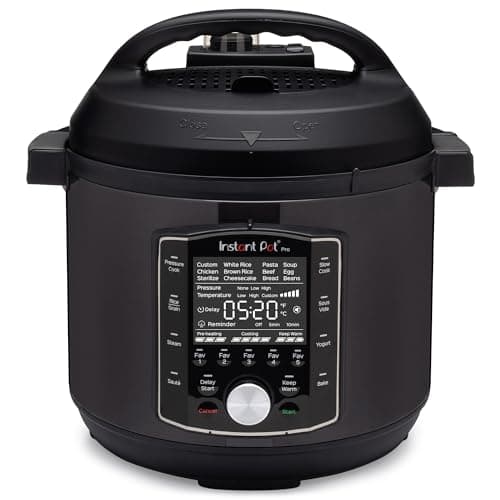
1,200 W
Instant Pot Pro 10-in-1 Pressure Cooker, 6 Quart
The Duo's mechanicals with the interface fixed: a genuine sous vide program, an auto-sealing lid, grab-and-go pot handles and five programmable buttons. It draws 1,200 W rather than the Duo's 1,000, and Instant Brands does not publish a working-pressure figure for it — the one gap in an otherwise well-documented cooker.
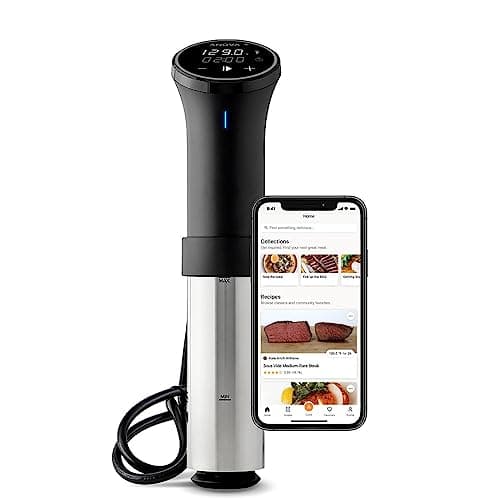
1,100 W
Anova Precision Cooker 3.0 (WiFi), 1100 W
The sous vide circulator most people should buy. Anova publishes the full specification — 1,100 W, a 0–92°C range, ±0.1°C accuracy, an 8 L/min pump — and backs it with a two-year warranty, the longest here. It has an on-device screen so it works without the app, which the Joule does not.
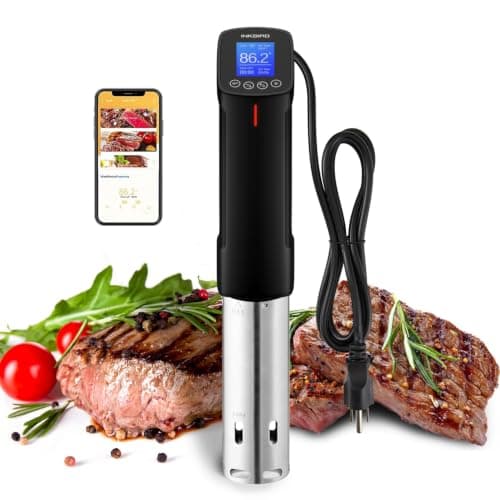
1,000 W
Inkbird ISV-100W WiFi Sous Vide, 1000 W
The value pick that does not feel like one. Under $100, and Inkbird still publishes the full specification: 1,000 W, a 25–99°C range, ±0.1°C accuracy, 15 L capacity, WiFi and an on-device dot-matrix screen. It undercuts the Anova by more than half and gives up remarkably little on paper.
#ad · As an Amazon Associate we earn from qualifying purchases.
Questions
Frequently asked
Does an Instant Pot have a sous vide function?
Is the Instant Pot's sous vide as good as a dedicated machine?
Should I buy a sous vide machine or just use my Instant Pot?
Keep reading