What actually matters for an older cook
The best cooker for a senior is not the one with the longest function list — it is the one that is simplest to operate, safe to use, and manageable to handle. That means clear, uncrowded controls rather than thirty tiny buttons; genuine safety features; forgiving cooking that is hard to get wrong; and a weight and design that are easy to lift, carry and clean. This roundup ranks three cookers on exactly those terms. As everywhere on this site, we have tested none of these— every figure comes from the manufacturer's own documents, cited on each card, and every pick carries a real, disqualifying con. The full rubric is in our methodology, and prices move, so the live price sits on each card rather than in the text.
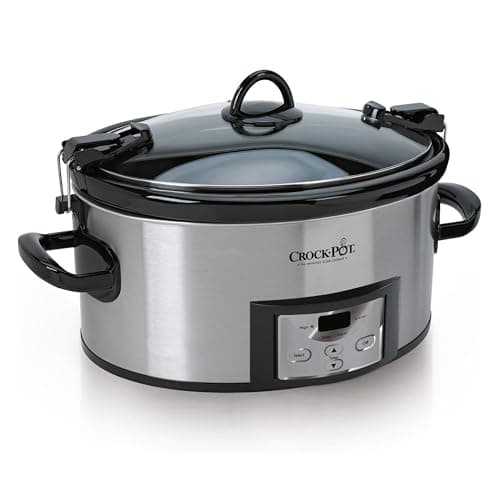
1. Crock-Pot Cook & Carry — the simplest, safest pick
For pure simplicity, the Crock-Pot Cook & Carry is the easiest cooker here to live with. It is a plain programmable slow cooker— no pressure, no sealing valve, no anxiety about steam — so there is almost nothing to get wrong: add the ingredients in the morning, set low or high, and come back to dinner. The locking Cook & Carry lid is a genuine convenience, letting it travel to a family dinner without spilling, and at 240 Wit is by far the lowest-draw appliance on this site — a cheap, gentle way to cook all day. It is also the most forgiving cooking there is: slow, low heat is very hard to overcook. The honest con: the stoneware crock is heavy and breakable, which is a real consideration for anyone with limited grip or strength, and it only slow-cooks — no rice, no sauté, no speed. If simplicity and safety top the list, though, this is the pick.
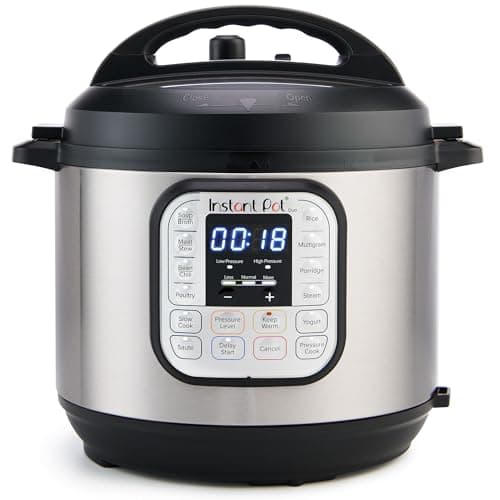
2. Instant Pot Duo — very safe, with an honest learning curve
People sometimes assume a pressure cooker is the wrong choice for an older cook, but a modern Instant Pot Duo is one of the safestcookers you can buy: the lid physically locks while there is pressure inside and will not open until it is released, and there are multiple overpressure protections — it is a world away from the old stovetop pressure cookers that made the technique feel risky. In return you get real versatilityin one lightweight stainless pot: pressure cook, slow cook, sauté, steam, rice and more, which can replace several appliances for someone downsizing a kitchen. The honest con: the button panel has a genuine learning curve— the array of programs and the sealing/venting valve take getting used to, and for a cook who wants to press one button and walk away, that curve is a real cost. Our buttons explained guide shortens it. Choose the Duo if versatility and safety matter more than absolute simplicity.
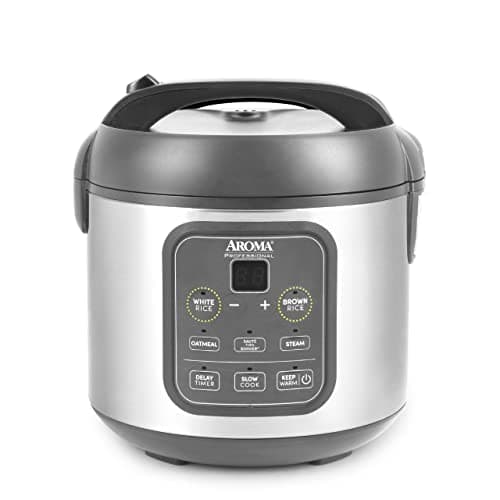
3. Aroma ARC-994SG — light, simple and inexpensive
If the Crock-Pot is too limited and the Instant Pot too complex, the Aroma ARC-994SG sits in between: a small, light, simple digital cooker (Aroma lists it at 6.2 lb) that makes rice and, via its Sauté-then-Simmer and slow-cook functions, a little more — without the Instant Pot's intimidating panel or the Crock-Pot's heavy stoneware. It is easy to lift, easy to store, and cheap to replace, and at a published 450 W it is cheap to run too. For a solo senior or a couple who want a straightforward machine for everyday meals, it is the low-commitment, low-weight choice. The honest con: it has only two rice programs and a “Sensor Logic” Aroma never explains, so the rice is good but not the best; Aroma recommends hand-washing its ceramic-coated pot to make it last; and the small capacity suits one or two, not a family gathering. It is the light-and-simple pick, not the do-everything one. (It took this slot when the Aroma ARC-954SBD that used to hold it was discontinued.)
The rule for an older cook: choose the Crock-Pot Cook & Carry if simplicity and safety are everything and slow cooking covers your meals — it is the easiest to use, if the heaviest crock. Choose the Instant Pot Duo if you want one safe, versatile machine to replace several and do not mind learning the panel. Choose the Aromaif you want something light, simple and inexpensive in between. Match the cooker to the hands and the habits that will actually use it — not the longest feature list. If worry about pressure cooking is the sticking point, read are Instant Pots safe? first.
Choosing a cooker for an older cook
Three practical things decide it, and none is the function count. First, the controls: a cook who wants to set one dial and walk away is better served by the Crock-Pot's or Aroma's simple panels than by the Instant Pot's array of programs, however capable it is — capability you cannot comfortably operate is not capability. Second, weight and handling: a heavy stoneware crock or a full pot of liquid is a genuine consideration for anyone with reduced grip or strength, so favor lighter pots and lower fill levels, and consider where the cooker will live so it does not have to be lifted from a low cupboard. Third, safety: modern electric cookers are far safer than the old stovetop pressure cookers — the Instant Pot's lid lock and overpressure protections are real — but the safest cooking of all is the slow cooker's low, forgiving heat. Buy for the person: their eyesight, their hands, their kitchen and how adventurous they want the cooking to be. When in doubt, simpler wins, because a machine that is easy to use is a machine that gets used. For a broader easy-cooking start, our best cookers for beginners lands on similarly forgiving picks.
How we picked
Machines we claim to have tested: 0
Everyone in this category tells you they tested twenty cookers. We have tested none, and we say so. Here is what we do instead: read the manufacturer's manual and spec page, record the published wattage, capacity, pressure or temperature figure and warranty term, work out what the machine costs to run per hour, show the arithmetic so you can redo it with your own electricity rate, and cite all of it. Where a brand publishes no wattage, we print no running cost rather than borrowing a number from a similar model. Prices come live from Amazon's API and disappear rather than go stale.
The scores above are judgments from that documented research — not test results. One of the five metrics is Documentation: whether the manufacturer will tell you what its cooker draws at all. The full rubric, including what disqualifies a pick, is published in full.