HUB 02 · Rice Cookers
What Is a Fuzzy-Logic Rice Cooker?
Fuzzy logic is the reason a $260 rice cooker makes better rice than a $30 one — and it has nothing to do with how the pot is heated. It is a microcomputer that senses the temperature and adjusts the heat and timing as the rice cooks, instead of running one fixed thermostat until the water is gone. Here is what that actually buys you.
We earn a commission if you buy through our links. It does not change the price you pay, and it does not decide our picks — the scoring rubric is published in full, including what disqualifies a pick. How this works.
Fuzzy logic, in one sentence
A fuzzy-logic rice cooker has a microcomputer inside— that is what “Micom” means, short for micro-computer — and it uses that brain to sense the temperature and adjust the heat and timing as the rice cooks, moment to moment, instead of running one fixed setting from start to finish. The name comes from “fuzzy logic,” a way of making decisions on a sliding scale rather than a simple on/off — which is exactly what cooking rice well needs, because the right amount of heat changes through the cook. That single capability is the whole reason fuzzy-logic cookers exist, and the whole reason they cost more.
What a basic rice cooker does instead
To see why fuzzy logic matters, picture the cheap alternative. A basic on/off rice cooker— the $20 kind — has one thermostat and no brain. It blasts a single fixed heat until the water has boiled off, at which point the pot's temperature rises past the boiling point, a spring-loaded switch trips, and it clicks to “warm.” That is genuinely all it does: full heat, then off. It cannot tell whether the rice is short-grain or brown, whether you added too much water, or whether the middle of a full pot is done — it just runs until the water is gone and stops. For plain white rice with a careful ratio it is fine; for anything else, it is a gamble.
Why sensing and adjusting makes better rice
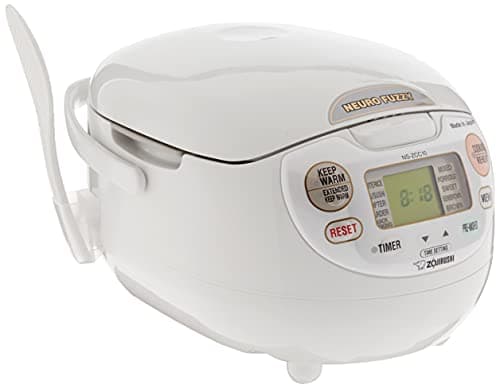
Cooking rice well is not one temperature — it is a sequence of stages: soak the grain, bring it up to a boil, hold a steady simmer while the water absorbs, then steam and rest. A fuzzy-logic cooker manages that whole curve. It eases off the heat so the pot does not boil over, holds the simmer steady, and adjusts the timing based on what its sensor reads — so the result is more consistent and more forgiving of a slightly-off water ratio. The same logic is what lets it handle brown, mixed and porridge well, each of which needs a different heat-and-time curve that a fixed thermostat simply cannot provide. The Zojirushi NS-ZCC10 Neuro Fuzzy is the benchmark for exactly this, with settings for white, sushi, softer, harder, mixed, porridge, brown and rinse-free — each one a different program the microcomputer runs.
Fuzzy logic vs induction — brain versus heat source
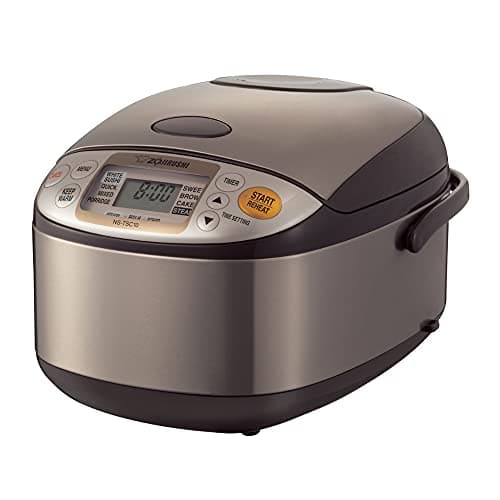
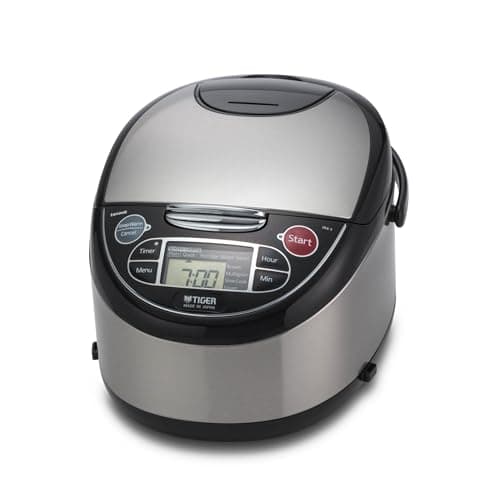
This is where people get confused, so it is worth being precise: fuzzy logic and induction are answers to two different questions. Fuzzy logic is the control — the brain that decides how much heat to apply and when. Induction is the heating method — how that heat is delivered. A standard Micom cooker like the Zojirushi NS-TSC10 or the Tiger JAX-T10U heats the pot from a plate in the base and uses fuzzy logic to control it. An induction cooker energizes the whole pot electromagnetically, so the heat is more even and far more responsive — and premium cookers like the induction Zojirushi NP-HCC10 are both at once: fuzzy-logic control over an induction heat source. Fuzzy logic is the big jump up from a timer cooker; induction is the smaller, second refinement on top. We map exactly where each line falls in induction vs fuzzy logic.
How to tell if a cooker has it
The labels are usually right there. Look for “Micom,” “fuzzy logic,” or “microcomputer” in the name or description — the Neuro Fuzzy wears it in the model name. A giveaway in the other direction: if a cooker has only a single lever or button and cooks everything on one setting, it is a basic on/off cooker, not fuzzy logic. A digital cooker with a screen is not automatically fuzzy-logic either — the budget Aroma, for instance, is digital and claims its own “Sensor Logic,” but Aroma never calls it fuzzy logic or explains it, and it has only two rice programs — a real distinction we are careful to draw. When in doubt, check whether the manufacturer uses the word “Micom” or “fuzzy” specifically.
Where the name comes from
“Fuzzy logic” is borrowed from control engineering, where it describes a way of making decisions on a sliding scalerather than a rigid yes/no — instead of “the water is boiling or it is not,” it reasons in shades like “the pot is getting close, so ease the heat a little.” That style of graded, adjust-as-you-go control turned out to fit consumer appliances well, and rice cookers were a natural home for it, because cooking rice is exactly the kind of task where the right move depends on how things are going rather than a fixed schedule. Micom— short for micro-computer — is just the hardware that runs it. So a “Micom fuzzy-logic” cooker is one with a small computer applying that graded control to the heat.
What fuzzy logic unlocks beyond white rice
Because it can run different heat-and-time curves, a fuzzy-logic cooker can carry a menu of rice types a single-thermostat cooker simply cannot. The Zojirushi Neuro Fuzzy is the clearest example, with programs for white, sushi, softer, harder, mixed, porridge, brown and rinse-free — each one a different curve the microcomputer runs. A porridge or congee setting holds a long, gentle simmer; a brown setting extends the soak and cook so the bran softens; a rinse-free setting accounts for the extra surface starch on unrinsed rice. None of that is possible with one fixed heat — the variety of programs is a direct consequence of having a brain that can change its mind mid-cook.
Fuzzy logic versus a digital cooker with a screen
A screen and buttons do not make a cooker fuzzy-logic, and this is a distinction worth drawing carefully. The budget Aroma ARC-994SG is a digital cooker — it has a display and preset programs — and Aroma says its “Sensor Logic” controls the temperature through the cook, but Aroma never calls it fuzzy logic, publishes nothing about how it works, and gives it only White and Brown rice programs rather than the menu of curves a true fuzzy-logic cooker runs while sensing and adjusting. That is not a knock; a good digital cooker makes perfectly good everyday rice, and the Aroma adds sauté and slow-cook functions a basic rice cooker lacks. But “digital” and “fuzzy-logic” are not synonyms, and marketing sometimes blurs them. If sensing and adjusting is what you are paying for, look specifically for “Micom” or “fuzzy logic,” not just a screen.
Smarter keep-warm, too
The microcomputer does not stop working when the rice is done. A fuzzy-logic cooker generally manages its keep-warmmore intelligently than a basic model — holding the finished rice at a temperature that keeps it pleasant without drying it out or yellowing it as quickly, and some offer an extended keep-warm or a reheat cycle. On a basic on/off cooker, “warm” is just a lower fixed heat, which is why rice on a cheap cooker hardens at the edges faster. It is a small thing on any single meal, but for anyone who leaves rice in the pot through dinner it is part of what the extra money buys.
“Neuro Fuzzy” and other brand names
Manufacturers dress the same idea in their own marketing. Zojirushi's “Neuro Fuzzy”is its name for fuzzy-logic control; other brands say “Micom,” “microcomputer,” or “computerized.” They point at the same underlying thing — a small computer adjusting the cook — so do not read a more elaborate name as a more advanced technology. What matters is whether the cooker senses and adjusts at all, not the brand word wrapped around it.
Is there a downside to fuzzy logic?
Two honest ones. First, it costs more — a fuzzy-logic cooker starts well above a basic on/off model, and you are paying for the control brain, not a fancier pot. Second, it is a little less transparent: a basic cooker does exactly one obvious thing, while a fuzzy-logic cooker decides the timing for you, so the cook time varies and you cannot rush it. For most people those are non-issues against the better, more consistent rice — but if you cook only plain white rice in careful, measured amounts and want the cheapest possible pot that gets it done, a basic cooker is a rational choice and fuzzy logic is more than you need. Match the tool to how much and what kind of rice you actually cook.
Is it worth it?
For almost anyone who cooks rice more than occasionally, yes — fuzzy logic is the upgrade that actually changes the rice, and it is the one we tell people to pay for. It makes more consistent rice, forgives small mistakes, and handles brown, sushi, mixed and porridge that a basic cooker cannot. It is worth less if you only ever cook plain white rice in careful, measured amounts, where a basic cooker gets you most of the way — and a budget digital cooker like the Aroma is a fine, honest compromise there. Whether to go one step further to induction is a separate, smaller question, covered in are expensive rice cookers worth it. The short version: pay for fuzzy logic; pay for induction only if rice is a daily event. To see where the fuzzy-logic cookers land against the whole field, start with the best rice cooker ranking.
The hardware
The cookers this page is about
The cookers referred to above, with prices pulled live from Amazon and dated on every card. Full rankings live in the roundups linked from this page.
680 W
Zojirushi NS-ZCC10 Neuro Fuzzy Rice Cooker & Warmer, 5.5 Cup
The rice cooker every other one is measured against. Its Neuro Fuzzy microcomputer adjusts heat through the cook rather than running a fixed timer, which is the whole reason a $260 rice cooker cooks rice better than a $30 one. Made in Japan, 680 W, and the settings that matter are all there.
610 W
Zojirushi NS-TSC10 Micom Rice Cooker & Warmer, 5.5 Cup
A Micom fuzzy-logic Zojirushi at meaningfully less than the Neuro Fuzzy, with a couple of trades: it is made in China rather than Japan, and it adds a steam and cake function the NS-ZCC10 lacks. Same fundamental advantage — the microcomputer adjusts heat as it cooks — at 610 W.
641 W
Tiger JAX-T10U Micom Rice Cooker & Warmer with tacook, 5.5 Cup
Tiger's answer to Zojirushi, with one trick the Zojirushis do not have: the tacook synchronous-cooking tray steams a dish above the rice while it cooks below, from the same 641 W. A Micom fuzzy-logic cooker made in Japan, with a genuinely useful feature the marketing did not invent.
#ad · As an Amazon Associate we earn from qualifying purchases.
Questions
Frequently asked
What does fuzzy logic mean on a rice cooker?
Is a fuzzy-logic rice cooker the same as an induction one?
Is a fuzzy-logic rice cooker worth it?
Keep reading
Related
Receipts
Sources
- Zojirushi — NS-ZCC10 Neuro Fuzzy Rice Cooker product page
- Zojirushi — NS-TSC10 Micom Rice Cooker product page
- Tiger Corporation (USA) — JAX-T10U rice cooker product page
We have not tested these machines in a lab and we do not pretend to have. Specifications come from the manufacturer's own published documents; electricity rates come from the US Energy Information Administration; prices come from the live Amazon API. Where a figure is not published, the page says “not published” rather than guessing. Read the full method.