HUB 02 · Rice Cookers
Rice Cooker vs Stovetop
You can make perfectly good rice in a pot on the stove — people have for millennia — so is a dedicated rice cooker worth the counter space? The honest answer turns on consistency and attention, not on some secret the pot can't match. Here is the real comparison, and who each method is for.
We earn a commission if you buy through our links. It does not change the price you pay, and it does not decide our picks — the scoring rubric is published in full, including what disqualifies a pick. How this works.
The stovetop makes good rice — that's the honest starting point
Let's be fair to the pot: you can make genuinely excellent rice on the stovetop, and billions of people do every day without ever owning a rice cooker. There is no magic in the appliance that a pot, a lid and a bit of attention cannot match on a good day. So the honest question is not “which makes better rice” in some absolute sense — it is which makes consistently good rice with the least attention, and what that consistency is worth to you. This is really the same ownership question as are rice cookers worth it, seen through the specific lens of the method you would otherwise use.
The case for the stovetop
The stovetop's advantages are real. It is free — you already own a pot, so there is nothing to buy and nothing to store, which matters in a small kitchen. It is flexible: you can adjust the heat by feel, crack the lid, or crank it at the end to build a crisp bottom crust (the prized tahdig, nurungji or socarrat), something most rice cookers deliberately avoid. And a skilled cook with a heavy pot and a tight lid can make superb rice. The cost is attention and repeatability: the stovetop demands you get the heat, the timing and the water right, and it punishes distraction — a phone call at the wrong moment means scorched rice on the bottom or a boil-over on the stove. It works beautifully when you are paying attention and less well when you are not.
The case for the rice cooker
A rice cooker's whole pitch is removing that attention tax. Its advantages are consistency and being hands-off: you measure, add water, press one button and walk away, and it makes the same rice every single time regardless of whether you are watching. It is hard to ruin — it will not boil over onto the stove or scorch if you get distracted, because it senses when the water is gone and stops. It keeps rice warm for hours at a safe temperature, so dinner is ready when the rest of the meal is, and many can be set on a delay timer so rice is ready when you walk in. And a fuzzy-logic or induction cooker adds something the stovetop genuinely cannot match easily: it adjusts the heat through the cook, which is why a good one — the Zojirushi Neuro Fuzzy is the benchmark — makes more reliable rice than most people manage in a pot. The costs are the price of the machine and the counter space it takes.
Effort, cost and the free-pot argument
Put the practical trade plainly. The stovetop wins on upfront cost and storage — it is free and takes no space. The rice cooker wins on consistency, convenience and forgiveness— it makes reliable rice with zero attention, keeps it warm, and cannot be distracted into ruining a batch. Which matters more depends entirely on how much rice you cook and how you cook it. If you make rice occasionally and enjoy cooking, the free pot you already own is genuinely fine, and spending on a cooker may not be justified — the same conclusion we reach for light users in are rice cookers worth it. If you make rice several times a week, or you want it to be one less thing to think about while you cook everything else, a rice cooker pays for itself in reclaimed attention fast.
The decision rule
Stick with the stovetop if you cook rice only occasionally, you enjoy the hands-on control (and maybe a crisp bottom crust), and you would rather not buy or store another appliance — a heavy pot and a bit of attention make excellent rice for free. Buy a rice cooker if you cook rice regularly, you want it consistent and truly hands-off, or you value the keep-warm and delay-timer convenience — the machine's advantage is not better rice on your best day, it is the same good rice every day with no attention. If you decide to buy, the best rice cooker roundup and how to choose a rice cooker take it from there.
The hardware
The cookers this page is about
The cookers referred to above, with prices pulled live from Amazon and dated on every card. Full rankings live in the roundups linked from this page.
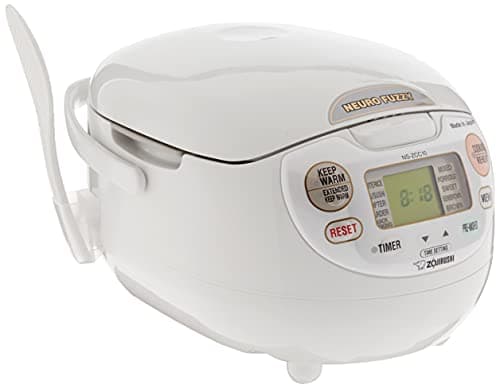
680 W
Zojirushi NS-ZCC10 Neuro Fuzzy Rice Cooker & Warmer, 5.5 Cup
The rice cooker every other one is measured against. Its Neuro Fuzzy microcomputer adjusts heat through the cook rather than running a fixed timer, which is the whole reason a $260 rice cooker cooks rice better than a $30 one. Made in Japan, 680 W, and the settings that matter are all there.
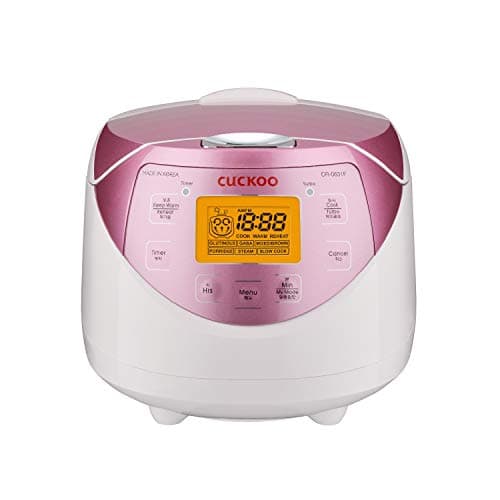
580 W
Cuckoo CR-0631F Micom Rice Cooker, 6 Cup
Cuckoo's non-pressure Micom cooker: the same Korean build and fuzzy-logic control as the CRP, without the pressure mechanism or its price. 580 W, a 6-cup nonstick pot, and a menu set that still covers GABA and brown rice. The sensible Cuckoo if you do not need pressure.
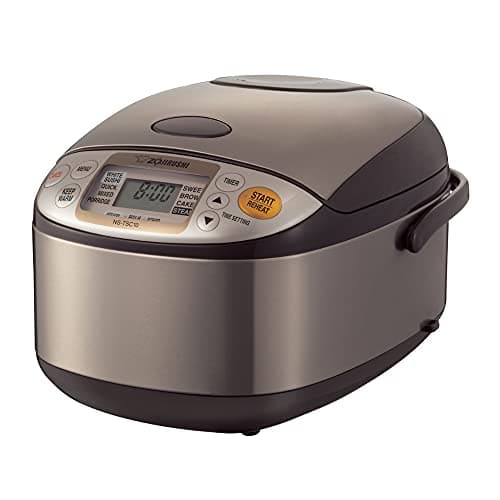
610 W
Zojirushi NS-TSC10 Micom Rice Cooker & Warmer, 5.5 Cup
A Micom fuzzy-logic Zojirushi at meaningfully less than the Neuro Fuzzy, with a couple of trades: it is made in China rather than Japan, and it adds a steam and cake function the NS-ZCC10 lacks. Same fundamental advantage — the microcomputer adjusts heat as it cooks — at 610 W.
#ad · As an Amazon Associate we earn from qualifying purchases.
Questions
Frequently asked
Does a rice cooker make better rice than the stovetop?
Is a rice cooker worth it if I already have pots?
Can you get crispy rice in a rice cooker?
Keep reading
Related
Receipts
Sources
- Zojirushi — NS-ZCC10 Neuro Fuzzy Rice Cooker product page
- Cuckoo CR-0631F series manual (specification page)
We have not tested these machines in a lab and we do not pretend to have. Specifications come from the manufacturer's own published documents; electricity rates come from the US Energy Information Administration; prices come from the live Amazon API. Where a figure is not published, the page says “not published” rather than guessing. Read the full method.