HUB 01 · Multicookers
Is an Instant Pot Worth It?
For most people who cook at home, yes — but not for the reason the marketing gives. The honest case for a multicooker rests on one function, and if that function does not fit how you cook, the machine ends up in a cupboard. Here is the undramatic version.
We earn a commission if you buy through our links. It does not change the price you pay, and it does not decide our picks — the scoring rubric is published in full, including what disqualifies a pick. How this works.
The one function that justifies it
Strip away the “13-in-1” sticker and an Instant Pot is worth it for one thing: speed under pressure. Dried beans without soaking in 40 minutes, a pot roast in under an hour, stock in two hours instead of six. That is the capability nothing else on your counter has, and it is the entire honest case for the machine. If a weeknight dinner from tough, cheap ingredients appeals to you, an Instant Pot pays for itself fast — cheap cuts and dried legumes are exactly what it turns around quickest.
What it genuinely does better than a pot
Two things beyond speed. Consistency — it comes to pressure, holds it and counts down without you watching, so the result is the same every time. And one-pot convenience — you sauté, then pressure-cook, then keep warm in the same stainless insert, so there is one thing to wash. Those are real, repeated benefits for anyone who cooks several dinners a week.
When it is not worth it
Be honest about the failure mode: the Instant Pot that lives in a cupboard belongs to someone who only ever used the slow-cook function. If you never pressure-cook, you bought a complicated slow cooker — and a plain slow cooker does that one job for less, with nothing to break. Similarly, if you mostly cook rice, a dedicated rice cooker makes better rice more conveniently. The machine is worth it in proportion to how much you will use the pressure.
Which one, if the answer is yes
For most people the plain Instant Pot Duo is the right buy and our overall category winner — a stainless pot, a published spec and every function a household actually uses, at the lowest price of any well-documented multicooker here. If you never used pressure on a previous multicooker but liked the big pot, the non-pressure Ninja PossibleCooker is the more honest machine for how you actually cook. And if you want to spend the least, the budget field is ranked here.
The honest summary
An Instant Pot is worth it if you will use the pressure function — for cheap cuts, dried beans, stock and hands-off weeknight dinners it is genuinely transformative and cheap to run. It is not worth it if you only ever slow-cook or only cook rice, where a single-purpose appliance does the job better. Buy it for the speed, or do not buy it. The full ranking is here.
The hardware
The cookers this page is about
The cookers referred to above, with prices pulled live from Amazon and dated on every card. Full rankings live in the roundups linked from this page.
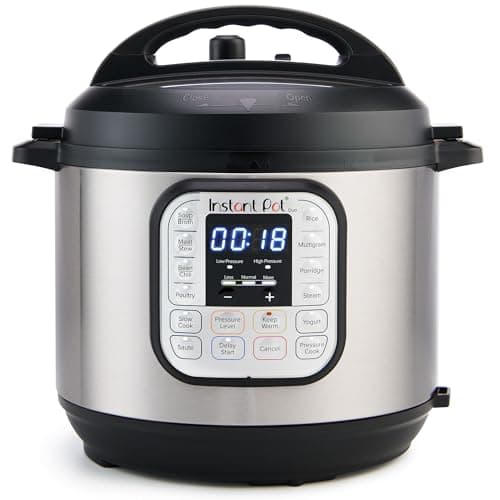
1,000 W
Instant Pot Duo 7-in-1 Electric Pressure Cooker, 6 Quart
The multicooker that made the category, and still the right default. Instant Brands publishes the wattage, the working pressure range and a stainless (not nonstick) inner pot, which is more than most of the field manages — and it costs less than almost all of them.
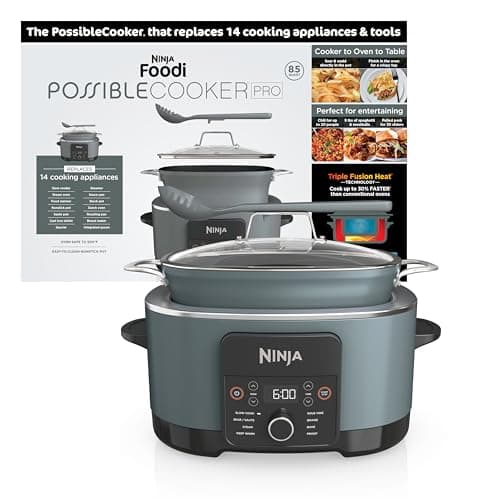
1,200 W
Ninja 14-in-1 PossibleCooker PRO, 8.5-Quart Multicooker (MC1001)
Ninja's current multicooker, and pointedly NOT a pressure cooker. It is an 8.5-quart pot that sears, slow-cooks, steams and goes in the oven to 500°F, at 1,200 W. If you never used the pressure function on your old Instant Pot, this is the more honest machine for how you actually cook.
#ad · As an Amazon Associate we earn from qualifying purchases.
Questions
Frequently asked
Is an Instant Pot actually useful?
Why do so many Instant Pots end up unused?
Is an Instant Pot cheap to run?
Keep reading
Related
- What can you cook in an Instant Pot?The realistic capability list.
- Are electric pressure cookers cheap to run?The running-cost side of the question.
- The best multicookersIf the answer is yes, start here.
- Multicooker vs slow cookerIf slow cooking is all you would use.
- Rice cooker vs Instant PotIf rice is mostly what you cook.
- How long do Instant Pots last?Durability and consumables, part of the value.
Receipts
Sources
- US Energy Information Administration — Electric Power Monthly, Table 5.3 (average residential price)
- Instant Brands — Instant Pot Duo 6qt product page
We have not tested these machines in a lab and we do not pretend to have. Specifications come from the manufacturer's own published documents; electricity rates come from the US Energy Information Administration; prices come from the live Amazon API. Where a figure is not published, the page says “not published” rather than guessing. Read the full method.