HUB 02 · Rice Cookers
What Is a Rice Cooker Cup?
The most common reason a new rice cooker makes disappointing rice is a measuring mix-up: the 'cup' a rice cooker means is 180 ml, about three-quarters of a US cup, not a full one. Get that straight and the water lines inside the pot suddenly make sense — and your rice comes out right.
We earn a commission if you buy through our links. It does not change the price you pay, and it does not decide our picks — the scoring rubric is published in full, including what disqualifies a pick. How this works.
The mismatch that ruins a first batch
If your new rice cooker's first batch came out too wet, too dry, or just not what you expected, there is a good chance the cause is a measuring mismatch — and it is the most common rice-cooker confusion there is. When a rice cooker, a recipe, or the lines inside the pot say “cup,” they almost never mean a US measuring cup. They mean a rice cooker cup, which is 180 milliliters — about three-quarters of a US cup (a US cup is 240 ml). This is the traditional Japanese gō, the standard measure for rice across Japan and the rice-cooker world, and every full-featured cooker on this site — the Zojirushi, Cuckoo and Tiger — is built around it.
Why the little plastic cup exists
That is why your cooker came with a small plastic measuring cup in the box, and why it looks slightly too small to be a “cup.” It is not a US cup — it is the 180 ml rice cooker cup, and it is the key to the whole system. The water-level lines inside the inner pot are calibrated to it: when the pot is marked for 3 cups, it means three 180 ml cups of rice, filled with water to the “3” line. Measure your rice with that cup, add water to the matching line, and the manufacturer has done the ratio math for you — this is exactly the built-in fill-line method we walk through in how to use a rice cooker. Lose the little cup and the whole calibrated system falls apart, which is why the mix-up is so common: people reach for a normal kitchen cup, and everything drifts.
What happens if you use a US cup instead
Suppose you measure your rice with a full 240 ml US cup but still fill water to the pot's lines, which are built for the smaller 180 ml cup. You have now put in a third more ricethan the pot expects, relative to the water — so the rice under-cooks and comes out firm, dry or unevenly done, because there is not enough water for that much grain. Do the opposite — measure rice with the little cup but eyeball the water in US cups — and you flood it, and the rice comes out wet and mushy. Neither is the cooker's fault; the numbers simply stopped matching. The good news is that the fix is trivial once you know the cause: keep the two measures consistent, and use the cup the pot was built for.
How to get it right without the plastic cup
If you have lost the cup, you have two clean options. The simplest is to ignore cups entirely and use the fill lines: measure your rice however you like, put it in the pot, and add water to the line that matches the number of rice cooker cups you used — as long as you scale rice and water together, the ratio holds. The other is to measure by ratio in any unit, which is what our rice-to-water ratio guide is for: pick a ratio for your rice type (it varies by rice), measure rice and water in the same cup — US cup, mug, whatever — and the pot cooks it fine because it only cares about the proportion, not the absolute size. What you must not do is mix the two systems, measuring rice in one size and water in another. And when you are buying rice for people, the 180 ml cup is also why portion math surprises people, which we untangle in how much rice per person.
The short version
A rice cooker cup is 180 ml, about three-quarters of a US cup — the traditional Japanese gō. The little plastic cup in the box is that cup, and the water lines inside the pot are matched to it. Measure rice with that cup and fill water to the matching line, or forget cups and just keep rice and water in the same proportion. The one thing that ruins a batch is measuring rice in a US cup while filling water to lines built for the smaller one.
The hardware
The cookers this page is about
The cookers referred to above, with prices pulled live from Amazon and dated on every card. Full rankings live in the roundups linked from this page.
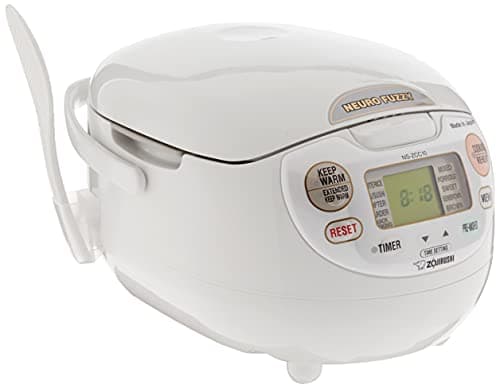
680 W
Zojirushi NS-ZCC10 Neuro Fuzzy Rice Cooker & Warmer, 5.5 Cup
The rice cooker every other one is measured against. Its Neuro Fuzzy microcomputer adjusts heat through the cook rather than running a fixed timer, which is the whole reason a $260 rice cooker cooks rice better than a $30 one. Made in Japan, 680 W, and the settings that matter are all there.
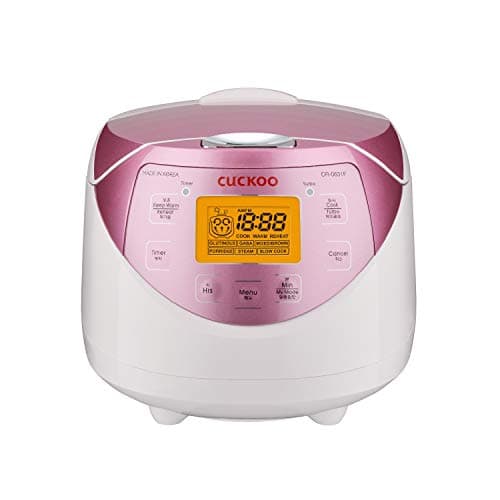
580 W
Cuckoo CR-0631F Micom Rice Cooker, 6 Cup
Cuckoo's non-pressure Micom cooker: the same Korean build and fuzzy-logic control as the CRP, without the pressure mechanism or its price. 580 W, a 6-cup nonstick pot, and a menu set that still covers GABA and brown rice. The sensible Cuckoo if you do not need pressure.
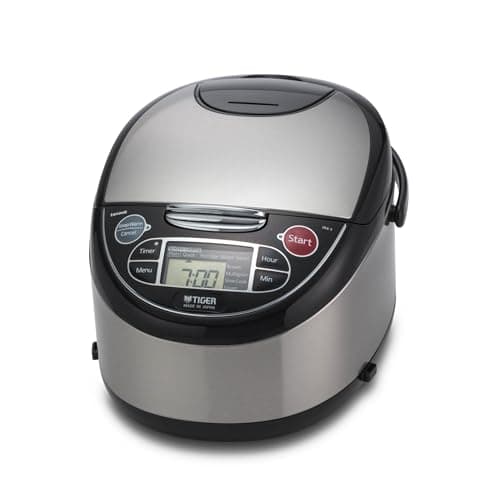
641 W
Tiger JAX-T10U Micom Rice Cooker & Warmer with tacook, 5.5 Cup
Tiger's answer to Zojirushi, with one trick the Zojirushis do not have: the tacook synchronous-cooking tray steams a dish above the rice while it cooks below, from the same 641 W. A Micom fuzzy-logic cooker made in Japan, with a genuinely useful feature the marketing did not invent.
#ad · As an Amazon Associate we earn from qualifying purchases.
Questions
Frequently asked
How many ml is a rice cooker cup?
Is a rice cooker cup the same as a US cup?
What if I lost the cup that came with my rice cooker?
Keep reading
Related
Receipts
Sources
- Zojirushi — NS-ZCC10 Neuro Fuzzy Rice Cooker product page
- USDA FoodData Central — rice, cooked (nutrition reference)
We have not tested these machines in a lab and we do not pretend to have. Specifications come from the manufacturer's own published documents; electricity rates come from the US Energy Information Administration; prices come from the live Amazon API. Where a figure is not published, the page says “not published” rather than guessing. Read the full method.